
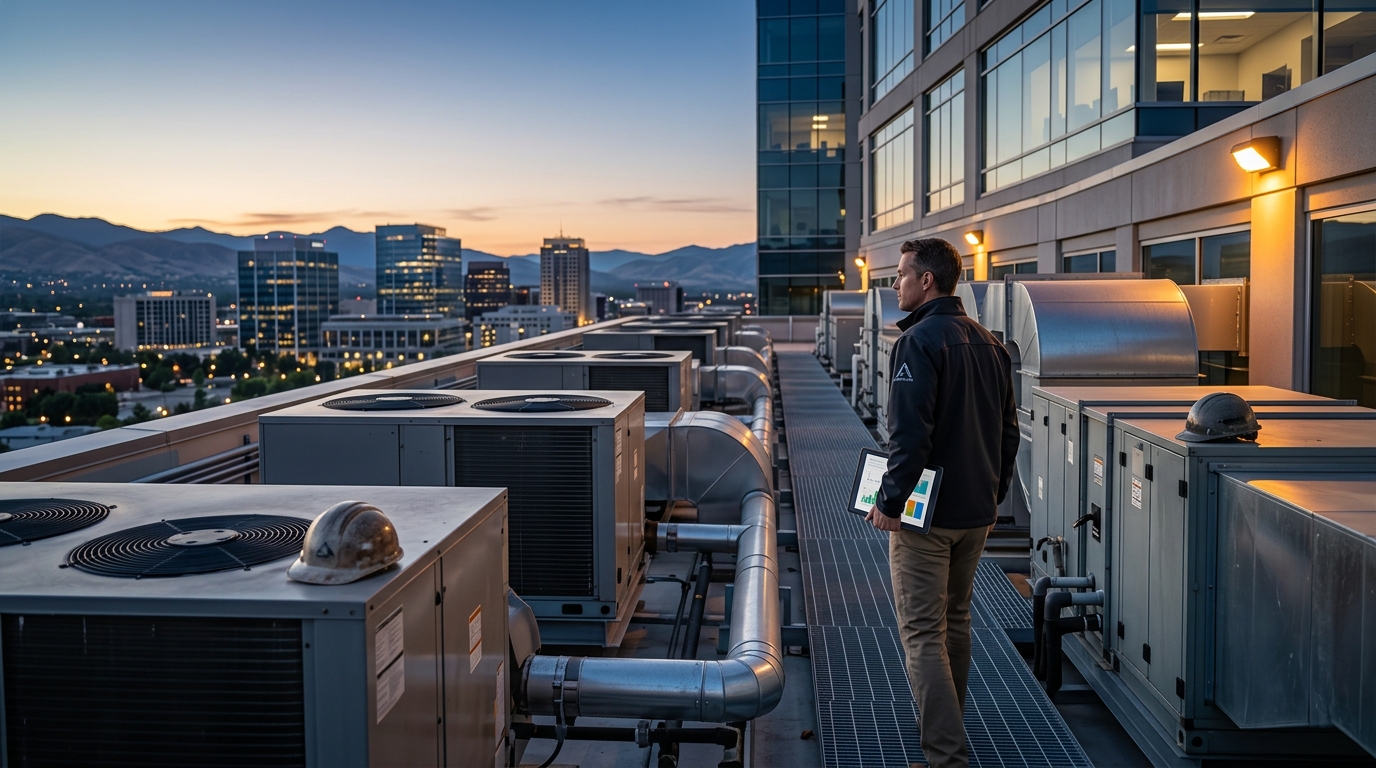
Commercial facilities face unique thermal challenges that residential systems simply cannot address. According to the U.S. Department of Energy, commercial buildings account for approximately 18% of total energy consumption in the United States, with HVAC systems representing the largest share of that load. This statistic highlights the critical need for strategic energy management in business operations. Inefficient climate control does more than inflate utility bills; it compromises employee productivity, damages inventory, and accelerates equipment wear. Achieving peak performance requires a holistic approach that integrates advanced diagnostics, proactive maintenance, and intelligent technology. This guide outlines the essential steps facility managers must take to optimize their commercial heating and cooling infrastructure. (About Us Apex Clean)
Establishing a Diagnostic Baseline
Before implementing any efficiency upgrades, facility managers must understand the current state of their HVAC infrastructure. Many commercial buildings operate with outdated assumptions about their system's capacity and performance. A professional diagnostic assessment reveals hidden inefficiencies, such as duct leakage, refrigerant imbalances, or sensor drift. These issues often go unnoticed until they cause a complete system failure or a significant spike in energy costs. (AC Installation Services UT)
Diagnostic services involve comprehensive testing of airflow, temperature differentials, and electrical consumption. By establishing a baseline, you create a benchmark against which future improvements can be measured. This data-driven approach eliminates guesswork and allows for precise budgeting of capital improvements. Without accurate data, any attempt to improve efficiency is merely speculative. Regular diagnostics ensure that your facility operates at its designed peak, rather than degrading over time.
The Role of Preventative Maintenance
Preventative maintenance is the cornerstone of long-term HVAC efficiency. Unlike reactive repairs, which address problems after they occur, preventative care identifies potential failures before they impact operations. Commercial HVAC systems endure significantly higher loads than residential units, making them more susceptible to wear and tear. Regular tune-ups ensure that components like compressors, fans, and filters operate within optimal parameters.
One of the most critical aspects of maintenance is filter management. Clogged filters restrict airflow, forcing the system to work harder to condition the space. This increased strain leads to higher energy consumption and premature component failure. Scheduled filter replacements and coil cleaning restore airflow and heat exchange efficiency. Furthermore, lubricating moving parts and checking electrical connections prevent unexpected breakdowns during peak heating or cooling seasons. A robust maintenance program extends the lifespan of your equipment and protects your investment.
Technology and Automation Integration
Modern commercial facilities can leverage advanced technology to optimize climate control. Automation reduces human error and ensures that systems respond dynamically to changing conditions. Integrating smart technology allows for real-time monitoring and adjustment of HVAC operations.
Smart Controls and Zoning
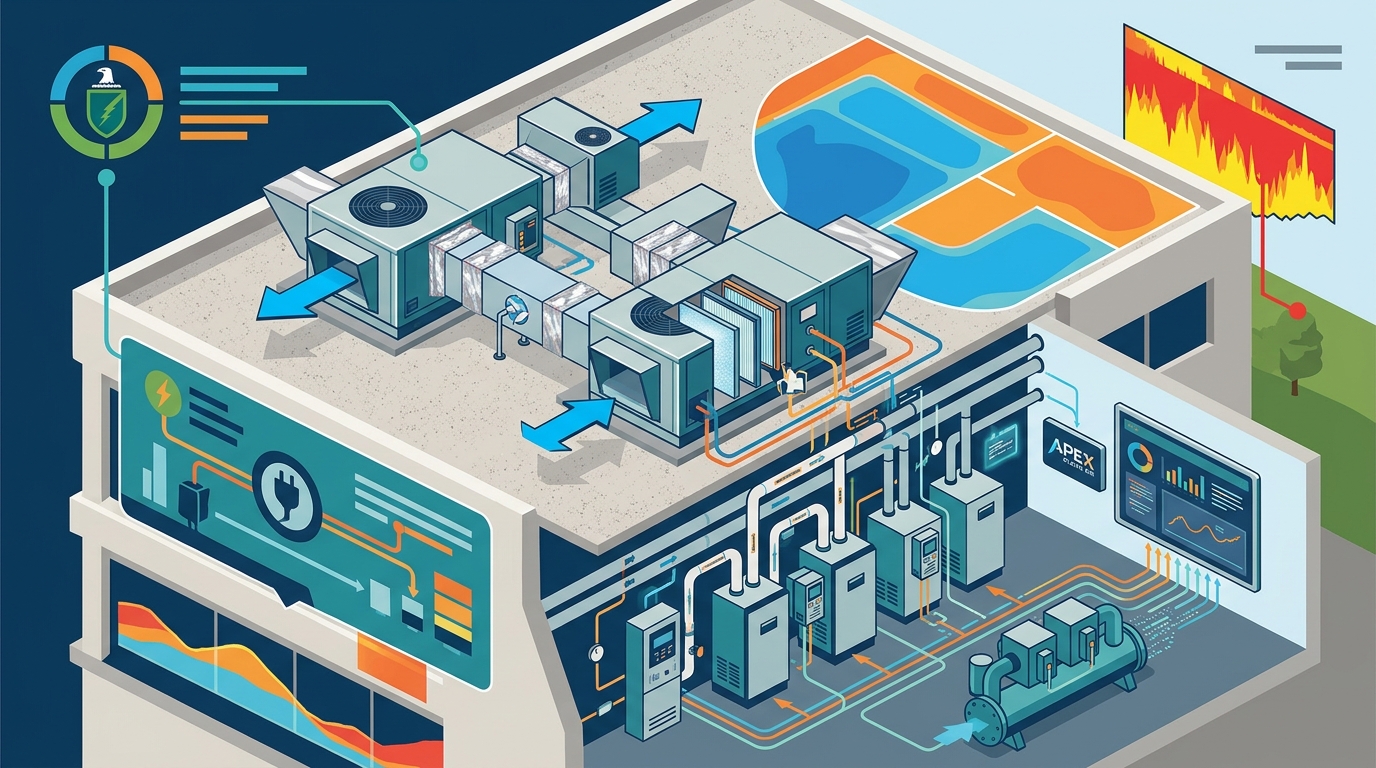
Smart thermostats and building management systems (BMS) provide granular control over temperature and humidity. These systems can adjust settings based on occupancy, time of day, and external weather conditions. Zoning is particularly effective in large commercial spaces. By dividing a building into distinct thermal zones, you can condition only the areas that are in use. This targeted approach eliminates energy waste in unoccupied rooms or corridors. For example, a conference room can be cooled only when booked, while adjacent offices maintain a standard setpoint.
Predictive Analytics
Predictive analytics uses historical data and machine learning algorithms to forecast equipment behavior. This technology can alert facility managers to subtle performance deviations that indicate impending failure. By addressing these issues early, you avoid costly emergency repairs and downtime. Predictive maintenance shifts the operational model from reactive to proactive, ensuring continuous comfort and efficiency.
Comparing Commercial System Options
Selecting the right HVAC system for a commercial facility depends on several factors, including building size, layout, and climate. Different systems offer varying levels of efficiency and flexibility. Understanding the pros and cons of each option is essential for making an informed decision.
| System Type | Best For | Efficiency Factor | Key Consideration |
|---|---|---|---|
| Heat Pumps | Moderate climates | High (transfers heat) | Performance drops in extreme cold |
| Gas Furnaces | Extreme cold regions | Moderate to High | Dependent on fuel costs |
| Central AC | Large open spaces | Moderate | Requires extensive ductwork |
| VRF Systems | Zoned commercial buildings | Very High | Higher initial installation cost |
Heat pumps are increasingly popular in commercial settings due to their ability to provide both heating and cooling with high efficiency. They move heat rather than generate it, resulting in lower energy consumption. However, their effectiveness can diminish in very cold climates, necessitating supplemental heating. Gas furnaces remain a reliable choice for regions with harsh winters, offering consistent heat output. Central air conditioning systems are suitable for large, open floor plans but require careful duct design to minimize losses. Variable Refrigerant Flow (VRF) systems offer precise zoning and high efficiency, making them ideal for complex commercial layouts.
Indoor Air Quality and Efficiency
Indoor air quality (IAQ) is directly linked to HVAC efficiency. Poor air quality forces systems to work harder to circulate and condition air. Dust, allergens, and pollutants accumulate in ducts and filters, restricting airflow and reducing heat exchange efficiency. Professional air duct cleaning and air purification services remove these contaminants, restoring optimal airflow.
Healthy indoor air also impacts occupant health and productivity. Stale air and high carbon dioxide levels can lead to fatigue and decreased cognitive function. By prioritizing IAQ, facility managers create a healthier environment that supports business goals. Advanced filtration systems, such as HEPA filters and UV-C light purification, can further enhance air quality by capturing microscopic particles and neutralizing pathogens. These investments pay dividends in reduced sick days and improved employee satisfaction.
Key Takeaways
- Commercial HVAC systems account for the largest portion of energy use in business buildings, making efficiency a financial priority.
- Regular diagnostic assessments provide the data necessary to identify inefficiencies and plan targeted upgrades.
- Preventative maintenance, including filter changes and coil cleaning, prevents costly breakdowns and extends equipment life.
- Smart controls and zoning allow for precise temperature management, eliminating energy waste in unoccupied areas.
- Predictive analytics helps facility managers anticipate equipment failures before they occur.
- Choosing the right system, such as heat pumps or VRF, depends on climate and building layout.
- Indoor air quality services, like duct cleaning and purification, improve both health and system efficiency.
Frequently Asked Questions
How often should commercial HVAC systems be serviced?
Commercial HVAC systems should be serviced at least twice a year, typically before the heating and cooling seasons. Regular maintenance ensures optimal performance and prevents unexpected failures.
What is the most energy-efficient commercial HVAC system?
Heat pumps and Variable Refrigerant Flow (VRF) systems are generally considered the most energy-efficient options. They offer high efficiency by transferring heat rather than generating it and provide precise zoning capabilities.
How does indoor air quality affect HVAC efficiency?
Poor indoor air quality leads to clogged filters and dirty coils, which restrict airflow and reduce heat exchange efficiency. Clean air allows the system to operate with less strain and lower energy consumption.
Can smart thermostats reduce commercial energy bills?
Yes, smart thermostats and building management systems can significantly reduce energy bills by optimizing temperature settings based on occupancy and weather conditions. They eliminate waste by adjusting systems in real-time.
What are the signs that a commercial HVAC system needs replacement?
Signs include frequent repairs, rising energy bills, inconsistent temperatures, and age. If a system is over 15 years old and requires frequent maintenance, replacement may be more cost-effective than continued repairs.
How does zoning improve commercial HVAC efficiency?
Zoning allows different areas of a building to be conditioned independently. This prevents overheating or overcooling of unoccupied spaces, reducing overall energy consumption and improving comfort.
What is the difference between AC maintenance and repair?
AC maintenance is proactive care designed to prevent issues, while repair is reactive care to fix existing problems. Regular maintenance reduces the need for costly repairs and extends system life.
Contact Your Local Office
Achieving efficient heating and cooling for your commercial facility requires expert guidance and reliable service. Apex Clean Air provides comprehensive HVAC solutions tailored to the unique needs of commercial buildings. Our certified technicians offer diagnostic assessments, preventative maintenance, and advanced system installations. We serve commercial clients across Utah, Colorado, and Idaho with a commitment to integrity and professionalism. Contact your local office today to schedule a consultation and discover how we can help you optimize your facility's comfort and efficiency.