
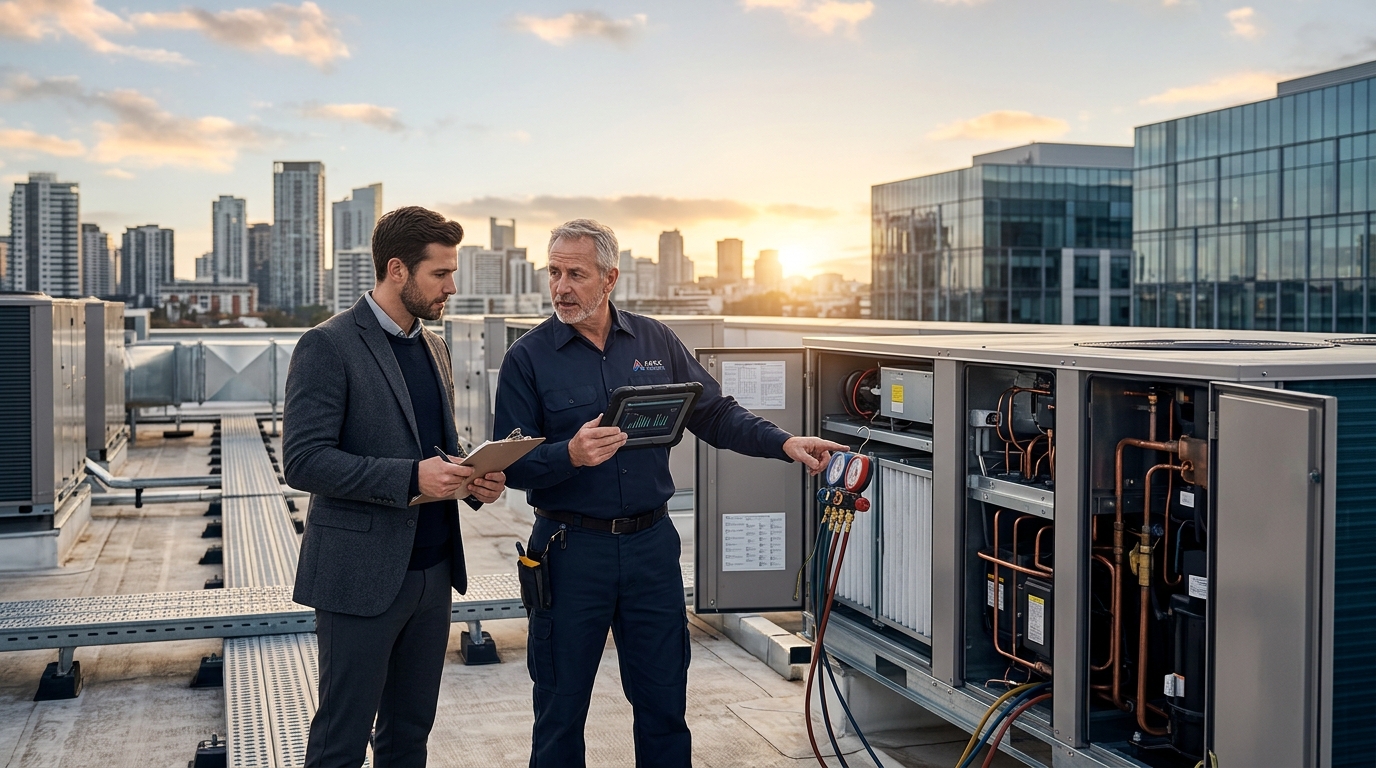
Commercial real estate operators face immense pressure to maintain indoor environmental quality while controlling escalating energy costs. According to the U.S. Department of Energy, commercial buildings account for approximately 18% of total U.S. energy consumption, with HVAC systems representing the largest share of that load. Effective maintenance is not merely a repair strategy but a critical financial lever. This guide outlines the definitive best practices for maintaining HVAC systems in large commercial facilities, ensuring operational reliability, regulatory compliance, and tenant satisfaction.
Predictive Maintenance Strategies
Traditional reactive maintenance, where repairs occur only after a system failure, is obsolete in large commercial environments. The shift toward predictive maintenance utilizes real-time data to anticipate equipment degradation before it causes downtime. This approach minimizes unplanned outages that can disrupt business operations and compromise tenant comfort.
Vibration Analysis and Thermography
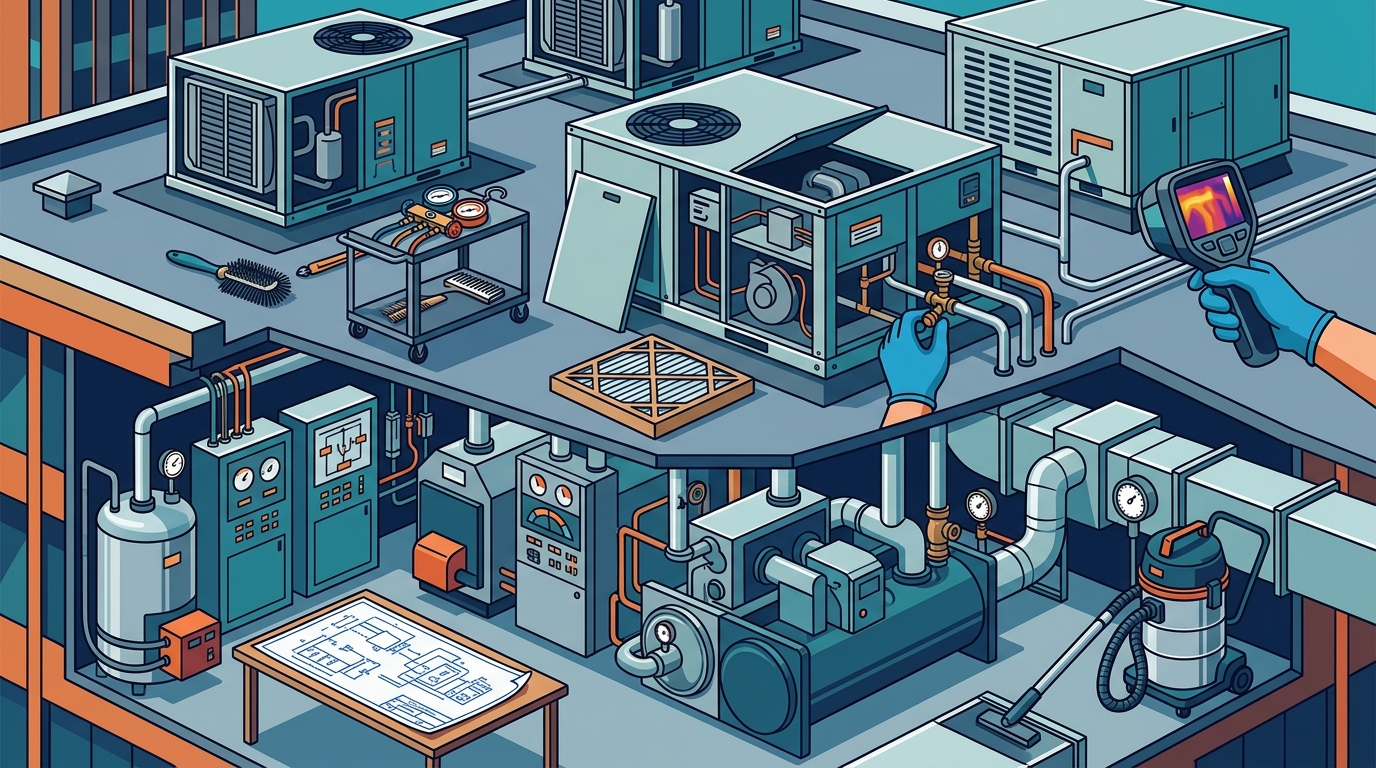
Technicians employ vibration analysis to detect imbalances in rotating machinery, such as fans and motors. Early detection of bearing wear or misalignment prevents catastrophic failure. Similarly, infrared thermography identifies electrical hot spots in panel boards and motor connections. These non-invasive diagnostics allow facility managers to schedule repairs during off-hours, reducing operational risk.
Oil Analysis for Rotating Equipment
For large chillers and compressors, regular oil analysis is critical. It reveals particulate contamination and chemical breakdown that visual inspection cannot detect. Maintaining proper lubrication extends the lifespan of expensive rotating components and ensures efficient heat transfer.
Implementing these strategies requires a partnership with certified professionals who understand the complexity of commercial systems. Heating diagnostic services and cooling diagnostic services are foundational to this proactive approach.
Air Filtration and Duct Hygiene
Indoor air quality (IAQ) is a primary concern for commercial building occupants. Poor air quality leads to sick building syndrome, reduced productivity, and potential liability issues. Maintaining filtration systems and ductwork is essential for health and system efficiency.
Filtration Efficiency Standards
Filters must be selected based on the Minimum Efficiency Reporting Value (MERV) rating appropriate for the system. High-efficiency filters capture smaller particles but increase static pressure. Facility managers must monitor pressure drops across filters to determine replacement schedules. Clogged filters force fans to work harder, increasing energy consumption and wear on motors.
Duct Cleaning and Contamination Control
Dust, mold, and debris accumulate in ductwork over time, restricting airflow and harboring pathogens. Professional air duct cleaning services remove this buildup, restoring designed airflow rates. Regular cleaning also prevents contaminants from recirculating into occupied spaces.
For comprehensive air quality management, consider air purification services to supplement mechanical filtration with advanced purification technologies.
Cooling Tower and Chiller Protocols
Cooling towers and chillers are the heart of many large commercial HVAC systems. They are susceptible to biological growth, scaling, and corrosion. Strict water treatment protocols are non-negotiable for safe and efficient operation.
Water Treatment and Legionella Prevention
Legionella bacteria thrive in warm water environments. Regular testing and biocide treatment of cooling towers are required by health regulations in many jurisdictions. Failure to comply can result in severe legal consequences and public health crises. Documentation of water treatment logs is essential for audit purposes.
Chiller Efficiency Monitoring
Chillers lose efficiency as heat exchanger tubes become fouled with scale or biological growth. Regular tube cleaning and monitoring of approach temperatures ensure the chiller operates at its designed coefficient of performance (COP). Heat pump installation and maintenance also play a role in overall system efficiency, particularly in hybrid systems.
Building Automation and Controls
Modern commercial buildings rely on Building Automation Systems (BAS) to manage HVAC operations. Proper configuration and maintenance of these controls are vital for energy savings and comfort.
Calibration of Sensors and Actuators
Sensors for temperature, humidity, and pressure drift over time. Uncalibrated sensors provide false data to the BAS, leading to incorrect control actions. Regular calibration ensures that the system responds accurately to changing load conditions.
Optimization of Setpoints and Schedules
Control sequences must be optimized for different occupancy periods. Pre-cooling strategies, variable air volume (VAV) box calibration, and economizer operation can significantly reduce energy use. Comfort Club membership programs often include regular control system checks to ensure optimal performance.
Regulatory Compliance and Safety
Commercial HVAC systems must adhere to a complex web of local, state, and federal regulations. Compliance is not optional; it is a legal requirement.
Refrigerant Management
The EPA regulates the handling of refrigerants under Section 608 of the Clean Air Act. Technicians must be certified to recover and recycle refrigerants. Leak detection and repair programs are mandatory for systems with large refrigerant charges. Financing options can help facilities upgrade to low-GWP (Global Warming Potential) refrigerants as older ones are phased out.
Documentation and Record Keeping
Maintaining detailed records of all maintenance, repairs, and inspections is crucial. These documents serve as evidence of due diligence in the event of an inspection or legal inquiry. Digital logbooks streamline this process and improve accessibility.
Service Model Comparison
Facility managers must choose between different service models to meet their maintenance needs. Each model offers distinct advantages regarding cost, response time, and coverage.
| Service Model | Cost Structure | Response Time | Best For |
|---|---|---|---|
| Reactive Maintenance | Pay-per-service | Variable | Low-risk, non-critical systems |
| Preventive Maintenance Agreement | Annual contract | Scheduled | Standard operational reliability |
| Comprehensive Care Plan | Subscription | Priority | High-value assets and critical environments |
Choosing the right model depends on the criticality of the equipment and the budget. Specials and promotional offers may provide opportunities to upgrade service levels at a reduced initial cost.
Key Takeaways
- Predictive maintenance using vibration analysis and thermography prevents costly downtime in large commercial HVAC systems.
- Regular air duct cleaning and filtration management are essential for maintaining indoor air quality and system efficiency.
- Cooling tower water treatment is critical for preventing Legionella growth and ensuring regulatory compliance.
- Building automation systems require regular sensor calibration and control sequence optimization for energy savings.
- Refrigerant management must comply with EPA regulations, including proper handling and leak detection.
- Comprehensive service agreements offer priority response and extended coverage for critical commercial assets.
- Apex Clean Air provides certified technicians and transparent pricing for commercial HVAC needs across Utah, Colorado, and Idaho.
Frequently Asked Questions
How often should commercial HVAC systems be inspected?
Commercial HVAC systems should be inspected at least twice a year, typically in the spring and fall, to prepare for cooling and heating seasons. Critical components like cooling towers may require monthly checks during peak operation.
What is the difference between preventive and predictive maintenance?
Preventive maintenance is scheduled based on time or usage intervals. Predictive maintenance uses real-time data and condition monitoring to perform repairs only when necessary, reducing unnecessary downtime and costs.
Why is air duct cleaning important for commercial buildings?
Air duct cleaning removes accumulated dust, mold, and debris that can restrict airflow and degrade indoor air quality. This improves system efficiency and reduces the risk of health issues for occupants.
How can building automation systems save energy?
BAS optimizes HVAC operations by adjusting setpoints based on occupancy and weather conditions. Proper calibration and programming ensure that energy is not wasted on conditioning unoccupied spaces.
What are the EPA regulations for commercial refrigerants?
The EPA requires certified technicians to handle refrigerants, mandates leak detection and repair programs, and regulates the phase-out of high-GWP refrigerants in favor of environmentally friendly alternatives.
How do I choose a commercial HVAC service provider?
Look for providers with certified technicians, comprehensive service agreements, and a track record of reliability. Check for transparent pricing and responsive customer service.
What is the role of the Comfort Club in commercial maintenance?
The Comfort Club offers structured maintenance plans that include regular inspections, priority service, and discounts on repairs, helping facility managers manage costs and ensure system longevity.
Can Apex Clean Air handle large commercial projects?
Yes, Apex Clean Air serves commercial clients across Utah, Colorado, and Idaho, offering expert installation, repair, and maintenance for large-scale HVAC and indoor air quality systems.
Contact Your Local Office
Ensure your commercial building operates at peak efficiency with Apex Clean Air. Our certified technicians provide expert HVAC maintenance, installation, and indoor air quality services tailored to your facility's needs. Contact your local office today to schedule a consultation and secure your comfort.