
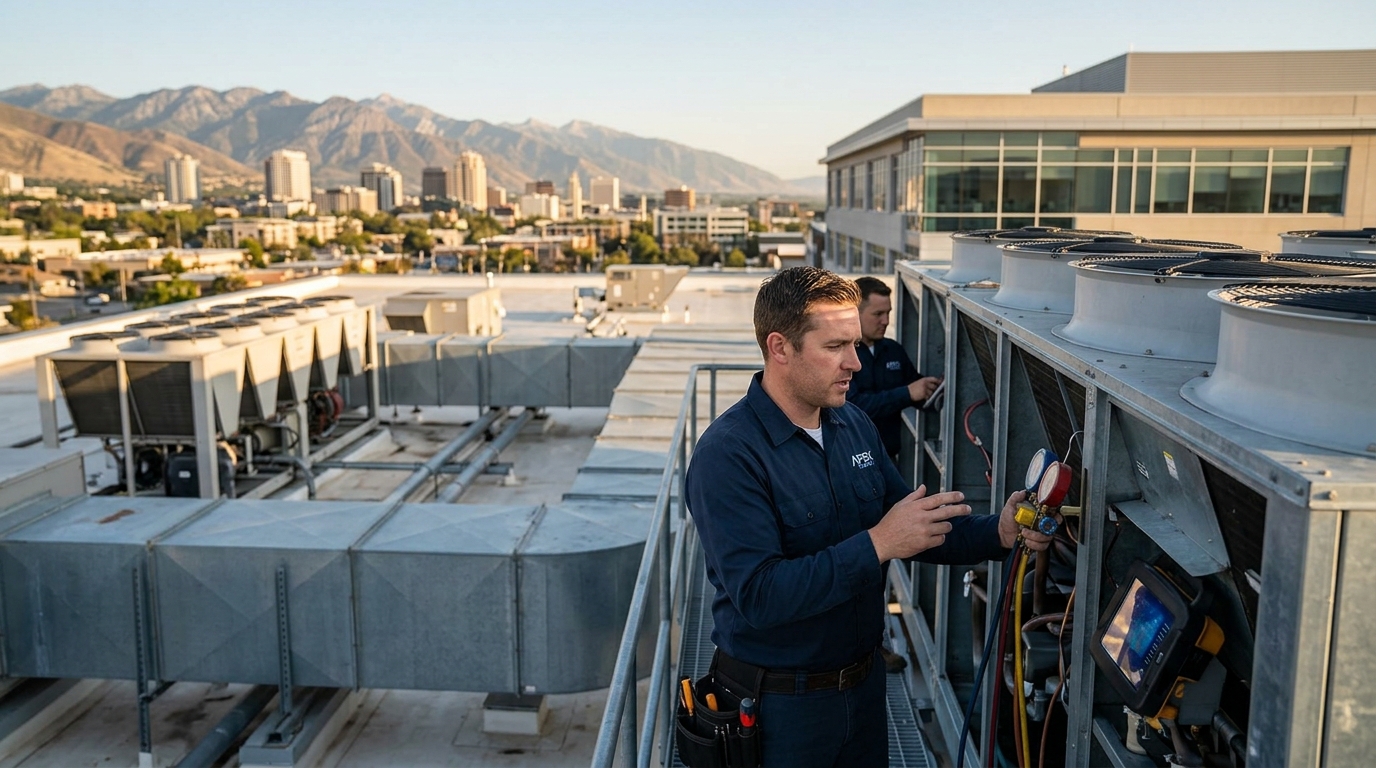
Commercial real estate operators face immense pressure to balance energy efficiency with occupant comfort. HVAC systems account for approximately 40% of a building's total energy consumption, making their maintenance a critical financial and operational priority. Neglecting these complex mechanical ecosystems leads to rapid depreciation, unexpected downtime, and inflated utility costs. This guide outlines the definitive best practices for maintaining HVAC systems in large commercial environments, ensuring longevity and peak performance. (AC Installation Services UT)
Predictive Maintenance Strategies
Traditional reactive maintenance is obsolete in modern facility management. The industry standard has shifted toward predictive maintenance, which utilizes real-time data to anticipate failures before they occur. This approach minimizes unplanned downtime and extends the operational life of expensive assets like chillers and boilers. (AC Repair Services UT)
Vibration Analysis and Thermography
Regular vibration analysis detects imbalances in rotating equipment such as fans and motors. According to data from the U.S. Department of Energy, proper lubrication and alignment can reduce motor energy consumption by 5 to 15%. Thermal imaging surveys identify electrical hot spots and insulation failures that are invisible to the naked eye. These non-invasive techniques allow technicians to address minor issues during scheduled windows rather than emergency repairs. (AC Maintenance Services UT)
Refrigerant Charge Verification
Incorrect refrigerant charge is a leading cause of efficiency loss in commercial cooling systems. Overcharging or undercharging forces compressors to work harder, increasing energy use and wear. Technicians must verify subcooling and superheat values against manufacturer specifications during every service interval. This ensures the system operates at its designed coefficient of performance (COP).
Air Filtration and Duct Hygiene
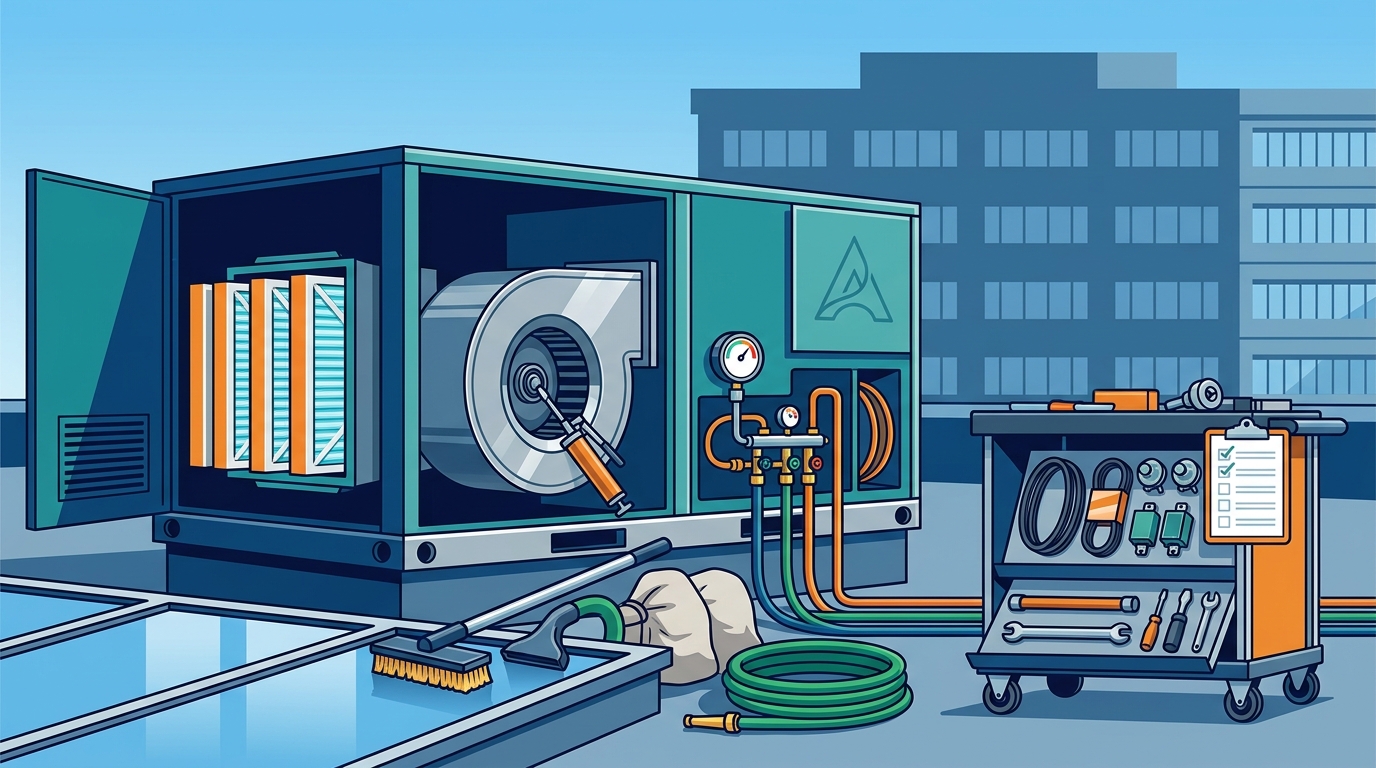
Indoor air quality (IAQ) is directly tied to HVAC maintenance. In large commercial buildings, air handlers move massive volumes of air, making filtration efficiency paramount. Dirty filters can increase fan energy consumption by up to 15% due to restricted airflow. This statistic highlights the financial impact of neglecting simple maintenance tasks.
Filtration Standards and MERV Ratings
Selecting the correct Minimum Efficiency Reporting Value (MERV) rating is crucial. While higher MERV ratings capture more particulates, they also create higher static pressure. Facility managers must balance filtration efficiency with fan capacity to avoid system strain. For commercial environments, MERV 13 or higher is often recommended to capture viruses and fine dust particles.
Ductwork Integrity and Cleaning
Air ducts accumulate dust, mold, and debris over time. This buildup restricts airflow and degrades air quality. Professional air duct cleaning services remove contaminants that standard filtration cannot catch. Regular inspection of duct seals prevents conditioned air from escaping into unconditioned spaces like ceilings or crawl spaces. This preservation of air volume is essential for maintaining consistent temperature control across all zones.
Cooling Tower and Chiller Protocols
Large commercial buildings often rely on central chillers and cooling towers for heat rejection. These systems are prone to biological growth and mineral scaling, which drastically reduce heat transfer efficiency.
Water Treatment and Chemistry
Proper water treatment is non-negotiable for cooling tower health. Biocides prevent the growth of Legionella and other harmful bacteria. Scale inhibitors prevent mineral deposits from forming on heat exchange surfaces. According to industry reports, a scale thickness of just 1/32 of an inch can increase energy consumption by 30%. Regular water testing and chemical dosing maintain optimal conductivity and pH levels.
Condenser Tube Cleaning
Condenser tubes in chillers accumulate biofilm and scale over time. This fouling layer acts as an insulator, forcing the chiller to work harder to reject heat. Automated tube cleaning systems or manual brushing during scheduled shutdowns restore heat transfer efficiency. This maintenance step is critical for maintaining the chiller's rated capacity and preventing compressor overload.
Building Management System Optimization
The brain of any commercial HVAC system is the Building Management System (BMS). An improperly configured BMS can waste thousands of dollars in energy annually. Optimization involves ensuring that schedules, setpoints, and alarms are aligned with actual building usage patterns.
Setpoint Reset and VAV Box Calibration
Variable Air Volume (VAV) boxes regulate airflow to individual zones. If these boxes are not calibrated correctly, some areas may be over-cooled while others are under-cooled. Setpoint reset strategies adjust supply air temperatures based on outdoor weather conditions. This adaptive control reduces energy use during mild weather days without sacrificing comfort.
Alarm Management and Monitoring
Effective alarm management prevents "alarm fatigue" among facility staff. Critical alarms for high static pressure, low refrigerant pressure, or equipment failure should be prioritized. Non-critical warnings can be batched for review during business hours. Real-time monitoring dashboards allow managers to spot trends, such as gradual efficiency declines, before they become costly failures.
Service Model Comparison
Choosing the right maintenance partner is as important as the maintenance itself. Below is a comparison of common service approaches for commercial HVAC.
| Service Model | Cost Structure | Response Time | Best For |
|---|---|---|---|
| Reactive Maintenance | Low upfront, high repair costs | Variable, often delayed | Minor, non-critical systems |
| Preventive Maintenance | Fixed annual contract | Scheduled intervals | Standard equipment longevity |
| Predictive Maintenance | Higher initial investment | Real-time alerts | Critical infrastructure, high ROI |
| Full-Service Partnership | Comprehensive coverage | Priority response | Large commercial portfolios |
A full-service partnership, such as those offered by Apex Clean Air, provides certified technicians who understand the nuances of commercial systems. Their expertise in both heating and cooling ensures a holistic approach to building comfort.
Key Takeaways
- Energy Impact: HVAC systems consume roughly 40% of commercial building energy, making efficiency a top financial priority.
- Predictive Tools: Vibration analysis and thermal imaging are essential for anticipating equipment failure.
- Filtration Efficiency: Dirty filters can increase fan energy use by 15%, directly impacting operating costs.
- Water Chemistry: Cooling tower scale can increase energy consumption by 30% if left untreated.
- BMS Optimization: Proper setpoint reset and alarm management prevent energy waste and alarm fatigue.
- Professional Service: Certified technicians provide transparent pricing and guaranteed work for complex commercial systems.
- IAQ Importance: Regular duct cleaning and filter replacement are critical for occupant health and compliance.
Frequently Asked Questions
How often should commercial HVAC systems be serviced?
Commercial HVAC systems should undergo preventive maintenance at least twice a year, typically in the spring for cooling and fall for heating. Critical components like chillers and boilers may require quarterly inspections depending on usage intensity.
What is the difference between preventive and predictive maintenance?
Preventive maintenance is scheduled based on time or usage intervals. Predictive maintenance uses real-time data and sensors to perform service only when indicators show potential failure, optimizing resource allocation.
Why is air duct cleaning important for commercial buildings?
Air duct cleaning removes accumulated dust, mold, and debris that restrict airflow and degrade indoor air quality. This process improves system efficiency and reduces the load on HVAC components.
How does a Building Management System (BMS) help with maintenance?
A BMS monitors equipment performance, alerts staff to faults, and automates control sequences. It provides data analytics that help facility managers identify inefficiencies and optimize energy use.
What are the benefits of a maintenance contract?
Maintenance contracts offer predictable budgeting, priority service response, and extended equipment lifespan. They often include discounts on parts and labor, providing significant long-term savings.
Can poor HVAC maintenance affect employee productivity?
Yes. Poor air quality and uncomfortable temperatures are linked to decreased cognitive function and increased absenteeism. Maintaining optimal HVAC performance supports a healthier and more productive work environment.
What is the role of refrigerant in commercial cooling?
Refrigerant absorbs and releases heat to cool the building. Maintaining the correct charge and purity is essential for system efficiency. Leaks or contamination can lead to compressor failure and costly replacements.
Secure Your Building's Comfort Today
Don't wait for a breakdown to compromise your building's efficiency. Partner with certified experts who understand the unique demands of commercial HVAC. Contact your local Apex Clean Air office to schedule a comprehensive system audit and develop a tailored maintenance plan. Ensure your facility operates at peak performance with transparent pricing and guaranteed work.