
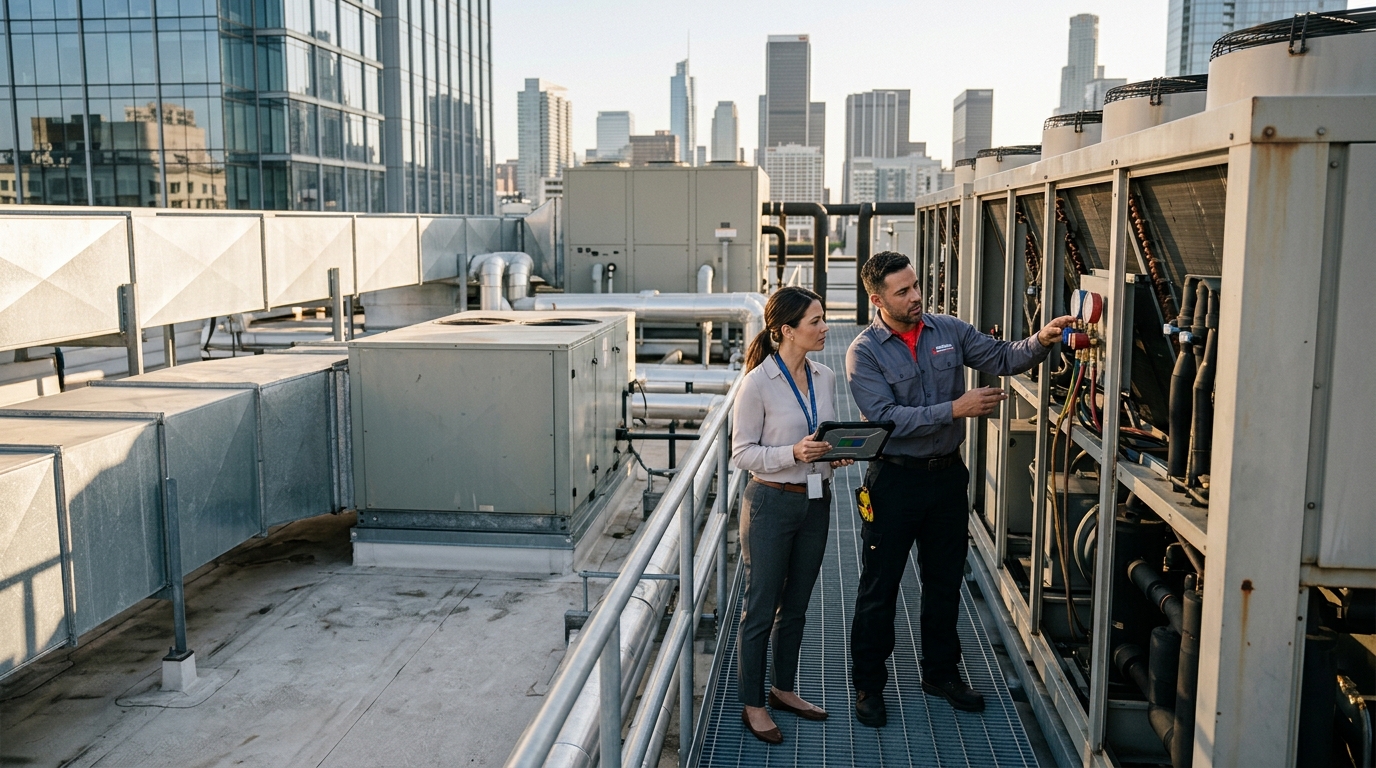
Commercial HVAC systems are the lungs of any large building, regulating temperature, humidity, and air quality for hundreds or thousands of occupants. According to the U.S. Department of Energy, heating and cooling account for approximately 30% of a commercial building's energy use. This massive energy footprint means that neglecting maintenance does not just risk comfort; it directly impacts the bottom line through inflated utility bills and premature equipment failure. For facility managers and building owners, establishing a rigorous maintenance protocol is not optional. It is a critical operational necessity that ensures compliance, protects asset value, and guarantees a healthy environment for tenants. (About Us Apex Clean)
The Foundation: Preventive Maintenance Strategies
Reactive maintenance, where repairs are only made after a breakdown occurs, is the most expensive approach for commercial properties. Downtime in a large office or retail space can lead to lost productivity, tenant dissatisfaction, and emergency service premiums. The industry standard for high-performance buildings is Preventive Maintenance (PM). This proactive approach involves scheduled inspections and servicing to identify potential issues before they escalate into costly failures.
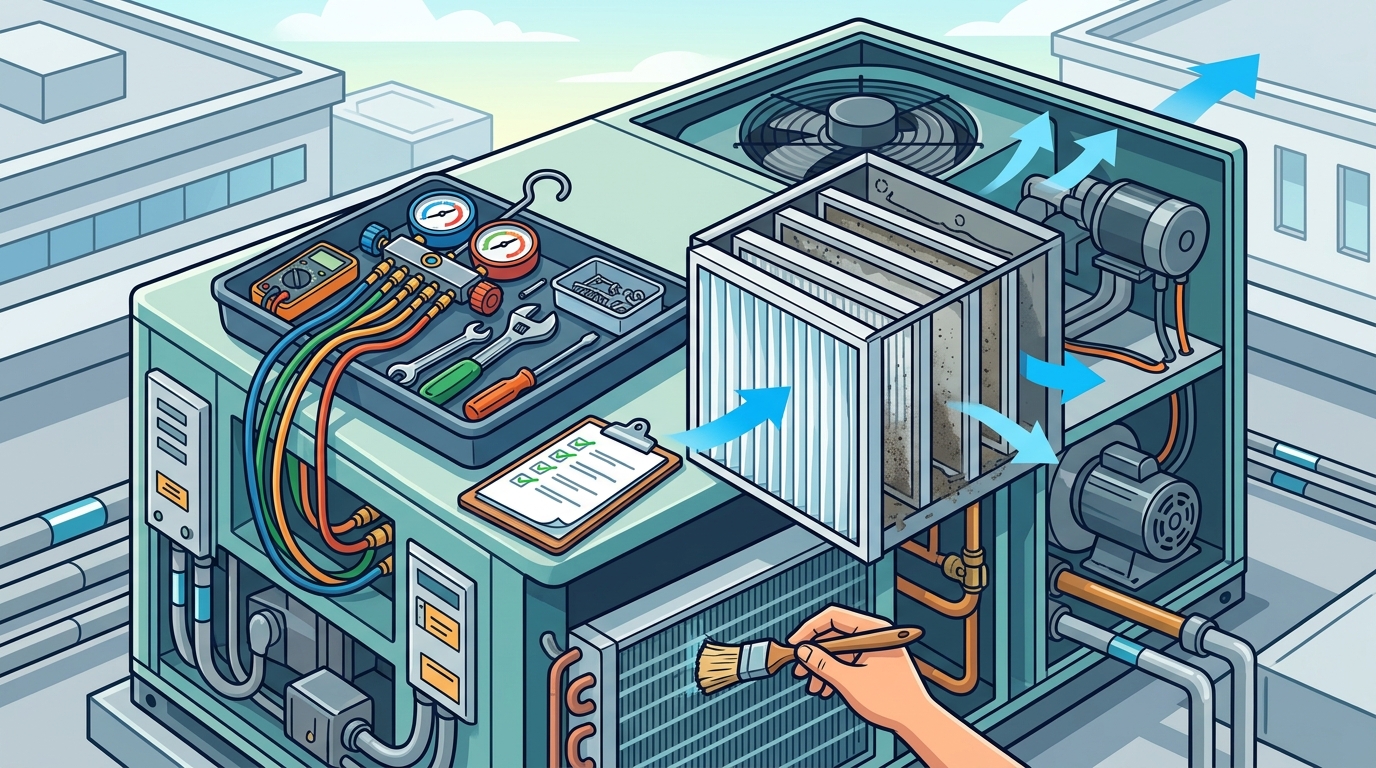
A robust PM program typically follows a quarterly or bi-annual schedule. During these visits, certified technicians perform comprehensive checks on critical components. This includes inspecting electrical connections, lubricating moving parts, checking refrigerant levels, and testing safety controls. By adhering to a strict schedule, building owners can extend the lifespan of their HVAC equipment by years. Regular maintenance also ensures that systems operate at peak efficiency, reducing energy consumption and carbon footprint. For detailed insights on maintaining heating systems in extreme climates, explore our heating services designed for reliability.
Prioritizing Indoor Air Quality (IAQ)
In the post-pandemic era, Indoor Air Quality (IAQ) has moved from a secondary concern to a primary operational metric. Tenants and employees expect clean, fresh air as a baseline for their workspace. Poor IAQ can lead to "Sick Building Syndrome," characterized by headaches, fatigue, and respiratory irritation among occupants. This not only affects morale but can also lead to increased absenteeism and legal liabilities for building owners.
Effective IAQ management goes beyond simple filtration. It requires a holistic approach that includes ventilation rate optimization, humidity control, and source control of pollutants. Indoor Air Quality is the measure of air quality within and around buildings and structures, as it relates to the health and comfort of building occupants. Facility managers should regularly monitor carbon dioxide (CO2) levels and volatile organic compounds (VOCs). If levels are high, increasing fresh air intake or upgrading air purification systems may be necessary. Apex Clean Air offers specialized indoor air quality services to help commercial clients test and improve their air health.
Filter Management and Airflow
Air filters are the first line of defense for your HVAC system. They trap dust, pollen, mold spores, and other particulates, preventing them from circulating through the building or clogging internal components. However, clogged filters are one of the most common causes of HVAC inefficiency and failure. When filters are blocked, the system must work harder to pull air through, increasing energy use and straining the blower motor.
Best practices dictate that filters be inspected monthly and replaced according to their MERV (Minimum Efficiency Reporting Value) rating and the building's specific environment. High-traffic commercial buildings may require more frequent changes than low-occupancy offices. Filter Replacement is the process of removing a dirty or damaged air filter and installing a new one to ensure proper airflow and filtration efficiency. Additionally, ensuring that supply and return vents are not obstructed by furniture or stored goods is crucial for maintaining balanced airflow throughout the building.
Cooling Tower and Chiller Care
For large commercial buildings, central chillers and cooling towers are often the heart of the cooling system. These systems remove heat from the building and dissipate it into the atmosphere. However, they are prone to scaling, corrosion, and biological growth, such as Legionella bacteria, which can pose serious health risks.
Regular water treatment is essential for cooling tower maintenance. This involves testing water chemistry to balance pH levels and adding biocides or scale inhibitors to prevent buildup. Water Treatment is the chemical or physical process of managing water quality in HVAC systems to prevent corrosion, scaling, and microbial growth. Furthermore, inspecting drift eliminators and fill media ensures that the tower operates efficiently without wasting water or spreading contaminants. Neglecting these components can lead to catastrophic system failures and significant health code violations.
Leveraging Technology for Monitoring
Modern commercial HVAC management is increasingly reliant on technology. Building Automation Systems (BAS) and Internet of Things (IoT) sensors provide real-time data on equipment performance, energy usage, and environmental conditions. These tools allow facility managers to move from scheduled maintenance to predictive maintenance.
Predictive maintenance uses data analytics to identify anomalies in equipment behavior. For example, a sudden increase in motor current draw might indicate a bearing failure weeks before it happens. By addressing the issue early, managers can avoid unexpected downtime. Additionally, smart thermostats and zoning controls allow for precise temperature management in different areas of the building, optimizing comfort while minimizing energy waste. For more information on how technology enhances comfort, learn about our Comfort Club membership benefits.
Service Model Comparison
Choosing the right service model is critical for long-term building performance. Below is a comparison of common approaches to commercial HVAC maintenance.
| Service Model | Cost Structure | Pros | Cons |
|---|---|---|---|
| Reactive Maintenance | Low upfront, high variable | No scheduled costs | Unpredictable downtime, higher long-term costs |
| Preventive Maintenance (PM) | Fixed annual contract | Predictable budgeting, extended equipment life | Requires consistent commitment |
| Predictive Maintenance | High initial tech investment | Optimized performance, minimal downtime | Requires specialized staff and tools |
| Full-Service Contract | Premium annual fee | Includes parts, labor, and priority service | Higher initial cost |
Key Takeaways
- Energy Impact: HVAC systems consume roughly 30% of commercial building energy, making efficiency a financial priority.
- Preventive Over Reactive: Scheduled maintenance prevents costly emergency repairs and extends equipment lifespan significantly.
- IAQ is Critical: Proper air quality management protects tenant health and reduces liability risks associated with Sick Building Syndrome.
- Filter Hygiene: Regular filter replacement is the simplest and most effective way to maintain airflow and system efficiency.
- Water Treatment: Cooling towers require rigorous chemical treatment to prevent biological hazards and scaling.
- Technology Integration: BAS and IoT sensors enable predictive maintenance, reducing unexpected downtime.
- Professional Expertise: Certified technicians are essential for handling complex commercial systems safely and effectively.
Frequently Asked Questions
How often should commercial HVAC systems be serviced?
Commercial HVAC systems should typically be serviced at least twice a year, once in the spring for cooling systems and once in the fall for heating systems. High-usage buildings may require quarterly visits.
What is the difference between preventive and predictive maintenance?
Preventive maintenance is scheduled based on time or usage intervals. Predictive maintenance uses real-time data and sensors to perform service only when equipment shows signs of potential failure.
Why is indoor air quality important in commercial buildings?
Good IAQ improves tenant health, productivity, and satisfaction. It also helps building owners comply with health regulations and avoid liabilities related to poor air conditions.
How do I choose the right air filter for my building?
Choose a filter based on its MERV rating, which indicates filtration efficiency. Higher MERV ratings capture smaller particles but may restrict airflow if the system is not designed for them. Consult a professional to determine the optimal balance.
What are the risks of neglecting cooling tower maintenance?
Neglecting cooling towers can lead to Legionella bacteria growth, scaling, corrosion, and reduced cooling efficiency. This can result in system failure and serious health risks for building occupants.
Can smart technology reduce HVAC maintenance costs?
Yes, smart technology allows for early detection of issues, optimizing energy use, and automating routine checks, which can significantly reduce long-term maintenance and energy costs.
What should I look for in a commercial HVAC service provider?
Look for certified technicians, a proven track record with commercial clients, comprehensive service agreements, and 24/7 emergency support capabilities.
Schedule Your Commercial Service
Ensuring your commercial building's HVAC system is operating at peak performance requires expertise, dedication, and the right partners. Apex Clean Air provides comprehensive commercial HVAC solutions, from routine maintenance to emergency repairs and indoor air quality testing. Our certified team is ready to help you optimize your building's comfort and efficiency. Contact your local Apex Clean Air office today to schedule a consultation and secure your building's comfort for years to come.