
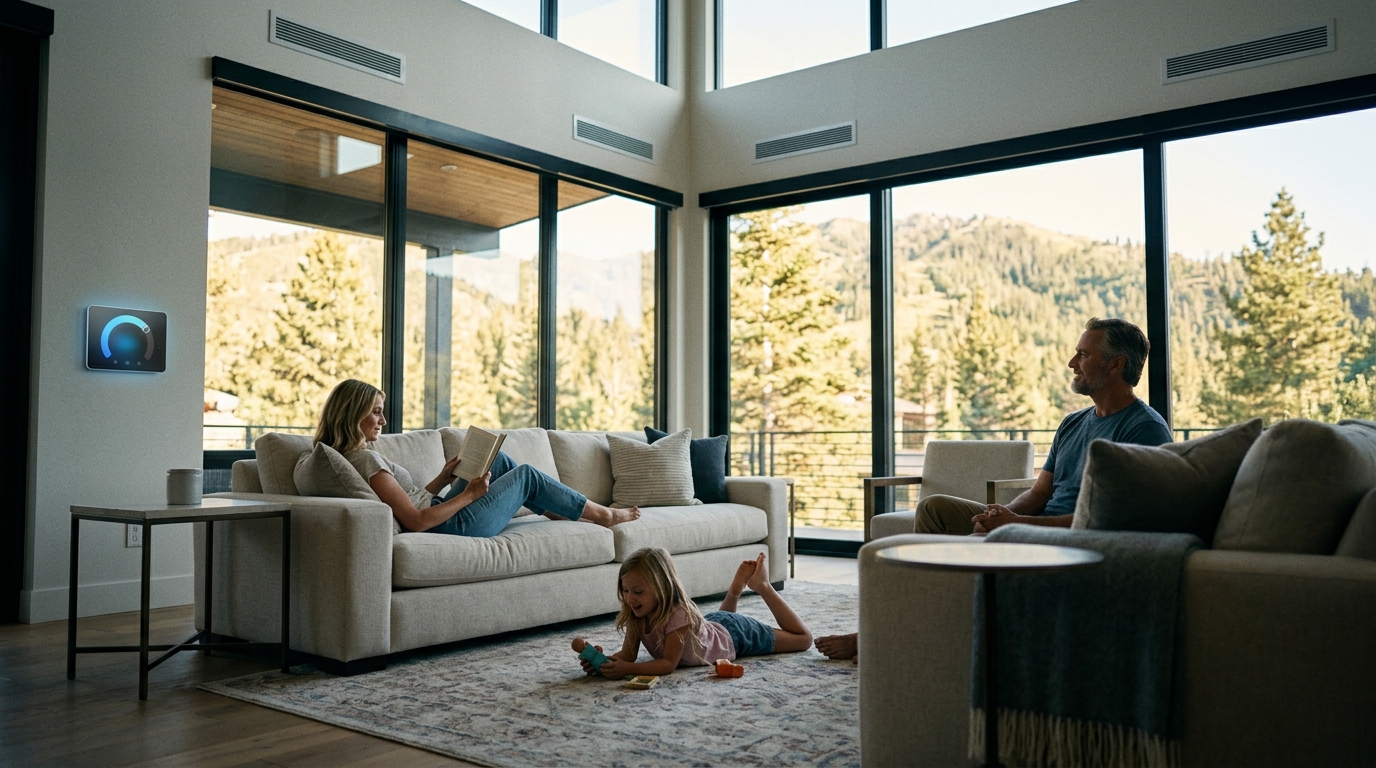
Large residential properties face unique thermal challenges that standard single-zone systems simply cannot address. According to industry data, homes exceeding 4,000 square feet often experience temperature inconsistencies of up to 10 degrees between floors and rooms when relying on inadequate cooling infrastructure. This disparity not only compromises comfort but also drives energy consumption higher as systems struggle to compensate for heat gain in poorly insulated or sun-exposed areas. For homeowners in Utah, Colorado, and Idaho, where seasonal extremes range from scorching summer highs to freezing winter lows, selecting the right cooling architecture is critical for long-term efficiency and indoor air quality.
Understanding the Challenges of Large Home Cooling
When a property expands beyond the standard footprint, the physics of heat transfer become more complex. Large homes often feature high ceilings, open floor plans, and extensive glass surfaces that allow significant solar heat gain. This creates a scenario where the cooling load is not just about square footage but also about volume and exposure. A standard HVAC system sized for a smaller home will short-cycle, meaning it turns on and off too frequently, failing to properly dehumidify the air or maintain consistent temperatures.
Furthermore, thermal bridging and inadequate insulation in older large estates can lead to significant energy waste. In regions like the Rocky Mountain West, the temperature differential between day and night can be drastic, requiring systems that can adapt quickly. Without a tailored approach, homeowners often face hot spots in upper-level bedrooms and cool zones in lower-level living areas. This inconsistency forces the system to work harder, increasing wear and tear on components and driving up utility bills. Effective cooling begins with a precise load calculation that accounts for these architectural nuances.
Zoned Ducted Systems and Multi-Stage Technology
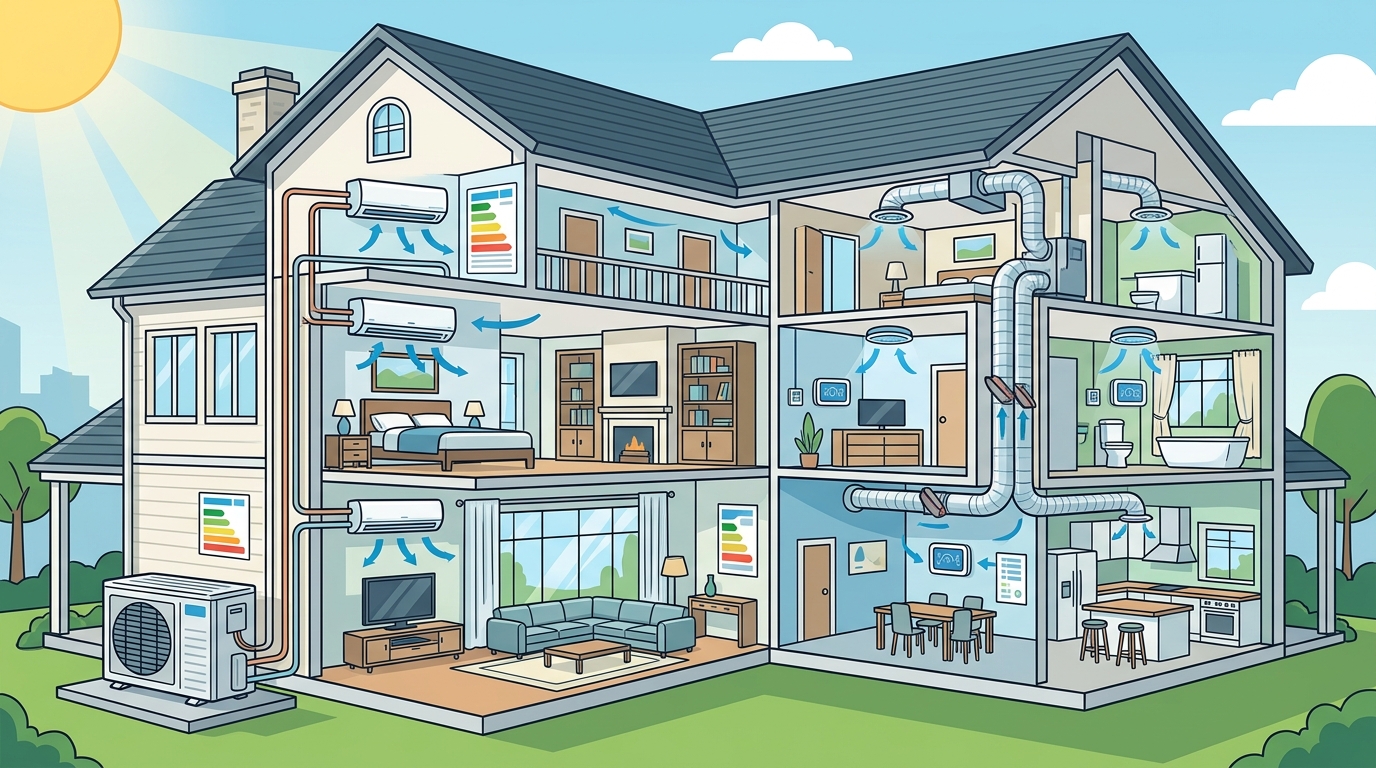
One of the most effective solutions for large residential properties is the implementation of a zoned ducted system. This approach divides the home into distinct thermal zones, each controlled by its own damper and thermostat. By directing conditioned air only to areas that need it, homeowners can eliminate the waste associated with cooling unoccupied rooms. For example, a second-floor bedroom can be cooled independently from a first-floor family room, allowing for personalized comfort settings.
Multi-stage compressors play a crucial role in this setup. Unlike single-stage units that operate at 100% capacity or off, multi-stage systems can modulate their output to match the exact cooling demand. This results in smoother temperature control, reduced humidity levels, and quieter operation. When paired with high-efficiency air handlers, these systems can achieve Seasonal Energy Efficiency Ratio (SEER) ratings that significantly lower long-term operating costs. For detailed insights on AC Installation Services, professional assessment is required to determine the optimal zoning layout for your specific floor plan.
Ductless Mini-Split Systems for Flexible Zones
For large homes with architectural constraints that make traditional ductwork impractical or too costly to retrofit, ductless mini-split systems offer a highly efficient alternative. These systems consist of an outdoor compressor connected to one or more indoor air handlers. They are particularly effective for adding cooling to sunrooms, home theaters, or expanded master suites without disrupting the existing structure.
The flexibility of mini-splits allows for precise temperature control in individual rooms. This is ideal for large properties where different family members may have varying comfort preferences. Additionally, modern ductless units often include advanced filtration and dehumidification features, contributing to better Indoor Air Quality. While they may not replace a central system for the entire home, they serve as an excellent supplement, reducing the load on the primary HVAC unit and enhancing overall comfort. If you are considering this hybrid approach, exploring Cooling Services can help determine the right balance for your property.
High-Efficiency Heat Pumps for Year-Round Comfort
Heat pump technology has evolved significantly, making it a viable primary cooling solution for large homes in moderate to cold climates. Unlike traditional air conditioners that only cool, heat pumps transfer heat from inside to outside during summer and reverse the process in winter. This dual functionality provides comprehensive climate control while often reducing the need for separate heating systems.
For large properties, high-velocity or variable-refrigerant-flow (VRF) heat pump systems are particularly effective. These systems can maintain consistent temperatures even in extreme cold, thanks to advanced inverter technology that adjusts compressor speed based on demand. This adaptability ensures that the system does not overwork during peak heat, preserving energy and extending equipment life. Investing in a high-efficiency Heat Pump Installation can provide substantial savings on both cooling and heating bills over the lifespan of the unit.
Smart Thermostats and Advanced Control Systems
Managing a large cooling system requires intelligent control. Smart thermostats and building management systems allow homeowners to monitor and adjust temperatures remotely via mobile apps. These devices learn occupancy patterns and adjust cooling schedules automatically, ensuring that energy is not wasted on empty rooms. For zoned systems, smart controllers can coordinate with dampers to optimize airflow dynamically.
Advanced systems also provide diagnostic alerts, notifying homeowners of potential issues before they become costly repairs. This proactive monitoring is essential for large properties where a system failure in one zone can impact the entire home's comfort. Integrating these technologies with your HVAC setup enhances efficiency and provides peace of mind. For more information on maintaining system health, review our AC Maintenance Services which include smart system diagnostics.
Maintenance and Air Quality in Large Spaces
Large cooling systems require rigorous maintenance to perform optimally. Filters, coils, and ductwork accumulate dust and debris more quickly in high-volume systems, leading to reduced efficiency and poor air quality. Regular Air Duct Cleaning Services are essential to remove contaminants and ensure unobstructed airflow. Without this care, the system must work harder to push air through clogged pathways, increasing energy consumption and wear on components.
Indoor air quality is equally important in large homes. With more square footage, there is a greater volume of air to condition and filter. Installing whole-home air purifiers or UV light systems can help eliminate allergens, mold spores, and bacteria. This is particularly beneficial for families with respiratory sensitivities. By prioritizing Indoor Air Quality Services, homeowners can ensure that the air circulating through their large spaces is as clean as it is cool.
Key Takeaways
- Large homes require zoned cooling to address temperature inconsistencies and reduce energy waste.
- Multi-stage compressors modulate output to match demand, improving humidity control and efficiency.
- Ductless mini-splits offer flexible, efficient cooling for areas where ductwork is impractical.
- High-efficiency heat pumps provide both cooling and heating, adapting to extreme weather conditions.
- Smart thermostats optimize scheduling and provide diagnostic alerts for proactive maintenance.
- Regular air duct cleaning and air purification are critical for maintaining air quality in large volumes.
- Professional load calculations are necessary to size systems correctly for complex architectural layouts.
Frequently Asked Questions
How do I determine the right size AC for a large home?
Proper sizing requires a Manual J load calculation, which accounts for square footage, ceiling height, insulation quality, window orientation, and local climate data. Oversized or undersized units lead to inefficiency and comfort issues.
Can a single AC unit cool a large multi-story home effectively?
While possible, a single unit often struggles with temperature consistency across floors. Zoned systems or multiple units are typically recommended to ensure even cooling and reduce strain on the equipment.
What is the benefit of a zoned cooling system?
Zoned systems allow independent temperature control in different areas, reducing energy waste by cooling only occupied spaces and improving overall comfort for all residents.
How often should air ducts be cleaned in a large home?
It is generally recommended to have air ducts cleaned every three to five years, or more frequently if there are pets, smokers, or residents with allergies, to maintain optimal air quality and system efficiency.
Are ductless mini-splits effective for whole-home cooling?
Ductless systems can cool entire homes when multiple indoor units are installed, but they are often used as supplements to central systems or for specific zones where ductwork is not feasible.
What role does humidity play in large home cooling?
Large homes can trap humidity, leading to a clammy feel even at lower temperatures. Multi-stage systems and proper dehumidification are essential to maintain comfort and prevent mold growth.
How can smart thermostats improve cooling efficiency?
Smart thermostats learn your schedule and adjust temperatures automatically, ensuring that cooling is not wasted when the home is empty and optimizing energy use during peak hours.
Schedule Your Cooling Consultation
Effective cooling for large residential properties requires expert planning, precise installation, and ongoing maintenance. Apex Clean Air specializes in designing and implementing custom cooling solutions for homes in Utah, Colorado, and Idaho. Our certified technicians are ready to help you achieve optimal comfort and efficiency. Contact your local office today to schedule a consultation and discover how we can transform your home's climate control.