

Commercial facilities consume approximately 40% of total energy in the United States, with heating, ventilation, and air conditioning (HVAC) systems accounting for the largest share of that usage. For business owners and facility managers, optimizing these systems is not merely a matter of comfort; it is a critical financial imperative. Inefficient HVAC operations lead to inflated utility bills, premature equipment failure, and inconsistent indoor air quality that can impact employee productivity and customer satisfaction. This guide outlines the definitive strategies for ensuring your commercial facility operates at peak efficiency, leveraging expert diagnostics, proactive maintenance, and advanced air quality solutions.
The Role of Diagnostic Services
Efficiency begins with accurate data. Many commercial buildings suffer from "hidden" inefficiencies caused by duct leaks, sensor errors, or imbalanced airflow that standard visual inspections miss. Heating and cooling diagnostic services provide the baseline data necessary to identify these issues before they result in costly breakdowns.
At Apex Clean Air, we utilize advanced diagnostic tools to measure static pressure, airflow volume, and combustion efficiency. These metrics allow us to pinpoint exactly where energy is being wasted. For instance, a slight imbalance in ductwork can force your HVAC system to work 20% harder to maintain set temperatures. By addressing these root causes early, facility managers can restore system efficiency without immediately resorting to expensive equipment replacements.
Regular diagnostics also extend the lifespan of your capital assets. According to industry data, facilities that implement quarterly diagnostic checks see a 15% reduction in unexpected repair costs compared to those relying solely on reactive maintenance. This proactive approach ensures that your HVAC system remains a reliable asset rather than a financial liability.
Preventative Maintenance Protocols
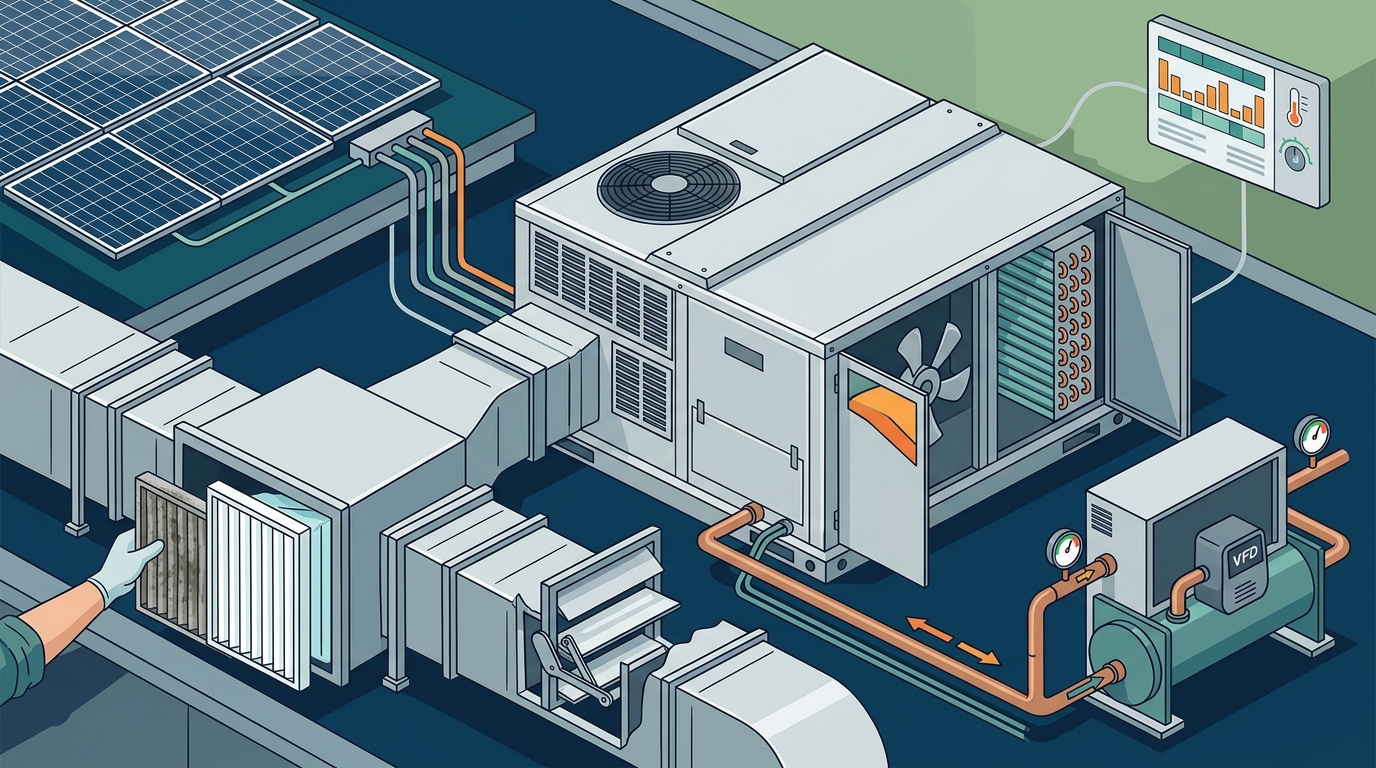
Preventative maintenance is the cornerstone of commercial HVAC efficiency. Unlike residential systems, commercial units operate under heavier loads and longer hours, making them more susceptible to wear and tear. A structured maintenance schedule ensures that every component, from filters to compressors, functions within optimal parameters.
Key maintenance tasks include:
- Filter Replacement: Clogged filters restrict airflow, forcing fans to consume more electricity. Regular replacement maintains airflow integrity.
- Coil Cleaning: Dirty evaporator and condenser coils reduce heat transfer efficiency, causing the system to run longer cycles.
- Belt and Bearing Inspection: Worn belts slip, reducing motor efficiency, while dry bearings increase friction and energy draw.
- Refrigerant Level Checks: Incorrect refrigerant charges can decrease cooling capacity by up to 20% and damage the compressor.
Apex Clean Air offers comprehensive AC maintenance services and furnace maintenance programs tailored for commercial environments. Our certified technicians perform thorough inspections that comply with manufacturer warranties and industry standards, ensuring your system operates at peak efficiency year-round.
Smart Technology and Controls
Modern commercial HVAC systems are increasingly integrated with smart building technologies. These systems use real-time data to adjust heating and cooling based on occupancy, weather conditions, and time of day. Building Automation Systems (BAS) and Internet of Things (IoT) sensors allow for granular control over individual zones, preventing energy waste in unoccupied areas.
Smart thermostats and variable refrigerant flow (VRF) systems are particularly effective in commercial settings. VRF technology allows for simultaneous heating and cooling in different zones, optimizing energy use based on specific building needs. According to the U.S. Department of Energy, smart building controls can reduce HVAC energy consumption by 10% to 30% depending on the building type and climate.
Implementing these technologies requires expert installation and configuration. Apex Clean Air specializes in heat pump installation and AC installation services that integrate seamlessly with modern control systems. Our team ensures that your new equipment is calibrated to work efficiently with your existing infrastructure, maximizing return on investment.
Indoor Air Quality and Filtration
Efficiency is not just about temperature control; it is also about air quality. Poor indoor air quality (IAQ) can lead to health issues for occupants and reduce the overall effectiveness of your HVAC system. Indoor air quality testing helps identify pollutants such as volatile organic compounds (VOCs), carbon dioxide, and particulate matter that can compromise comfort and health.
High-efficiency particulate air (HEPA) filters and air purification services can significantly improve IAQ by removing allergens, bacteria, and viruses from the air. Additionally, air duct cleaning removes accumulated dust and debris that can harbor mold and restrict airflow. Clean ducts ensure that conditioned air reaches its intended destination without obstruction, reducing the workload on your HVAC system.
Apex Clean Air provides comprehensive indoor air quality testing to help commercial facilities understand their specific IAQ challenges. Our solutions are designed to create healthier environments for employees and customers while maintaining optimal HVAC performance.
System Options: Heat Pumps vs. Furnaces
Choosing the right heating and cooling equipment is crucial for long-term efficiency. Below is a comparison of two common commercial HVAC options to help guide your decision-making process.
| Feature | Heat Pumps | Furnaces |
|---|---|---|
| Energy Source | Electricity (Air Source) | Natural Gas or Propane |
| Efficiency Rating | High (300%+ COP) | High (95%+ AFUE) |
| Heating & Cooling | Both | Heating Only |
| Operating Cost | Lower in Mild Climates | Lower in Extreme Cold |
| Maintenance Needs | Regular Filter & Coil Care | Annual Safety Inspection |
Heat pumps are increasingly popular in commercial settings due to their dual functionality and high efficiency. They move heat rather than generate it, making them up to three times more efficient than traditional heating systems. However, in regions with extreme cold, gas furnace installation may still be the preferred option for reliability and cost-effectiveness. Apex Clean Air offers expert guidance to help you choose the best system for your specific climate and budget.
Key Takeaways
- Diagnostics are Essential: Regular heating diagnostic services and cooling diagnostics identify hidden inefficiencies that waste energy.
- Maintenance Prevents Failure: Scheduled AC maintenance and furnace tune-ups extend equipment life and maintain peak efficiency.
- Smart Controls Save Money: Integrating smart building technologies can reduce HVAC energy consumption by 10% to 30%.
- IAQ Impacts Health: Air purification and duct cleaning improve air quality and reduce system strain.
- Right Equipment Matters: Choosing between heat pumps and furnaces depends on climate, budget, and efficiency goals.
- Expert Installation is Key: Proper installation by certified technicians ensures optimal performance and warranty validity.
- Proactive vs. Reactive: Facilities with proactive maintenance plans see 15% lower repair costs than those with reactive plans.
Frequently Asked Questions
How often should commercial HVAC systems be serviced?
Commercial HVAC systems should be serviced at least twice a year, typically in the spring for cooling and fall for heating. More frequent service may be required for systems in heavy use or harsh environments.
What is the difference between a heat pump and a furnace?
A heat pump moves heat from one place to another, providing both heating and cooling. A furnace generates heat by burning fuel, such as natural gas or propane, and only provides heating.
How can I improve indoor air quality in my commercial facility?
You can improve indoor air quality by installing high-efficiency filters, using air purification systems, and regularly cleaning air ducts to remove pollutants and allergens.
What are the signs of an inefficient HVAC system?
Signs include inconsistent temperatures, high energy bills, unusual noises, frequent repairs, and poor indoor air quality. If you notice these issues, contact Apex Clean Air for a diagnostic assessment.
Does Apex Clean Air offer financing for commercial HVAC upgrades?
Yes, Apex Clean Air offers flexible financing options to help commercial facilities manage the cost of new installations and major repairs. Contact our team for details.
How do smart thermostats save energy?
Smart thermostats adjust heating and cooling based on occupancy and weather conditions, preventing energy waste when spaces are unoccupied or when outdoor conditions reduce the need for conditioning.
What is the lifespan of a commercial HVAC system?
With proper maintenance, commercial HVAC systems can last 15 to 25 years. Regular diagnostic services and preventative care are key to maximizing this lifespan.
Why is duct cleaning important for commercial buildings?
Duct cleaning removes accumulated dust, mold, and debris that can restrict airflow and harbor pollutants. Clean ducts improve air quality and system efficiency, reducing the workload on your HVAC equipment.
Schedule Your Consultation
Ensuring efficient heating and cooling for your commercial facility requires a strategic approach that combines expert diagnostics, proactive maintenance, and advanced technology. Apex Clean Air is your trusted partner in achieving peak HVAC performance. Our certified technicians are ready to help you optimize your system, reduce energy costs, and improve indoor air quality.
Contact your local Apex Clean Air office today to schedule a consultation. Whether you are in Salt Lake City, Boise, Denver, or Colorado Springs, we are here to provide reliable, professional service. Visit our contact page to get started.