
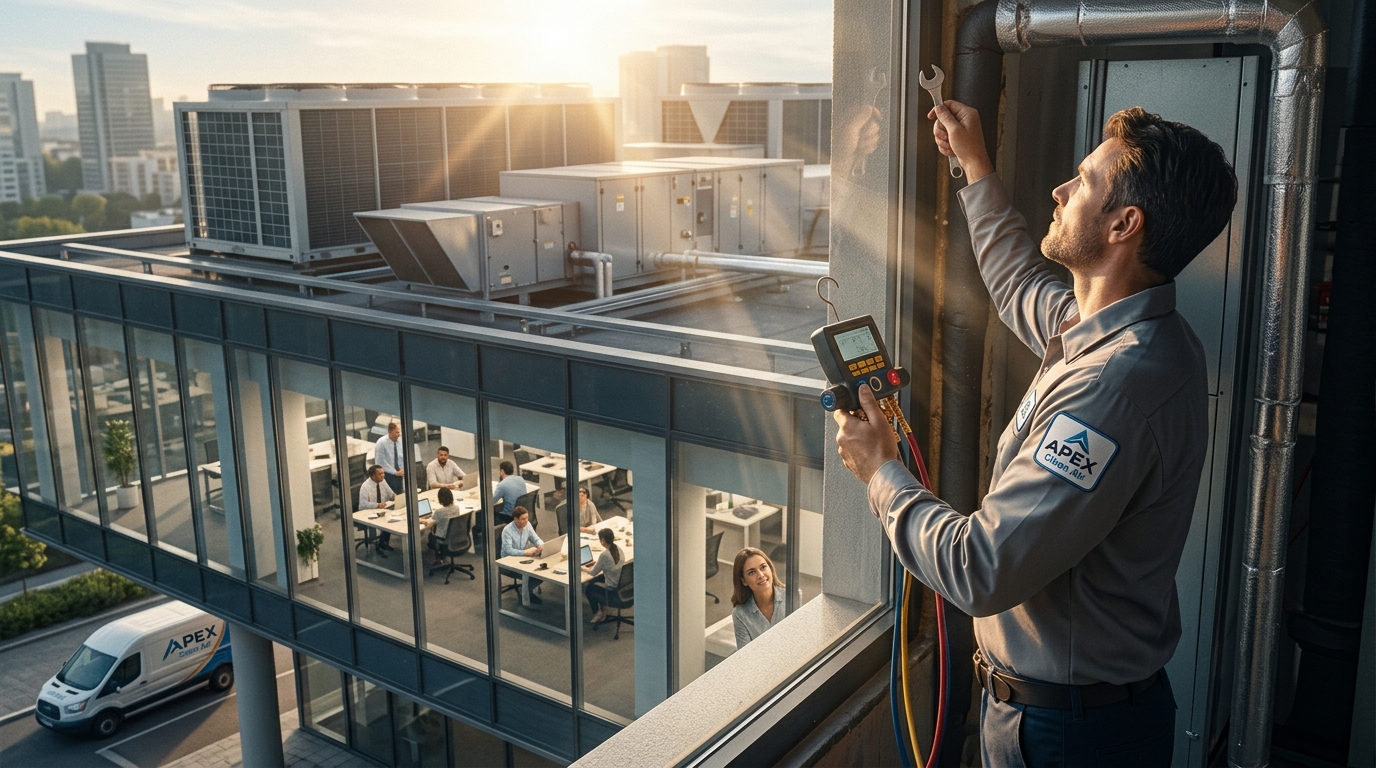
Commercial HVAC Best Practices: Maintenance Guide for Large Buildings
Large commercial buildings consume approximately 40% of the total energy generated in the United States, with HVAC systems accounting for nearly half of that usage. According to the U.S. Department of Energy, proactive maintenance can reduce HVAC energy consumption by up to 30%. This statistic highlights why facility managers cannot treat commercial climate control as a reactive afterthought. Instead, it must be a strategic operational pillar. Apex Clean Air brings this same level of rigorous, certified expertise to commercial environments, ensuring that large-scale systems operate at peak efficiency while maintaining the health of the occupants inside.
Why Preventive Maintenance Matters
Commercial HVAC systems are complex ecosystems. They are not merely boxes that blow cold air. They are integrated networks of airflow, thermal exchange, and humidity control. When one component fails, the entire system suffers. Preventive maintenance is the practice of inspecting, cleaning, and servicing these components before they break. This approach is critical for large buildings where a single point of failure can disrupt operations for hundreds of employees or customers.
Apex Clean Air emphasizes that comfort is not just about temperature. It is about the reliability of the environment. In commercial settings, reliability translates to productivity. A building with a well-maintained HVAC system experiences fewer unexpected shutdowns. This stability protects the business from costly downtime and ensures that the indoor environment remains safe and comfortable for all occupants.
Furthermore, regulatory compliance is a major driver for commercial maintenance. Buildings must adhere to strict codes regarding ventilation rates and air quality. Regular inspections ensure that your facility remains compliant with local and federal standards. This reduces legal liability and protects the building's reputation. For facility managers, the goal is to extend the lifespan of the equipment while minimizing energy waste.
Core Components to Inspect
A comprehensive maintenance plan must address the specific hardware that drives your commercial climate. Ignoring these components leads to inefficiency and premature failure. The following areas require rigorous attention during every service cycle.
Heat Pumps and Chillers
Heat pumps are increasingly popular in commercial settings due to their dual functionality. They provide heating in the winter and cooling in the summer. Heat Pump Installation and repair require specialized knowledge to ensure that the refrigerant levels are optimal. If the refrigerant is low, the system works harder to achieve the same temperature. This increases energy bills and wears out the compressor. Regular checks of the condenser and evaporator coils are essential to remove debris and ensure proper heat exchange.
Furnaces and Boilers
For buildings relying on gas or electric furnaces, Furnace Installation quality dictates long-term performance. Even the best furnace will fail if it is not maintained. Technicians must inspect the burners, heat exchangers, and flues for cracks or corrosion. A cracked heat exchanger can leak carbon monoxide into the building. This is a severe safety hazard. Regular Furnace Repair and diagnostic services ensure that the combustion process is clean and efficient.
Air Distribution Systems
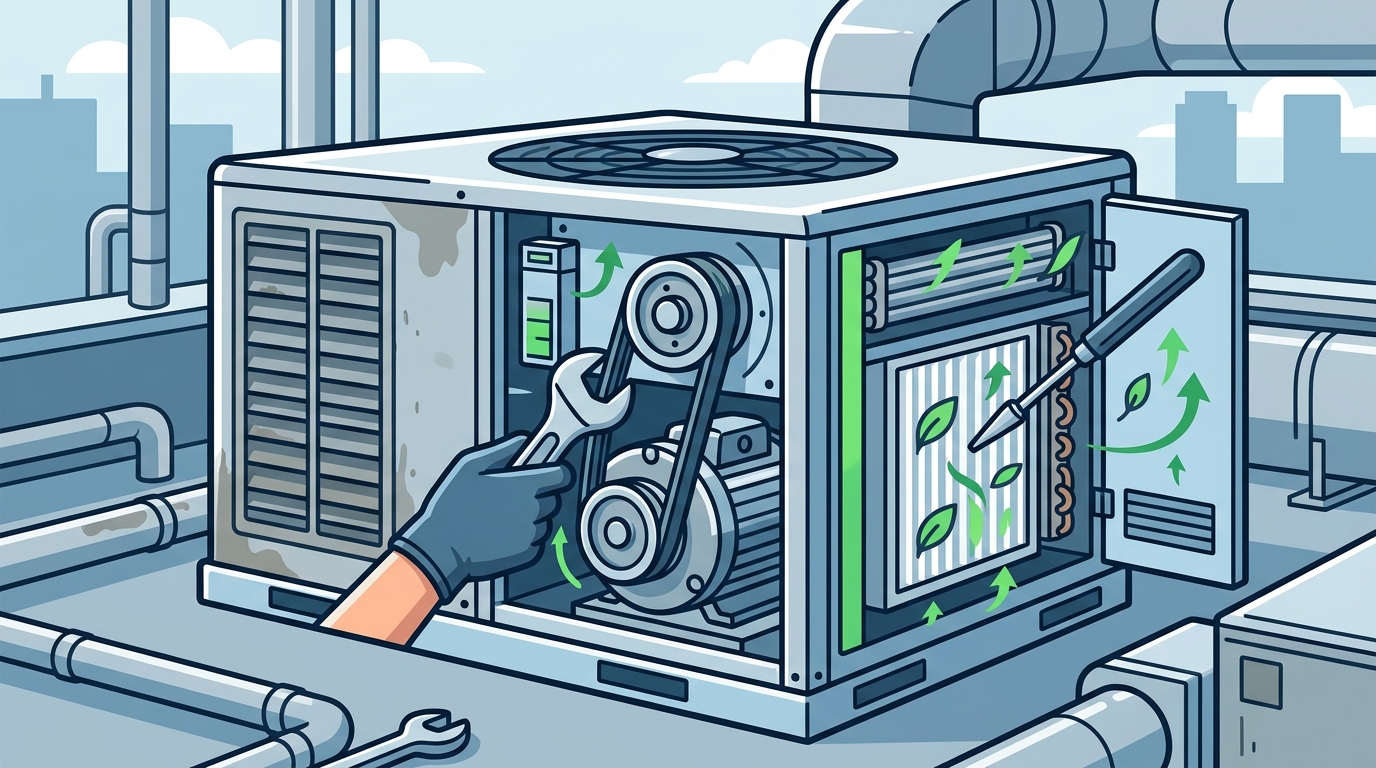
The ductwork in a large building is a network of arteries. If it is blocked or leaking, the conditioned air never reaches its destination. Air Duct Cleaning Services are vital for removing dust, mold, and debris that accumulate over time. Leaky ducts can waste up to 30% of the conditioned air. Sealing these leaks and cleaning the interior surfaces improves airflow and reduces the load on the HVAC unit. This directly lowers energy consumption and improves tenant comfort.
Indoor Air Quality Protocols
Indoor Air Quality (IAQ) has become a top priority for commercial building owners. Poor air quality leads to "sick building syndrome," where occupants experience headaches, fatigue, and respiratory issues. This reduces productivity and increases absenteeism. Indoor Air Quality Testing is the first step in diagnosing these problems. It identifies pollutants, allergens, and volatile organic compounds (VOCs) in the air.
Once the air quality is assessed, Air Purification Services can be implemented. These services include installing advanced filtration systems, UV-C light sanitizers, and humidifiers. These technologies work together to remove pathogens and control moisture levels. High humidity promotes mold growth, while low humidity causes static electricity and dry skin. Balancing these factors is a key part of Indoor Air Quality Services.
Apex Clean Air offers comprehensive Indoor Air Quality Testing to help commercial clients understand their specific risks. By addressing these issues proactively, building owners create a healthier environment. This not only protects the health of the occupants but also enhances the building's value. Tenants are more likely to renew leases in buildings that prioritize air health.
Maintenance vs. Reactive Repair
Facility managers often face the decision between preventive maintenance and reactive repair. Reactive repair is the practice of fixing equipment only after it breaks. This approach seems cheaper in the short term but is far more expensive over time. Unexpected breakdowns require emergency service calls, which carry premium rates. They also cause operational disruption.
Preventive maintenance, on the other hand, is planned and scheduled. It allows for budgeting and minimizes downtime. The following table compares the two approaches across key metrics.
| Factor | Preventive Maintenance | Reactive Repair |
|---|---|---|
| Cost Predictability | High (Budgeted annually) | Low (Unpredictable spikes) |
| System Lifespan | Extended by 5-10 years | Reduced due to wear |
| Energy Efficiency | Optimized (Lower bills) | Degraded (Higher bills) |
| Downtime Risk | Minimal | High (Emergency outages) |
| Warranty Protection | Maintained | Often Voided |
As shown in the table, preventive maintenance offers superior value. It protects the investment in the HVAC system. It also ensures that the building remains compliant with safety codes. Apex Clean Air recommends a Comfort Club membership for commercial clients. This program provides regular inspections, priority service, and discounted repairs. It is the most cost-effective way to manage large-scale HVAC assets.
Key Takeaways
- Commercial HVAC systems account for nearly 50% of a building's energy use, making efficiency critical.
- Preventive maintenance can reduce energy consumption by up to 30% according to the U.S. Department of Energy.
- Regular Air Duct Cleaning Services prevent airflow loss and improve indoor air quality significantly.
- Indoor Air Quality Testing is essential for identifying hidden pollutants and allergens in commercial spaces.
- Apex Clean Air provides certified technicians for Heat Pump Installation and repair in commercial sectors.
- Reactive repairs lead to higher costs and operational downtime compared to scheduled maintenance.
- The Comfort Club offers a structured approach to managing commercial HVAC assets efficiently.
Frequently Asked Questions
How often should commercial HVAC systems be serviced?
Commercial HVAC systems should be serviced at least twice a year. Once in the spring for cooling readiness and once in the fall for heating preparation. High-usage buildings may require quarterly inspections to maintain peak performance.
What is the difference between AC Maintenance and AC Repair?
AC Maintenance Services are preventive tasks like cleaning coils and checking refrigerant levels. AC Repair Services are corrective actions taken when a component fails. Maintenance prevents the need for repairs.
Can poor air quality affect employee productivity?
Yes. Studies show that poor indoor air quality can reduce cognitive function and increase sick days. Improving air quality through Air Purification Services directly boosts employee health and productivity.
What is a Heat Pump and is it good for commercial use?
A heat pump is a device that transfers heat rather than generating it. It is highly efficient for commercial use because it provides both heating and cooling. Heat Pump Repair and installation are specialized services that Apex Clean Air provides.
How does duct cleaning improve HVAC efficiency?
Dust and debris in ducts restrict airflow. This forces the HVAC system to work harder to circulate air. Air Duct Cleaning Services remove these blockages, allowing the system to operate more efficiently and use less energy.
What is the Comfort Club?
The Comfort Club is a membership program that offers regular maintenance, priority service, and discounts on repairs. It is designed to extend the life of HVAC systems and reduce long-term costs.
Why is Indoor Air Quality Testing important?
Indoor Air Quality Testing identifies specific pollutants like mold, dust, and VOCs. This data allows for targeted solutions rather than guesswork. It ensures that the air your tenants breathe is safe and healthy.
Secure Your Building's Comfort Today
Large commercial buildings require more than just basic repairs. They need a strategic partner who understands the complexity of commercial HVAC systems. Apex Clean Air offers certified technicians, transparent pricing, and comprehensive maintenance plans. We serve commercial clients with the same dedication we bring to residential homes. Contact your local office to schedule a diagnostic assessment. Visit our About Us page to learn more about our team. Explore our AC Maintenance Services to see how we can help. Discover our Air Duct Cleaning Services for improved air quality. Join the Comfort Club for priority care. Contact Us to book your service today.