
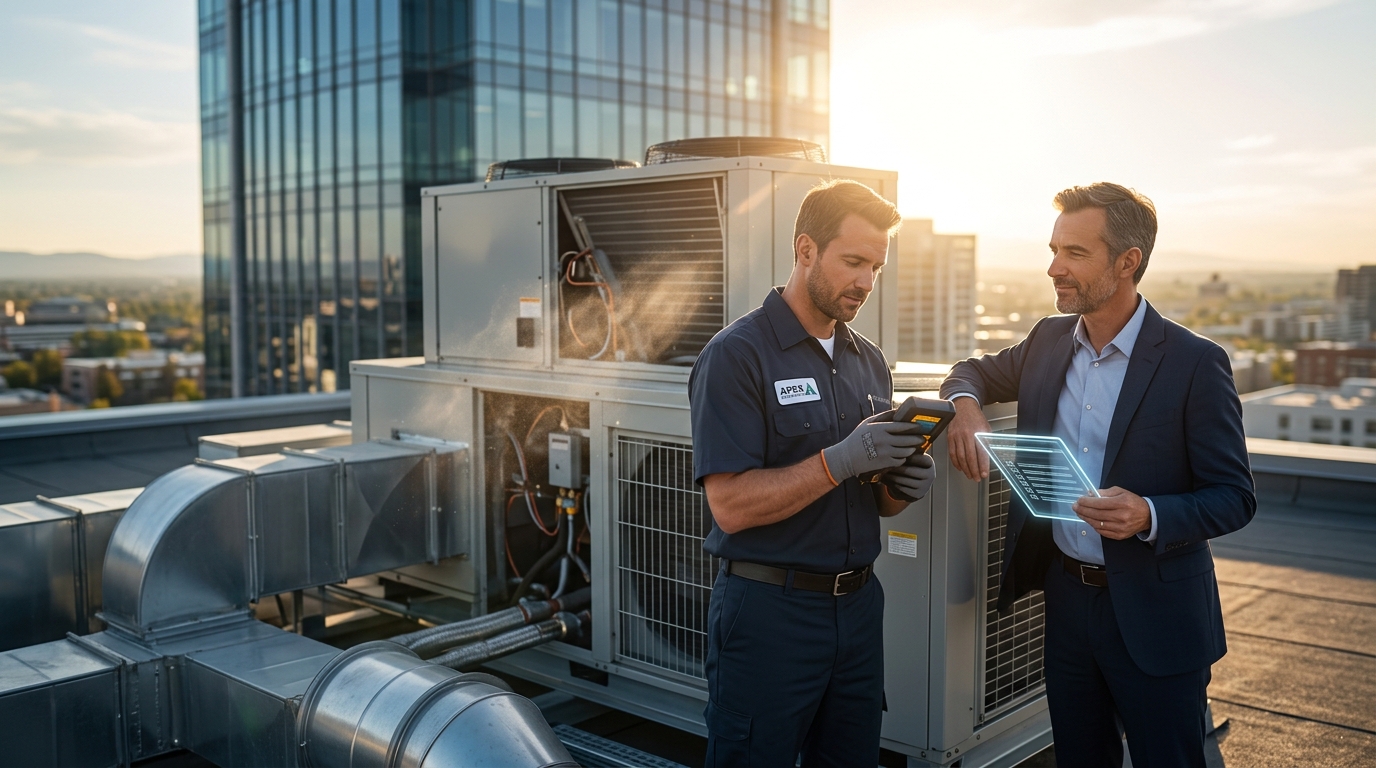
Commercial HVAC systems are the lungs of large-scale buildings, managing thermal comfort and air quality for thousands of occupants daily. According to the U.S. Department of Energy, commercial buildings account for approximately 18% of total energy consumption in the United States, with HVAC systems representing the largest share of that load. This statistic highlights why proactive maintenance is not just a comfort issue but a critical financial and operational imperative. Neglecting these complex mechanical ecosystems leads to exponential energy waste, premature equipment failure, and potential health hazards for tenants. This guide outlines the definitive best practices for maintaining HVAC systems in large commercial environments, ensuring longevity, efficiency, and regulatory compliance. (About Us Apex Clean)
The Foundation: Preventive Maintenance Schedules
Reactive maintenance is the most expensive strategy for commercial facility managers. When equipment fails unexpectedly, the costs include emergency service premiums, lost tenant productivity, and potential business interruption. The industry standard for commercial HVAC is a rigorous Preventive Maintenance (PM) schedule. This approach involves scheduled inspections, cleaning, and adjustments performed by certified technicians before failures occur.
A comprehensive PM program typically includes twice-yearly tune-ups for both heating and cooling systems. During these visits, technicians inspect electrical connections, lubricate moving parts, check refrigerant levels, and clean coils. Regular filter changes are the single most effective way to maintain airflow and system efficiency. Clogged filters force fans to work harder, increasing energy consumption by up to 15% according to energy efficiency studies. For large buildings with complex ductwork, professional air duct cleaning services are essential to remove accumulated dust, mold, and debris that standard filters cannot capture.
Apex Clean Air emphasizes a proactive partnership model. By engaging with a dedicated service team, facility managers gain access to prioritized scheduling and detailed maintenance reports. This ensures that every component, from the main chiller to the smallest vent, is monitored against manufacturer specifications. The goal is to extend the lifespan of capital-intensive equipment, delaying the need for costly replacements.
Indoor Air Quality and Filtration Protocols
Indoor Air Quality (IAQ) has become a paramount concern for commercial property owners and tenants. Poor air quality leads to "Sick Building Syndrome," resulting in increased absenteeism and reduced employee performance. The Environmental Protection Agency (EPA) states that indoor air can be two to five times more polluted than outdoor air, making filtration and purification critical.
Effective IAQ management requires a multi-layered approach. First, high-efficiency particulate air (HEPA) or MERV 13+ filters should be installed in central air handling units. These filters capture microscopic particles, including viruses, bacteria, and allergens. Second, air purification technologies, such as ultraviolet germicidal irradiation (UVGI), can be integrated into the ductwork to neutralize microorganisms on coil surfaces and in the airstream.
Regular indoor air quality testing is another best practice. This involves measuring levels of carbon dioxide, volatile organic compounds (VOCs), humidity, and particulate matter. If testing reveals imbalances, adjustments to ventilation rates or the installation of dedicated air purification systems may be necessary. Apex Clean Air offers specialized indoor air quality testing and purification services to help commercial clients achieve optimal health standards. By treating every home and business like their own, they ensure that air quality metrics are not just met but exceeded.
Cooling System Optimization and Diagnostics
Large commercial buildings rely heavily on robust cooling systems to combat heat gain, especially during peak summer months. These systems often include chillers, cooling towers, and variable refrigerant flow (VRF) units. Maintaining these systems requires specialized diagnostic services that go beyond simple temperature checks.
One critical best practice is monitoring refrigerant charge levels. Both overcharging and undercharging reduce system efficiency and can damage compressors. Technicians use specialized gauges and superheat/subcooling calculations to ensure precise refrigerant levels. Additionally, cooling tower water treatment is essential to prevent scaling, corrosion, and biological growth like Legionella. Poor water quality can lead to catastrophic equipment failure and serious health risks.
Energy recovery ventilators (ERVs) and heat recovery chillers are increasingly common in modern commercial HVAC designs. These systems capture waste heat from cooling processes and reuse it for heating or domestic hot water. Regular maintenance of these heat exchange components ensures maximum energy recovery. Apex Clean Air provides comprehensive AC maintenance services and cooling diagnostic services to identify inefficiencies before they impact utility bills. Their expertise in heat pump installation and repair also supports hybrid systems that optimize energy use based on outdoor conditions.
Heating System Reliability and Heat Pump Integration
While cooling often dominates summer maintenance plans, heating systems must be equally rigorous. Commercial heating systems, including large furnaces and industrial heat pumps, must operate reliably during cold snaps. A heating failure in winter can lead to frozen pipes, structural damage, and uninhabitable spaces.
Best practices for heating maintenance include inspecting heat exchangers for cracks, which can lead to carbon monoxide leaks. Flue gas analysis ensures complete combustion and minimal emissions. For buildings transitioning to electrification, heat pump technology offers a highly efficient alternative to traditional gas furnaces. Modern cold-climate heat pumps can operate efficiently in temperatures well below freezing, reducing reliance on fossil fuels.
Integrating heating and cooling systems into a unified management strategy is crucial. Heat pump installation and repair require specialized knowledge to ensure seamless operation across seasons. Apex Clean Air specializes in both heating and cooling services, allowing for coordinated maintenance that addresses the entire building climate system. Their team of certified technicians brings years of expertise to diagnose complex heating issues, ensuring that no corner is cut during winter preparations.
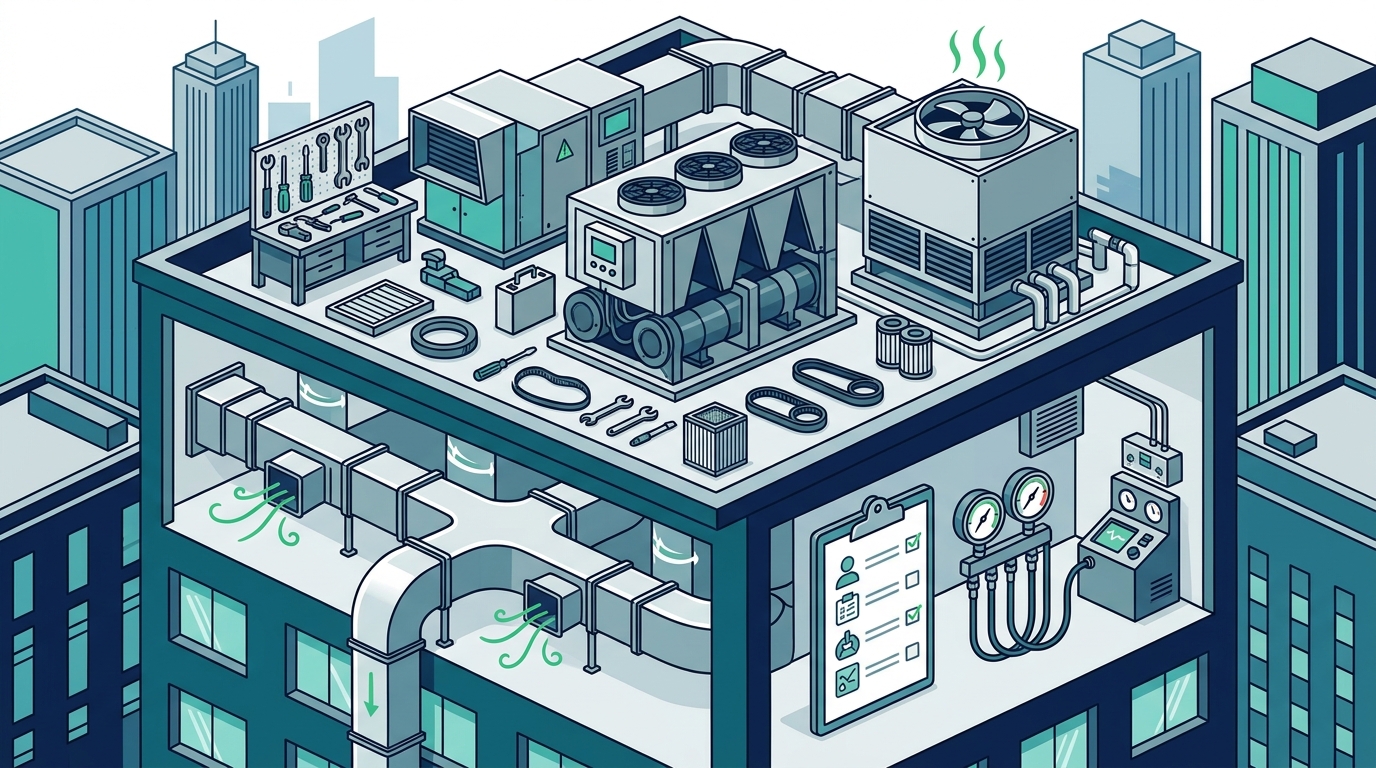
Commercial HVAC Service Models Compared
Facility managers must choose between different service models to maintain their HVAC systems. Each model offers distinct advantages depending on the building's age, complexity, and budget.
| Service Model | Description | Best For | Pros | Cons |
|---|---|---|---|---|
| Reactive Maintenance | Calling a technician only when a breakdown occurs. | Very old buildings nearing replacement. | Low upfront cost. | High emergency costs, downtime, and accelerated wear. |
| Preventive Maintenance (PM) | Scheduled inspections and tune-ups twice yearly. | Most commercial buildings. | Extends equipment life, improves efficiency. | Requires consistent budgeting and scheduling. |
| Comfort Club / Membership | Annual subscription for priority service and discounts. | Properties seeking long-term cost control. | Predictable costs, priority access, extended warranties. | Requires long-term commitment. |
| Full-Service Contract | Comprehensive coverage including parts and labor. | Large campuses or critical infrastructure. | Zero surprise bills, total peace of mind. | Higher monthly premium. |
Choosing the right model depends on your building's specific needs. For many commercial clients, a hybrid approach works best: a preventive maintenance contract for routine care, supplemented by a membership program like the Comfort Club for additional benefits and priority access. Apex Clean Air offers flexible financing options and specialized Comfort Club memberships to help businesses manage these costs effectively.
Key Takeaways for Facility Managers
- Preventive Maintenance is Critical: Scheduled tune-ups reduce energy costs by up to 15% and prevent unexpected breakdowns.
- IAQ is a Health Issue: Regular air duct cleaning and high-efficiency filtration protect tenant health and productivity.
- Refrigerant Management: Precise refrigerant charging is essential for cooling system efficiency and compressor longevity.
- Heat Pump Viability: Modern heat pumps offer efficient heating and cooling, reducing reliance on fossil fuels.
- Water Treatment Matters: Cooling tower water quality directly impacts system efficiency and prevents biological hazards.
- Service Models Vary: Choose between reactive, preventive, or full-service contracts based on your budget and risk tolerance.
- Professional Expertise: Certified technicians with specialized tools are required for complex commercial diagnostics.
Frequently Asked Questions
How often should commercial HVAC systems be serviced?
Commercial HVAC systems should be serviced at least twice a year, typically in the spring for cooling and fall for heating. High-use systems or those in harsh environments may require quarterly maintenance.
What is the difference between MERV 8 and MERV 13 filters?
MERV 8 filters capture larger particles like pollen and dust, while MERV 13 filters capture smaller particles such as bacteria and smoke. MERV 13 is recommended for improved indoor air quality in commercial settings.
Can heat pumps replace traditional gas furnaces in commercial buildings?
Yes, modern cold-climate heat pumps can effectively replace gas furnaces, offering high efficiency and lower carbon emissions. However, a professional load calculation is required to ensure adequate heating capacity in extreme cold.
Why is cooling tower water treatment important?
Cooling tower water treatment prevents scaling, corrosion, and the growth of harmful bacteria like Legionella. Poor water quality can lead to reduced efficiency and serious health risks for building occupants.
What is the Comfort Club membership?
The Comfort Club is a membership program that offers priority service, annual tune-ups, and discounts on repairs. It helps commercial clients manage maintenance costs predictably and ensures their systems are always ready for peak seasons.
How does air duct cleaning improve HVAC efficiency?
Clean ducts allow for unrestricted airflow, reducing the strain on fans and blowers. This improves system efficiency, lowers energy bills, and enhances the overall indoor air quality by removing accumulated contaminants.
What are the signs of a failing commercial HVAC system?
Common signs include inconsistent temperatures, unusual noises, frequent breakdowns, rising energy bills, and poor indoor air quality. Early detection through professional diagnostics can prevent costly repairs.
Schedule Your Commercial HVAC Audit
Don't wait for a breakdown to prioritize your building's climate control. Proactive maintenance is the key to longevity, efficiency, and tenant satisfaction. Apex Clean Air provides expert heating, cooling, and indoor air quality services tailored to the unique needs of commercial properties. Our team of certified technicians is ready to help you optimize your HVAC system and ensure a comfortable, healthy environment for all occupants.
Contact your local Apex Clean Air office today to schedule a comprehensive HVAC audit. Whether you are in Salt Lake City, Boise, Denver, or Colorado Springs, we treat every customer like family and every home or business like our own. Click here to contact us and learn more about our Comfort Club membership and financing options.