

Commercial real estate operators face a critical challenge in managing energy efficiency and occupant comfort. Data shows that HVAC systems account for approximately 40% of energy consumption in large commercial buildings. This statistic highlights the urgent need for rigorous maintenance protocols. Without a structured approach, facility managers risk skyrocketing utility bills, premature equipment failure, and poor indoor air quality. This guide outlines the definitive strategies for maintaining HVAC systems in large commercial environments.
Predictive Maintenance Strategies
Traditional reactive maintenance is obsolete in large-scale facilities. Predictive maintenance relies on real-time data to anticipate failures before they occur. This approach minimizes downtime and extends the lifespan of critical assets.
Vibration Analysis
Vibration analysis detects imbalances in rotating machinery such as fans and pumps. Early detection of abnormal vibrations prevents catastrophic bearing failures. Regular vibration testing is essential for preserving motor integrity.
Thermographic Inspections
Infrared thermography identifies electrical hotspots in control panels and motor connections. Overheating components are a leading cause of electrical fires and system shutdowns. Thermal imaging allows technicians to address these issues safely.
Ultrasonic Leak Detection
Compressed air and refrigerant leaks are often inaudible to the human ear. Ultrasonic detectors pinpoint these leaks with precision. Sealing leaks reduces energy waste and improves system efficiency.
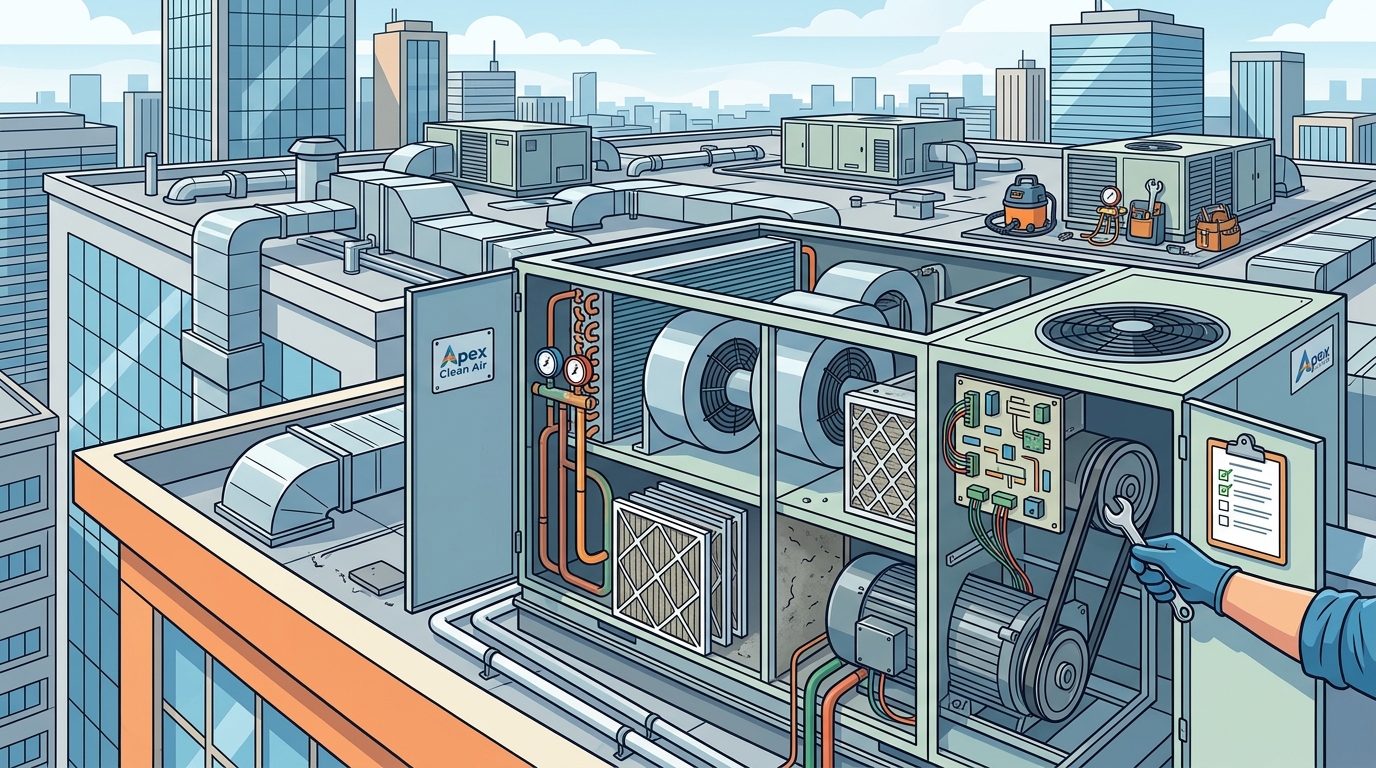
Air Filter and Duct Hygiene
Indoor air quality (IAQ) is a primary concern for commercial tenants. Poor air quality leads to health issues and decreased productivity. Maintaining clean air pathways is non-negotiable.
Filter Selection and Replacement
High-efficiency particulate air (HEPA) filters or MERV 13+ filters capture fine particles. Regular filter replacement prevents airflow restriction. Clogged filters force fans to work harder, increasing energy consumption.
Air Duct Cleaning
Dust and debris accumulate in ductwork over time. This buildup harbors mold and bacteria. Professional air duct cleaning services remove contaminants and restore optimal airflow. Learn more about air duct cleaning to understand the process.
Air Purification Technologies
Advanced air purification systems neutralize pathogens and volatile organic compounds (VOCs). Air purification services enhance overall health standards in commercial spaces. Explore air purification options for your facility.
Cooling Tower and Chiller Care
Chillers and cooling towers are the heart of many large commercial HVAC systems. They require specialized maintenance to prevent Legionella and other waterborne pathogens.
Water Treatment Programs
Chemical water treatment prevents scale, corrosion, and biological growth. Consistent water treatment ensures heat exchange efficiency. It also protects the structural integrity of the tower basin and fill media.
Chiller Performance Monitoring
Chillers must operate at peak coefficient of performance (COP). Regular chiller maintenance optimizes energy usage. Technicians check refrigerant levels, oil quality, and compressor health.
Condenser Coil Cleaning
Dirty condenser coils reduce heat rejection capacity. Clean coils improve cooling capacity and reduce energy costs. Schedule AC maintenance services to keep coils clean.
Building Management Systems (BMS)
A robust Building Management System (BMS) is the brain of commercial HVAC operations. It automates control and provides data analytics for optimization.
Setpoint Optimization
BMS allows for precise control of temperature and humidity setpoints. Optimized setpoints balance comfort with energy savings. Adjustments can be made based on occupancy schedules.
Alarm Management
Automated alarms notify facility managers of system faults. Immediate alarm response prevents minor issues from becoming major failures. Regular alarm testing ensures reliability.
Data Analytics and Reporting
BMS platforms generate detailed reports on energy usage and equipment performance. Data analytics drive informed maintenance decisions. Managers can identify trends and plan capital expenditures.
Service Model Comparison
Choosing the right service model is crucial for long-term success. Below is a comparison of common maintenance approaches.
| Service Model | Cost Structure | Response Time | Best For |
|---|---|---|---|
| Reactive Maintenance | Low upfront, high repair costs | Variable | Small, non-critical systems |
| Preventive Maintenance | Fixed annual contract | Scheduled | Standard commercial buildings |
| Predictive Maintenance | Higher initial investment | Real-time alerts | Large, complex facilities |
| Comfort Club Membership | Discounted service rates | Priority | Cost-conscious property owners |
For those seeking reliable support, join the Comfort Club for priority service and exclusive benefits.
Key Takeaways
- Energy Impact: HVAC systems consume roughly 40% of commercial building energy.
- Predictive Tools: Use vibration analysis and thermography to prevent failures.
- IAQ Priority: Maintain high MERV filters and clean ducts for health.
- Water Treatment: Essential for cooling towers to prevent pathogens.
- BMS Integration: Automate controls for efficiency and real-time monitoring.
- Service Models: Choose between reactive, preventive, or predictive based on asset criticality.
- Professional Support: Partner with certified experts for complex diagnostics.
Frequently Asked Questions
How often should commercial HVAC systems be serviced?
Commercial HVAC systems should be serviced at least twice a year, typically in the spring and fall. Regular servicing ensures peak performance and prevents seasonal breakdowns.
What is the difference between preventive and predictive maintenance?
Preventive maintenance follows a fixed schedule. Predictive maintenance uses data to determine service needs. This approach reduces unnecessary interventions.
Why is indoor air quality important in commercial buildings?
Good IAQ improves occupant health and productivity. Poor air quality leads to sick building syndrome. It also affects tenant retention and satisfaction.
How can a BMS improve HVAC efficiency?
A BMS automates control and optimizes setpoints. Automated adjustments reduce energy waste and extend equipment life.
What are the benefits of a Comfort Club membership?
Members receive priority service and discounted repairs. Comfort Club members enjoy exclusive savings on maintenance plans.
How do cooling towers prevent Legionella?
Water treatment programs control biological growth. Proper water treatment eliminates pathogen risks in cooling systems.
When should air ducts be cleaned?
Air ducts should be cleaned when visible mold or excessive debris is present. Regular cleaning maintains airflow quality and system efficiency.
What is the role of vibration analysis?
Vibration analysis detects mechanical imbalances early. Early detection prevents motor failure and costly downtime.
Contact Your Local Office
Ensure your commercial building operates at peak efficiency with expert support. Apex Clean Air provides comprehensive HVAC maintenance and indoor air quality services. Contact your local office today to schedule a consultation and secure your facility's comfort.