
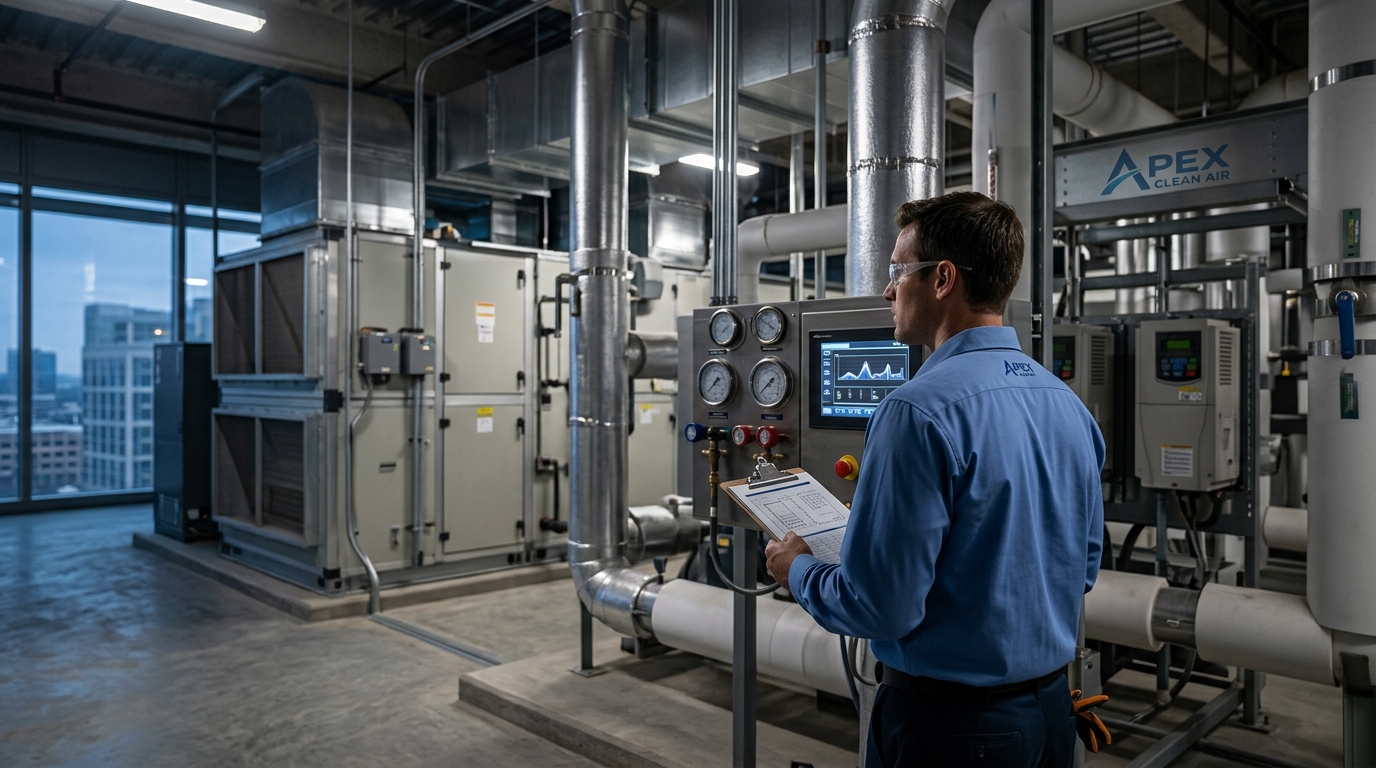
Commercial real estate operators face immense pressure to maintain indoor environmental quality while controlling escalating energy costs. According to the U.S. Department of Energy, commercial buildings consume approximately 40% of total U.S. energy, with HVAC systems accounting for nearly 40% of that energy use. This statistic highlights why proactive maintenance is not just an operational preference but a financial imperative. Neglecting these systems leads to rapid efficiency degradation, increased carbon footprints, and potential regulatory non-compliance. This guide outlines the definitive strategies for preserving asset value and ensuring tenant comfort in large-scale facilities.
Understanding HVAC Diagnostic Basics
Before implementing complex protocols, facility managers must understand the core components of a commercial HVAC ecosystem. Preventive maintenance is the systematic inspection and servicing of equipment to prevent unexpected failures. This differs fundamentally from reactive repair, which addresses issues only after a breakdown occurs. In large buildings, the scale of the system amplifies the impact of minor inefficiencies.
Commercial systems often utilize Variable Refrigerant Flow (VRF) or chilled water plants. Each requires distinct diagnostic approaches. For instance, VRF systems need precise refrigerant charge verification, while chilled water systems require rigorous water treatment to prevent scaling and corrosion. Understanding these mechanical differences is the first step in creating an effective maintenance plan. Without this foundational knowledge, maintenance efforts become scattered and inefficient.
Regular diagnostic checks should include monitoring compressor amperage, checking for refrigerant leaks, and inspecting electrical connections for thermal hotspots. These simple checks can identify potential failures months before they cause downtime. Early detection is the cornerstone of cost-effective facility management.
Implementing Preventive Maintenance Schedules
A robust preventive maintenance schedule is the backbone of commercial HVAC reliability. This schedule must be tailored to the specific equipment types and the building's usage patterns. Filter replacement is the process of removing particulate matter from the air stream to protect internal components and maintain airflow. In large buildings, clogged filters can increase energy consumption by up to 15% due to restricted airflow.
Seasonal Service Priorities
Seasonal transitions are critical windows for maintenance. Spring services should focus on cooling components, including condenser coil cleaning and refrigerant line inspections. Fall services must prioritize heating elements, such as furnace burners and heat exchangers. This seasonal approach ensures that systems are ready for peak demand periods.
Filter and Duct Hygiene
High-efficiency particulate air (HEPA) filters are essential in modern commercial settings. However, they require more frequent monitoring due to higher static pressure. Additionally, air duct cleaning services are vital for removing accumulated debris, mold, and allergens. Clean ducts ensure that conditioned air reaches tenants efficiently, reducing strain on the system. Air duct cleaning should be performed annually or when air quality tests indicate contamination.
Indoor Air Quality Management
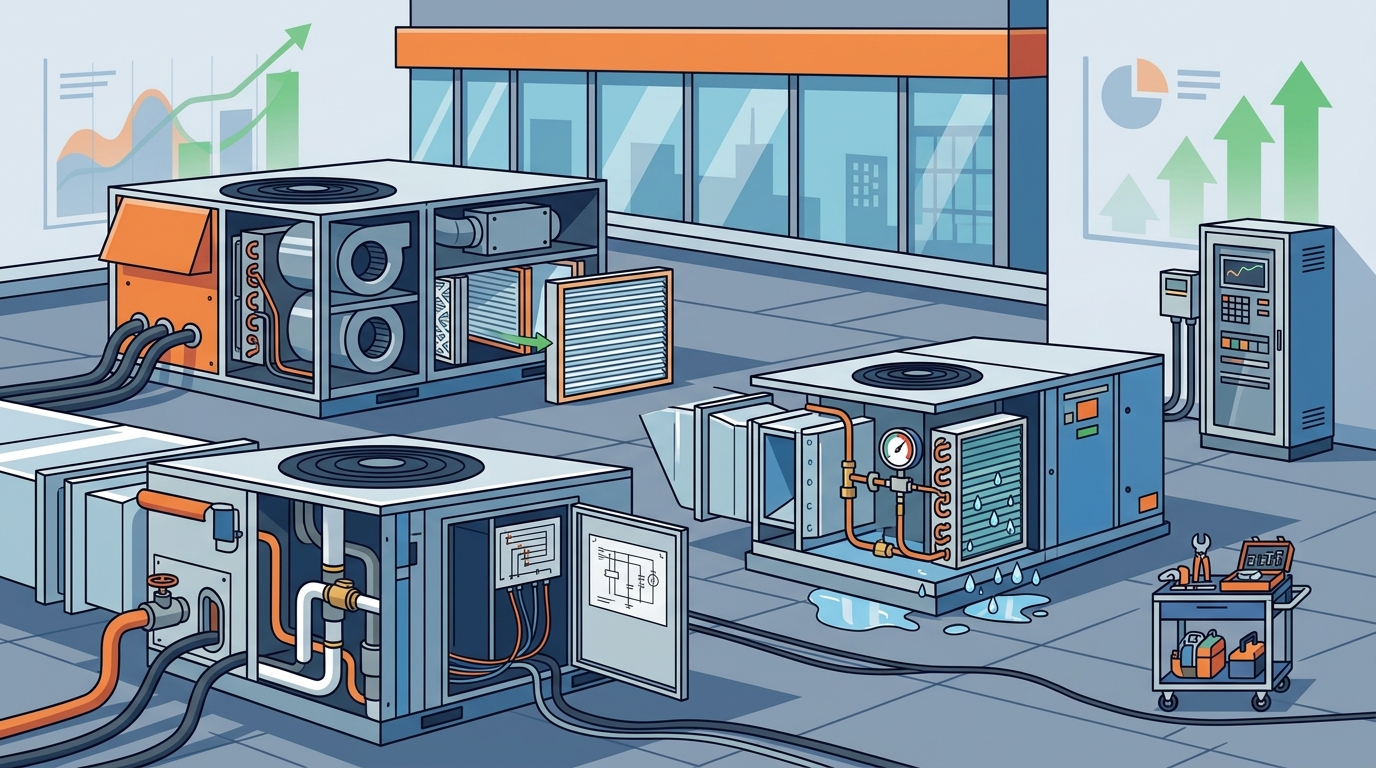
Post-pandemic, Indoor Air Quality (IAQ) has become a primary concern for tenants and regulatory bodies. Poor IAQ leads to "Sick Building Syndrome," which reduces productivity and increases liability. Indoor air quality refers to the air quality within and around buildings, especially as it relates to the health and comfort of building occupants. Maintaining high IAQ standards is no longer optional for premium commercial properties.
Monitoring and Filtration
Facility managers should install continuous IAQ monitors that track CO2, VOCs, and particulate matter. These data points allow for real-time adjustments to ventilation rates. Upgrading filtration systems to MERV 13 or higher can significantly reduce airborne pathogens. Air purification services utilizing advanced technologies like UV-C light or bipolar ionization can further enhance air cleanliness.
Ventilation Standards
Adhering to ASHRAE Standard 62.1 is critical for legal and health compliance. This standard dictates minimum ventilation rates for various occupancy types. Regular testing ensures that the system delivers the required amount of outdoor air. Failure to meet these standards can result in fines and tenant disputes.
Technology and IoT Integration
The modern commercial HVAC landscape is defined by connectivity. Internet of Things (IoT) sensors provide real-time data on equipment performance, allowing for predictive maintenance. Predictive maintenance uses data analytics to determine the condition of equipment and predict when maintenance should be performed. This approach minimizes downtime and extends equipment lifespan.
Building Management Systems (BMS)
A centralized BMS allows facility managers to monitor and control HVAC systems from a single interface. Advanced BMS platforms can integrate with weather forecasts to pre-condition spaces, optimizing energy use. For example, a system can cool a building more aggressively during off-peak hours when electricity rates are lower. This strategy, known as thermal storage, can reduce operational costs significantly.
Data-Driven Decision Making
Historical data analysis helps identify trends and inefficiencies. By comparing energy usage against occupancy levels, managers can detect anomalies that indicate equipment failure or control issues. This data-driven approach transforms maintenance from a cost center into a strategic asset.
Vendor Selection and Service Models
Choosing the right service provider is as important as the maintenance itself. Large commercial buildings require partners with specialized expertise and 24/7 emergency support. Commercial HVAC service involves specialized repair, installation, and maintenance of heating and cooling systems designed for large-scale environments. Not all residential HVAC companies have the capacity or certification to handle complex commercial systems.
Evaluating Service Providers
Look for vendors with a proven track record in commercial facilities. Check for certifications such as NATE (North American Technician Excellence) and EPA 608 Type II or III for large refrigerant systems. Additionally, inquire about their response times and spare parts inventory. A reliable vendor should have local stock of critical components to minimize repair delays.
Service Agreements
Comprehensive service agreements often provide better value than pay-per-service models. These agreements typically include regular inspections, priority service, and discounted parts. For businesses seeking reliable support, exploring heating services and cooling services packages can ensure consistent system performance. Some providers also offer Comfort Club memberships that bundle maintenance with other benefits.
Comparing Maintenance Approaches
| Maintenance Type | Cost Profile | Impact on Lifespan | Energy Efficiency |
|---|---|---|---|
| Reactive Repair | High (Emergency Rates) | Reduced | Poor |
| Preventive Maintenance | Moderate (Scheduled) | Extended | Optimized |
| Predictive Maintenance | High (Initial Tech) | Maximized | Peak |
Key Takeaways
- Commercial buildings consume 40% of U.S. energy, with HVAC as a major driver.
- Preventive maintenance prevents unexpected failures and extends equipment life.
- Filter replacement is critical for maintaining airflow and protecting components.
- Indoor air quality directly impacts tenant health and productivity.
- IoT and BMS enable predictive maintenance and energy optimization.
- Choosing certified vendors ensures compliance and reliable service.
- Seasonal services prepare systems for peak heating and cooling demands.
Frequently Asked Questions
How often should commercial HVAC systems be serviced?
Commercial HVAC systems should be serviced at least twice a year, typically in the spring and fall. This ensures that cooling and heating components are optimized before peak seasons.
What is the difference between preventive and predictive maintenance?
Preventive maintenance is scheduled based on time or usage intervals. Predictive maintenance uses real-time data and sensors to determine when service is actually needed, reducing unnecessary interventions.
Why is indoor air quality important in commercial buildings?
Good IAQ reduces the risk of sick building syndrome, improves tenant health, and ensures compliance with regulations like ASHRAE 62.1. It also enhances the building's marketability.
Can IoT sensors reduce HVAC energy costs?
Yes, IoT sensors allow for precise control of ventilation and temperature based on real-time occupancy and weather data. This optimization can significantly lower energy consumption.
What certifications should a commercial HVAC technician have?
Technicians should hold EPA 608 certification for handling refrigerants and NATE certification for technical proficiency. Additional credentials in building automation are also valuable.
How does filter quality affect HVAC efficiency?
High-quality filters capture more contaminants, protecting internal components. However, they must be replaced regularly to prevent excessive static pressure, which forces the system to work harder.
What is a Comfort Club membership?
A Comfort Club membership is a service plan that offers discounted maintenance, priority service, and extended warranties for HVAC systems, providing long-term value for property owners.
Secure Your Building's Efficiency Today
Implementing these best practices requires expertise and dedication. Apex Clean Air provides comprehensive commercial HVAC solutions tailored to your building's unique needs. From AC installation to air duct cleaning, our team ensures your system operates at peak performance. Contact your local office to schedule a diagnostic assessment and protect your investment.