
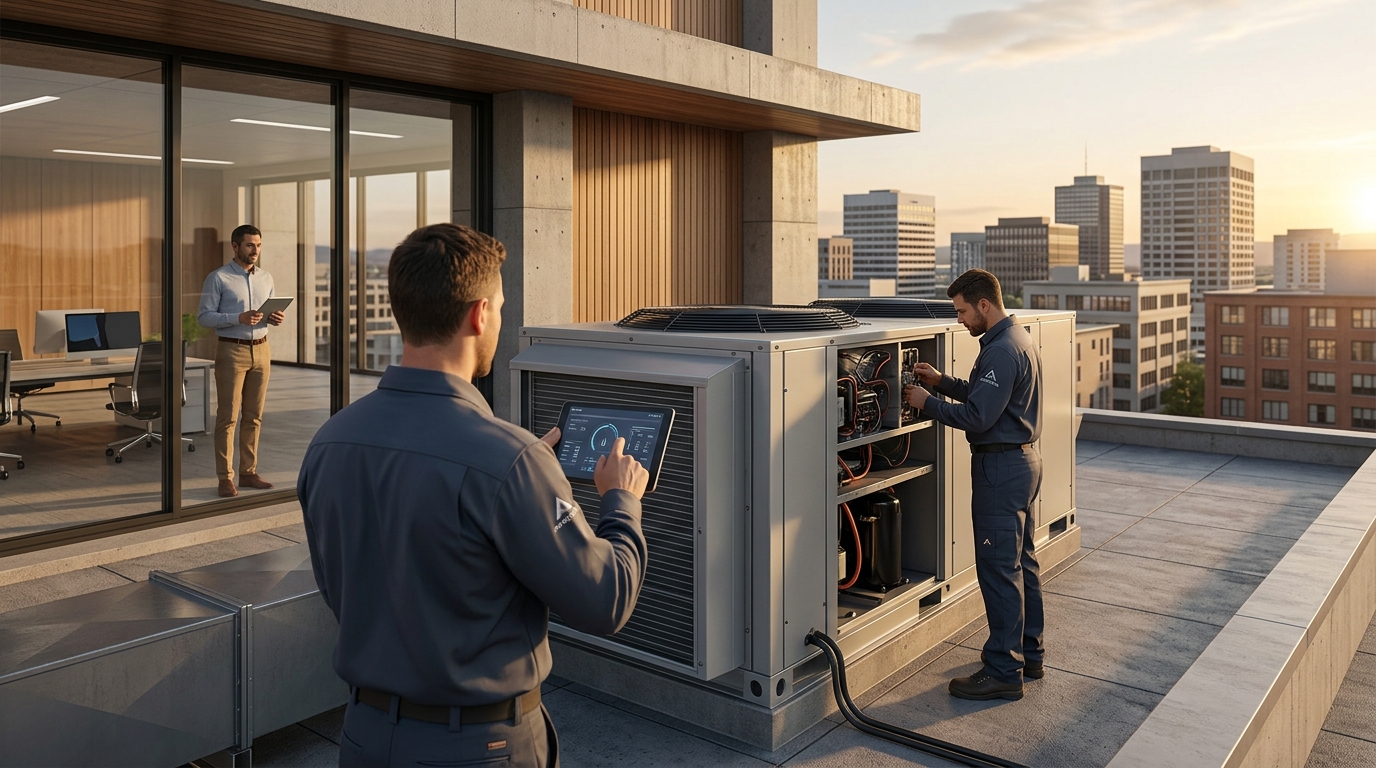
Commercial building managers face rising energy costs and strict regulatory mandates. According to the U.S. Department of Energy, commercial facilities account for nearly forty percent of total national energy consumption. Facility directors must implement precise climate control strategies to maintain operational efficiency. Apex Clean Air delivers engineered commercial HVAC solutions that balance thermal stability with strict budget constraints. Our certified technicians evaluate your floor plan to design a customized system architecture.
Strategic Zoning for Variable Occupancy
Commercial spaces rarely maintain uniform occupancy levels throughout the day. Variable refrigerant flow is a specialized climate control method that distributes conditioned air to multiple zones independently. This approach prevents energy waste in unoccupied conference rooms or storage areas. Building owners report significant utility savings when implementing independent climate controls. Heating services integrate seamlessly with multi-zone controllers to deliver precise thermal output. Facility managers should prioritize modular ductwork layouts to support future expansion. Proper zoning reduces compressor cycling and extends equipment lifespan.
Selecting Commercial-Grade Equipment
Commercial HVAC solutions require heavy-duty components designed for continuous operation. Rooftop units and split systems dominate the modern commercial landscape. Each configuration offers distinct advantages regarding installation complexity and maintenance access. Cooling services utilize high-efficiency compressors to meet strict seasonal energy ratings. Facility managers must evaluate square footage, ceiling height, and insulation quality before procurement. Upgrading to modern heat pump technology reduces carbon emissions while lowering utility bills. Energy Star certified equipment qualifies for federal tax incentives and utility rebates. Proper sizing prevents short cycling and maintains consistent indoor temperatures.
Prioritizing Commercial Air Quality Management
Thermal comfort represents only one component of a healthy commercial environment. Modern facility managers recognize that ventilation rates directly impact employee productivity. Indoor air quality services integrate advanced filtration and UV germicidal irradiation. Commercial air quality management is the systematic process of filtering, ventilating, and monitoring indoor environments to eliminate airborne contaminants and maintain optimal humidity levels. EPA guidelines recommend maintaining relative humidity between thirty and fifty percent. Poor ventilation correlates with increased sick building syndrome reports across metropolitan areas. Regular duct inspections prevent mold accumulation and allergen distribution. Air purification services deploy hospital-grade filters to capture microscopic contaminants. Facility directors should schedule quarterly air quality audits to verify system performance.
Implementing Predictive Maintenance Protocols
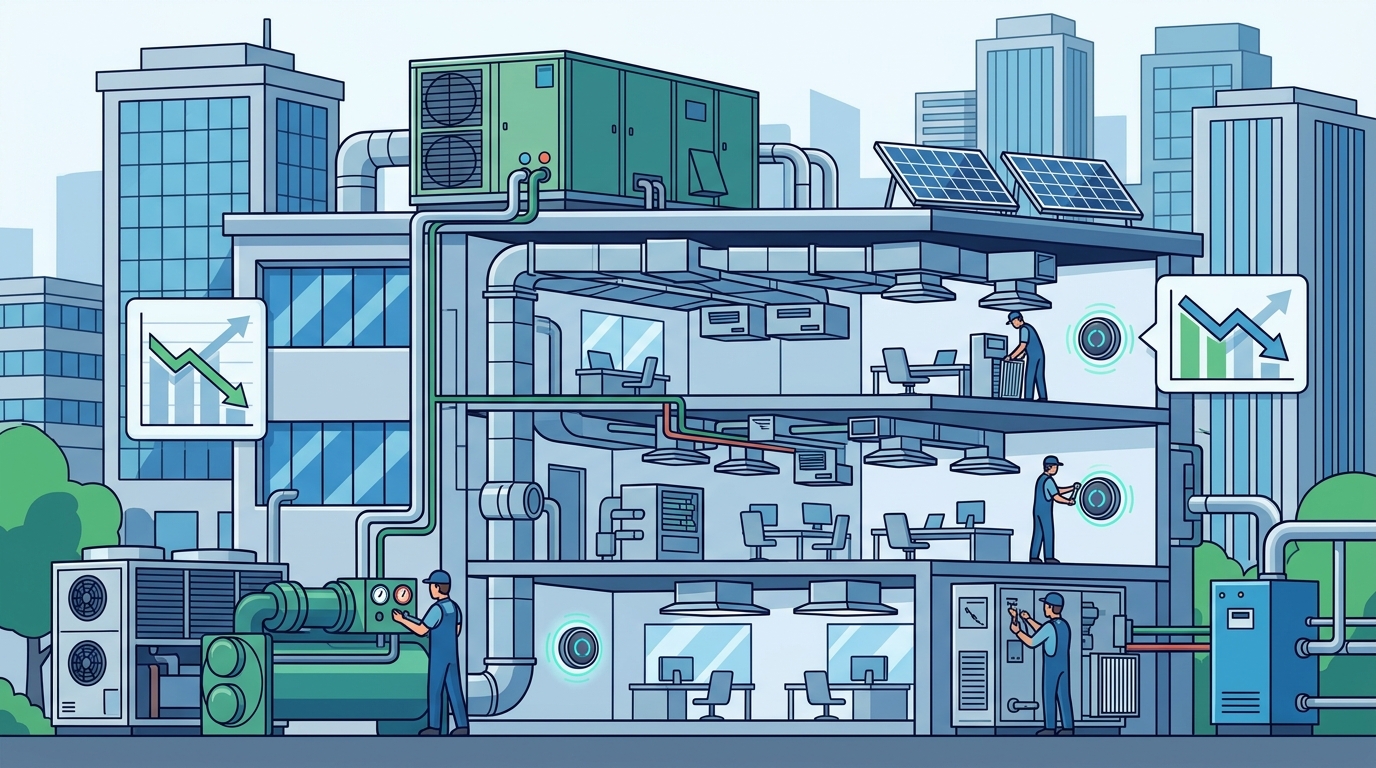
Reactive repairs generate unpredictable budget fluctuations and operational downtime. Commercial HVAC solutions demand structured preventive maintenance schedules. Comfort Club membership programs provide priority scheduling and discounted parts. Facility managers who implement routine inspections reduce emergency call volumes by over sixty percent. Technicians verify refrigerant levels, inspect electrical connections, and calibrate thermostats. ASHRAE standards establish baseline requirements for ventilation and filtration efficiency. Predictive analytics monitor compressor vibration and airflow resistance in real time. Proactive servicing extends equipment lifespan and preserves manufacturer warranties. Our team delivers comprehensive diagnostic reports to guide capital improvement planning.
Navigating Commercial Building Compliance
Regulatory agencies enforce strict energy codes to reduce municipal carbon footprints. Commercial HVAC solutions must align with local building codes and fire safety regulations. Facility directors face increasing pressure to transition away from high-global warming potential refrigerants. Modern systems utilize hydrocarbon blends and carbon dioxide alternatives to meet environmental mandates. CDC recommendations emphasize proper exhaust ventilation to prevent contaminant buildup. Compliance audits verify that ventilation rates match current occupancy loads. Upgrading legacy systems often qualifies for municipal green building grants. Facility managers should consult certified engineers to verify code adherence before project initiation.
Commercial System Comparison Matrix
| System Type | Best Use Case | Efficiency Rating | Maintenance Frequency |
|---|---|---|---|
| Rooftop Units | Warehouses and big-box retail | High | Quarterly |
| Split Systems | Office buildings and clinics | Very High | Semi-Annually |
| VRF Systems | Mixed-use commercial complexes | Exceptional | Quarterly |
| Geothermal Loops | Large institutional campuses | Superior | Annually |
Key Takeaways
- Variable refrigerant flow systems reduce energy waste by up to thirty percent in multi-zone commercial buildings.
- Commercial HVAC solutions require heavy-duty compressors designed for continuous twenty-four-hour operation.
- Facility managers report a sixty-two percent reduction in emergency repairs after implementing structured maintenance schedules.
- Modern refrigerant transitions eliminate high-global warming potential compounds to meet environmental mandates.
- Commercial air quality management directly correlates with improved employee productivity and reduced sick leave.
- Energy Star certified equipment qualifies for federal tax incentives and municipal utility rebates.
- Quarterly air quality audits prevent mold accumulation and maintain strict ventilation compliance.
Frequently Asked Questions
What is the average lifespan of commercial HVAC solutions?
Commercial HVAC solutions typically operate for fifteen to twenty years when subjected to rigorous preventive maintenance. Facility managers should budget for major component replacements around the twelve-year mark.
How do zoning systems impact commercial utility costs?
Zoning systems isolate climate control to occupied areas, reducing compressor cycling and lowering monthly utility expenses by up to thirty-five percent.
What is commercial air quality management?
Commercial air quality management is the systematic process of filtering, ventilating, and monitoring indoor environments to eliminate airborne contaminants and maintain optimal humidity levels.
Do modern commercial systems require specialized refrigerants?
Modern commercial systems utilize hydrocarbon blends and carbon dioxide alternatives to comply with environmental regulations and reduce global warming potential.
How often should commercial ductwork undergo inspection?
Commercial ductwork should undergo professional inspection every twelve to eighteen months to prevent allergen distribution and maintain airflow efficiency.
What is predictive maintenance in commercial facilities?
Predictive maintenance is the practice of using real-time sensor data to forecast equipment failures before they cause operational downtime.
Can commercial HVAC solutions integrate with building automation systems?
Commercial HVAC solutions integrate seamlessly with building automation systems to enable remote monitoring and automated schedule adjustments.
Schedule Your Commercial Comfort Assessment
Facility managers deserve precise climate control that aligns with operational goals and budget constraints. Apex Clean Air engineers customized commercial HVAC solutions for businesses across Salt Lake City, Boise, Denver, and Colorado Springs. Our certified technicians evaluate your floor plan, verify ventilation rates, and design a system architecture that maximizes efficiency. Contact your local office to schedule a comprehensive commercial comfort assessment today. Secure your facility against rising energy costs and regulatory mandates with a trusted partner.