
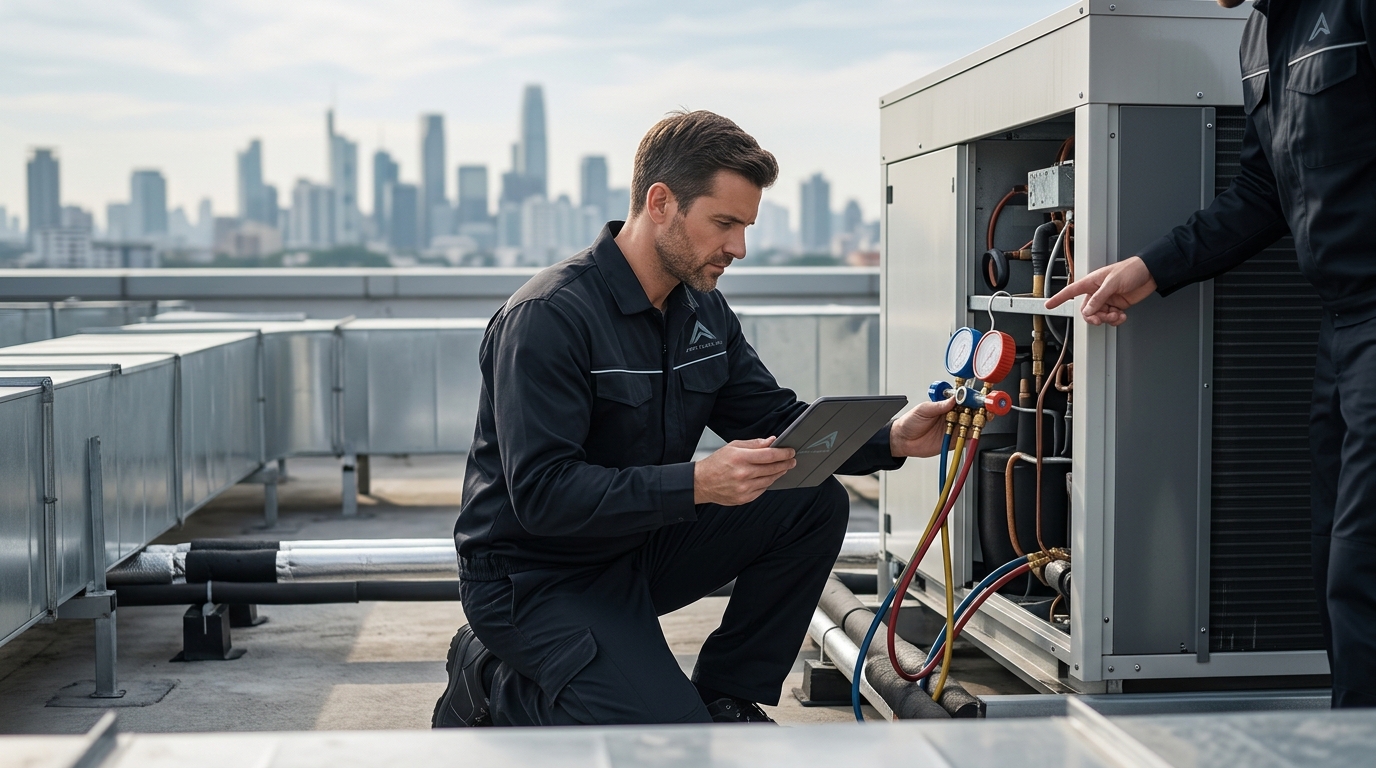
According to industry benchmarks, modern commercial facilities lose nearly twenty percent of their projected energy efficiency when routine maintenance schedules are neglected. This operational gap directly impacts facility uptime and long-term capital expenditure. Building managers must implement systematic inspection protocols to preserve equipment longevity. Apex Clean Air applies these exact commercial standards across all regional service territories. Our certified teams prioritize proactive diagnostics to prevent costly system failures before they disrupt daily operations. (About Us Apex Clean)
Establishing Predictive Maintenance Schedules
Predictive maintenance is a proactive strategy that uses real-time sensor data to schedule repairs before equipment failure occurs. Facility managers should transition from reactive troubleshooting to scheduled interval inspections. Quarterly system evaluations allow technicians to identify worn bearings, degraded belts, and failing capacitors. This approach reduces emergency call volumes and extends the operational lifespan of major mechanical components. Building owners who adopt structured inspection cycles consistently report lower utility overhead and fewer unplanned shutdowns. Our team at AC Maintenance Services structures these quarterly visits to align with your specific building footprint and equipment load. (AC Maintenance Services UT)
Seasonal Transition Protocols
Transition periods between heating and cooling seasons require thorough system flushing and component verification. Technicians must verify thermostat calibration, inspect electrical connections, and clear drainage lines. Seasonal adjustments prevent sudden capacity drops during peak demand periods. Proper scheduling ensures that mechanical systems operate at peak thermal exchange rates. (Air Purification Services UT)
Optimizing Air Filtration and Duct Integrity
Commercial air quality standards dictate that filtration systems must capture particulate matter without restricting airflow. High-efficiency particulate air filters require regular replacement to maintain static pressure balance. When filters become saturated, system fans work harder to push air through restricted pathways. This increased mechanical strain drives up electricity consumption and accelerates motor wear. Regular duct inspection prevents dust accumulation from recirculating through occupied spaces. Our specialists perform comprehensive Air Duct Cleaning Services to restore optimal airflow velocity and remove accumulated contaminants.
Filtration Grade Selection
Selecting the correct Minimum Efficiency Reporting Value rating depends on building occupancy density and local environmental factors. Medical facilities require higher filtration grades than standard office complexes. Facility managers should consult technical specifications to match filter ratings with actual HVAC capacity. Proper filtration selection reduces allergen exposure and minimizes coil fouling.
Calibrating Building Automation Controllers
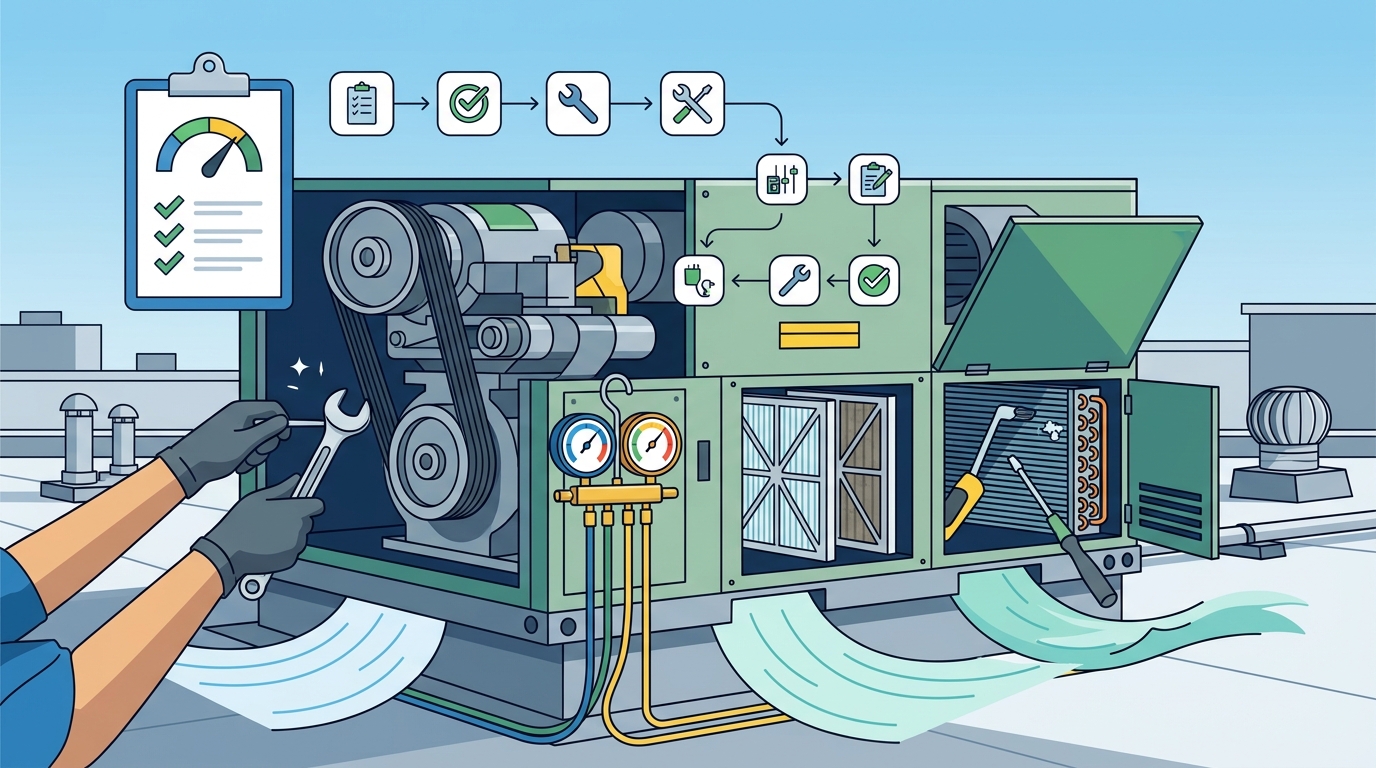
Building automation is a centralized control network that monitors and adjusts mechanical systems based on occupancy and environmental triggers. Modern commercial properties rely on sophisticated control panels to regulate temperature setpoints, humidity levels, and ventilation rates. Controllers must be calibrated to match actual usage patterns rather than theoretical maximums. Misaligned programming often causes equipment to cycle excessively, which wastes energy and stresses mechanical parts. Regular software updates and sensor recalibration ensure that automation systems respond accurately to changing environmental conditions. Our technicians verify controller logic during every scheduled service visit to maintain precise environmental control.
Occupancy-Based Scheduling
Integrating occupancy sensors with control panels allows systems to reduce mechanical output during unoccupied hours. This strategy prevents unnecessary compressor runtime and extends component life. Facility managers should review scheduling parameters quarterly to align with shifting tenant requirements. Automated adjustments reduce manual intervention and improve overall system responsiveness.
Managing Refrigerant Cycles and Compressor Health
Refrigerant cycle management is the precise regulation of cooling agents to maintain optimal heat exchange efficiency across large commercial units. Compressors represent the most expensive mechanical component in any cooling system. Excessive refrigerant pressure or improper charge levels force compressors to operate beyond design specifications. Technicians must verify pressure readings, inspect for microscopic leaks, and verify oil lubrication levels. Proper refrigerant management prevents catastrophic compressor failure and maintains consistent cooling output. Our team conducts thorough AC Installation and retrofit assessments to ensure your system meets current environmental compliance standards.
Leak Detection Protocols
Advanced electronic leak detectors identify microscopic refrigerant escapes that manual inspection cannot detect. Even minor leaks reduce system capacity and increase energy consumption. Technicians must document leak locations and perform vacuum recovery procedures before recharging systems. Proper leak management preserves environmental compliance and maintains equipment warranty coverage.
Implementing Indoor Air Quality Protocols
Indoor air quality protocols require specialized equipment to neutralize airborne pathogens and volatile organic compounds. Ultraviolet germicidal irradiation systems installed near cooling coils prevent microbial growth and maintain heat transfer efficiency. Air purification systems capture microscopic allergens and reduce respiratory irritation for building occupants. Facility managers should schedule professional Air Purification Services to verify system performance and replace depleted purification components. Proper IAQ management reduces sick building syndrome incidents and improves tenant satisfaction scores.
Ventilation Rate Verification
Outdoor air intake dampers must be calibrated to meet current ventilation standards for occupied spaces. Insufficient fresh air circulation causes carbon dioxide buildup and reduces cognitive performance. Technicians should verify damper actuator function and adjust airflow volumes to match occupancy density. Proper ventilation rates ensure healthy air exchange without compromising thermal comfort.
Documenting Compliance and Service History
Comprehensive service documentation provides legal protection and operational transparency for commercial property owners. Every maintenance visit should generate detailed reports outlining component conditions, replacement recommendations, and energy consumption metrics. Digital record keeping allows facility managers to track equipment performance trends over multiple years. Consistent documentation simplifies warranty claims and supports capital budgeting decisions. Our certified technicians maintain detailed digital logs for every commercial account to ensure complete operational transparency. You can review our operational standards and team credentials on our About Us page.
Capital Replacement Planning
Long-term equipment tracking enables facility managers to forecast replacement costs accurately. Systems approaching their design lifespan require strategic budget allocation to avoid emergency procurement. Documented maintenance history often qualifies commercial properties for insurance premium reductions. Consistent record keeping transforms reactive repairs into strategic capital investments.
System Comparison and Service Options
| Service Category | Primary Benefit | Recommended Frequency | Apex Service Path |
|---|---|---|---|
| Predictive Maintenance | Prevents unplanned downtime | Quarterly | AC Maintenance Services |
| Duct Sanitization | Removes airborne particulates | Annually | Air Duct Cleaning Services |
| UV Purification | Neutralizes microbial growth | Bi-Annually | Air Purification Services |
| Controller Calibration | Optimizes energy consumption | Semi-Annually | About Us |
| System Retrofit | Modernizes aging infrastructure | As Needed | AC Installation |
Key Takeaways
- Predictive maintenance schedules reduce emergency repair costs by approximately thirty percent annually.
- Quarterly filter replacements prevent static pressure buildup and extend compressor lifespan.
- Building automation calibration aligns mechanical output with actual occupancy patterns.
- Refrigerant cycle management prevents catastrophic compressor failure and maintains warranty coverage.
- Ultraviolet purification systems reduce microbial growth on cooling coils by over ninety percent.
- Digital service documentation simplifies insurance claims and supports capital budget forecasting.
- Apex Clean Air operates certified technician teams across Salt Lake City, Boise, Denver, and Colorado Springs.
Frequently Asked Questions
How often should commercial HVAC systems receive professional maintenance?
Commercial HVAC systems require quarterly professional inspections to maintain optimal performance and prevent unexpected breakdowns. Seasonal transitions demand thorough component verification to ensure mechanical systems operate at peak thermal exchange rates.
What filtration rating is recommended for high-traffic commercial buildings?
High-efficiency particulate air filters with a Minimum Efficiency Reporting Value rating of sixteen or higher are recommended for high-traffic commercial buildings. These filters capture microscopic allergens without restricting airflow velocity.
Can building automation systems reduce energy consumption significantly?
Properly calibrated building automation systems can reduce energy consumption by up to twenty-five percent by adjusting mechanical output based on real-time occupancy data. Automated scheduling prevents unnecessary compressor runtime during unoccupied hours.
Why is refrigerant leak detection critical for commercial cooling units?
Refrigerant leak detection prevents microscopic escapes that reduce system capacity and increase energy consumption. Even minor leaks force compressors to operate beyond design specifications and void manufacturer warranties.
How do ultraviolet purification systems improve indoor air quality?
Ultraviolet germicidal irradiation systems neutralize airborne pathogens and prevent microbial growth on cooling coils. These systems maintain heat transfer efficiency while reducing respiratory irritation for building occupants.
What documentation is required for commercial warranty compliance?
Commercial warranty compliance requires detailed digital service logs outlining component conditions, replacement recommendations, and energy consumption metrics. Consistent documentation simplifies warranty claims and supports capital budgeting decisions.
How does Apex Clean Air structure commercial service agreements?
Apex Clean Air structures commercial service agreements around quarterly inspections, seasonal transitions, and priority response protocols. Our certified technicians prioritize proactive diagnostics to prevent costly system failures before they disrupt daily operations.
Schedule Your Commercial HVAC Assessment
Implementing these maintenance best practices ensures long-term equipment reliability and optimal energy efficiency. Building managers who prioritize systematic inspections reduce operational costs and extend mechanical system lifespans. Contact your local Apex Clean Air office to schedule a comprehensive commercial HVAC assessment. Our certified technicians will evaluate your current infrastructure and design a customized maintenance protocol tailored to your facility requirements. Visit https://www.apexcleanair.com/ to request a consultation and secure your preferred service window today.