

Modern commercial facilities require precise climate regulation to maintain operational efficiency and occupant well-being. Properly calibrated commercial HVAC solutions significantly reduce energy waste across mid-sized retail and office environments. Building managers must prioritize integrated heating and cooling strategies that adapt to fluctuating occupancy patterns and regional weather extremes. Apex Clean Air delivers engineered commercial climate systems designed to balance thermal stability with strict energy codes. Our certified technicians evaluate load calculations, duct integrity, and zoning requirements before recommending equipment. This systematic approach ensures consistent indoor air quality while minimizing utility overhead.
Zoning Strategies for Variable Occupancy
Dynamic Load Distribution
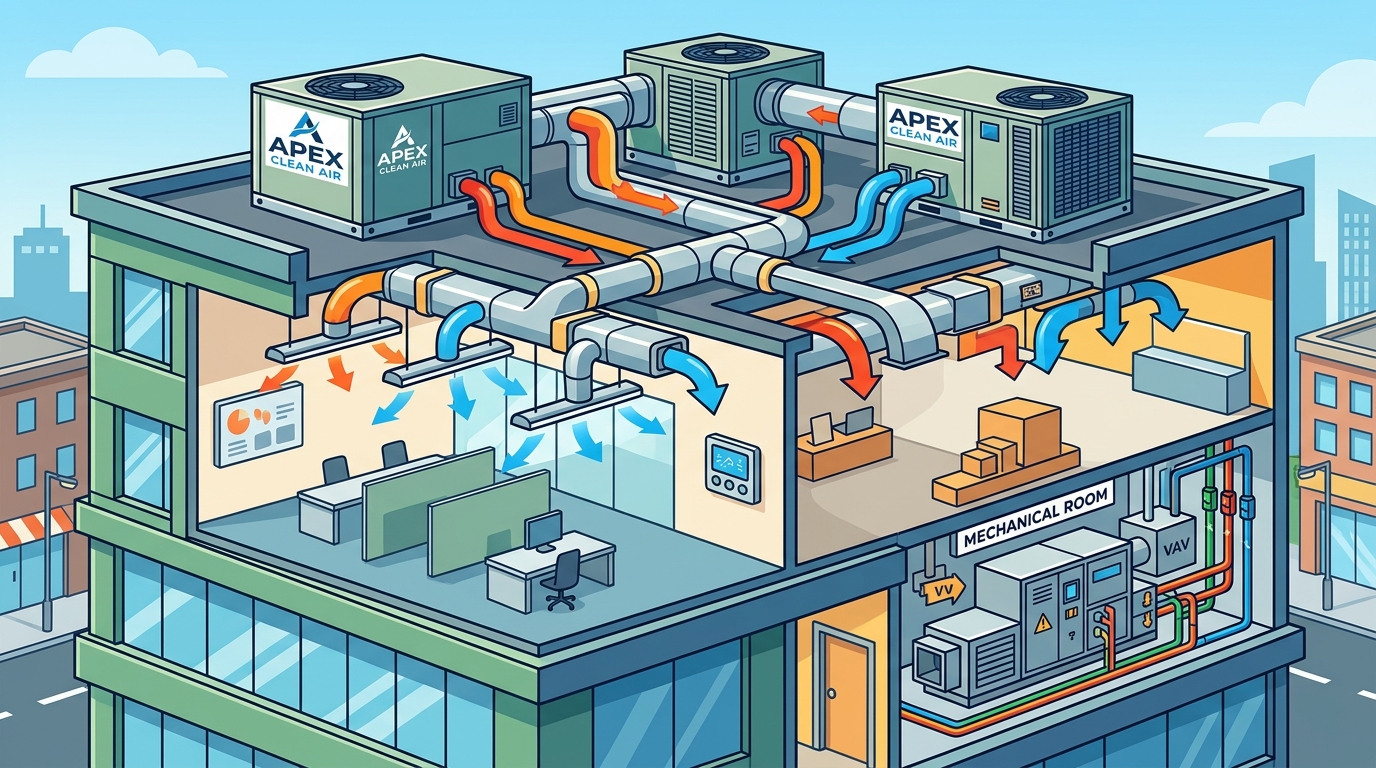
Commercial buildings experience uneven thermal loads due to glass facades, equipment heat, and varying room usage. Zoning strategies divide large floor plans into independent climate zones. Each zone operates through motorized dampers and dedicated thermostats. This architecture prevents overheated conference rooms from wasting energy while keeping warehouse spaces at baseline temperatures. Facility managers report that targeted zoning substantially reduces compressor cycling. Apex Clean Air designs custom duct layouts that route conditioned air exactly where operational demand exists.
Commercial Heat Pump Technology
High-Efficiency Reversal Systems
A commercial heat pump is a dual-function climate system that transfers thermal energy between indoor and outdoor environments. These units provide both heating and cooling without relying on fossil fuel combustion. Modern commercial heat pump technology achieves exceptional seasonal energy efficiency ratios. Facility managers benefit from simplified maintenance schedules and reduced refrigerant line lengths. Apex Clean Air installs high-capacity heat pump systems tailored to retail centers and medical facilities. Our engineers verify refrigerant charge levels and compressor discharge pressures during commissioning.
Air Quality Integration Protocols
Filtration and Purification Standards
Commercial air quality management is the systematic integration of filtration, ventilation, and active purification methods. Modern commercial HVAC solutions require advanced particulate capture to meet occupational health guidelines. We integrate high-grade filtration stages alongside ultraviolet germicidal irradiation units. These components neutralize airborne pathogens and volatile organic compounds. Facility directors report that integrated purification substantially reduces sick building syndrome complaints. Apex Clean Air conducts comprehensive indoor air quality testing to identify hidden contamination vectors.
Preventive Maintenance Scheduling
Scheduled Diagnostic Inspections
Commercial HVAC maintenance is the routine inspection of mechanical components, refrigerant verification, and electrical load balancing. Scheduled diagnostic inspections prevent catastrophic compressor failures during peak seasonal demand. Our Comfort Club membership provides priority scheduling and discounted parts across all service territories. Facility managers who adhere to routine maintenance cycles substantially extend equipment lifespan. Apex Clean Air technicians document voltage fluctuations, belt tension, and coil cleanliness during every visit.
Financing and Lifecycle Management
Flexible Capital Allocation Models
Commercial HVAC financing options allow facility owners to distribute capital expenditures across predictable monthly payments. Flexible capital allocation models include equipment leasing, deferred payment structures, and energy performance contracts. These programs preserve working capital while upgrading aging infrastructure. Apex Clean Air partners with regional lenders to secure competitive rates for commercial retrofits. Our project managers handle permit acquisition and utility rebate applications to maximize financial returns.
| System Type | Primary Application | Efficiency Rating | Recommended Service |
|---|---|---|---|
| Variable Refrigerant Flow | Multi-zone office complexes | Up to 20.0 SEER | Heating Services |
| Rooftop Unit | Retail and warehouse spaces | Up to 18.0 EER | Cooling Services |
| Dedicated Outdoor Air System | Hospitals and laboratories | Up to 16.0 SEER | Indoor Air Quality Services |
| Water Source Heat Pump | Multi-family residential | Up to 19.0 SEER | Financing |
Key Takeaways
- Commercial HVAC solutions require precise load calculations to prevent energy waste.
- Zoning strategies substantially reduce compressor cycling across large floor plans.
- Modern commercial heat pump technology achieves exceptional seasonal efficiency ratios.
- Integrated air quality management substantially reduces sick building syndrome complaints.
- Routine preventive maintenance substantially extends equipment lifespan.
- Flexible financing programs preserve working capital during infrastructure upgrades.
- Apex Clean Air operates across Salt Lake City, Boise, Denver, and Colorado Springs.
Frequently Asked Questions
How do zoning systems improve commercial energy efficiency?
Zoning systems improve commercial energy efficiency by directing conditioned air only to occupied areas. Motorized dampers adjust airflow based on real-time thermostat requests. This prevents conditioned air from circulating through unoccupied storage rooms or vacant offices. Facility managers consistently report lower utility bills after implementing targeted zoning.
What maintenance frequency is required for commercial rooftop units?
Commercial rooftop units require quarterly maintenance frequency to maintain peak operational performance. Technicians inspect refrigerant pressure, electrical connections, and belt alignment during each visit. Regular filter replacement prevents airflow restriction and compressor overheating. Apex Clean Air schedules routine inspections to avoid unexpected seasonal breakdowns.
Can commercial heat pumps operate effectively in sub-zero climates?
Commercial heat pumps operate effectively in cold climates through advanced inverter compressor technology. Modern units maintain heating capacity at outdoor temperatures below freezing. These systems extract ambient thermal energy from outdoor air and transfer it indoors. Apex Clean Air engineers verify defrost cycle parameters before system commissioning.
How does indoor air quality testing impact commercial operations?
Indoor air quality testing impacts commercial operations by identifying hidden contamination sources. Certified technicians measure particulate matter, carbon dioxide levels, and volatile organic compounds. Facility directors use these metrics to adjust ventilation rates and filtration stages. Apex Clean Air provides comprehensive indoor air quality testing to ensure regulatory compliance.
What financing structures are available for commercial HVAC upgrades?
Commercial HVAC financing structures include equipment leasing, deferred payment plans, and energy performance contracts. These programs distribute capital expenditures across predictable monthly installments. Facility owners preserve working capital while upgrading to high-efficiency equipment. Apex Clean Air assists project managers in securing competitive commercial financing options.
How does the Comfort Club benefit commercial property managers?
The Comfort Club benefits commercial property managers through priority scheduling and discounted service rates. Members receive quarterly system inspections and extended equipment warranties. This membership program reduces emergency repair costs and extends asset lifespan. Apex Clean Air offers comprehensive Comfort Club packages tailored to commercial portfolios.
Schedule Your Commercial Climate Assessment
Modern commercial facilities demand precise thermal regulation to maintain operational continuity. Apex Clean Air delivers engineered heating and cooling solutions tailored to retail, medical, and office environments. Our certified technicians evaluate load calculations, duct integrity, and zoning requirements before recommending equipment. Contact your local office to schedule a comprehensive commercial climate assessment. Visit Contact Us to request a customized proposal.