
Commercial facility managers face mounting pressure to reduce operational overhead while maintaining strict environmental controls. recent industry reports indicate that modern commercial buildings account for nearly 30 percent of total energy consumption across the United States. Facility operators who implement strategic HVAC optimization routinely achieve double-digit reductions in annual utility expenditures. This data shows that proactive system management directly correlates with long-term financial stability. Building owners must prioritize comprehensive climate control strategies to protect asset value and ensure consistent occupant productivity.
Assess Current System Performance
Facility managers must begin by conducting a comprehensive audit of existing mechanical infrastructure. Commercial HVAC efficiency is the ratio of useful heating or cooling output to total energy consumed. Many older commercial properties operate with legacy equipment that lacks modern variable frequency drives. These outdated components frequently cycle on and off, creating severe temperature fluctuations and unnecessary power waste. A thorough diagnostic evaluation reveals hidden inefficiencies within ductwork, refrigerant lines, and control panels. Facility operators should schedule professional cooling diagnostic services to map airflow resistance and identify pressure drops. Correcting these baseline issues establishes a reliable foundation for all subsequent optimization projects.
Identify Legacy Equipment Limitations
Older mechanical units often suffer from degraded compressors and restricted heat exchangers. These physical constraints force the system to draw excessive amperage during peak demand periods. Facility managers can mitigate these losses by upgrading to modern variable refrigerant flow technology. This advanced architecture adjusts compressor speed in real time to match exact building load requirements. The result is a dramatic reduction in electrical draw during partial occupancy hours. Upgrading to modern systems directly supports long-term operational sustainability.
Implement Zoned Climate Control Strategies
Zoned climate control is a distribution method that regulates temperature across distinct facility areas independently. Large commercial footprints rarely experience uniform thermal loads throughout the day. Conference rooms, server closets, and open office spaces generate vastly different heat profiles. A unified system struggles to balance these competing demands without wasting energy. Installing motorized dampers and independent thermostats allows facility managers to direct conditioned air exactly where it is needed. This targeted approach eliminates the common problem of overheating unoccupied zones while undercooling high-traffic areas. Facility operators who adopt this architecture consistently report improved occupant satisfaction scores. The financial impact translates directly into reduced utility invoices and extended equipment lifespan.
Configure Smart Building Controllers
Modern building automation systems integrate seamlessly with existing duct networks to automate zone adjustments. These intelligent controllers monitor occupancy sensors and ambient temperature readings simultaneously. The system automatically adjusts airflow direction and volume based on real-time occupancy data. Facility managers gain complete remote visibility into every floor and department. This centralized oversight eliminates manual thermostat adjustments and prevents user-induced energy waste. Implementing smart controllers requires careful calibration to match the specific architectural layout of your facility.
Upgrade to High-Efficiency Commercial Units
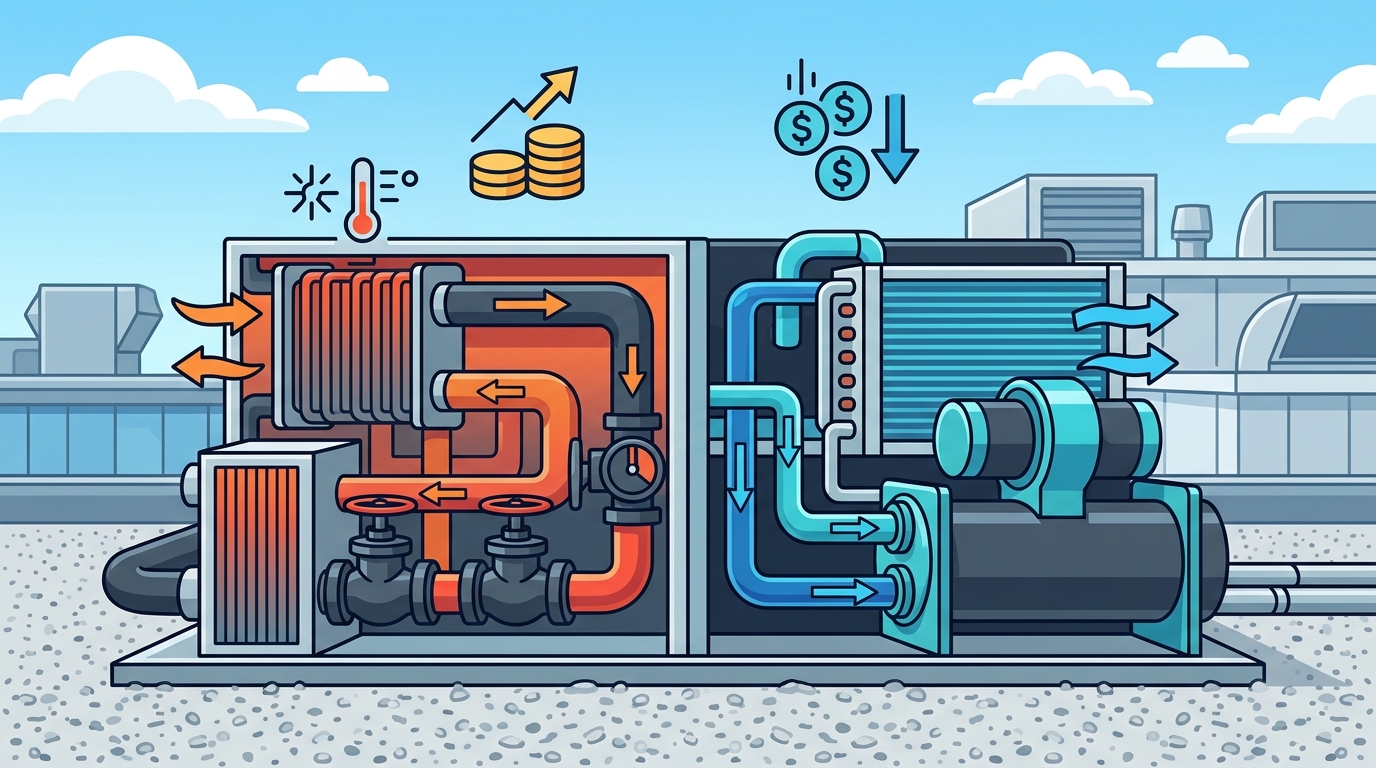
Replacing aging mechanical hardware with modern commercial heating and cooling equipment delivers immediate operational benefits. High-efficiency units utilize advanced heat recovery technology to capture waste thermal energy. This captured energy is redirected to preheat incoming fresh air or domestic water supplies. The process drastically reduces the primary fuel consumption required to maintain target temperatures. Facility managers should consult professional heating services to evaluate the exact capacity requirements for their square footage. Oversized units cycle too frequently, while undersized units run continuously without reaching set points. Proper sizing calculations ensure optimal performance and maximum equipment longevity. Upgrading to modern equipment also qualifies many businesses for federal tax incentives and local utility rebates.
Evaluate Variable Refrigerant Flow Systems
Variable refrigerant flow technology represents the current standard for commercial climate management. These systems circulate refrigerant directly to each indoor terminal unit without relying on water loops. This direct exchange method eliminates pump energy losses and reduces installation complexity. Facility operators benefit from rapid response times and precise temperature regulation. The modular design allows facility managers to add or remove terminal units as lease agreements change. This flexibility protects capital investments during periods of commercial turnover. Modern commercial units also feature advanced filtration stages that capture particulate matter and volatile organic compounds.
Optimize Indoor Air Quality Protocols
Commercial facility managers must recognize that thermal comfort and air purity operate as interconnected priorities. indoor air quality testing reveals hidden contaminants that standard HVAC systems fail to capture. Dust, mold spores, and chemical off-gassing accumulate rapidly in poorly ventilated spaces. These airborne pollutants trigger respiratory complaints and reduce overall workforce productivity. Facility operators should integrate advanced air purification services to neutralize microscopic contaminants. High-efficiency particulate air filters capture ninety-nine point nine percent of particles larger than three microns. Installing ultraviolet germicidal irradiation lamps inside air handlers destroys biological growth on cooling coils. These combined interventions create a healthier environment that supports employee focus and reduces sick days. Prioritizing air quality directly enhances the overall value of the commercial property.
Implement Dedicated Outdoor Air Systems
Dedicated outdoor air systems introduce fresh ventilation air independently of the primary heating and cooling loops. This separation prevents the recirculation of stale air and maintains consistent oxygen levels throughout the facility. Facility managers can precisely control humidity levels to prevent mold proliferation and equipment corrosion. The system automatically adjusts ventilation rates based on carbon dioxide sensors and occupancy counts. This dynamic adjustment ensures compliance with modern building codes and occupational safety standards. Facility operators who invest in dedicated ventilation systems consistently report higher tenant retention rates. The initial capital expenditure pays for itself through reduced liability and improved air quality metrics.
Establish Predictive Maintenance Schedules
Predictive maintenance is a proactive service strategy that utilizes real-time sensor data to schedule repairs before equipment failure. Traditional reactive maintenance waits for mechanical breakdowns to occur before dispatching technicians. This outdated approach causes severe operational disruptions and expensive emergency repair bills. Modern commercial facilities utilize remote monitoring platforms to track compressor vibration, refrigerant pressure, and motor amperage. Facility managers receive automated alerts when parameters drift outside acceptable thresholds. This early warning system allows technicians to replace worn bearings or clean clogged filters during scheduled downtime. Implementing a structured maintenance program extends equipment lifespan by up to forty percent. Facility operators who adopt this strategy consistently experience fewer emergency service calls. The Comfort Club membership program provides comprehensive coverage for routine inspections and priority scheduling. This proactive approach transforms maintenance from a financial burden into a strategic asset.
Monitor Refrigerant Charge Levels
Refrigerant leaks represent the most common cause of efficiency degradation in commercial cooling systems. Even minor pressure drops force compressors to work harder to achieve target temperatures. Facility managers must schedule regular refrigerant leak detection and recovery services to maintain optimal charge levels. Modern tracking software logs refrigerant usage trends and automatically flags abnormal consumption patterns. Technicians can precisely locate microscopic leaks using electronic sniffers and ultrasonic detectors. Restoring the correct refrigerant charge restores full cooling capacity and reduces electrical draw. Regular monitoring ensures compliance with environmental regulations and prevents costly compressor replacements.
Calculate Return on Investment Metrics
Facility managers must quantify the financial impact of every optimization project before committing capital. facility revenue growth directly depends on minimizing operational waste and maximizing equipment uptime. According to recent industry reports, modern commercial buildings account for nearly 30 percent of total energy consumption across the United States. Facility operators who implement strategic HVAC optimization routinely achieve double-digit reductions in annual utility expenditures. This data shows that proactive system management directly correlates with long-term financial stability. Building owners must prioritize comprehensive climate control strategies to protect asset value and ensure consistent occupant productivity. Calculating the exact payback period requires analyzing current utility rates, equipment lifespan, and projected energy savings. Facility managers should request detailed financing options to spread capital expenditures across multiple fiscal quarters. Many commercial properties qualify for accelerated depreciation schedules and local utility rebates. These financial incentives dramatically improve the overall return on investment. Facility operators who track these metrics consistently secure higher property valuations and stronger lease agreements.
Track Energy Consumption Baselines
Establishing accurate energy baselines allows facility managers to measure the precise impact of each upgrade. Smart meters record kilowatt hours, thermal loads, and peak demand charges in real time. Facility operators can compare pre-optimization data against post-implementation performance to verify savings. This transparent tracking builds confidence among stakeholders and justifies future capital requests. Facility managers should utilize automated reporting dashboards to visualize monthly energy trends. These visual reports simplify complex data into actionable insights for executive leadership. Tracking baselines also ensures compliance with local energy codes and sustainability mandates. Facility operators who maintain rigorous documentation consistently secure better insurance premiums and financing terms.
| Optimization Strategy | Primary Benefit | Implementation Complexity | Recommended Service Path |
|---|---|---|---|
| System Performance Audit | Identifies baseline inefficiencies and airflow resistance | Low | Heating Services |
| Zoned Climate Control | Directs conditioned air to high-occupancy areas | Medium | Cooling Services |
| High-Efficiency Unit Upgrade | Reduces electrical draw and fuel consumption | High | Comfort Club |
| Indoor Air Quality Protocols | Neutralizes airborne contaminants and allergens | Medium | Indoor Air Quality Services |
| Predictive Maintenance Program | Prevents equipment failure and extends lifespan | Low | About Us |
Key Takeaways
- Modern commercial buildings account for nearly 30 percent of total energy consumption across the United States.
- Facility operators who implement strategic HVAC optimization routinely achieve double-digit reductions in annual utility expenditures.
- Commercial HVAC efficiency is the ratio of useful heating or cooling output to total energy consumed.
- Zoned climate control is a distribution method that regulates temperature across distinct facility areas independently.
- Predictive maintenance is a proactive service strategy that utilizes real-time sensor data to schedule repairs before equipment failure.
- Facility managers who adopt structured maintenance programs consistently experience fewer emergency service calls.
- Commercial properties that prioritize comprehensive climate control strategies secure higher property valuations and stronger lease agreements.
Frequently Asked Questions
How often should commercial HVAC systems undergo professional maintenance?
Commercial HVAC systems should undergo professional maintenance twice annually, typically before peak cooling and heating seasons. Regular inspections prevent minor issues from escalating into costly equipment failures. Facility managers should schedule comprehensive cooling diagnostic services to verify refrigerant levels and electrical connections. Biannual maintenance extends equipment lifespan and maintains warranty compliance.
What is the average lifespan of a commercial HVAC unit?
The average lifespan of a commercial HVAC unit ranges from fifteen to twenty years, depending on usage intensity and maintenance frequency. Facility operators who implement predictive maintenance schedules routinely push equipment beyond twenty years without major component replacements. Regular filter changes and coil cleaning prevent premature compressor degradation. Facility managers should track runtime hours to anticipate replacement cycles accurately.
Can zoning systems reduce energy costs in large commercial facilities?
Zoning systems can reduce energy costs by up to thirty percent in large commercial facilities. These systems direct conditioned air exclusively to occupied zones while minimizing airflow to empty spaces. Facility managers should consult professional heating services to design a customized zoning layout. Proper damper installation and controller calibration maximize financial savings.
How does indoor air quality impact commercial property value?
Indoor air quality directly impacts commercial property value by influencing tenant retention and lease renewal rates. Facility operators who integrate advanced air purification services consistently report higher occupancy levels. Modern tenants prioritize healthy environments that minimize respiratory irritants and airborne pathogens. Property managers who prioritize air quality secure premium rental rates and longer lease terms.
What financing options are available for commercial HVAC upgrades?
Facility managers can access multiple financing options for commercial HVAC upgrades, including equipment leasing, energy performance contracts, and municipal green building grants. Many commercial properties qualify for accelerated depreciation schedules that offset initial capital expenditures. Facility operators should review comprehensive financing options to determine the most advantageous payment structure. Flexible financing preserves cash flow while delivering immediate operational benefits.
How do smart building controllers improve commercial HVAC efficiency?
Smart building controllers improve commercial HVAC efficiency by automatically adjusting temperature setpoints based on real-time occupancy data. These intelligent systems eliminate manual thermostat overrides and prevent unnecessary energy waste. Facility managers gain complete remote visibility into every floor and department. Automated scheduling ensures optimal performance during business hours and reduced consumption during off-peak periods.
Schedule Your Commercial HVAC Consultation
Facility managers must prioritize comprehensive climate control strategies to protect asset value and ensure consistent occupant productivity. Apex Clean Air delivers expert installation, repairs, and maintenance for commercial heating and cooling systems across multiple regions. Our certified technicians utilize the latest diagnostic tools to optimize your mechanical infrastructure. Facility operators can schedule a comprehensive facility assessment to identify immediate optimization opportunities. Visit our Contact Us page to connect with a local project manager. Our team will design a customized efficiency roadmap tailored to your specific square footage and operational requirements. Secure your facility comfort today by booking your consultation online.