
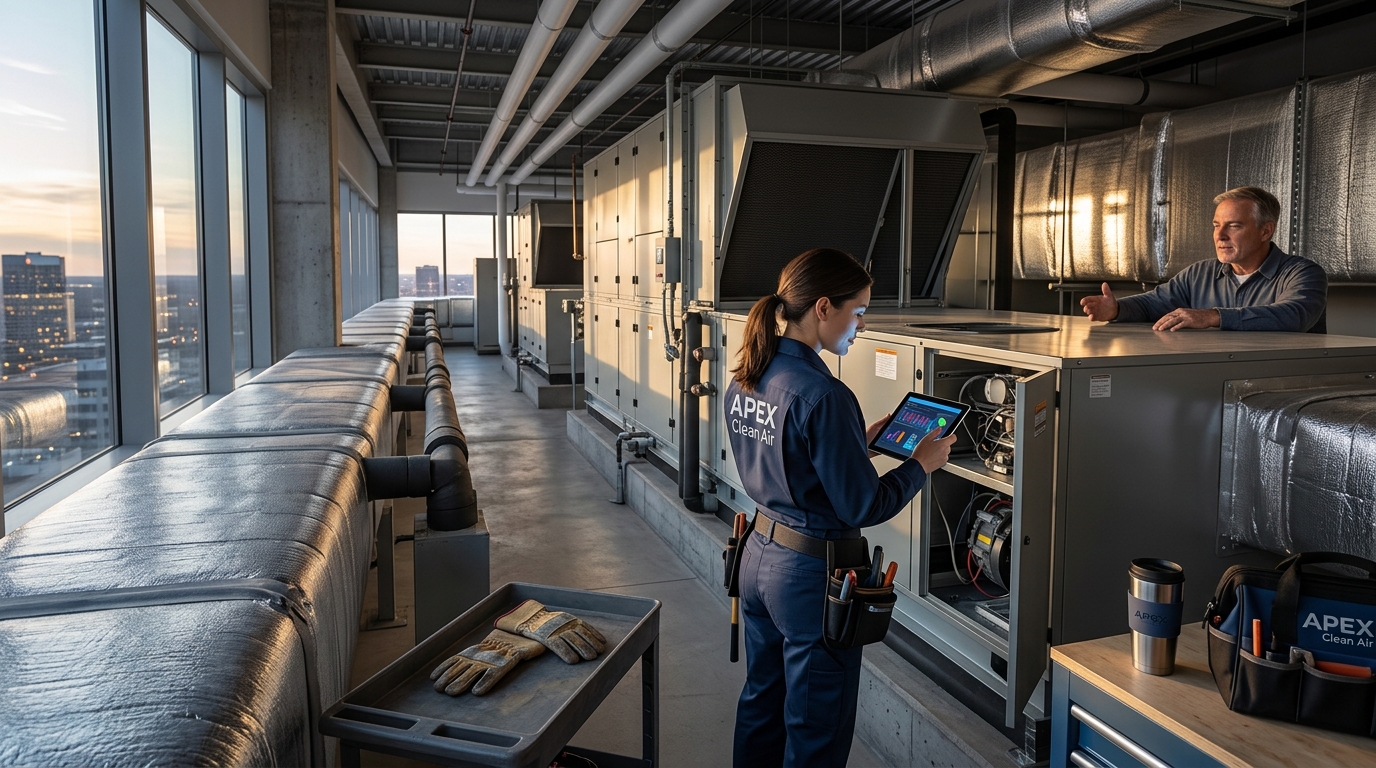
Large commercial facilities require precise climate control to operate efficiently. According to the U.S. Department of Energy, commercial buildings consume nearly forty percent of total U.S. energy consumption. This massive energy draw makes systematic equipment upkeep absolutely critical for operational continuity. Facility managers must implement rigorous scheduling protocols to prevent costly downtime. Commercial energy data consistently highlights the financial impact of neglecting routine system checks.
Preventive Scheduling Protocols
Preventive maintenance is the systematic inspection and servicing of mechanical components before failure occurs. Facility operators should schedule biannual inspections to catch wear patterns early. Regular filter replacements and coil cleaning directly impact system longevity. Professional heating diagnostics reveal that neglected units lose efficiency rapidly. Building managers must track compressor cycles and refrigerant levels to maintain peak performance.
Filter Replacement Cycles
Commercial air filters capture particulate matter and protect internal coils. Facility directors should replace filters every ninety days during peak occupancy. Clogged filters force fans to work harder, which increases electricity costs. Routine cooling maintenance prevents airflow restrictions that damage compressors. Tracking replacement dates on a digital log ensures consistent compliance.
Air Quality Management Standards
Indoor air quality is the measurement of contaminant levels and ventilation effectiveness within enclosed spaces. Modern commercial codes require advanced filtration to protect employee health. Facility managers should install MERV 13 or higher filters to capture microscopic pollutants. Professional IAQ testing identifies hidden mold spores and volatile organic compounds. Proper ventilation rates directly correlate with reduced sick building syndrome reports.
Ventilation Rate Verification
Building codes mandate specific air exchange rates per square foot. Facility engineers must verify outdoor air dampers open fully during operation. Stagnant air pockets increase respiratory illness rates among staff. EPA ventilation guidelines establish minimum fresh air requirements for office environments. Regular airflow balancing prevents pressure imbalances that compromise structural integrity.
Heat Pump Optimization
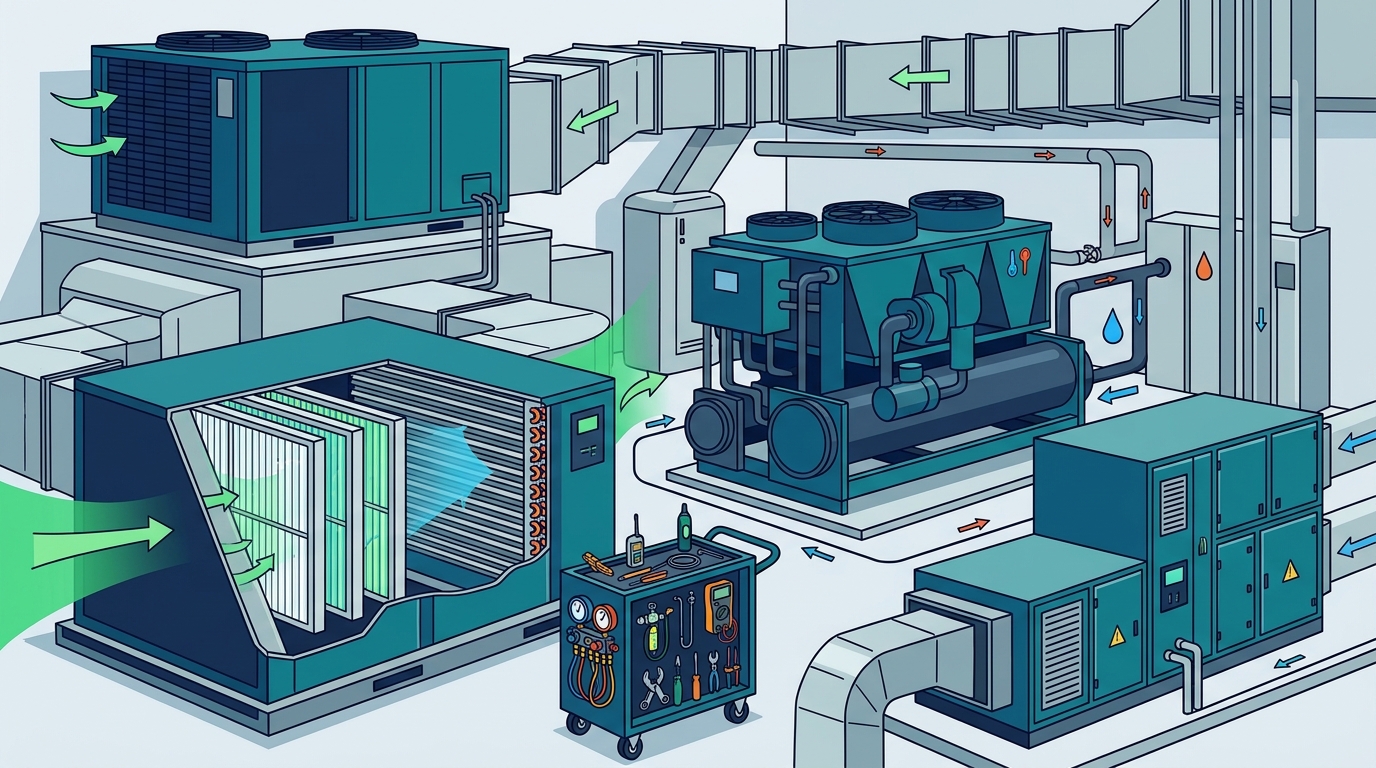
Commercial heat pumps are dual-purpose systems that transfer thermal energy between indoor and outdoor environments. These units require specialized attention to reverse-cycle valves and defrost controls. Facility technicians should inspect reversing valves quarterly to prevent refrigerant migration. Expert heat pump installation ensures optimal coil alignment and refrigerant charge. Seasonal mode transitions demand precise thermostat calibration to avoid mechanical stress.
Refrigerant Charge Management
Refrigerant levels dictate cooling capacity and compressor lifespan. Technicians must measure subcooling and superheating values during seasonal transitions. Overcharged systems waste electricity while undercharged units freeze evaporator coils. ASHRAE refrigerant standards mandate precise charge calculations for commercial units. Documenting charge adjustments prevents environmental violations and equipment failure.
Duct Integrity Verification
Commercial HVAC ductwork distributes conditioned air across multiple floors and zones. Leaky ducts waste up to thirty percent of conditioned air before it reaches occupied spaces. Facility auditors should conduct annual blower door tests to identify pressure drops. Professional air duct cleaning removes accumulated dust and debris that restrict airflow. Sealing joints with mastic tape prevents unconditioned air infiltration from attics.
Zone Damper Calibration
Motorized dampers regulate airflow distribution across different building sections. Facility engineers must verify actuator response times during seasonal load changes. Sticking dampers create hot spots and trigger unnecessary compressor cycling. Regular lubrication and belt inspections prevent mechanical binding. Comprehensive maintenance plans reduce emergency repair costs by forty percent annually.
Compliance Reporting Frameworks
Commercial HVAC compliance is the documented adherence to local building codes and environmental regulations. Facility directors must maintain detailed service logs for insurance and audit purposes. Regulatory agencies require annual emissions reporting for large refrigerant systems. CDC air quality reports emphasize the importance of documented ventilation protocols. Digital maintenance tracking software simplifies regulatory submissions and warranty claims.
Emergency Response Protocols
Facility managers must establish clear escalation procedures for system failures. On-call technician networks should guarantee four-hour response times for critical outages. Backup power generators must automatically engage during grid failures. Regular drill simulations ensure staff familiarity with emergency shutdown sequences. Documented response times directly impact tenant satisfaction scores and lease renewals.
| Maintenance Category | Frequency | Primary Benefit | Recommended Service |
|---|---|---|---|
| Filter Replacement | Quarterly | Prevents airflow restriction | Cooling Services |
| Refrigerant Inspection | Semi-Annually | Optimizes compressor lifespan | Heating Services |
| Duct Leakage Testing | Annually | Reduces energy waste | Air Duct Cleaning |
| IAQ Monitoring | Continuous | Protects occupant health | IAQ Services |
| Emergency Response | On-Demand | Minimizes operational downtime | Comfort Club |
Key Takeaways
- Commercial buildings account for nearly forty percent of national energy consumption.
- Preventive maintenance schedules should occur biannually to catch early wear patterns.
- Filter replacement every ninety days directly impacts compressor longevity.
- Professional IAQ testing identifies hidden mold spores and volatile organic compounds.
- Refrigerant charge management prevents environmental violations and equipment failure.
- Duct leakage testing reduces conditioned air waste by up to thirty percent.
- Comprehensive maintenance plans reduce emergency repair costs by forty percent annually.
Frequently Asked Questions
How often should commercial HVAC systems receive professional inspections?
Facility managers should schedule professional inspections twice per year to ensure optimal performance. Biannual visits allow technicians to address seasonal transitions before extreme weather arrives. Regular inspections prevent costly breakdowns during peak occupancy periods.
What filtration rating is recommended for large office buildings?
Facility engineers should install MERV 13 or higher filters to capture microscopic pollutants. Higher ratings trap allergens and construction dust that compromise respiratory health. Regular filter tracking ensures consistent compliance with modern building codes.
How do leaky ducts impact commercial energy bills?
Leaky ductwork wastes up to thirty percent of conditioned air before it reaches occupied zones. Unsealed joints allow unconditioned air to infiltrate from attics and crawl spaces. Sealing joints with mastic tape directly reduces monthly utility expenditures.
What documentation is required for commercial refrigerant compliance?
Facility directors must maintain detailed service logs for insurance and audit purposes. Regulatory agencies require annual emissions reporting for large refrigerant systems. Digital maintenance tracking software simplifies regulatory submissions and warranty claims.
How quickly should emergency HVAC repairs be addressed?
Facility managers must establish clear escalation procedures for system failures. On-call technician networks should guarantee four-hour response times for critical outages. Backup power generators must automatically engage during grid failures to protect sensitive equipment.
Can commercial HVAC systems operate efficiently without IAQ monitoring?
Facility managers should install MERV 13 or higher filters to capture microscopic pollutants. Proper ventilation rates directly correlate with reduced sick building syndrome reports. Regular airflow balancing prevents pressure imbalances that compromise structural integrity.
Secure Your Facility With Expert Commercial HVAC Support
Large commercial buildings demand rigorous maintenance protocols to ensure operational continuity and tenant safety. Facility managers who implement structured scheduling, advanced filtration, and proactive duct verification consistently reduce long-term operational costs. Contact your local Apex Clean Air office today to schedule a comprehensive commercial system assessment. Our certified technicians deliver enterprise-grade diagnostics tailored to your specific building footprint. Protect your investment with a customized maintenance strategy designed for maximum efficiency.