
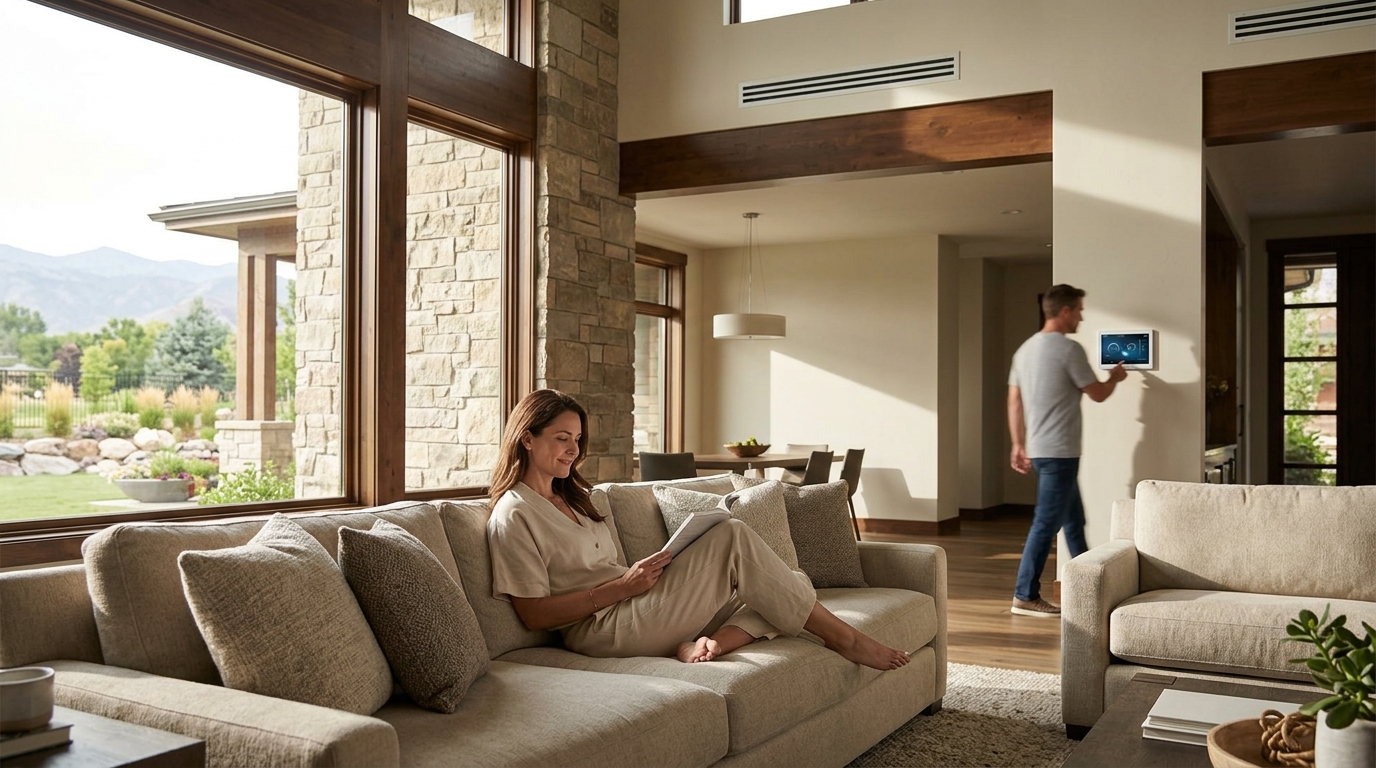
Large residential properties require specialized climate control strategies to maintain consistent comfort across expansive square footage. According to the U.S. Department of Energy, oversized or improperly zoned cooling systems waste approximately thirty percent of household energy on inefficient air distribution. This inefficiency directly increases utility costs and accelerates equipment wear. Homeowners must prioritize strategic system design, precise load calculations, and advanced air quality integration. Selecting the right cooling architecture prevents hot spots, reduces humidity, and ensures long-term operational reliability. (About Us Apex Clean)
Zoned Climate Control Architecture
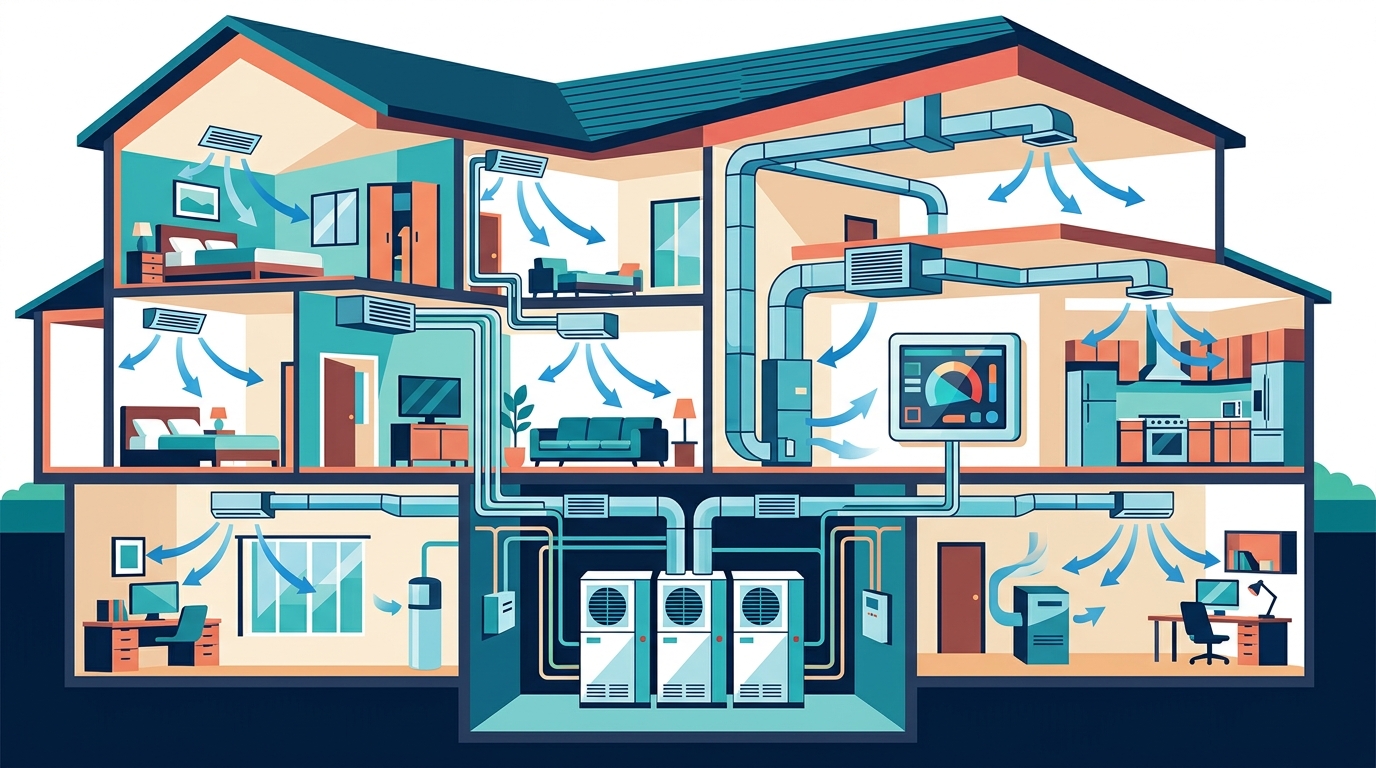
Zoning is the strategic division of a residence into independent thermal zones. Large homes suffer from uneven temperature distribution when relying on a single mechanical unit. Ductwork is the network of sealed channels that distributes conditioned air. Modern zoning systems utilize motorized dampers and multiple thermostats to regulate airflow dynamically. This approach eliminates temperature gradients between ground floors and upper levels. Homeowners benefit from reduced energy consumption and customized comfort settings for each living area. Implementing a multi-zone configuration requires professional load analysis to prevent short cycling. (AC Repair Services Apex)
Zone Damper Implementation
Motorized dampers regulate airflow based on real-time temperature demands. These components integrate directly with the main control panel. Proper installation prevents pressure imbalances that damage blower motors. Homeowners should consult certified technicians to map optimal damper placement. (AC Maintenance Apex Clean)
Zone Controller Programming
Zone controllers act as the central nervous system for multi-zone HVAC networks. They communicate with individual thermostats to open or close specific duct pathways. Advanced controllers support scheduling routines that align with daily occupancy patterns. Programming these units correctly maximizes efficiency and extends equipment lifespan. (4 55 PM Air)
High-Capacity Equipment Selection
High-capacity equipment refers to commercial-grade cooling units engineered for expansive residential footprints. Standard residential compressors often lack the static pressure required to push air through extensive duct networks. Variable speed compressors adjust output continuously to match exact thermal loads. This technology reduces humidity levels while maintaining steady temperatures across multiple floors. Homeowners should prioritize units with high Seasonal Energy Efficiency Ratio ratings. Proper sizing prevents energy waste and mechanical stress. Consulting a certified installer ensures accurate Manual J load calculations.
Variable Speed Compressor Benefits
Variable speed compressors modulate cooling output in precise increments. This capability eliminates the harsh on-off cycling typical of single-stage units. Lower operational noise and consistent airflow improve overall comfort. These systems adapt to fluctuating outdoor temperatures without sacrificing efficiency.
High Static Pressure Duct Design
High static pressure duct design accommodates longer runs and complex routing. Standard residential ducts often restrict airflow in expansive properties. Upgrading to reinforced ductwork reduces friction losses and improves delivery rates. Proper sealing prevents conditioned air from escaping into unconditioned attics or crawl spaces.
Advanced Air Filtration Integration
Advanced air filtration integration combines mechanical cooling with targeted purification systems. Large properties accumulate higher volumes of airborne particulates due to increased square footage. HEPA-grade filtration captures microscopic allergens, dust, and volatile organic compounds. These systems operate independently of the primary cooling cycle to maintain continuous air quality. Homeowners benefit from reduced respiratory irritation and improved indoor air quality. Integrating purification units requires careful airflow balancing to prevent system strain.
Ultraviolet Circuits
Ultraviolet circuits neutralize biological contaminants within the cooling coil assembly. These lamps prevent mold growth and maintain heat exchange efficiency. Installation requires professional electrical integration and routine bulb replacement. UV treatment complements standard filtration by targeting hidden microbial colonies.
Electronic Precipitation Filters
Electronic precipitation filters charge airborne particles and collect them on charged plates. These reusable components reduce filter replacement costs over time. Regular cleaning maintains optimal electrical conductivity and airflow. Homeowners should schedule professional maintenance to ensure consistent particle capture rates.
Preventive Maintenance Protocols
Preventive maintenance protocols establish scheduled service intervals that preserve equipment performance. Large residential systems experience accelerated wear due to extended runtime hours. Regular coil cleaning restores heat transfer efficiency and reduces compressor strain. Filter replacement prevents airflow restriction and protects internal components. Homeowners should enroll in comprehensive service programs that include seasonal inspections. Consistent maintenance extends equipment lifespan and prevents costly emergency repairs.
Coil Inspection Procedures
Coil inspection procedures evaluate fin alignment and refrigerant charge levels. Dirty coils force compressors to work harder, increasing energy consumption. Professional technicians use specialized cleaning solutions to restore surface area. Regular inspections prevent refrigerant leaks and maintain cooling capacity.
Refrigerant Charge Verification
Refrigerant charge verification ensures optimal thermodynamic performance across the cooling cycle. Incorrect charge levels reduce efficiency and damage compressor valves. Certified technicians use precision gauges to measure subcooling and superheating. Maintaining factory specifications prevents premature equipment failure.
Smart Thermostat Optimization
Smart thermostat optimization leverages machine learning algorithms to predict occupancy patterns. These devices adjust cooling schedules based on historical usage data and weather forecasts. Geofencing technology detects homeowner proximity and preconditions specific zones. Large properties benefit from adaptive scheduling that reduces energy waste during unoccupied periods. Homeowners should integrate smart controls with existing zoning infrastructure. Proper configuration maximizes comfort while minimizing operational costs.
Geofencing Technology
Geofencing technology utilizes smartphone location data to trigger climate adjustments. This feature eliminates manual scheduling errors and ensures consistent comfort. Homeowners can set custom radius distances for automatic system activation. Geofencing integrates seamlessly with multi-zone controllers for precise management.
Usage Analytics Reporting
Usage analytics reporting tracks energy consumption across different cooling periods. These dashboards highlight inefficiencies and suggest operational adjustments. Homeowners can compare monthly usage trends to identify equipment degradation. Data-driven insights support proactive maintenance decisions and budget planning.
System Comparison Overview
| System Type | Best Use Case | Efficiency Rating | Installation Complexity |
|---|---|---|---|
| Single-Stage Central AC | Small to medium homes | Moderate | Low |
| Variable Speed Central AC | Large residential properties | High | Moderate |
| Ductless Mini-Split Arrays | Zone-specific cooling | Very High | High |
| Hybrid Heat Pump Systems | Mixed climate regions | High | Moderate |
Key Takeaways
- Zoned climate control divides expansive properties into independent thermal zones for precise temperature management.
- Variable speed compressors adjust cooling output continuously, reducing humidity and energy waste.
- High static pressure duct design accommodates longer airflow routes without sacrificing delivery rates.
- Advanced air filtration integration captures microscopic allergens and volatile organic compounds.
- Preventive maintenance protocols include seasonal coil cleaning, filter replacement, and refrigerant verification.
- Smart thermostat optimization utilizes geofencing and usage analytics to automate comfort schedules.
- Professional load calculations prevent oversized equipment and ensure long-term operational reliability.
Frequently Asked Questions
How do I determine the correct cooling capacity for a large home?
Accurate cooling capacity requires a professional Manual J load calculation. This process evaluates square footage, insulation levels, window orientation, and local climate data. Oversized units cycle frequently, while undersized units struggle to maintain comfort. Certified technicians use specialized software to determine precise tonnage requirements.
Can I retrofit existing ductwork for a zoned cooling system?
Existing ductwork can often be retrofitted with motorized dampers and zone controllers. Professional assessors evaluate duct integrity, insulation, and airflow capacity before installation. Reinforcing weak sections ensures optimal pressure distribution across all zones. Retrofitting typically costs less than complete duct replacement.
What maintenance schedule applies to high-capacity residential cooling systems?
High-capacity systems require biannual professional inspections and quarterly filter changes. Seasonal tune-ups include coil cleaning, refrigerant verification, and electrical component testing. Homeowners should schedule services before peak summer and winter months. Consistent maintenance prevents unexpected breakdowns and extends equipment lifespan.
How do smart thermostats integrate with multi-zone HVAC networks?
Smart thermostats communicate directly with zone controllers via wireless protocols. These devices sync occupancy data to adjust damper positions automatically. Homeowners can program separate schedules for each thermal zone. Integration requires professional configuration to ensure accurate temperature mapping.
Are ductless mini-split arrays viable for entire large properties?
Ductless mini-split arrays provide highly efficient zone-specific cooling without extensive ductwork. Multiple indoor units connect to a single outdoor compressor. These systems excel in properties with challenging architectural layouts. Installation requires precise refrigerant line routing and electrical integration.
What indoor air quality improvements accompany advanced cooling systems?
Advanced cooling systems integrate HEPA filtration, ultraviolet circuits, and electronic precipitation filters. These components capture microscopic particles and neutralize biological contaminants. Homeowners experience reduced allergen exposure and improved respiratory comfort. Regular filter maintenance ensures consistent purification performance.
How does humidity control impact large residential cooling efficiency?
Proper humidity control reduces perceived temperature and improves comfort levels. Variable speed compressors run longer cycles to extract moisture without overcooling. High humidity forces systems to work harder, increasing energy consumption. Homeowners should prioritize units with dedicated dehumidification capabilities.
Schedule Your Cooling Assessment
Large residential properties demand precision-engineered cooling solutions that balance capacity, efficiency, and air quality. Homeowners should partner with certified HVAC professionals to design systems that match their specific architectural requirements. Contact your local office today to schedule a comprehensive load analysis and equipment consultation. Visit Apex Clean Air to explore financing options, service packages, and regional support. Secure your comfort with a cooling system built for expansive living spaces.