
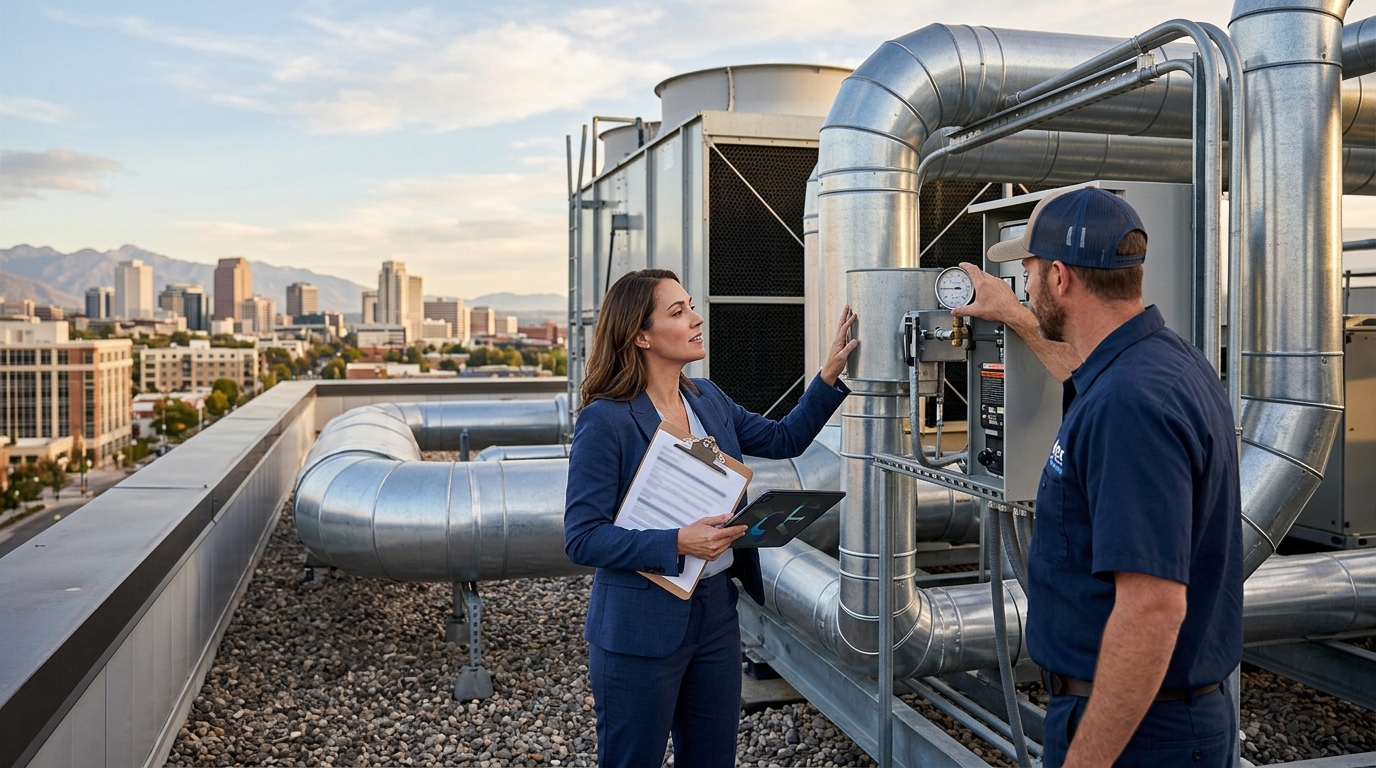
Commercial buildings consume nearly forty percent of total energy production across the United States. According to the U.S. Department of Energy, optimizing climate control systems directly reduces operational overhead while extending equipment lifespan. Facility managers must implement systematic diagnostic protocols to maintain consistent thermal comfort. This guide outlines the exact operational steps required to maximize efficiency across large-scale commercial environments. Energy data confirms that strategic system upgrades yield immediate financial returns.
Conduct Comprehensive Diagnostic Assessments
Diagnostic assessment is the systematic evaluation of existing mechanical systems to identify performance bottlenecks. Facility operators should schedule professional inspections before committing to capital upgrades. Certified technicians utilize thermal imaging and airflow mapping to locate hidden inefficiencies. You can schedule a professional evaluation through our heating services division to establish a baseline performance metric. Regular audits prevent minor mechanical failures from escalating into costly operational disruptions. Building owners who prioritize early detection consistently report lower utility expenditures across fiscal quarters.
Implement Advanced Zoning Strategies
Zoning strategy refers to the architectural division of a facility into independent thermal control districts. Large commercial spaces require segmented climate management to accommodate varying occupancy loads. Installing variable refrigerant flow systems allows precise temperature adjustments across different departments. Facility managers can explore specialized cooling services to design customized distribution networks. Proper zoning eliminates energy waste in unoccupied conference rooms or storage areas. Data shows that segmented climate control reduces overall power consumption by approximately twenty five percent annually. Efficiency metrics support this reduction across commercial sectors.
Integrate Indoor Air Quality Protocols
Indoor air quality management encompasses the continuous filtration and circulation of breathable air within enclosed commercial spaces. Modern facility standards demand rigorous particle removal and pathogen reduction. High-efficiency particulate air filters capture microscopic contaminants that standard systems miss. Our team provides comprehensive indoor air quality services tailored to specific commercial occupancy requirements. Maintaining optimal air circulation directly correlates with employee productivity and reduced sick leave. According to the Environmental Protection Agency, proper filtration systems significantly decrease airborne viral transmission rates in office environments. Air quality reports validate these health outcomes.
Establish Preventive Maintenance Schedules
Preventive maintenance is the scheduled inspection and servicing of mechanical components to prevent unexpected equipment failure. Commercial HVAC systems operate under continuous stress and require quarterly professional oversight. Technicians clean coils, calibrate thermostats, and replace worn belts before breakdowns occur. Facility administrators should enroll in a structured comfort club program to guarantee consistent system performance. Neglected equipment frequently experiences efficiency drops exceeding thirty percent within five years. Regular servicing preserves manufacturer warranties and maintains peak operational reliability.
Upgrade to Smart Building Technology
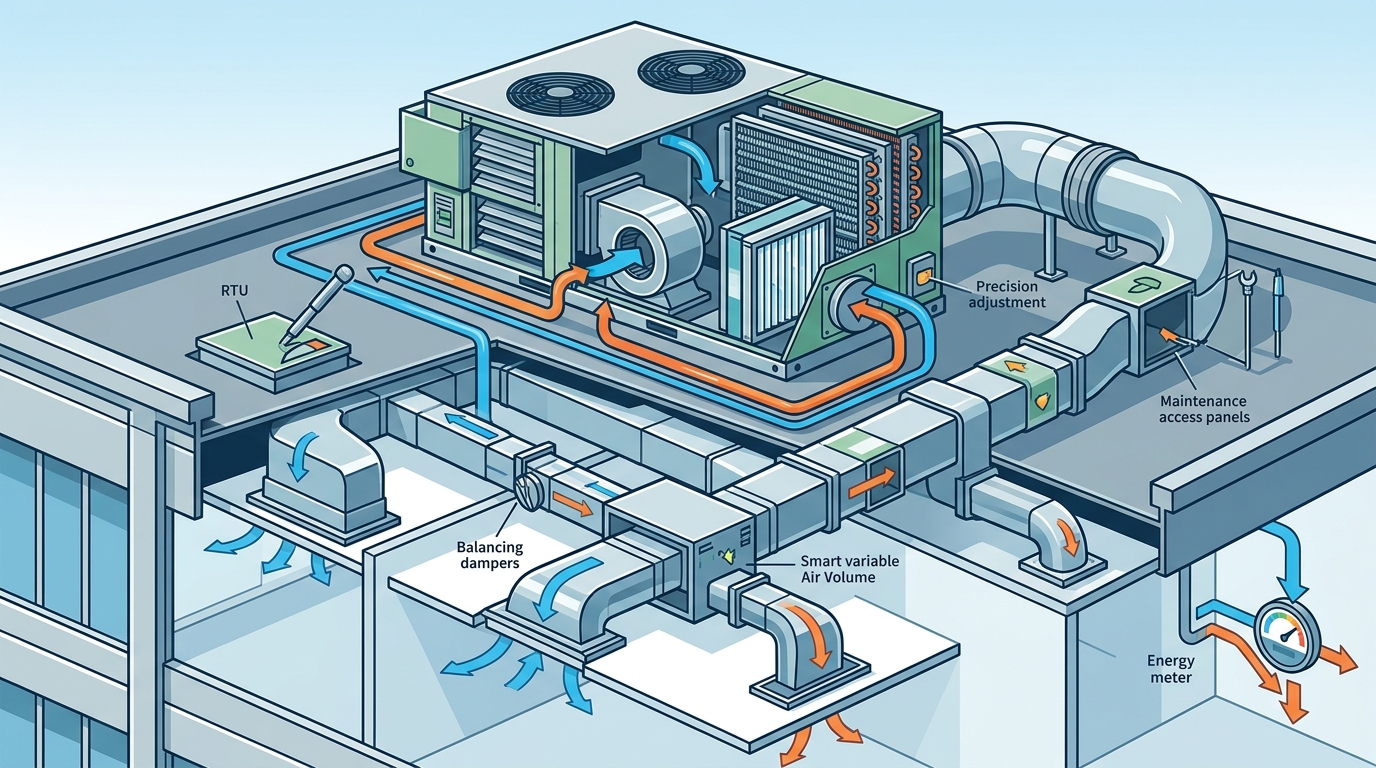
Smart building technology integrates automated sensors and machine learning algorithms to optimize climate distribution in real time. Modern controllers adjust airflow based on occupancy patterns and external weather conditions. Building automation systems reduce manual intervention while maximizing energy conservation. Facility owners can request a detailed consultation through our about us page to explore available automation packages. Automated diagnostics alert management teams to pressure fluctuations before equipment damage occurs. Research indicates that automated climate control systems decrease annual energy bills by nearly eighteen percent. Industry standards mandate these performance thresholds.
Commercial System Comparison Matrix
| System Type | Primary Application | Efficiency Rating | Recommended Maintenance Frequency |
|---|---|---|---|
| Variable Refrigerant Flow | Multi-zone commercial offices | High | Quarterly |
| Rooftop Unit Systems | Big box retail and warehouses | Medium to High | Semi-annually |
| Dedicated Outdoor Air Systems | Hospitals and laboratories | Very High | Monthly |
| Geothermal Heat Pumps | Sustainable commercial campuses | Exceptional | Annually |
Key Takeaways
- Commercial buildings account for nearly forty percent of national energy consumption.
- Diagnostic assessments identify hidden inefficiencies before they impact operational budgets.
- Zoning strategies reduce power consumption by approximately twenty five percent annually.
- High-efficiency filtration systems decrease airborne pathogen transmission in office environments.
- Quarterly professional servicing preserves manufacturer warranties and maintains peak reliability.
- Automated climate control systems decrease annual energy bills by nearly eighteen percent.
- Facility managers should utilize structured maintenance programs to guarantee consistent performance.
Frequently Asked Questions
How often should commercial HVAC systems undergo professional inspections?
Commercial mechanical systems require quarterly professional inspections to maintain optimal performance. Annual audits fail to catch seasonal wear patterns that impact efficiency ratings. Certified technicians evaluate refrigerant levels, electrical connections, and airflow distribution during each visit. Regular inspections prevent minor mechanical failures from escalating into costly operational disruptions.
What is the average lifespan of a commercial rooftop unit?
A commercial rooftop unit typically operates for fifteen to twenty years with proper maintenance. Facility managers who implement preventive servicing consistently extend equipment longevity beyond standard expectations. Neglected systems frequently experience compressor failure within the first decade of operation. Regular component replacement preserves operational reliability and maintains peak efficiency ratings.
How does zoning impact commercial energy consumption?
Zoning impacts commercial energy consumption by isolating climate control to occupied spaces only. Unoccupied conference rooms and storage areas consume unnecessary power when integrated into a single system. Segmented climate management reduces overall power consumption by approximately twenty five percent annually. Facility administrators can explore specialized cooling services to design customized distribution networks.
Can indoor air quality systems reduce employee sick leave?
Advanced filtration systems directly reduce airborne contaminants that trigger respiratory complaints and allergies. Modern commercial spaces demand rigorous particle removal to maintain healthy workplace environments. According to the Environmental Protection Agency, proper filtration systems significantly decrease airborne viral transmission rates in office environments. Facility managers who prioritize air circulation consistently report higher employee retention rates.
What financing options are available for commercial system upgrades?
Commercial facility upgrades frequently utilize structured financing packages to distribute capital expenditures over time. Facility operators can explore flexible financing options to implement modern climate control without straining operational budgets. Deferred payment structures align equipment payments with projected energy savings. Building owners who prioritize early detection consistently report lower utility expenditures across fiscal quarters.
Schedule Your Commercial Facility Assessment
Efficient climate control requires proactive management and expert technical oversight. Facility managers should contact our commercial division to schedule a comprehensive system evaluation. Our certified technicians deliver precise diagnostic reports and customized optimization strategies. Visit our contact page to request a detailed proposal tailored to your specific operational requirements. Secure reliable thermal comfort and maximize your facility energy efficiency today.