
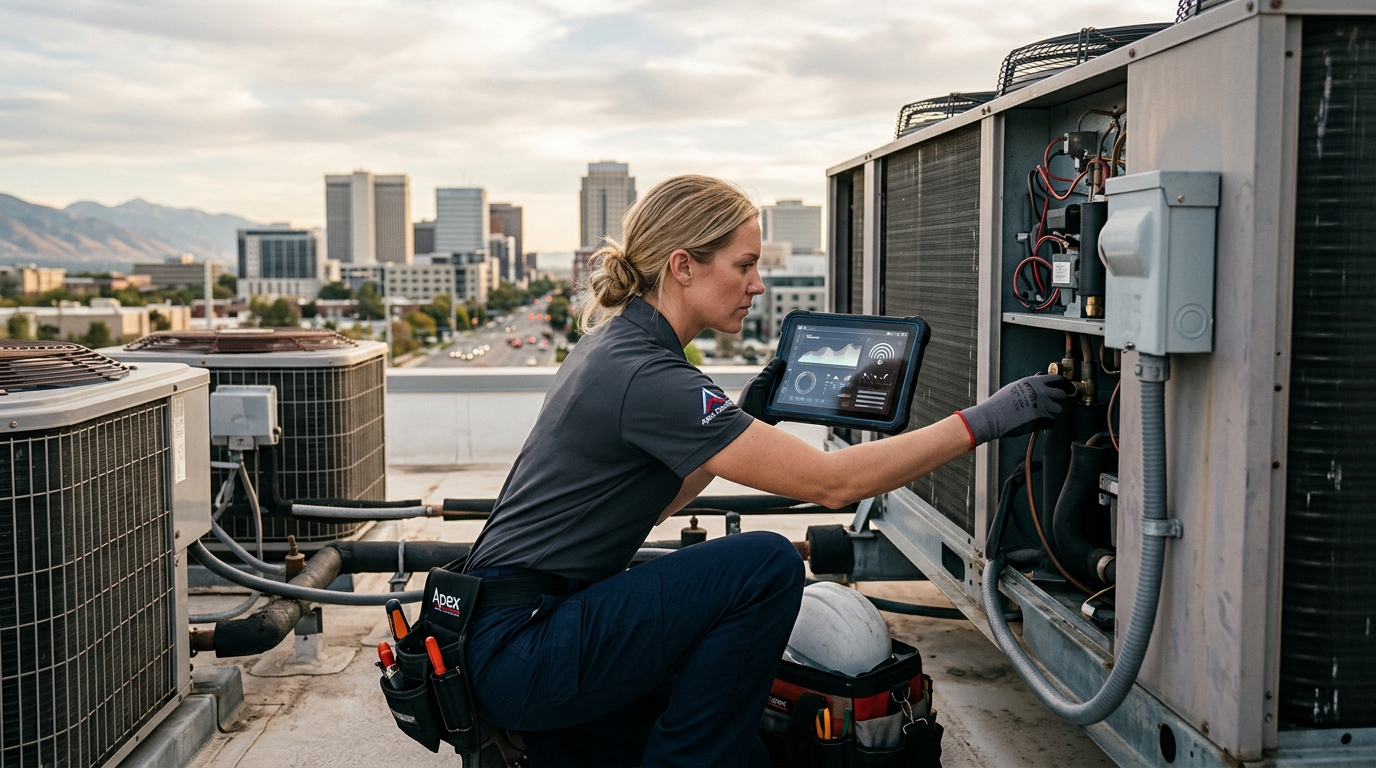
Large commercial facilities consume nearly forty percent of total national energy output, according to the Department of Energy. This massive energy footprint demands rigorous climate control strategies that prioritize efficiency and reliability. Facility managers must implement systematic maintenance protocols to prevent costly operational failures. Modern building infrastructure requires continuous monitoring, precise calibration, and proactive component replacement. Organizations that neglect these operational standards face increased utility expenses and compromised occupant comfort. Strategic maintenance planning transforms reactive repairs into predictable, budget-friendly operational workflows. (About Us Apex Clean)
Understanding Commercial HVAC Architecture
Commercial HVAC architecture is a centralized network of mechanical rooms, rooftop units, and complex duct networks designed to regulate thermal environments across multiple building zones. Large buildings utilize specialized equipment that differs significantly from residential systems. Facility managers must understand the exact capacity ratings and refrigerant specifications for each operational zone. Regular inspection of compressors, condensers, and air handlers prevents catastrophic equipment failure. System architecture mapping ensures that every component operates within its designed thermal parameters. Organizations should consult certified professionals to audit existing infrastructure before implementing upgrades. Detailed blueprints reveal hidden bottlenecks that reduce overall system performance. Facility managers at properties across Salt Lake City, Boise, Denver, and Colorado Springs rely on precise architectural mapping to maximize equipment lifespan. Comprehensive documentation creates a reliable historical record for warranty claims and equipment valuation. (AC Repair Services Apex)
Implementing Predictive Maintenance Schedules
Predictive maintenance scheduling is a systematic protocol that utilizes continuous data collection to forecast equipment failures before they impact operational workflows. Modern building management systems track temperature fluctuations, humidity levels, and equipment runtime hours. Facility managers can schedule filter replacements and belt adjustments before components reach critical failure thresholds. Regular lubrication of motors and calibration of thermostats extend equipment lifespan by decades. Predictive maintenance scheduling transforms unpredictable breakdowns into planned, low-impact service windows. Building owners should establish quarterly inspection routines that align with seasonal operational demands. Consistent documentation creates a reliable historical record for warranty claims and equipment valuation. Organizations that utilize our Comfort Club membership programs experience fewer emergency service calls and extended equipment durability. Predictable budgeting replaces financial surprises with controlled operational expenditures. (AC Maintenance Apex Clean)
Optimizing Indoor Air Quality Protocols
Indoor air quality protocols are standardized filtration, circulation, and purification procedures that establish baseline ventilation rates and filter replacement cycles for large commercial spaces. Large commercial spaces accumulate volatile organic compounds, particulate matter, and biological contaminants. Advanced filtration systems capture microscopic allergens and reduce airborne pathogen transmission. Regular duct cleaning removes accumulated dust, mold spores, and debris that restrict airflow. Indoor air quality protocols establish baseline standards for ventilation rates and filter replacement cycles. Facility managers must verify that fresh air intake valves operate without obstruction. Proper humidity control prevents microbial growth within cooling coils and drain pans. Organizations that prioritize air purification experience fewer occupant complaints and higher productivity metrics. Our certified technicians perform comprehensive air quality testing to identify hidden contaminants and recommend targeted purification solutions. (4 55 PM Air)
Managing Energy Consumption and Efficiency
Energy consumption management requires precise balancing of heating, cooling, and ventilation loads. Variable frequency drives adjust motor speeds based on real-time occupancy and weather conditions. Building automation controllers optimize compressor cycling to eliminate unnecessary power draw. Regular coil cleaning restores heat exchange efficiency and reduces electrical demand. Energy consumption management identifies waste patterns and implements corrective operational adjustments. Facility managers should conduct annual commissioning reviews to verify system alignment with original design specifications. Upgrading to high-efficiency motors and smart thermostats delivers measurable utility savings. Organizations that track energy usage data can forecast operational budgets with greater accuracy. Our heating services and cooling services teams specialize in retrofitting older commercial buildings with modern, energy-efficient components that reduce carbon footprints.
Training Facility Staff and Technicians
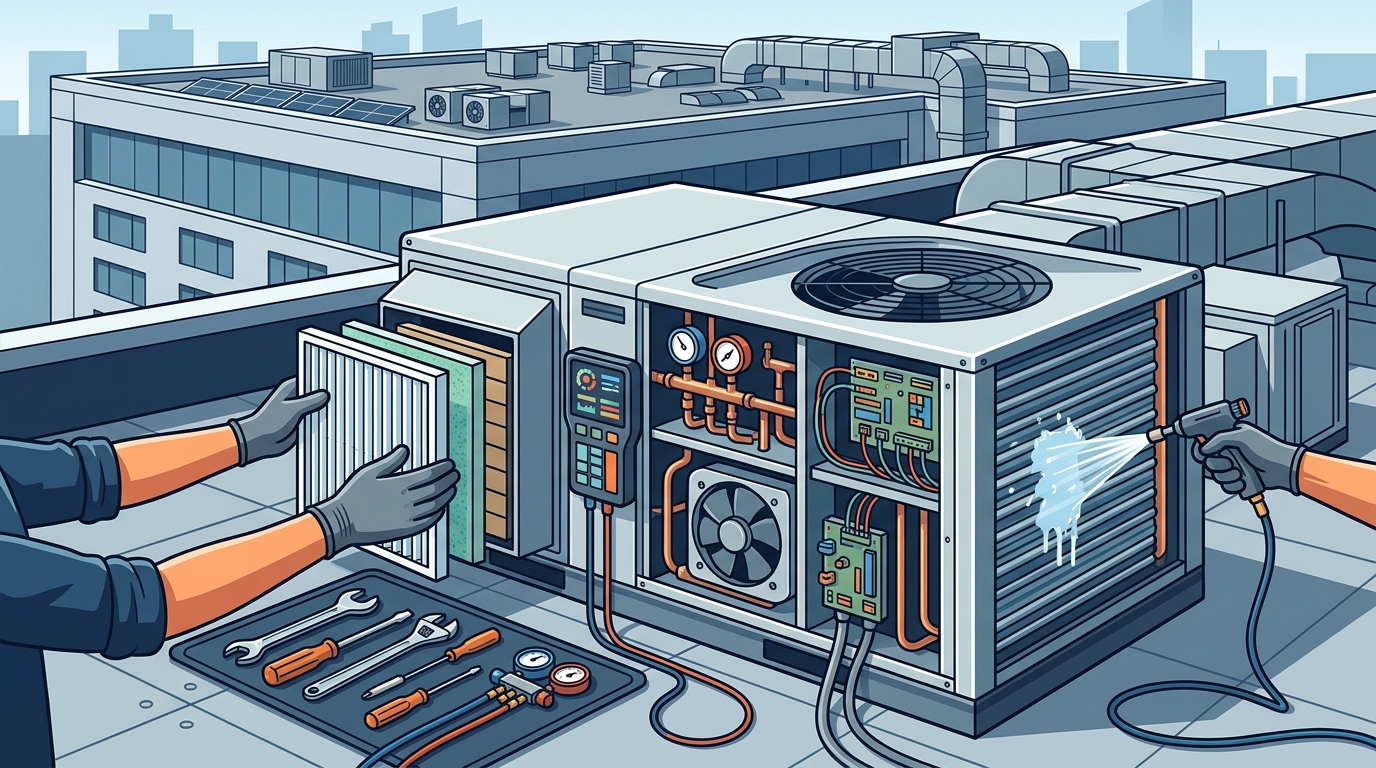
Comprehensive staff training ensures that daily operational tasks align with manufacturer guidelines. Facility managers must educate maintenance crews on equipment shutdown procedures, safety protocols, and emergency response plans. Regular workshops cover refrigerant handling, electrical diagnostics, and control system programming. Certified technicians gain proficiency in troubleshooting complex control boards and sensor arrays. Comprehensive staff training reduces human error and prevents accidental equipment damage. Organizations should invest in ongoing education programs that reflect the latest industry standards. Cross-training multiple employees creates operational redundancy during staff absences. Documented training records satisfy regulatory compliance requirements and insurance mandates. Our team of certified technicians brings years of expertise, the latest tools, and a dedication to excellence that has earned us the trust of thousands of commercial property managers.
Maintenance Tier Comparison
| Maintenance Tier | Service Frequency | Key Components Addressed | Operational Benefit |
|---|---|---|---|
| Basic Preventive | Biannual | Filter replacement, belt inspection, thermostat calibration | Reduces minor wear and maintains baseline airflow |
| Advanced Comprehensive | Quarterly | Coil cleaning, refrigerant pressure testing, motor lubrication | Prevents efficiency loss and extends equipment lifespan |
| Predictive Monitoring | Continuous | Building automation integration, runtime tracking, vibration analysis | Eliminates unplanned downtime and optimizes energy usage |
Key Takeaways
- Large commercial facilities consume nearly forty percent of total national energy output, requiring rigorous climate control strategies.
- Predictive maintenance schedules transform unpredictable breakdowns into planned, low-impact service windows.
- Advanced filtration systems capture microscopic allergens and reduce airborne pathogen transmission across large spaces.
- Variable frequency drives adjust motor speeds based on real-time occupancy and weather conditions.
- Comprehensive staff training reduces human error and prevents accidental equipment damage during routine operations.
- Annual commissioning reviews verify system alignment with original design specifications and warranty requirements.
- Organizations that track energy usage data can forecast operational budgets with greater accuracy and reduce utility expenses.
Frequently Asked Questions
How often should commercial HVAC systems undergo professional inspections?
Professional inspections should occur quarterly to ensure optimal performance across all building zones. Biannual checks may suffice for lightly utilized facilities, but high-traffic environments require more frequent monitoring. Regular assessments identify minor wear patterns before they escalate into costly equipment failures.
What filtration standards apply to large commercial buildings?
Large commercial buildings typically utilize Minimum Efficiency Reporting Value ratings of thirteen or higher. These advanced filters capture ninety-five percent of airborne particulates and allergens. Facility managers must verify filter compatibility with existing airflow resistance limits.
How do variable frequency drives improve system efficiency?
Variable frequency drives adjust motor speeds based on real-time occupancy and weather conditions. These devices eliminate unnecessary power draw during low-demand periods. Organizations report significant utility savings after installing variable speed technology.
What documentation is required for commercial HVAC compliance?
Commercial HVAC compliance requires detailed maintenance logs, refrigerant handling records, and equipment calibration reports. Facility managers must archive these documents for regulatory audits and insurance verification. Proper recordkeeping satisfies federal safety mandates and warranty requirements.
Can building automation systems replace manual maintenance tasks?
Building automation systems streamline monitoring but cannot replace hands-on mechanical inspections. Automated controllers track temperature fluctuations and equipment runtime hours. Certified technicians must still perform physical component testing and calibration.
Schedule Your Commercial Service
Large commercial facilities demand specialized expertise and comprehensive maintenance protocols. Apex Clean Air delivers certified technicians, advanced diagnostic tools, and systematic service frameworks tailored to your building specifications. Our team treats every commercial property like a critical operational asset. Contact your local office today to schedule a comprehensive system audit. Visit Apex Clean Air to explore our full range of heating, cooling, and indoor air quality solutions. Secure reliable climate control and maximize your facility efficiency today.