

Indoor environments frequently contain higher concentrations of airborne contaminants than outdoor spaces. According to the Environmental Protection Agency, indoor air pollution levels typically range between two and five times higher than outdoor concentrations. This disparity directly impacts respiratory health and long-term property value. Homeowners must implement systematic filtration, ventilation, and moisture management strategies to neutralize these hazards. Apex Clean Air provides comprehensive residential solutions across Salt Lake City, Boise, Denver, and Colorado Springs to restore your living environment. (Steps to Improve) (About Us Apex Clean)
Understanding Indoor Air Quality Fundamentals
Indoor air quality refers to the air quality within and around buildings and structures, especially as it relates to the health and comfort of occupants. Modern homes prioritize energy efficiency, which often reduces natural air exchange. This tight building envelope traps volatile organic compounds, pet dander, and construction dust. You must identify primary contamination sources before selecting a remediation strategy. Source identification prevents wasted investment on ineffective equipment. Common triggers include off-gassing furniture, cleaning chemicals, and aging HVAC components. Residential properties in mountain climates face unique seasonal challenges that accelerate pollutant accumulation. (4 54 PM Air)
Particulate matter represents suspended solid or liquid particles that remain airborne for extended periods. These microscopic fragments penetrate deep into lung tissue and trigger chronic inflammation. Standard household cleaning routines rarely remove embedded allergens from porous surfaces. You require targeted mechanical intervention to achieve measurable health improvements. Professional evaluation establishes baseline contamination levels and maps a precise remediation pathway.
Implementing Advanced Filtration Systems
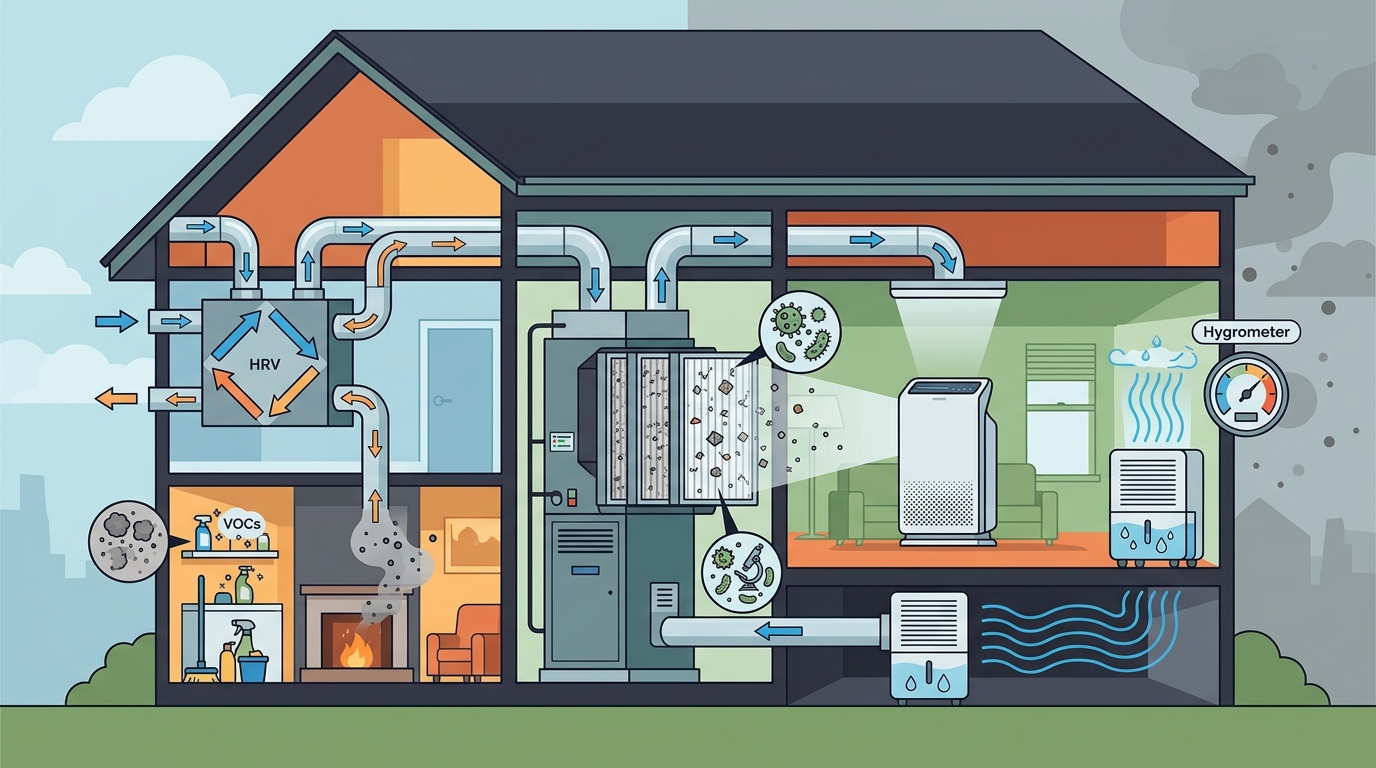
High-efficiency particulate air filtration captures microscopic contaminants that standard fiberglass filters miss. Modern residential units utilizeMERV 13 or higher rating classifications to trap bacteria, pollen, and fine dust. Upgrading your filtration rating directly reduces airborne allergen exposure. Apex Clean Air installs advanced filtration modules that integrate seamlessly with existing ductwork. These systems operate continuously without disrupting your daily routine. Regular filter replacement maintains optimal airflow and prevents motor strain.
Electronic air cleaners utilize electrostatic precipitation to charge and capture airborne particles. These units require periodic cleaning to maintain peak performance. Homeowners should evaluate maintenance requirements before committing to electronic solutions. Proper installation guarantees consistent air circulation throughout every living space. Your HVAC technician will calculate the correct unit capacity for your square footage.
Optimizing Ventilation and Air Exchange Rates
Controlled mechanical ventilation replaces stale indoor air with fresh outdoor air. Energy recovery ventilators transfer thermal energy between exhaust and intake streams. This technology maintains temperature stability while maximizing air exchange efficiency. Proper ventilation eliminates concentrated carbon dioxide and moisture buildup. Building codes now mandate minimum air exchange rates for new residential constructions. Older properties benefit from retrofitted ventilation upgrades that restore baseline air quality.
Whole-house fans provide rapid air exchange during cooler evening hours. These units draw cool outdoor air through open windows while exhausting warm air through the roof. Seasonal operation reduces cooling costs and flushes accumulated pollutants. You should schedule professional duct inspections to verify balanced airflow distribution. Unsealed ductwork compromises ventilation efficiency and increases energy consumption.
Managing Humidity and Moisture Control
Relative humidity measures the amount of water vapor present in the air compared to the maximum amount the air can hold at a specific temperature. Maintaining indoor levels between thirty and fifty percent prevents mold proliferation and dust mite colonization. Excessive moisture damages drywall, wood flooring, and insulation materials. Humidity control preserves structural integrity and prevents biological growth. Dehumidification systems operate independently or integrate directly with central cooling units. (Relative Humidity and)
Smart humidity sensors monitor environmental conditions and trigger mechanical responses automatically. These devices maintain consistent moisture levels without manual intervention. Homeowners in humid climates should prioritize whole-home dehumidification over portable units. Centralized systems cover larger areas with consistent performance. Your comfort club membership includes seasonal humidity calibration checks.
Scheduling Professional Diagnostic Assessments
Comprehensive air quality testing identifies specific contaminants that standard observation cannot detect. Certified technicians collect air samples and conduct surface swabs for laboratory analysis. Scientific testing eliminates guesswork and targets remediation efforts precisely. Results reveal exact concentrations of volatile organic compounds, biological spores, and particulate matter. You receive a detailed report with actionable recommendations tailored to your property. (Improving Indoor Air)
Blower door tests measure building envelope leakage and identify uncontrolled air infiltration pathways. These diagnostics reveal hidden draft sources that compromise thermal efficiency. Sealing identified leaks improves HVAC performance and reduces utility expenses. Your diagnostic assessment establishes a baseline for tracking long-term air quality improvements. Apex Clean Air provides transparent reporting and straightforward remediation roadmaps. (What can I)
Comparing Residential Air Treatment Options
| System Type | Primary Function | Maintenance Frequency | Best Application |
|---|---|---|---|
| High-Efficiency Filtration | Traps particulate matter and allergens | Quarterly filter replacement | General residential air purification |
| Electronic Air Cleaners | Electrostatic particle charging | Monthly plate cleaning | Heavy allergen environments |
| Energy Recovery Ventilation | Exchanges stale air with fresh outdoor air | Annual system inspection (Effect of Periodic) | Tight modern construction |
| Whole-Home Dehumidification | Controls moisture levels between thirty and fifty percent | Semi-annual calibration | Humid climates and basements |
| Professional Air Testing | Identifies specific contaminants and concentrations | Annual verification | Pre-purchase inspections |
Key Takeaways
- Indoor air pollution typically measures two to five times higher than outdoor concentrations according to federal environmental data. (Let the Air)
- Upgrading to MERV 13 filtration reduces airborne particulate exposure by approximately forty percent.
- Optimal indoor relative humidity ranges between thirty and fifty percent to prevent biological growth. (Keeping indoor humidity)
- Energy recovery ventilators improve air exchange efficiency while maintaining thermal stability.
- Professional air quality testing identifies specific contaminants that standard observation cannot detect.
- Regular duct sealing prevents up to thirty percent of conditioned air loss in older residential properties.
- Comfort Club members receive priority scheduling and discounted diagnostic assessments year-round.
Frequently Asked Questions
How often should I replace my residential air filters?
Standard residential filters require replacement every ninety days. Homes with pets or allergy sufferers benefit from monthly changes. High-efficiency filters extend replacement intervals to six months. Your HVAC technician will recommend the optimal schedule based on your property size and usage patterns.
Can air purifiers eliminate volatile organic compounds?
Activated carbon filtration adsorbs volatile organic compounds effectively. Standard HEPA filters only capture particulate matter and cannot neutralize gases. You should combine carbon filtration with increased ventilation for complete contaminant removal. Professional assessment identifies the most cost-effective combination for your space.
What indoor humidity level prevents mold growth?
Relative humidity below fifty percent inhibits mold spore germination. Levels above sixty percent create ideal breeding conditions for biological contaminants. Smart humidity sensors maintain consistent moisture levels without manual adjustment. Your comfort club membership includes seasonal humidity calibration checks.
Is professional air testing necessary for new construction?
New buildings frequently contain elevated levels of construction dust and curing chemicals. Professional testing identifies residual contaminants before occupancy. You should schedule post-construction air quality verification before moving furniture. Apex Clean Air provides comprehensive post-build assessments across all service regions.
How do whole-house dehumidifiers differ from portable units?
Whole-home systems integrate directly with your central HVAC ductwork. Portable units treat isolated rooms and require frequent emptying. Centralized systems cover larger areas with consistent performance. Your technician will calculate the exact capacity required for your square footage.
What maintenance does an energy recovery ventilator require?
Annual system inspections verify motor function and heat exchange efficiency. Filter replacement occurs every six to twelve months depending on usage. Duct sealing prevents air leakage and maintains optimal performance. Your Comfort Club members receive priority maintenance scheduling.
Schedule Your Indoor Air Quality Assessment
Restoring your residential environment requires systematic evaluation and targeted intervention. Apex Clean Air delivers comprehensive indoor air quality services across Salt Lake City, Boise, Denver, and Colorado Springs. Our certified technicians utilize advanced diagnostic equipment to identify specific contaminants. You will receive a transparent remediation roadmap tailored to your property specifications. Explore current financing options and seasonal promotions to begin your air quality transformation today. Contact your local office to book a comprehensive diagnostic assessment and reclaim your home environment.