

The air inside your home may look clean, but it can carry dust, allergens, mold spores, and volatile chemicals that affect your family's health every day. According to the U.S. Environmental Protection Agency (EPA), indoor air can be two to five times more polluted than outdoor air. The good news is that practical, proven strategies exist to bring your indoor air quality back to a healthy level. In this guide, the team at Apex Clean Air walks you through the most effective steps, from simple filter swaps to professional-grade solutions.
What Is Indoor Air Quality (IAQ)?
Indoor air quality (IAQ) is a measure of how clean, well-ventilated, and free of harmful pollutants the air inside a building is. IAQ directly impacts your family's comfort and health, especially for children, the elderly, and anyone with asthma or allergies. Because most people spend roughly 90% of their time indoors, according to the EPA, even small improvements can have outsized benefits.
Common Indoor Air Pollutants
Understanding what you are breathing is the first step toward fixing it. The most common residential pollutants include:
- Particulate matter — dust, pet dander, and pollen that settle in ductwork and recirculate every time your HVAC runs.
- Biological contaminants — mold spores, bacteria, and dust mites. One ounce of dust can contain nearly 42,000 living dust mites.
- Volatile organic compounds (VOCs) — chemicals released from household products, paints, and building materials.
- Combustion byproducts — carbon monoxide and nitrogen dioxide from gas stoves, fireplaces, and unvented heaters.
These pollutants accumulate over time, especially in tightly sealed homes common across Utah and Colorado. Professional indoor air quality testing can identify which contaminants are present in your specific environment.
Step 1: Control Pollution at the Source
Source control is the most effective strategy for reducing indoor air pollution. It means eliminating or reducing pollutant sources before they enter your breathing space.
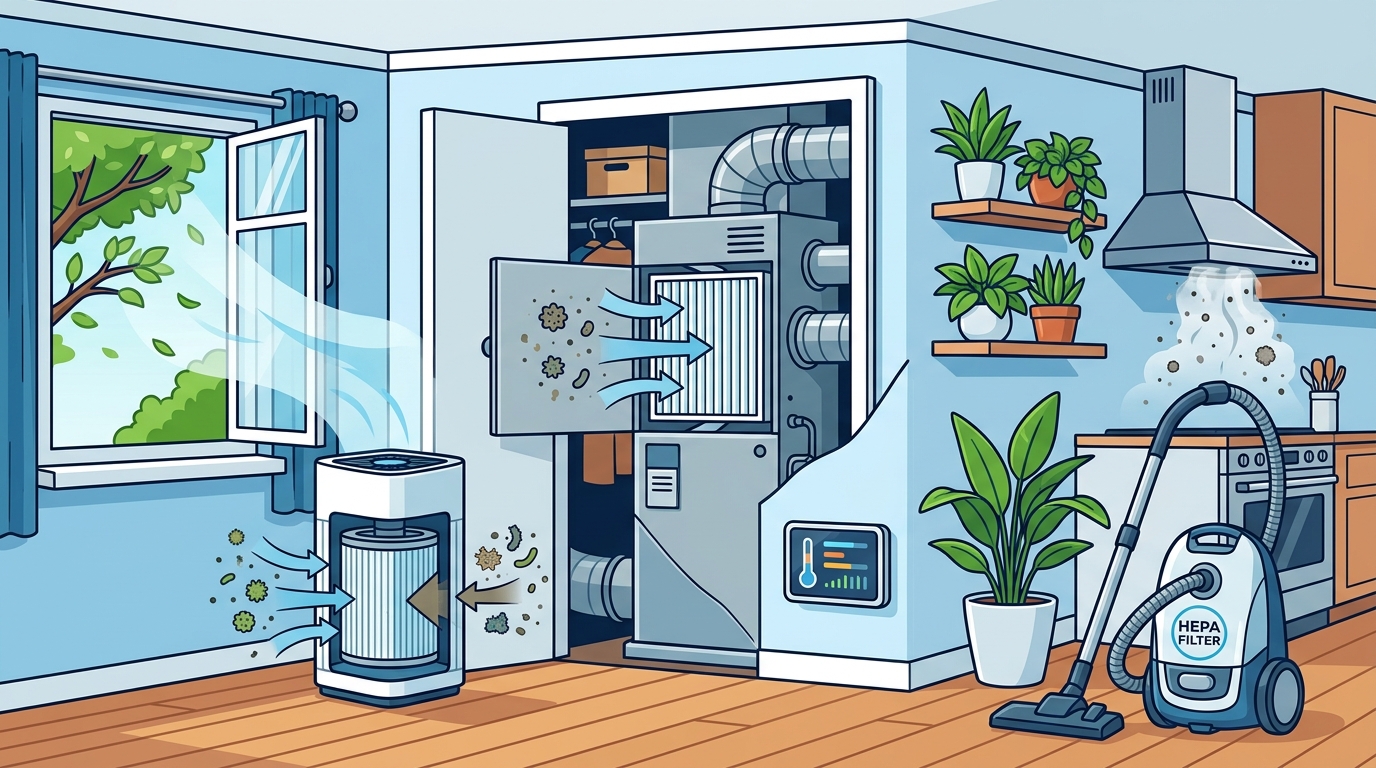
Practical Source Control Actions
- Use exhaust fans vented to the outdoors when cooking on a gas stove.
- Choose low-VOC paints, cleaners, and building materials.
- Keep pets groomed and off upholstered furniture.
- Never allow smoking indoors.
By addressing pollutants at the source, you reduce the burden on your HVAC system and filtration equipment.
Step 2: Improve Ventilation
Ventilation is the process of exchanging stale indoor air with fresh outdoor air to dilute pollutant concentrations. Most residential forced-air heating and cooling systems do not mechanically bring fresh air into the house, so natural ventilation through open windows or dedicated mechanical ventilation is often necessary.
Ventilation Tips for Homeowners
- Open windows on opposite sides of your home when weather permits for cross-ventilation.
- Run bathroom and kitchen exhaust fans during and after moisture-producing activities.
- Ask your HVAC technician about energy recovery ventilators (ERVs) that bring in fresh air without wasting heating or cooling energy.
A properly installed air conditioning system also supports ventilation. Learn more about how AC installation impacts indoor air quality on our blog.
Step 3: Upgrade Your Air Filtration
Air filtration is the use of mechanical or electronic filters to capture airborne particles before they circulate through your living space. Portable air purifiers help individual rooms, but whole-home filtration systems integrated with your HVAC equipment clean every cubic foot of air in your house.
Filter Selection Guide
Look for filters rated MERV 11 or higher for effective allergen capture. Replace standard filters every 60 to 90 days, or more frequently if you have pets. Apex Clean Air installs whole-home air filtration and UV light systems that neutralize bacteria, viruses, and mold spores at the source.
Step 4: Schedule Professional Duct Cleaning
Your air ducts are the lungs of your home, circulating conditioned air through every room. Over time, they collect layers of dust, pollen, pet dander, and even mold. A thorough professional cleaning removes this debris and prevents it from recirculating.
Most homes benefit from professional duct cleaning every three to five years. More frequent service may be needed if you have pets, allergies, or recent construction. Apex uses high-volume negative pressure and HEPA-filtered containment to prevent particles from drifting into living spaces during the cleaning process.
Step 5: Manage Humidity Levels
The EPA recommends keeping indoor humidity between 30% and 50%. High humidity encourages mold growth and dust mite reproduction, while low humidity dries out mucous membranes and increases susceptibility to respiratory infections.
Humidity Control Strategies
- Use a dehumidifier in basements and damp areas.
- Run your air conditioner during humid months to remove excess moisture.
- Fix plumbing leaks and ensure dryer vents exhaust to the outdoors.
During seasonal HVAC diagnostics, Apex technicians check humidity levels and recommend adjustments tailored to your home.
Step 6: Test Your Indoor Air
Many air quality problems are invisible, but they show up in how your home feels. Symptoms like persistent headaches, stuffy noses, or lingering odors can signal hidden pollutants. Professional indoor air quality testing measures particulate matter, VOCs, carbon monoxide, and humidity imbalances using professional-grade equipment.
Apex Clean Air currently offers IAQ testing for homeowners in Denver, CO and Salt Lake City, UT. Our technicians explain results in plain language and only suggest solutions when the data supports it.
IAQ Solutions at a Glance
| Solution | Coverage | Best For | Frequency |
|---|---|---|---|
| HVAC Filter Upgrade (MERV 11+) | Whole home | Dust, pollen, pet dander | Replace every 60-90 days |
| Professional Duct Cleaning | Whole home | Accumulated debris, odors | Every 3-5 years |
| UV Light System | HVAC system | Bacteria, viruses, mold | Bulb replacement annually |
| Whole-Home Air Purifier | Whole home | Fine particles, VOCs | Filter per manufacturer |
| Energy Recovery Ventilator | Whole home | Fresh air exchange | Annual maintenance |
| Portable Air Purifier | Single room | Spot treatment | Filter every 6-12 months |
Key Takeaways
- Indoor air can be two to five times more polluted than outdoor air, making proactive IAQ management essential.
- Source control is the single most effective strategy for reducing indoor pollutants.
- Improving ventilation dilutes indoor pollutant concentrations without expensive equipment.
- Whole-home filtration and UV light systems outperform portable purifiers by treating every room.
- Professional duct cleaning every three to five years removes accumulated allergens and supports HVAC efficiency.
- Keeping humidity between 30% and 50% discourages mold and dust mites.
- Professional air quality testing provides data-driven answers rather than guesswork.
Frequently Asked Questions
What are the signs of poor indoor air quality?
Common signs include persistent dust on surfaces, musty or stale odors, increased allergy symptoms, headaches, and visible mold around vents or damp areas. If you notice these, consider scheduling an indoor air quality test.
How often should I change my HVAC filter?
Standard 1-inch filters should be replaced every 60 to 90 days. Homes with pets, smokers, or allergy sufferers may need monthly changes. Higher-capacity media filters can last up to 6 months.
Does duct cleaning really improve air quality?
Yes. Removing built-up dust, allergens, and contaminants from your ductwork ensures cleaner air circulates through your home. Learn more in our post on whether air duct cleaning makes a difference.
What is a MERV rating?
MERV stands for Minimum Efficiency Reporting Value. It is a scale from 1 to 20 that rates a filter's ability to capture airborne particles. Residential systems typically perform best with MERV 11 to 13 filters.
Are UV light systems safe for homes?
Yes. UV-C light systems installed inside your HVAC air handler are enclosed and do not expose occupants to ultraviolet radiation. They work continuously to neutralize mold, bacteria, and viruses on coils and in the airstream.
Can houseplants improve indoor air quality?
While NASA research popularized the idea, most experts agree that the number of plants needed to meaningfully filter a room is impractical. Mechanical filtration and ventilation remain far more effective.
How much does professional duct cleaning cost?
Costs vary based on home size, duct complexity, and add-on services like UV treatment or sanitization. Apex Clean Air provides upfront quotes with transparent pricing and offers flexible financing through GoodLeap and Synchrony.
Does Apex Clean Air serve my area?
Apex Clean Air provides HVAC and indoor air quality services throughout Utah, Colorado, and Idaho, including Salt Lake City, Denver, and Boise.
Breathe Easier Today
Your family deserves clean, healthy air at home. Whether you need duct cleaning, whole-home filtration, or a professional air quality assessment, Apex Clean Air's certified technicians are ready to help. Schedule your indoor air quality service today and take the first step toward a healthier home.