
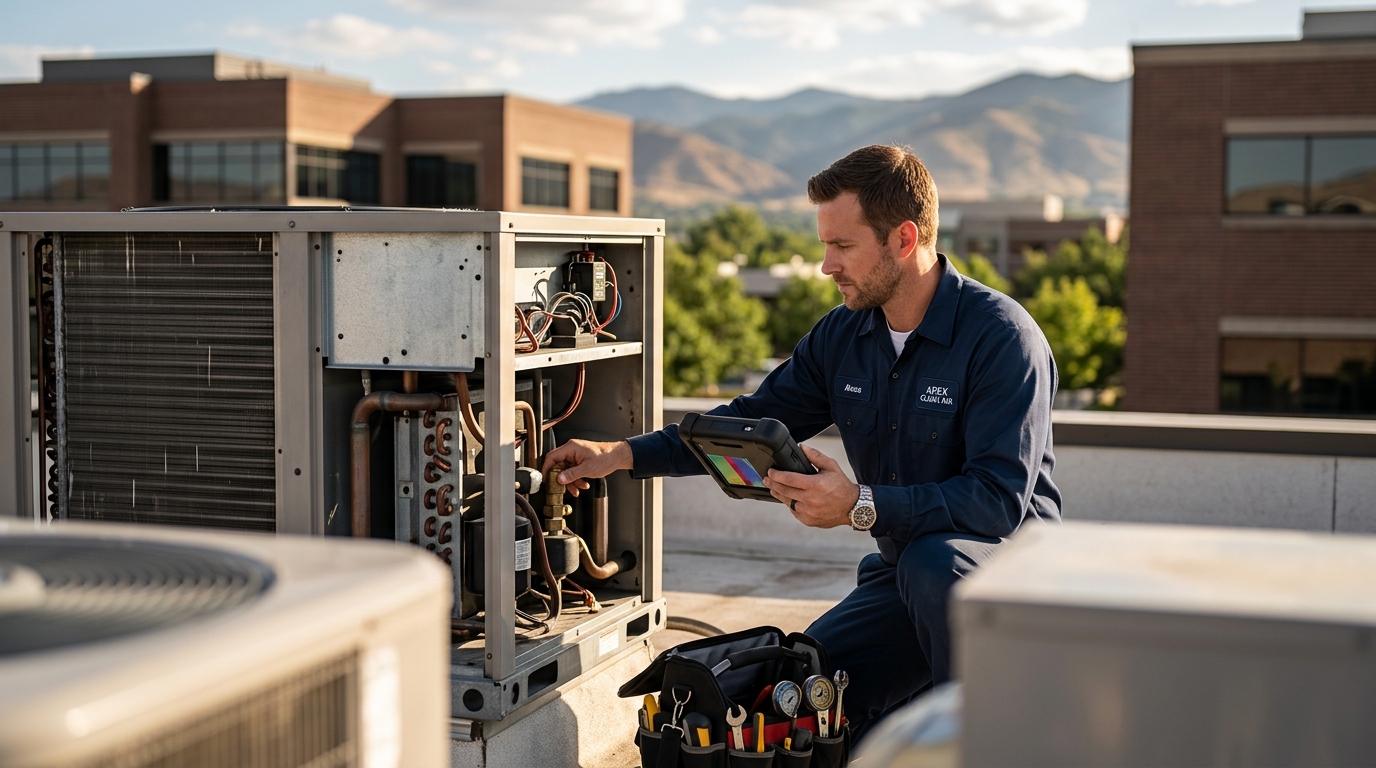
For any business, heating and cooling systems run quietly in the background until something goes wrong. A sudden breakdown in the middle of July or January does not just create discomfort; it can drive away customers, stall productivity, and drain your budget with emergency repair bills. Regular HVAC maintenance is a proactive strategy that keeps commercial systems running at peak performance while protecting your bottom line. Below, we break down exactly why scheduled tune-ups are one of the smartest investments a business owner can make.
1. Significant Energy Cost Savings
HVAC equipment accounts for roughly 40 percent of energy usage in commercial buildings. When filters clog, coils collect grime, and refrigerant levels drop, the system works harder and consumes more power. According to the U.S. Department of Energy, organizations can save 5 to 20 percent annually on energy bills by following operations and maintenance best practices.
Many businesses see energy cost reductions of 10 to 30 percent with proper maintenance alone. Over a multi-year lease or ownership period, those savings add up to thousands of dollars that can be reinvested in growth.
2. Fewer Breakdowns and Emergency Repairs
Preventive maintenance is a scheduled service approach designed to identify and resolve small issues before they escalate into costly failures. Emergency HVAC repairs typically cost 50 to 100 percent more than standard service calls. Even worse, running equipment to failure can cost 3 to 10 times more than a proper maintenance program.
A proactive approach also means less downtime. For commercial properties, even a few hours without climate control can result in lost revenue and reputational damage. Scheduling seasonal AC maintenance and heating system tune-ups keeps your business running without interruption.
3. Extended Equipment Lifespan
The average lifespan of a commercial HVAC system is about 15 to 20 years, but neglected systems often fail well before that mark. Routine inspections, cleaning, and part replacements reduce cumulative wear and keep components operating within design specifications.
| Maintenance Approach | Avg. Equipment Lifespan | Relative Repair Cost | Energy Efficiency |
|---|---|---|---|
| Preventive (scheduled) | 15 to 20 years | Baseline | Optimal |
| Reactive (run-to-failure) | 10 to 12 years | 3 to 10x higher | Up to 25% worse |
| Predictive (data-driven) | 18 to 25 years | Lowest overall | Best-in-class |
Investing in a maintenance membership like the Apex Comfort Club is one of the easiest ways to stay on a preventive schedule without having to remember service dates yourself.
4. Better Indoor Air Quality
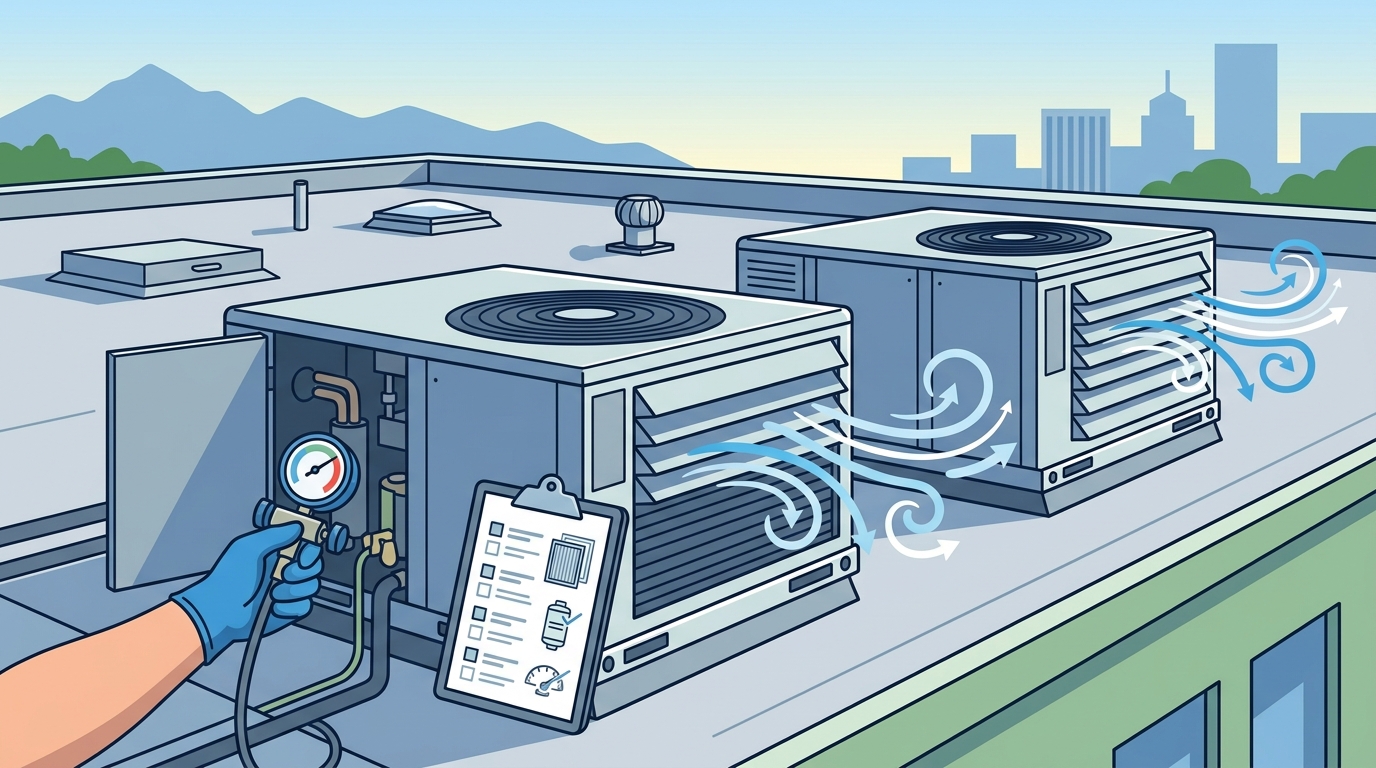
Indoor air quality (IAQ) is the measure of how clean and healthy the air is inside a building. Dust, allergens, mold spores, and volatile organic compounds accumulate in ductwork and HVAC components over time. When the system runs, it recirculates those contaminants throughout your workspace.
Regular filter replacements, coil cleaning, and professional air duct cleaning dramatically reduce airborne pollutants. Cleaner air means fewer sick days, lower liability risk, and a more pleasant environment for employees and visitors alike.
5. Improved Employee Productivity and Comfort
Temperature directly affects how well people work. Research cited by ASHRAE shows that even small deviations from optimal indoor temperature can reduce concentration and cognitive performance. A well-maintained HVAC system delivers consistent temperatures and humidity levels, keeping your team focused.
The Cost of Discomfort
A malfunctioning AC unit does not just create discomfort. It can reduce employee productivity, damage inventory, drive away customers, and even force temporary business closures. The stakes are higher for commercial properties than for homes, where occupants may tolerate a warm room for a day.
6. Warranty Protection and Regulatory Compliance
A manufacturer warranty is a guarantee from the equipment maker that covers defects and certain repairs within a set time frame. Most manufacturers require yearly maintenance to keep warranties valid. Skipping service can void that coverage, leaving you responsible for the full cost of major component failures.
Beyond warranties, local building codes and ASHRAE standards such as Standard 180 establish minimum inspection and maintenance requirements for commercial HVAC systems. Staying compliant protects your business from fines and ensures occupant safety.
7. What a Commercial HVAC Tune-Up Includes
A comprehensive commercial tune-up covers multiple system components. Here is what certified technicians typically address:
Inspection and Diagnostics
Technicians evaluate refrigerant levels, airflow, wiring, and electrical connections. Loose or corroded connections can cause malfunctions or safety hazards. An HVAC diagnostics service pinpoints hidden issues before they grow.
Cleaning and Calibration
Evaporator and condenser coils, condensate drain lines, and blower components are cleaned to restore efficient heat transfer. Thermostat calibration ensures precise temperature regulation and minimizes energy waste.
Filter Replacement
Commercial filters should be replaced every 30 to 90 days depending on building traffic and environment. Clean filters maintain proper airflow, reduce system strain, and improve indoor air quality.
Key Takeaways
- Businesses can save 5 to 20 percent on energy bills annually with routine HVAC maintenance.
- Emergency repairs cost 50 to 100 percent more than scheduled service visits.
- Well-maintained systems last 15 to 20 years; neglected systems often fail by year 10 to 12.
- Clean HVAC systems reduce airborne allergens, dust, and pollutants in the workplace.
- Consistent indoor temperatures improve employee focus and customer satisfaction.
- Most equipment warranties require proof of annual professional maintenance.
- A maintenance membership simplifies scheduling and often includes discounted repairs.
Frequently Asked Questions
How often should commercial HVAC systems be serviced?
Commercial systems should be serviced at least twice a year: once in spring for cooling equipment and once in fall for heating equipment. High-traffic or high-dust environments may require quarterly service.
What does commercial HVAC maintenance cost?
Costs vary by system size and scope, but routine tune-ups are far less expensive than emergency repairs. Many providers offer membership plans that bundle two annual visits with discounts on parts and labor.
Can regular maintenance really lower my energy bills?
Yes. The U.S. Department of Energy reports that proper maintenance practices can reduce energy consumption by 5 to 20 percent. Some businesses report savings of up to 30 percent when maintenance is combined with equipment upgrades.
What happens if I skip HVAC maintenance?
Skipping maintenance leads to reduced efficiency, higher utility costs, more frequent breakdowns, and a shorter equipment lifespan. It can also void manufacturer warranties and create indoor air quality problems.
Does HVAC maintenance improve indoor air quality?
Absolutely. Regular filter changes, coil cleaning, and duct cleaning remove dust, allergens, mold, and other contaminants that recirculate through your building every time the system runs.
Will maintenance prevent all breakdowns?
No maintenance program can guarantee zero failures, but preventive maintenance significantly reduces the likelihood. Studies show a 31 to 50 percent reduction in service requests when preventive programs are in place.
How do I choose the right HVAC maintenance provider?
Look for certified technicians, transparent pricing, service guarantees, and flexible scheduling. A provider that serves your region and offers a maintenance membership, like the Apex Comfort Club, makes it easy to stay on track.
Keep Your Business Comfortable Year-Round
Do not wait for a breakdown to take action. Contact Apex Clean Air today to schedule a commercial HVAC tune-up or ask about our Comfort Club membership. Our certified technicians serve businesses across Utah, Colorado, and Idaho with same-day availability, transparent pricing, and guaranteed workmanship.