

How to Improve Indoor Air Quality in Your Home: 7 Proven Steps
The air inside your home may look clean, but it could be working against your health. According to the U.S. Environmental Protection Agency, Americans spend roughly 90 percent of their time indoors, where pollutant concentrations can be two to five times higher than outdoor levels. Dust, pet dander, mold spores, and volatile organic compounds (VOCs) build up inside your living spaces and circulate every time your HVAC system runs. The good news is that improving residential indoor air quality does not require a full renovation. With a combination of simple habits and professional services, you can breathe easier starting today.
Understand What Indoor Air Quality Really Means
Indoor air quality (IAQ) is the condition of the air within and around buildings, especially as it relates to the health and comfort of occupants. Common indoor pollutants include dust mites, pet dander, mold spores, VOCs from household products, and combustion byproducts like carbon monoxide. Poor IAQ can trigger allergies, worsen asthma, cause headaches, and even contribute to long-term respiratory and cardiovascular disease.
Homes in Utah, Colorado, and Idaho face unique IAQ challenges. Dry winters, pollen-heavy springs, and seasonal wildfire smoke all put extra stress on the air inside your home. Understanding these regional factors is the first step toward choosing the right solutions.
Step 1: Control Pollution at the Source
Source control is the practice of identifying and eliminating individual sources of indoor pollution or reducing their emissions. The EPA considers source control the most effective and cost-efficient strategy for improving IAQ. It is often more affordable than increasing ventilation because it avoids added energy costs.
Quick Wins for Source Control
- Use low-VOC paints, cleaners, and building materials.
- Avoid smoking or using e-cigarettes indoors.
- Vent all combustion appliances (gas stoves, dryers, space heaters) to the outside.
- Store chemicals in sealed containers and ventilate when using them.
Step 2: Improve Ventilation
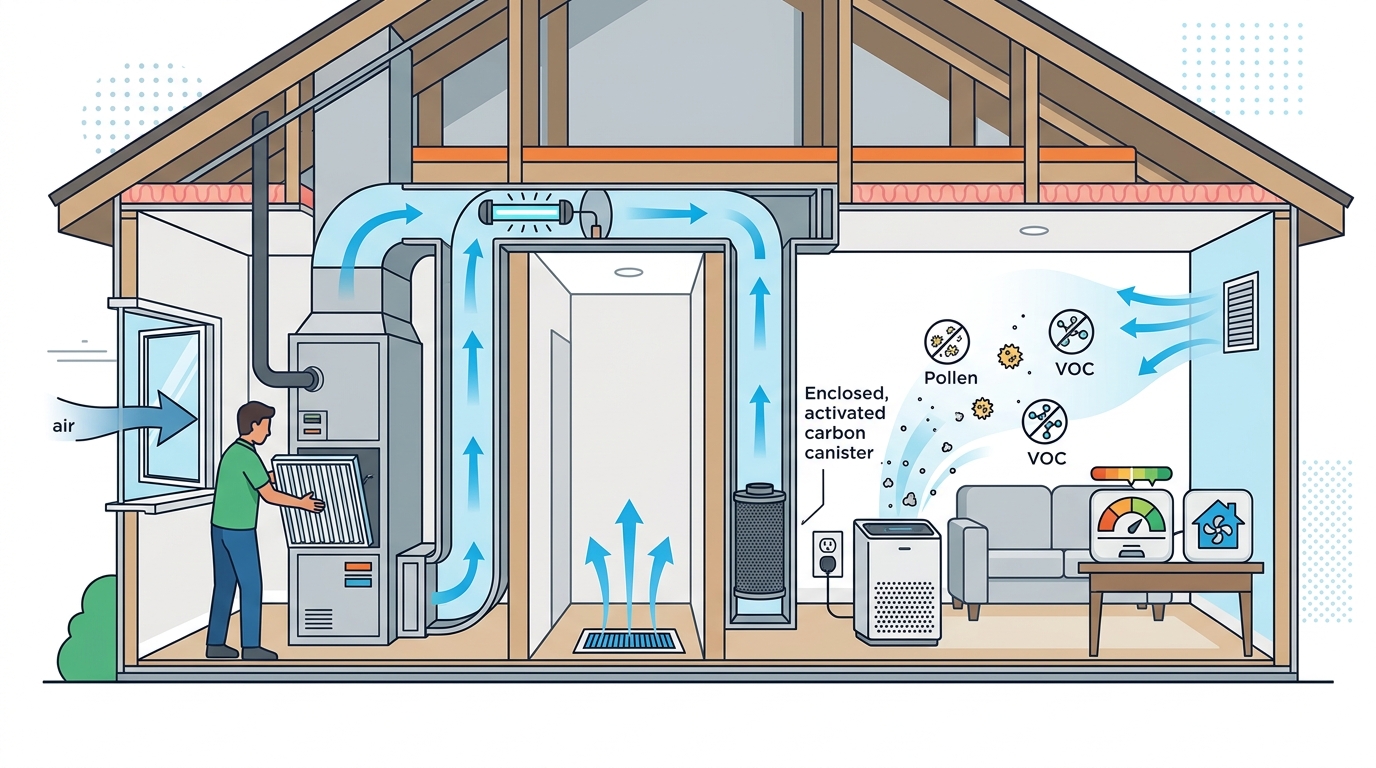
Ventilation is the process of exchanging indoor air with fresh outdoor air to dilute pollutants. Most residential forced-air heating and cooling systems do not mechanically bring outdoor air into the home, which means many households rely on infiltration alone. When weather and outdoor air quality permit, open windows and doors. Use exhaust fans in bathrooms and kitchens to remove moisture and cooking pollutants at the source.
For a more consistent solution, consider a heat recovery ventilator (HRV) or energy recovery ventilator (ERV). These devices bring in fresh air while recapturing energy from the outgoing airstream, keeping utility bills in check. If you want to learn how your HVAC system affects ventilation, explore how AC installation impacts indoor air quality.
Step 3: Upgrade Your HVAC Filters
Your HVAC filter is the first line of defense against airborne particles. Standard filters rated MERV 8 or lower are designed to protect equipment, not lungs. Upgrading to a MERV 13 or higher filter captures finer particles like pollen, mold spores, and some bacteria. Replace or clean filters every one to three months, depending on household conditions such as pets, allergies, or nearby construction.
| MERV Rating | Particles Captured | Best For |
|---|---|---|
| 1 to 8 | Large dust, lint, pollen | Equipment protection |
| 9 to 12 | Fine dust, mold spores | Improved residential IAQ |
| 13 to 16 | Bacteria, smoke, fine allergens | Allergy and asthma relief |
| 17 to 20 (HEPA) | Viruses, ultra-fine particles | Medical-grade environments |
Not sure which filter fits your system? A certified technician from Apex Clean Air can recommend the right option during an indoor air quality service visit.
Step 4: Schedule Professional Air Duct Cleaning
Air duct cleaning is the process of removing dust, debris, and contaminants from your home's heating and cooling ductwork. Over time, ducts collect layers of dust, pet dander, pollen, and even mold that recirculate every time the system runs. A thorough cleaning not only improves the air you breathe but also helps your HVAC system run more efficiently and last longer.
Most homes benefit from professional duct cleaning every three to five years, though more frequent service is recommended for households with pets, allergies, or recent renovation work. Signs that your ducts need attention include visible dust clouds from vents, musty odors, and worsening allergy symptoms indoors.
Step 5: Install Whole-Home Air Purification
A whole-home air purifier integrates directly with your HVAC system to clean every cubic foot of air in your house, unlike portable units that only cover a single room. Options include UV germicidal lamps that kill bacteria, viruses, and mold spores inside your air handler, and advanced oxidation systems like the REME Halo that disperse low-level hydrogen peroxide throughout your home.
For maximum protection, many homeowners layer high-efficiency media filters with UV or oxidation-based systems for multi-stage defense. Learn whether a whole-home system is right for you in our guide to whole-home air purifiers.
Step 6: Manage Humidity Levels
The EPA recommends keeping indoor humidity between 30 and 50 percent. Too much moisture encourages mold growth and dust mites, while too little causes dry skin, irritated sinuses, and increased susceptibility to respiratory infections. A simple humidity gauge from a hardware store can help you monitor conditions.
Your HVAC system plays a major role in humidity control. An oversized AC unit cools air too quickly without running long enough to dehumidify, while an undersized unit may dry air excessively. Professional HVAC diagnostics can determine whether your system is properly sized and recommend add-on humidifiers or dehumidifiers where needed.
Step 7: Keep Up with HVAC Maintenance
Regular HVAC maintenance is one of the simplest ways to protect indoor air quality year-round. An annual tune-up for your furnace in fall and your air conditioner in spring catches small issues before they become costly breakdowns. The EPA emphasizes that maintaining HVAC systems is essential for good IAQ and helps reduce airborne pollutants.
During a maintenance visit, technicians inspect filters, clean coils and blower components, check refrigerant levels, and test safety controls. This process keeps your system running cleanly and efficiently. Explore Apex Clean Air heating services to schedule your seasonal tune-up.
Key Takeaways
- Indoor air can be two to five times more polluted than outdoor air, making proactive IAQ management essential.
- Source control is the most effective and cost-efficient first step toward cleaner indoor air.
- Upgrading to MERV 13 or higher filters captures fine allergens that standard filters miss.
- Professional air duct cleaning every three to five years removes built-up contaminants from your HVAC system.
- Whole-home air purification systems provide continuous, house-wide protection that portable units cannot match.
- Maintaining humidity between 30 and 50 percent prevents both mold growth and dry-air discomfort.
- Annual HVAC maintenance improves system efficiency, extends equipment life, and supports healthier air.
Frequently Asked Questions
How often should I have my air ducts cleaned?
Most homes benefit from professional duct cleaning every three to five years. If you have pets, suffer from allergies, or have completed recent construction, more frequent service may be appropriate.
What is the best HVAC filter for allergies?
Filters rated MERV 13 or above capture fine allergens such as mold spores, pollen, and bacteria. HEPA-grade media filters offer the highest level of residential particle removal. Always confirm your HVAC system can handle the increased airflow resistance before upgrading.
Do UV lights in HVAC systems really work?
Yes. UV germicidal lamps have been proven to kill or deactivate bacteria, mold, and viruses that circulate through HVAC systems. They are most effective when installed inside the air handler or near the evaporator coil.
What humidity level should I maintain indoors?
The EPA recommends keeping indoor humidity between 30 and 50 percent. Use a hygrometer to monitor levels and consider a whole-home humidifier or dehumidifier if your HVAC system alone cannot maintain this range.
Can I improve indoor air quality without buying new equipment?
Absolutely. Low-cost steps include opening windows when outdoor air quality is good, using exhaust fans, replacing HVAC filters regularly, reducing the use of chemical-based household products, and keeping your home clean and dry.
How does HVAC maintenance affect air quality?
A dirty HVAC system circulates dust, mold, and allergens throughout your home. Regular professional maintenance cleans critical components, ensures proper filtration, and keeps the system running efficiently, all of which directly improve the air you breathe.
What are signs of poor indoor air quality?
Common indicators include persistent allergy symptoms that worsen indoors, musty or stale odors from vents, visible dust buildup near registers, frequent headaches, and excessive humidity or condensation on windows.
Does Apex Clean Air offer air quality testing?
Yes. Apex Clean Air provides professional indoor air quality testing in the Denver and Salt Lake City markets. Technicians use professional-grade equipment to measure particulate matter, VOCs, carbon monoxide, and humidity, then provide clear results and tailored recommendations.
Get Started with Cleaner Air Today
Improving your home's air quality does not have to be complicated. Whether you need a professional duct cleaning, a whole-home purification system, or a seasonal HVAC tune-up, the certified technicians at Apex Clean Air are ready to help. With over 4,000 reviews and a 4.9-star average rating, families across Utah, Colorado, and Idaho trust Apex for reliable, transparent service. Request your free estimate or call today to schedule a same-day appointment.