
The air inside your home has a direct impact on your family's comfort, health, and well-being. According to the U.S. Environmental Protection Agency (EPA), Americans spend roughly 90 percent of their time indoors, where pollutant concentrations can be two to five times higher than outdoor levels. From dust and pet dander to volatile organic compounds (VOCs) and mold spores, hidden contaminants circulate through your HVAC system every day. The good news is that practical, proven steps can dramatically reduce those pollutants and help your household breathe easier.
Why Indoor Air Quality Matters
Indoor air quality (IAQ) is the measure of how clean and healthy the air inside a building is relative to the comfort and well-being of its occupants. Poor IAQ can lead to allergies, asthma flare-ups, headaches, fatigue, and even long-term respiratory and cardiovascular conditions. Vulnerable groups like children, the elderly, and people with pre-existing health issues face the greatest risk.
Energy-efficient construction in modern homes creates a tight building envelope that keeps conditioned air in but also traps pollutants with nowhere to go. That is why proactive IAQ management is essential, not optional.
Common Indoor Air Pollutants
Understanding what you are dealing with is the first step. Below is a comparison of the most common residential pollutants, their sources, and their health effects.
| Pollutant | Common Sources | Health Effects |
|---|---|---|
| Dust and dust mites | Carpeting, bedding, ductwork | Allergies, asthma triggers |
| Pet dander | Cats, dogs, other animals | Respiratory irritation, allergic reactions |
| Mold spores | Damp HVAC components, bathrooms | Allergic reactions, respiratory infections |
| Volatile organic compounds (VOCs) | Paint, cleaners, building materials | Headaches, nausea, long-term organ damage |
| Carbon monoxide (CO) | Gas stoves, furnaces, fireplaces | Dizziness, confusion, fatal at high levels |
| Pollen | Doors, windows, HVAC intake | Seasonal allergy symptoms |
| Wildfire smoke / PM2.5 | Outdoor air during fire season | Respiratory distress, cardiovascular strain |
Start With Source Control
Source control is the process of eliminating or reducing individual pollution sources before they contaminate your air. The EPA considers source control the most effective and cost-efficient approach to improving IAQ.
Practical Source Control Steps
- Use low-VOC paints, adhesives, and cleaning products. Look for the EPA Safer Choice label.
- Vent combustion appliances (gas stoves, dryers, water heaters) directly to the outdoors.
- Test your home for radon, especially in Utah and Colorado where geological conditions increase exposure risk.
- Avoid smoking or vaping indoors.
If you suspect an underlying system issue is affecting your air, professional indoor air quality testing can identify hidden pollutants using measured data rather than guesswork.
Improve Ventilation
Ventilation is the controlled exchange of indoor air with outdoor air to dilute and remove pollutants. Most residential forced-air systems do not mechanically bring fresh air into the house, so homeowners must take deliberate action.
Simple Ventilation Improvements
- Open windows and doors when weather and outdoor air quality permit.
- Run bathroom and kitchen exhaust fans during and after cooking or showering.
- Ask your HVAC technician about adding a heat recovery ventilator (HRV) or energy recovery ventilator (ERV) to bring in filtered outdoor air without losing heating or cooling efficiency.
For homes in regions like Utah's Wasatch Front, where winter inversions trap pollution, mechanical ventilation paired with filtration is the safest approach. An HVAC diagnostic appointment can assess whether your current system provides adequate airflow.
Upgrade Filtration and Air Purification
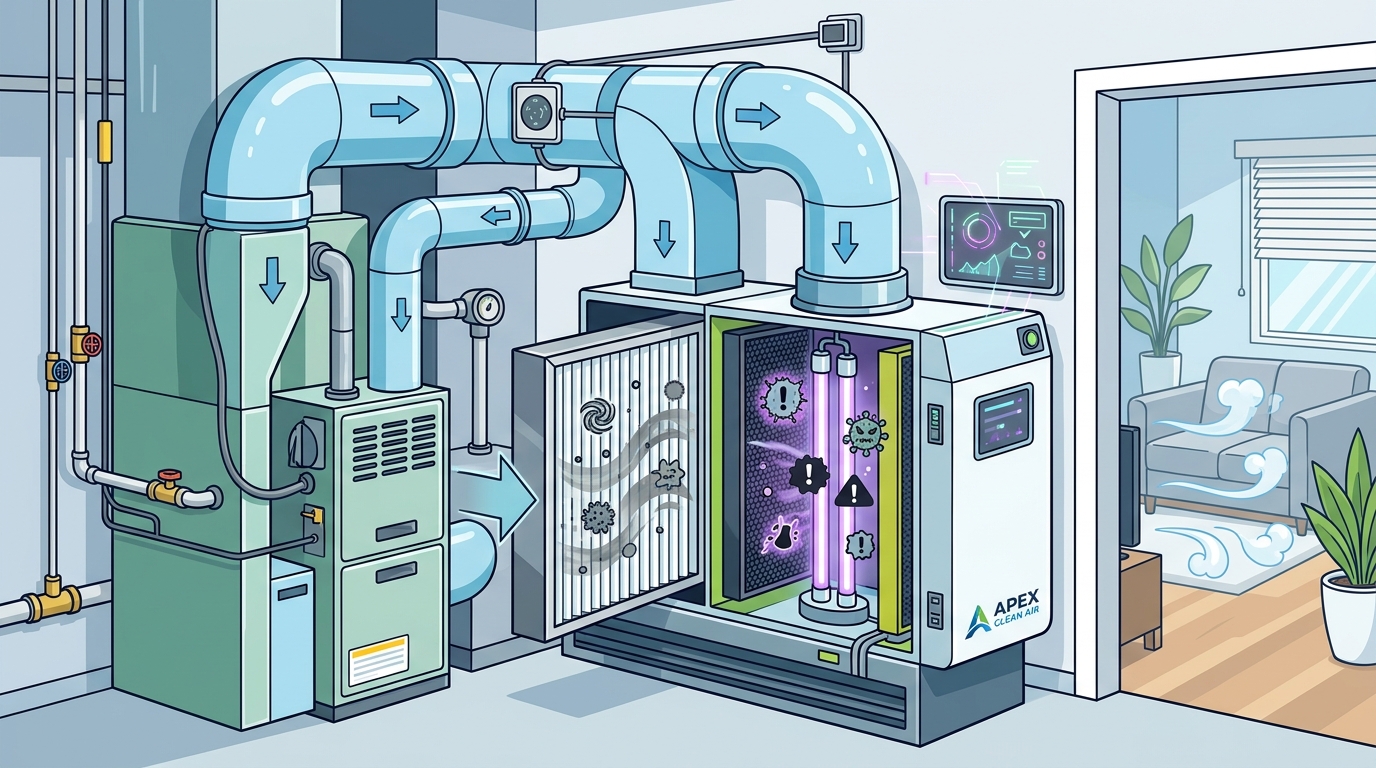
A whole-home air purifier is a filtration or sanitization system that integrates directly with your HVAC equipment to clean every cubic foot of air in your house. Standard HVAC filters rated MERV 8 or lower are designed to protect equipment, not your lungs. Upgrading to MERV 13 or higher captures significantly more fine particulate matter.
Types of Whole-Home Purification
- High-efficiency media filters (MERV 13+): Capture pollen, mold spores, and fine dust.
- UV germicidal lamps: Kill or deactivate bacteria, viruses, and mold inside your air handler.
- Oxidation-based systems (e.g., REME Halo): Neutralize odors, VOCs, and biological contaminants.
Many homeowners combine two or more of these technologies for layered protection. Learn whether a whole-home air purifier is right for your household based on your specific concerns and HVAC setup.
Schedule Professional Air Duct Cleaning
Air duct cleaning is the process of removing dust, debris, and contaminants from your home's heating and cooling system. Over time, ductwork collects dust, pet dander, pollen, and even mold that recirculates every time your HVAC runs.
Most homes benefit from professional duct cleaning every 3 to 5 years. Homes with pets, allergy sufferers, or recent renovations may need more frequent service. A thorough cleaning also improves system efficiency, potentially lowering energy bills and extending the lifespan of your equipment.
What a Professional Cleaning Includes
A comprehensive service goes beyond the ducts themselves. It covers evaporator coils, blower assemblies, the plenum, and supply and return registers. The most effective method uses high-volume negative pressure while specialized tools dislodge debris for extraction. Read the complete guide to air duct cleaning for a detailed look at the process.
Manage Humidity Levels
The EPA recommends keeping indoor humidity between 30 and 50 percent. Excess moisture encourages mold growth and dust mite proliferation. Too little moisture causes dry skin, irritated sinuses, and increased susceptibility to respiratory infections.
In Utah's dry winters and Colorado's arid climate, a whole-home humidifier integrated with your HVAC system can maintain balanced moisture. During humid months, your air conditioner naturally dehumidifies, but only if it is properly sized. An oversized AC cools air too quickly without running long enough to remove moisture. A professional indoor air quality assessment includes humidity evaluation and equipment recommendations tailored to your home.
Key Takeaways
- Indoor air can be 2 to 5 times more polluted than outdoor air, making proactive IAQ management critical.
- Source control is the most effective and affordable first step to cleaner air.
- Proper ventilation dilutes indoor pollutants, but mechanical options are safer during poor outdoor air events.
- Upgrading to MERV 13+ filters or whole-home purification captures particles that standard filters miss.
- Professional air duct cleaning every 3 to 5 years removes accumulated contaminants from your HVAC system.
- Humidity should stay between 30 and 50 percent to prevent mold growth and respiratory discomfort.
- Regular HVAC maintenance ties all of these strategies together for year-round air quality improvements.
Frequently Asked Questions
How often should I change my HVAC air filter?
Most standard 1-inch filters should be replaced every 30 to 90 days. Homes with pets or allergy sufferers should change filters monthly. High-capacity media filters can last 6 to 12 months depending on conditions.
Can air duct cleaning help with allergies?
Yes. Removing dust, dander, and mold spores from ductwork significantly reduces airborne triggers for asthma and allergy sufferers. Pairing duct cleaning with upgraded filtration provides the best results.
What is the difference between a portable air purifier and a whole-home system?
Portable units clean air in a single room. Whole-home systems integrate with your HVAC equipment to filter every cubic foot of air in your house, providing consistent protection throughout every room.
How do I know if my indoor air quality is poor?
Common signs include lingering odors, dust that returns quickly after cleaning, increased allergy symptoms indoors, and visible dust coming from supply vents. Professional air quality testing can measure pollutant levels with precision.
Does HVAC maintenance really affect air quality?
Absolutely. A well-maintained system traps pollutants effectively and ensures proper airflow. Neglected systems accumulate dust, allergens, and mold that recirculate through your home every time the blower runs.
Is indoor air quality worse in winter?
Often, yes. Homes are sealed tightly against the cold, reducing natural ventilation. In areas like Utah's Wasatch Front, winter inversions also trap outdoor pollution, making indoor filtration and ventilation even more important.
What MERV rating should I use for my home?
MERV 13 is generally recommended for residential homes seeking improved air quality. Higher ratings capture finer particles but may restrict airflow in older systems, so consult an HVAC technician before upgrading.
How much does professional air duct cleaning cost?
Costs vary based on home size, system complexity, and location. Most residential duct cleaning jobs take 2 to 4 hours. Contact a provider like Apex Clean Air for a transparent, upfront quote with no hidden fees.
Get Started With Cleaner Air
Improving your home's air quality does not have to be overwhelming. Start with one step, whether it is replacing your filter, scheduling a duct cleaning, or booking an air quality test, and build from there. Apex Clean Air's certified technicians serve homeowners across Utah, Colorado, and Idaho with same-day appointments, transparent pricing, and a satisfaction guarantee. Request your free indoor air quality estimate today and take the first step toward healthier air for your family.