
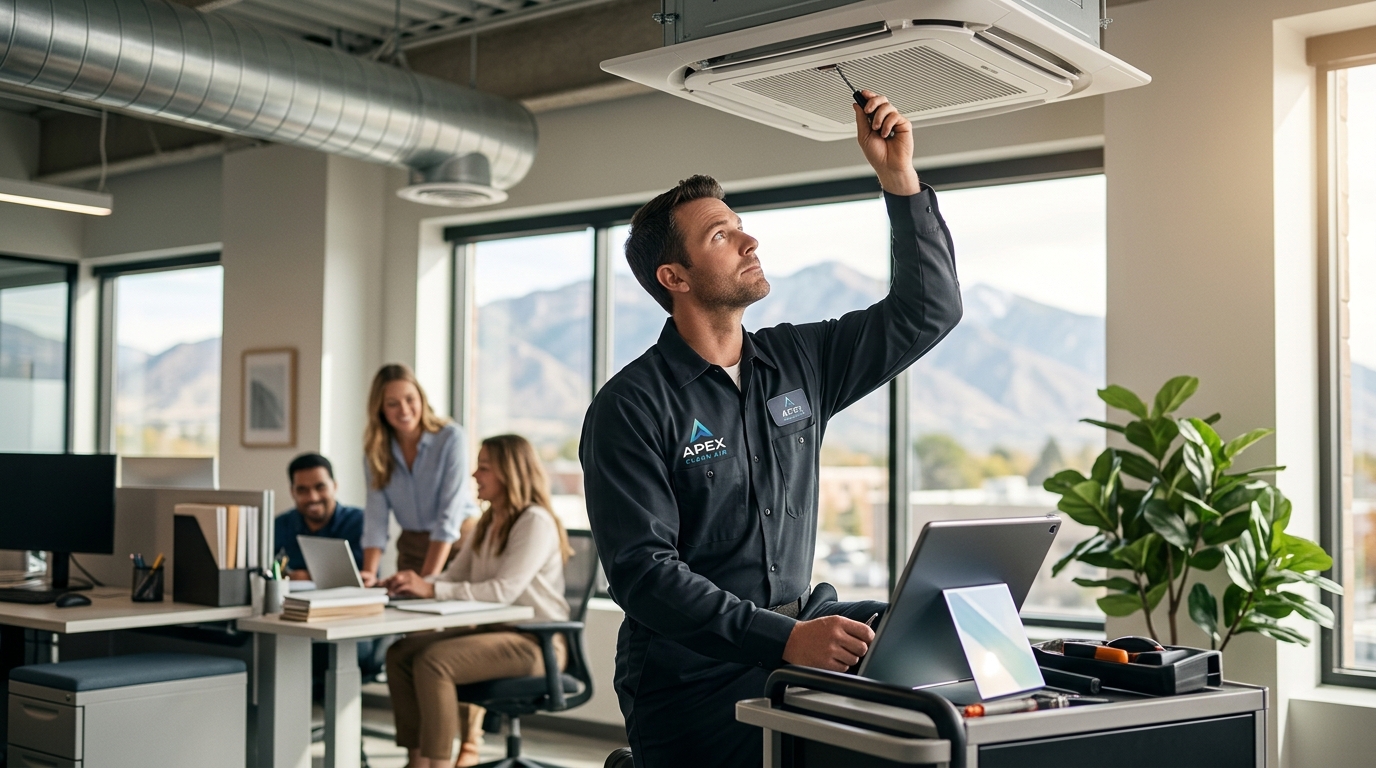
Your commercial HVAC system does far more than control temperature. It affects energy costs, employee productivity, indoor air quality, and even regulatory compliance. Yet many business owners treat maintenance as an afterthought, reacting only when something breaks. The truth is that a proactive maintenance plan can save your company thousands of dollars each year while keeping your team comfortable and your operations running smoothly. Below, we break down the specific, data-backed benefits of regular HVAC maintenance for businesses in Utah, Colorado, Idaho, and beyond.
Significant Energy Savings
Preventive maintenance is one of the fastest ways to reduce operating expenses. According to the U.S. Department of Energy, effective operations and maintenance of commercial HVAC systems can save organizations 5 to 20 percent annually on energy bills. For a mid-size office spending $50,000 a year on utilities, that translates to $2,500 to $10,000 in savings.
HVAC systems account for roughly 40 percent of energy usage in commercial buildings, according to the U.S. Small Business Administration. Dirty coils, clogged filters, and low refrigerant force your system to work harder, driving up utility bills. Simple tasks like filter replacement, coil cleaning, and thermostat calibration keep energy consumption in check.
Extended Equipment Lifespan
Commercial HVAC equipment is a major capital investment. The average lifespan of an HVAC system is 15 to 20 years, but neglected systems often fail well before that mark. Routine inspections catch worn belts, corroded connections, and refrigerant leaks early, preventing the kind of cascading damage that shortens a unit's useful life.
Equipment lifespan extension is the additional years a system operates beyond its expected service life due to consistent, professional care. Research shows that every $1 of deferred maintenance becomes $4 in capital renewal costs down the road. Investing in scheduled furnace and HVAC maintenance protects that investment and delays costly full-system replacements.
Better Indoor Air Quality
Indoor air quality (IAQ) is the condition of the air inside a building as it relates to the health and comfort of occupants. Poor IAQ contributes to headaches, fatigue, and respiratory issues, all of which reduce employee productivity. Dust, pollen, and biological contaminants accumulate in ductwork and recirculate every time the system runs.
Regular maintenance includes filter changes, coil cleaning, and professional air duct cleaning to remove built-up allergens and debris. For businesses in regions like Utah and Colorado, where wildfire smoke and dry air are common concerns, indoor air quality services such as air purifiers and UV light systems provide an added layer of protection.
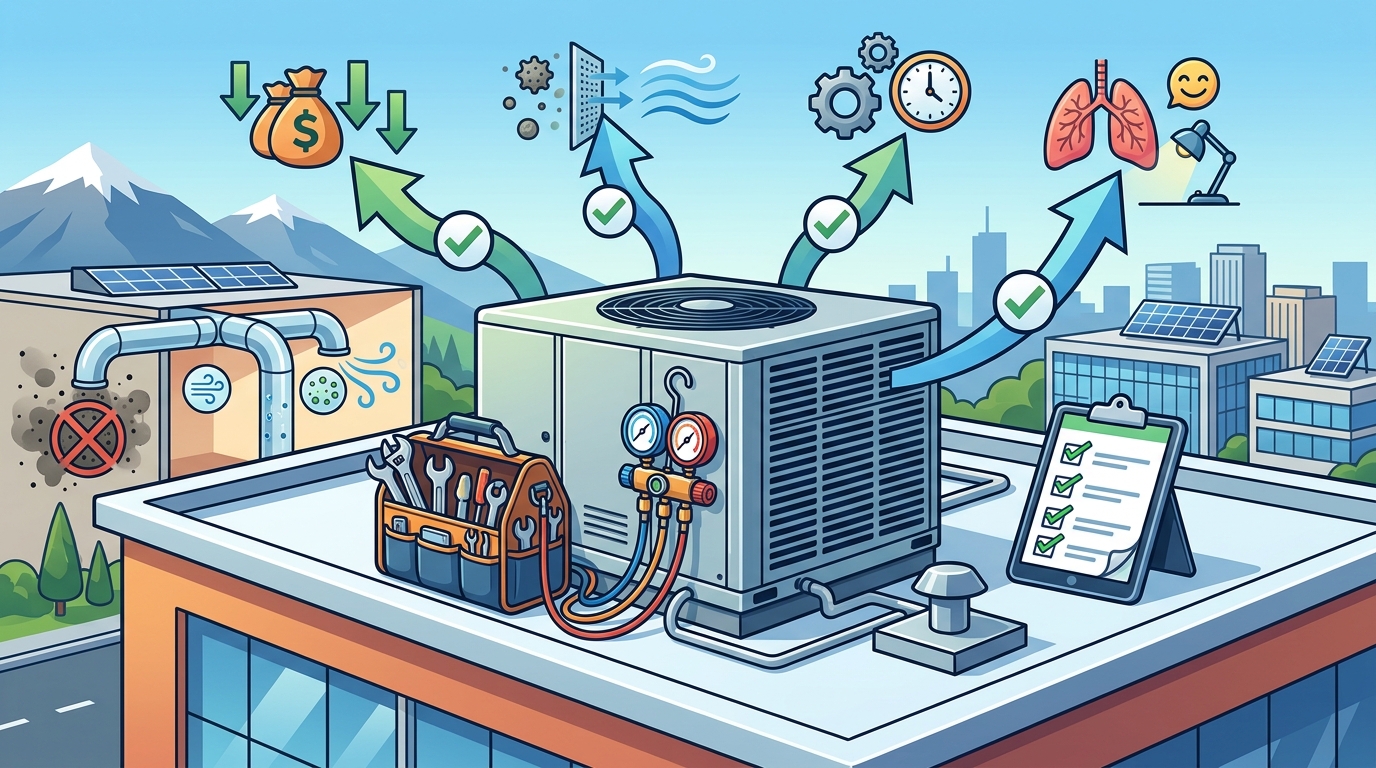
The Productivity Connection
Research referenced by ASHRAE shows that small changes in indoor temperature and air quality can influence worker concentration and comfort. A malfunctioning system does not just create discomfort; it can measurably reduce output across your workforce.
Fewer Costly Breakdowns
Emergency HVAC repairs cost 50 to 100 percent more than standard service calls. Even worse, an unexpected system failure during peak summer or winter can force a temporary business closure, driving away customers and hurting revenue.
Preventive maintenance is a scheduled approach to inspecting, cleaning, and servicing HVAC components before they fail. Planned maintenance reduces the likelihood of breakdowns by identifying worn parts and performance issues in advance. Studies have documented a 70 to 75 percent reduction in system breakdowns when predictive maintenance strategies are applied. Businesses that join a structured commercial maintenance plan gain priority service, scheduled tune-ups, and peace of mind.
Regulatory Compliance and Safety
Commercial buildings must meet local mechanical codes, energy codes, and health and safety regulations. ASHRAE Standard 180 sets the minimum requirements for HVAC inspection and maintenance programs in commercial buildings, and many jurisdictions adopt or reference this standard. OSHA also requires employers to maintain safe working environments, including ensuring HVAC systems do not pose indoor air quality or electrical hazards.
Properties pursuing LEED certification or ENERGY STAR benchmarking need documented HVAC maintenance and performance audits. A cracked heat exchanger, for instance, can leak carbon monoxide into occupied spaces. Regular inspections identify dangerous issues like gas leaks or carbon monoxide risks well before they become emergencies. Learn more about Apex Clean Air's preventive maintenance in Colorado.
Reactive vs. Preventive Maintenance: A Side-by-Side Comparison
| Factor | Reactive Maintenance | Preventive Maintenance |
|---|---|---|
| Annual Energy Costs | Up to 25% higher | 5-20% lower |
| Repair Costs | 50-100% premium for emergency calls | Predictable, lower overall spend |
| Equipment Lifespan | Shortened by years of neglect | Maximized (15-20 years) |
| System Downtime | Frequent, unplanned outages | 70-75% fewer breakdowns |
| Indoor Air Quality | Degraded over time | Consistently healthy |
| Compliance Risk | Higher liability exposure | Documented, audit-ready |
Key Takeaways
- Regular HVAC maintenance can save businesses 5 to 20 percent annually on energy bills.
- HVAC systems account for about 40 percent of energy use in commercial buildings, making efficiency critical.
- Preventive maintenance reduces system breakdowns by up to 70 to 75 percent compared to reactive approaches.
- Emergency repairs cost 50 to 100 percent more than planned service visits.
- Proper maintenance protects indoor air quality, boosting employee health and productivity.
- Documented maintenance supports ASHRAE, OSHA, LEED, and ENERGY STAR compliance requirements.
- Every $1 of deferred maintenance can become $4 in future capital renewal costs.
Frequently Asked Questions
How often should a commercial HVAC system be serviced?
Most experts recommend at least two professional tune-ups per year, once in spring before cooling season and once in fall before heating season. High-use facilities may benefit from quarterly inspections.
What does a commercial HVAC maintenance visit include?
A typical visit includes filter inspection and replacement, coil cleaning, electrical connection checks, refrigerant level verification, thermostat calibration, and a full system performance evaluation.
How much money can businesses save with preventive HVAC maintenance?
The U.S. Department of Energy estimates savings of 5 to 20 percent on annual energy bills. Combined with reduced repair costs and extended equipment life, the total return on investment can be substantial.
Does HVAC maintenance improve employee productivity?
Yes. Organizations like ASHRAE have published standards linking indoor temperature and air quality to worker concentration. Consistent climate control and clean air reduce sick days and improve focus.
Is commercial HVAC maintenance required by law?
There is no single federal mandate, but many states and municipalities require periodic inspections under local mechanical and energy codes. ASHRAE Standard 180 and OSHA regulations also apply to commercial buildings.
What are the signs a commercial HVAC system needs maintenance?
Common warning signs include rising energy bills, inconsistent temperatures, unusual noises, poor air quality, frequent cycling, and visible wear on components like belts or coils.
Can duct cleaning improve commercial HVAC performance?
Absolutely. Post-cleaning HVAC systems can deliver 10 to 46 percent more airflow. Removing dust and debris from ductwork also reduces strain on fans and blowers, lowering energy consumption.
Schedule Your Commercial Maintenance Today
Do not wait for a breakdown to disrupt your business. Apex Clean Air provides professional HVAC maintenance, repair, and air quality services for commercial clients across Utah, Colorado, and Idaho. Our certified technicians deliver thorough inspections, transparent pricing, and priority scheduling so your business stays comfortable year-round. Contact us today to build a maintenance plan tailored to your facility.