
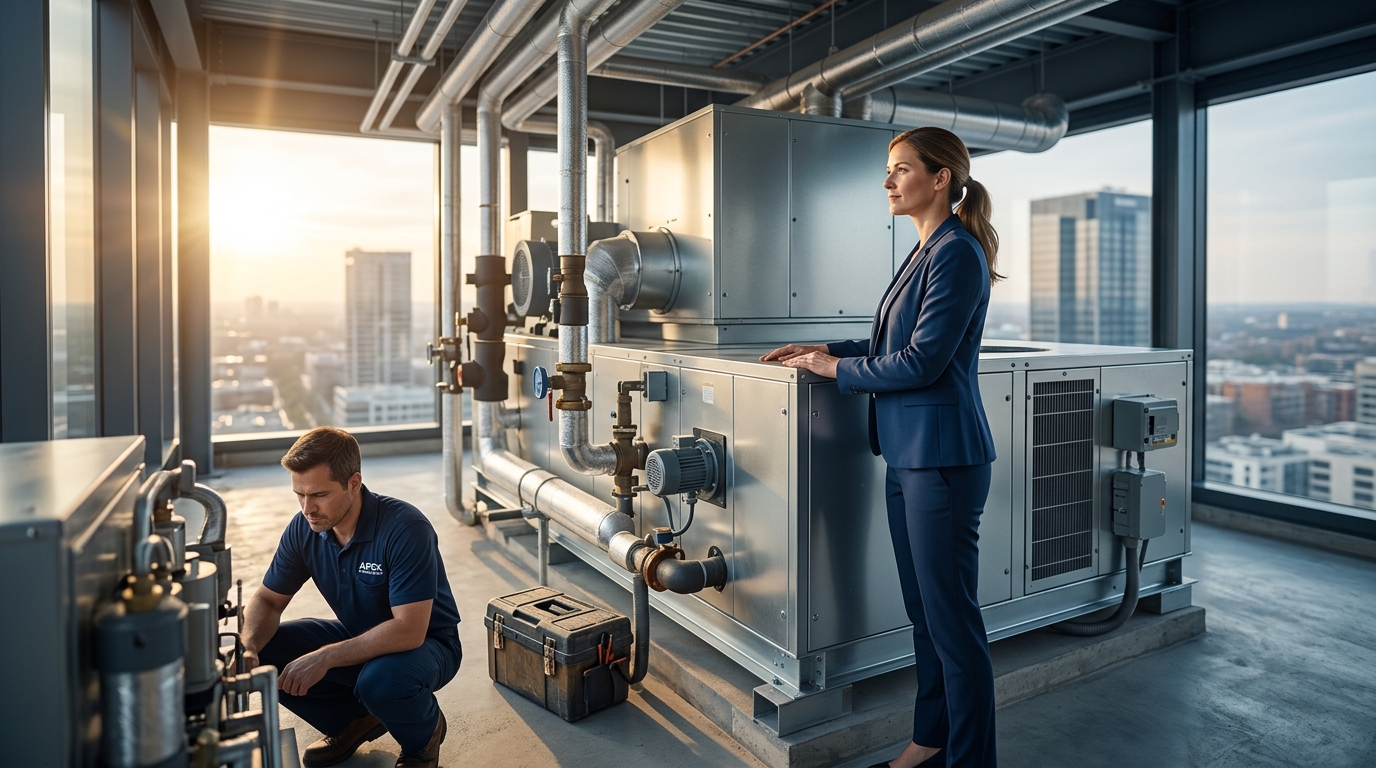
Your commercial HVAC system does more than control temperature. It directly affects energy costs, employee productivity, indoor air quality, and the longevity of expensive equipment. Yet many business owners treat maintenance as optional, reacting only when something breaks. According to the U.S. Department of Energy, HVAC systems account for up to 40% of a commercial building's total energy use, making proactive upkeep one of the smartest investments a business can make. Below, we break down the key benefits of regular commercial HVAC maintenance and explain why it belongs in every facility manager's playbook.
Lower Energy Bills and Improved Efficiency
Preventive maintenance is the single most cost-effective way to reduce commercial energy consumption. The U.S. Department of Energy estimates that proper HVAC operations and maintenance can save organizations 5 to 20% annually on energy bills. Dirty coils, clogged filters, and low refrigerant levels force systems to work harder, driving utility costs up month after month.
Regular filter changes alone can yield a 5 to 15% reduction in monthly utility expenses. When you add coil cleaning, refrigerant checks, and thermostat calibration, the cumulative savings are substantial. For a mid-size office building spending $5,000 per month on energy, even a 10% improvement means $6,000 back in your budget each year.
Extended Equipment Lifespan
Commercial HVAC systems are a significant capital investment. Equipment lifespan is the total operational period a system delivers reliable performance before requiring replacement. Well-maintained commercial units typically last 15 to 20 years, while neglected systems may fail in under a decade.
Research shows that every $1 of deferred maintenance eventually becomes $4 in capital renewal costs. Scheduled inspections catch worn belts, corroded connections, and minor refrigerant leaks before they cascade into compressor failure or total system replacement. If your business relies on dependable climate control, professional HVAC diagnostics can identify problems early and protect your investment.
Better Indoor Air Quality
Indoor air quality (IAQ) is a measure of how clean and healthy the air inside a building is, factoring in pollutants like dust, mold, and volatile organic compounds. The EPA estimates that indoor air can be two to five times more polluted than outdoor air, a statistic that is especially relevant for sealed commercial spaces.
Routine maintenance includes filter replacement, coil cleaning, and duct inspection to remove the buildup of allergens and contaminants. Dirty ductwork recirculates particles every time the system cycles, aggravating allergies and respiratory conditions among employees and visitors. Businesses that pair maintenance with air purification systems can further reduce airborne pathogens and odors.
Fewer Costly Breakdowns
Emergency HVAC repairs cost 50 to 100% more than standard service calls, and running equipment to failure can be 3 to 10 times more expensive than a proper maintenance program. For businesses, an unexpected system failure does not just mean a repair bill. It means lost revenue, uncomfortable customers, and disrupted operations.
Predictive maintenance strategies have been shown to reduce system breakdowns by 70 to 75%. Planned maintenance keeps your team in control of scheduling and costs, rather than scrambling for emergency service during peak season. Apex Clean Air's commercial AC services include comprehensive tune-ups designed to catch issues before they become emergencies.
| Factor | Reactive Maintenance | Preventive Maintenance |
|---|---|---|
| Average repair cost | 50-100% higher | Standard service rates |
| Energy efficiency | Up to 25% more energy used | 5-20% annual savings |
| Equipment lifespan | Under 10 years | 15-20 years |
| Breakdown frequency | High / unpredictable | Reduced by up to 75% |
| Total maintenance cost | Baseline | Up to 50% lower over time |
Compliance and Safety
ASHRAE Standard 180 is the industry benchmark that establishes minimum inspection and maintenance requirements for commercial HVAC systems. Many local jurisdictions adopt or reference this standard in their building codes. OSHA also requires employers to maintain safe working environments, including ensuring HVAC systems do not pose indoor air quality or electrical hazards.
Properties pursuing LEED certification or ENERGY STAR benchmarking may need documented maintenance records and performance audits. Regular professional maintenance from a provider like Apex Clean Air helps you stay compliant and reduces liability exposure. Safety checks during tune-ups can also detect critical issues like cracked heat exchangers, which can leak carbon monoxide into occupied spaces.
Employee Comfort and Productivity
Comfortable employees are productive employees. ASHRAE publishes standards to guide healthy and efficient building temperatures because even small changes in indoor climate can influence worker concentration and output. A malfunctioning AC unit does not just create discomfort; it can reduce productivity, increase sick days, and drive away customers.
OSHA data suggests that improving indoor air quality could save businesses up to $15 billion annually through increased worker productivity, fewer sick days, and lower health care costs. Clean, well-ventilated air paired with consistent temperatures helps your team perform at their best. Businesses across Utah, Colorado, and Idaho trust Apex Clean Air's local teams to keep commercial spaces healthy and comfortable year-round.
Key Takeaways
- Regular HVAC maintenance can save businesses 5 to 20% on annual energy bills.
- Preventive programs reduce total maintenance costs by up to 50% compared to reactive approaches.
- Well-maintained systems last 15 to 20 years, while neglected equipment often fails in under a decade.
- Indoor air quality improves significantly with routine filter changes, coil cleaning, and duct inspections.
- Emergency repairs cost 50 to 100% more than planned service visits.
- ASHRAE Standard 180 and OSHA guidelines make documented maintenance a compliance necessity.
- Healthier indoor air reduces sick days and boosts employee productivity.
Frequently Asked Questions
How often should a business schedule HVAC maintenance?
Most commercial systems benefit from at least two professional tune-ups per year, once before the cooling season and once before the heating season. High-use facilities like restaurants or data centers may need quarterly service.
What does a commercial HVAC tune-up include?
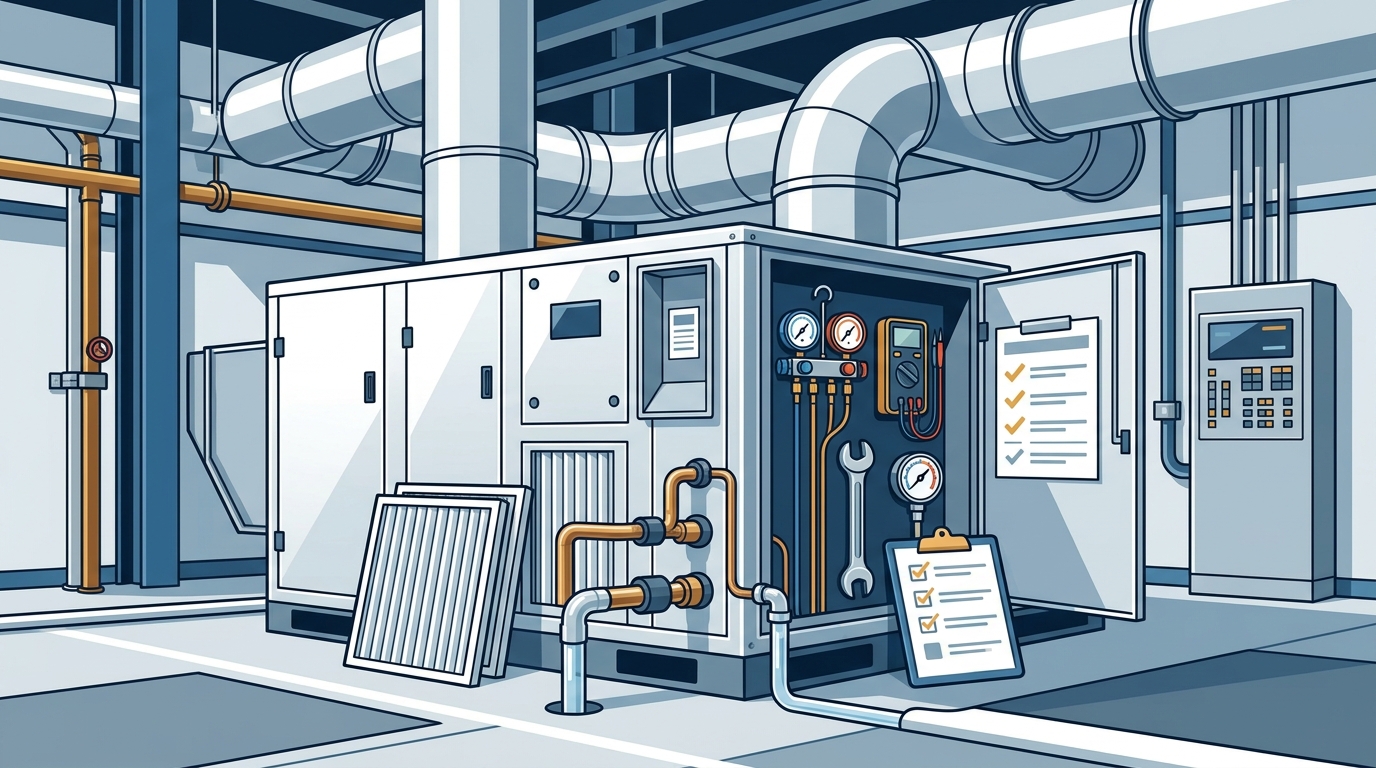
A typical tune-up includes filter replacement, coil cleaning, refrigerant level checks, electrical connection inspection, thermostat calibration, and a safety review of components like heat exchangers and drain lines.
How much can businesses save with preventive HVAC maintenance?
The U.S. Department of Energy estimates savings of 5 to 20% on annual energy bills. Additionally, planned maintenance programs can cut total maintenance costs by up to 50% compared to a break-fix approach.
Does HVAC maintenance improve indoor air quality?
Yes. Replacing filters, cleaning coils, and inspecting ductwork removes dust, allergens, and mold spores that would otherwise recirculate through your building. Pairing maintenance with professional air quality services provides even greater protection.
What are the risks of skipping commercial HVAC maintenance?
Neglected systems consume up to 25% more energy, break down more frequently, and have shorter lifespans. Safety risks include carbon monoxide leaks from cracked heat exchangers and electrical hazards from corroded wiring.
Is commercial HVAC maintenance required by law?
While there is no single federal mandate, many states and municipalities require periodic inspections under local mechanical and energy codes. ASHRAE Standard 180 and OSHA regulations set widely referenced benchmarks for commercial buildings.
How do I choose the right HVAC maintenance provider?
Look for certified technicians, transparent pricing, documented maintenance protocols, and strong local reviews. A provider with experience in both residential and commercial systems, like Apex Clean Air, can tailor a plan to your facility's specific needs.
Protect Your Business Investment Today
Do not wait for an expensive breakdown to take action. Contact Apex Clean Air to schedule a commercial HVAC maintenance consultation. Our certified technicians serve businesses across Utah, Colorado, and Idaho with same-day availability, transparent pricing, and a 100% workmanship guarantee.