
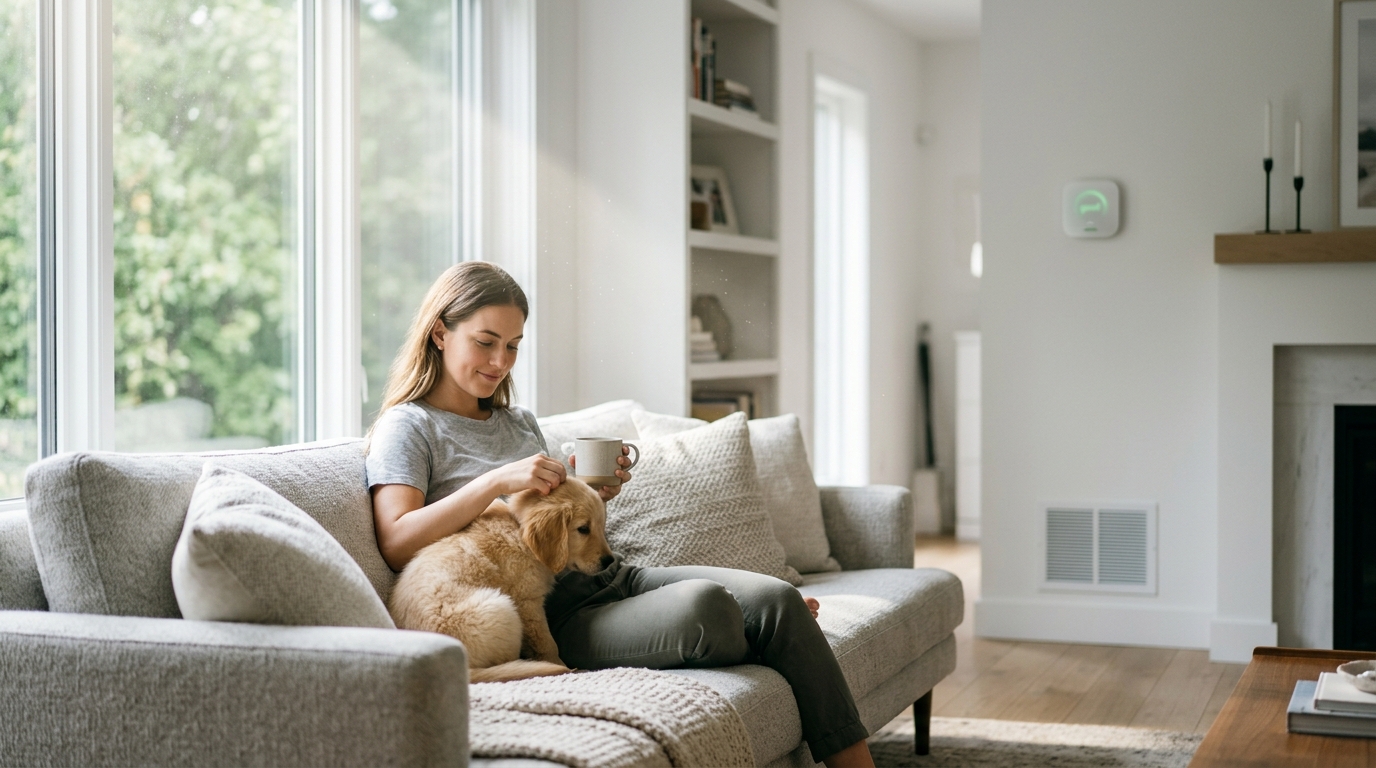
The air inside your home may look clean, but it could be working against your health. According to the U.S. Environmental Protection Agency (EPA), Americans spend roughly 90 percent of their time indoors, where pollutant concentrations can be two to five times higher than outdoor levels. Dust, pet dander, mold spores, and volatile organic compounds (VOCs) accumulate in living spaces and recirculate through your HVAC system every time it runs. The good news is that a few targeted steps can dramatically improve the air your family breathes. Below, we walk through the most effective strategies for cleaner, healthier indoor air.
What Is Indoor Air Quality?
Indoor air quality (IAQ) is the condition of the air within and around buildings, especially as it relates to the health and comfort of occupants. Poor IAQ can trigger allergies, aggravate asthma, cause headaches and fatigue, and even contribute to long-term respiratory and cardiovascular disease. Because modern homes are built with tight building envelopes to save energy, pollutants often have nowhere to escape without active intervention.
Common Indoor Air Pollutants
Before you can fix the problem, you need to know what you are dealing with. Here are the most common contaminants found in residential settings:
| Pollutant | Primary Sources | Health Impact |
|---|---|---|
| Dust and dust mites | Ductwork, carpets, upholstery | Allergy symptoms, asthma flare-ups |
| Pet dander | Cats, dogs, other animals | Respiratory irritation, allergic reactions |
| Mold spores | Damp HVAC components, bathrooms | Allergic reactions, respiratory infections |
| VOCs | Paints, cleaners, building materials | Headaches, dizziness, long-term organ damage |
| Carbon monoxide | Gas stoves, furnaces, fireplaces | Poisoning, fatigue, impaired cognition |
| Pollen | Outdoor air entering through doors and HVAC intake | Seasonal allergy symptoms |
| Radon | Soil beneath the foundation | Lung cancer (second leading cause) |
Understanding these sources is the foundation of any effective indoor air quality improvement plan.
Step 1: Control Pollution at the Source
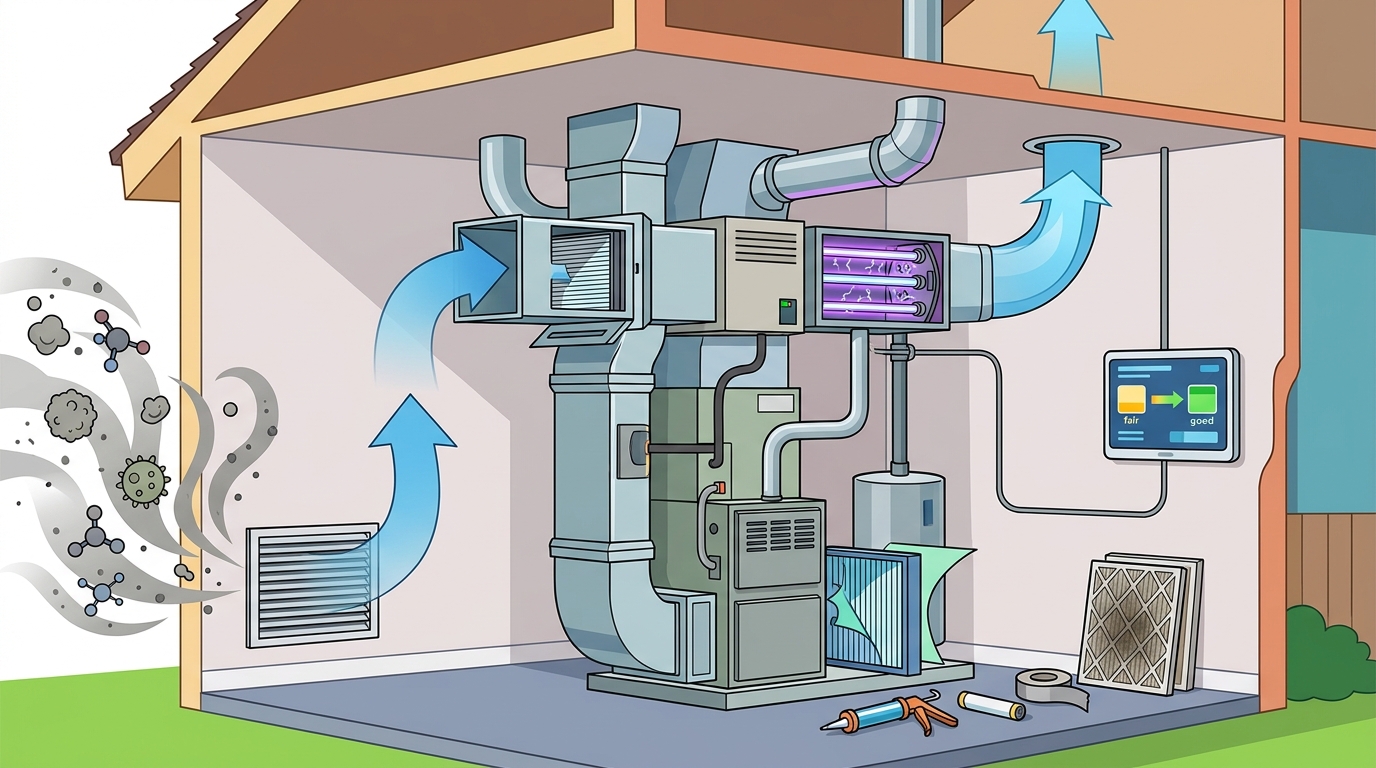
Source control is the process of eliminating or reducing emissions from individual pollution sources before they enter your air. The EPA calls it the most cost-efficient approach to protecting indoor air quality. Practical steps include switching to low-VOC paints and cleaners, venting combustion appliances to the outside, testing your home for radon, and keeping smoking outdoors.
Why Source Control Comes First
Increasing ventilation or adding filters costs energy and money. Removing the source of the problem is almost always cheaper and more effective. For example, using exhaust fans over gas stoves vented to the outdoors greatly reduces exposure to combustion pollutants during cooking.
Step 2: Improve Ventilation
Ventilation is the process of exchanging stale indoor air with fresh outdoor air. Most residential forced-air heating and cooling systems do not mechanically bring outdoor air into the home, which means pollutant concentrations can build up quickly in tightly sealed houses.
Simple ventilation improvements include opening windows when weather and outdoor air quality permit, running bathroom and kitchen exhaust fans, and considering an energy recovery ventilator (ERV) for year-round fresh air exchange. If you want a professional assessment of your home's airflow, Apex Clean Air's indoor air quality testing can identify specific ventilation deficiencies.
Step 3: Upgrade Your Air Filtration
Air filtration is the use of media filters or electronic cleaners to capture airborne particles as air passes through the HVAC system. Standard HVAC filters rated MERV 8 or lower protect your equipment but do little for your lungs. Upgrading to a MERV 13 or higher filter captures significantly finer particulate matter, including many allergens and smoke particles.
Filter Replacement Schedule
Change or inspect your HVAC filter every 30 to 90 days, depending on household factors like pets, allergies, and local air quality. A clogged filter restricts airflow and allows allergens to bypass the media entirely. Regular AC maintenance includes filter inspection as a standard step.
Step 4: Schedule Professional Air Duct Cleaning
Air duct cleaning is the process of removing dust, debris, and contaminants from your home's heating and cooling system. Over time, ducts accumulate layers of dust, pet dander, pollen, and even mold that recirculate every time your HVAC runs. Most homes benefit from professional duct cleaning every three to five years, though homes with pets, allergies, or recent renovations may need service more frequently.
Apex Clean Air uses high-volume negative pressure and HEPA-filtered containment to prevent particles from drifting into living spaces during the cleaning process. Learn what a full visit includes in our air duct cleaning complete guide.
Step 5: Install Whole-Home Air Purification
Portable air purifiers clean the air in a single room, but a whole-home air purification system integrates directly with your HVAC equipment to treat every cubic foot of air in your house. Options include HEPA-grade media filters, UV germicidal lamps that kill bacteria, viruses, and mold spores at the source, and oxidation-based systems like the REME Halo.
Many homeowners combine two or more technologies for layered protection. A certified technician can recommend the right approach based on your home's layout and your specific air quality concerns. Explore your options on our whole-home air purifier guide.
Step 6: Manage Humidity Levels
The EPA recommends keeping indoor humidity between 30 and 50 percent. Excessive humidity fosters mold growth and dust mite reproduction, while air that is too dry causes irritated sinuses, dry skin, and increased susceptibility to respiratory infections. Utah's dry winters and hot summers create wide humidity swings that make active humidity management especially important.
Tools for Humidity Control
A whole-home humidifier or dehumidifier integrated with your HVAC system provides consistent control across every room. During HVAC diagnostics, Apex technicians evaluate humidity levels and recommend adjustments tailored to your home's conditions.
Key Takeaways
- Indoor air can be two to five times more polluted than outdoor air, making proactive management essential.
- Source control is the most effective and cost-efficient first step to better IAQ.
- Upgrading to MERV 13 or higher filters captures fine particles that standard filters miss.
- Professional air duct cleaning every three to five years removes accumulated contaminants from your HVAC system.
- Whole-home air purification systems treat every room, unlike portable units limited to a single space.
- Keeping indoor humidity between 30 and 50 percent prevents mold growth and respiratory irritation.
- Professional IAQ testing identifies hidden problems so solutions are data-driven, not guesswork.
Frequently Asked Questions
How often should I have my air ducts cleaned?
Most homes benefit from duct cleaning every three to five years. Homes with pets, allergy sufferers, or recent construction may need more frequent service.
Do UV light systems really kill germs inside HVAC systems?
Yes. UV germicidal lamps have been proven to kill or deactivate bacteria, mold, and viruses that circulate through HVAC systems when installed in the air handler or ductwork.
What MERV rating should I use for my home filter?
MERV 13 and above captures extremely fine particulate matter, including many allergens and smoke particles. Always confirm your HVAC system can handle the increased air resistance before upgrading.
Can I test the air quality in my home?
Yes. Professional indoor air quality testing measures particulate matter, VOCs, carbon monoxide, and humidity levels using calibrated equipment. Apex Clean Air offers IAQ testing in the Salt Lake City and Denver markets.
What is the ideal indoor humidity level?
The EPA recommends keeping indoor humidity between 30 and 50 percent to prevent mold growth, dust mite proliferation, and respiratory discomfort.
Is a whole-home air purifier worth the investment?
For families dealing with allergies, asthma, pets, or regional wildfire smoke, a whole-home system provides continuous, comprehensive filtration that portable units cannot match.
How does HVAC maintenance affect indoor air quality?
A well-maintained HVAC system traps pollutants effectively and prevents contaminants from recirculating. Neglected systems accumulate dust, mold, and allergens that degrade the air in every room.
Get Started With Cleaner Air
Your family deserves air that supports their health and comfort. Whether you need air duct cleaning, a whole-home purification system, or a professional air quality assessment, the certified technicians at Apex Clean Air are ready to help. Schedule your indoor air quality service today and feel the difference cleaner air makes.