

The air inside your home may look clean, but it could be quietly affecting your family's health. According to the U.S. Environmental Protection Agency (EPA), indoor air can be two to five times more polluted than outdoor air. With most Americans spending roughly 90% of their time indoors, taking steps to improve your home's air quality is not optional. In this guide, we walk through proven strategies for cleaner indoor air, from simple filter changes to professional HVAC services that make a lasting difference.
What Is Indoor Air Quality?
Indoor air quality (IAQ) is the condition of the air within and around buildings, especially as it relates to the health and comfort of the people who occupy them. The EPA notes that indoor pollution sources, inadequate ventilation, and high humidity levels are the three primary drivers of IAQ problems in homes.
Poor IAQ does not always announce itself with visible smoke or odors. Symptoms like persistent headaches, fatigue, eye irritation, and worsening allergy or asthma symptoms can all point to indoor air quality problems that affect your health. Children, the elderly, and anyone with pre-existing respiratory conditions are especially vulnerable.
Common Indoor Air Pollutants
Understanding what is in your air is the first step toward fixing it. Here are the most common residential pollutants:
| Pollutant | Common Sources | Health Impact |
|---|---|---|
| Dust and dust mites | Carpets, bedding, ductwork | Allergies, asthma triggers |
| Pet dander | Cats, dogs, other animals | Respiratory irritation |
| Mold spores | Damp HVAC components, bathrooms | Allergic reactions, lung issues |
| Volatile organic compounds (VOCs) | Paints, cleaners, building materials | Headaches, organ damage |
| Carbon monoxide (CO) | Gas stoves, furnaces, fireplaces | Poisoning, fatality at high levels |
| Pollen | Outdoor intake, open windows | Seasonal allergy symptoms |
| Radon | Soil beneath foundations | Lung cancer risk |
Energy-efficient construction traps many of these contaminants inside by creating a tight building envelope that limits natural airflow. That is why deliberate IAQ strategies are so important in modern homes.
Start With Source Control
Source control is the process of eliminating or reducing individual pollution sources before they contaminate your air. The EPA identifies it as the most effective and most cost-efficient approach to improving indoor air quality.
Practical Source Control Steps
- Test your home for radon and remediate if levels are elevated.
- Use low-VOC paints, adhesives, and cleaning products.
- Ensure all combustion appliances vent to the outdoors.
- Keep surfaces clean and dry to prevent mold growth.
- Avoid smoking or vaping indoors.
These simple actions cost little to nothing and can eliminate pollutants before they ever reach your lungs.
Improve Ventilation
Ventilation is the introduction of fresh outdoor air into your home to dilute and displace indoor pollutants. Most residential forced-air heating and cooling systems do not mechanically bring fresh air into the house, which means homes rely on infiltration through gaps and occasional open windows.
How to Boost Ventilation
- Open windows and doors when outdoor air quality permits.
- Run kitchen and bathroom exhaust fans during and after cooking or showering.
- Ask your HVAC technician about energy recovery ventilators (ERVs) or heat recovery ventilators (HRVs) that bring in fresh air without wasting energy.
Proper ventilation is especially critical during Utah's dry winters, when homes are sealed tight against the cold. An indoor air quality assessment from Apex Clean Air can pinpoint whether your home needs better airflow.
Upgrade Your Filtration
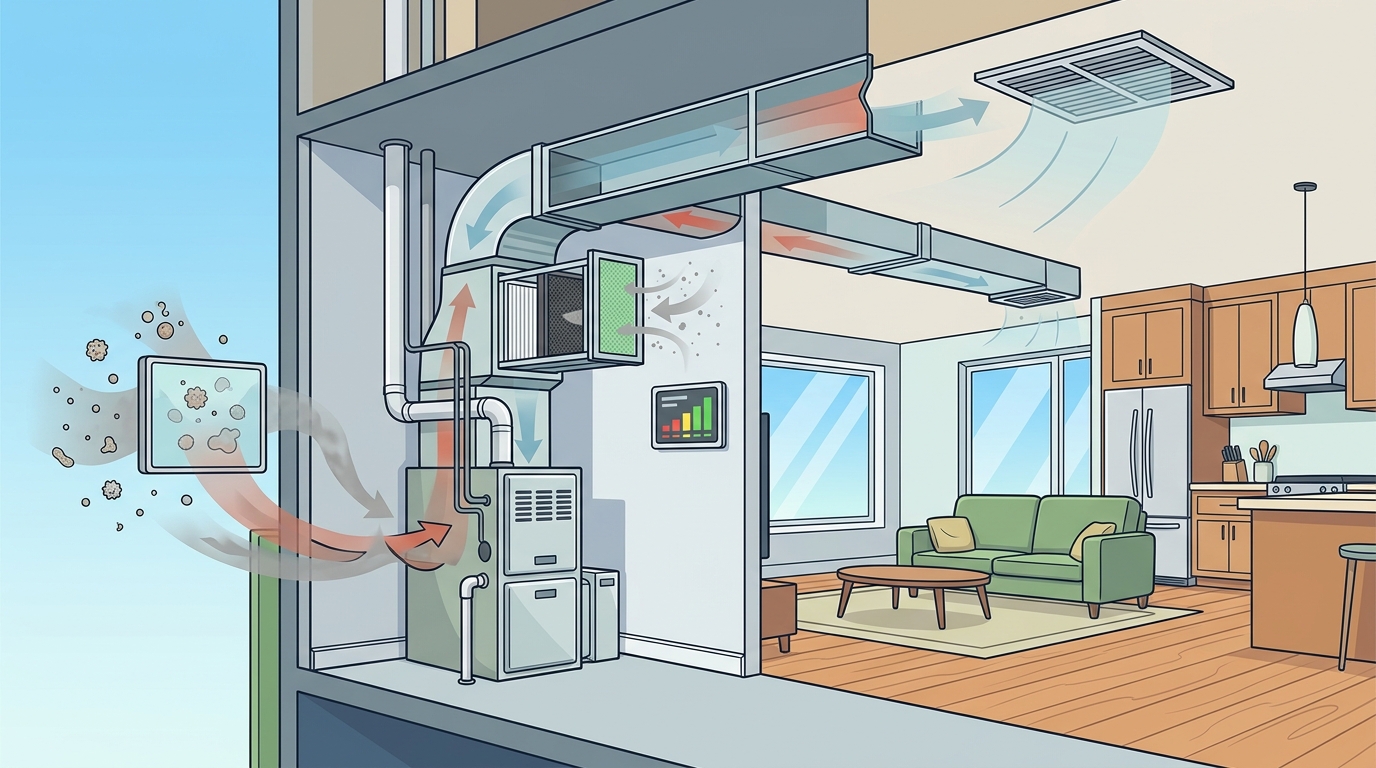
Filtration is the use of media or devices to capture airborne particles as air passes through your HVAC system. Standard HVAC filters rated MERV 8 or lower primarily protect your equipment, not your lungs. Upgrading to a MERV 13 or higher filter captures significantly more fine particulate matter, pollen, and mold spores.
Portable vs. Whole-Home Systems
Portable air purifiers clean the air in a single room, while whole-home air purification systems integrate directly with your HVAC to treat every cubic foot of air in your house. For families with pets, young children, or allergy sufferers, whole-home filtration delivers consistent results across every room.
Schedule Professional Air Duct Cleaning
Your ductwork circulates air through every room in your home multiple times per day. Over time, dust, pet dander, pollen, and even mold accumulate inside ducts and recirculate each time your system runs. Professional air duct cleaning removes that buildup and restores healthy airflow.
When to Schedule Duct Cleaning
Most homes benefit from duct cleaning every 3 to 5 years. You may need more frequent service if you have pets, suffer from allergies, or have completed a recent renovation. Signs your ducts need attention include visible dust from vents, musty odors when the system runs, and unexplained allergy flare-ups indoors.
Apex Clean Air uses high-volume negative pressure and HEPA-filtered containment to ensure contaminants are extracted rather than redistributed. With over 4,000 reviews and a 4.9-star average rating, Apex is a trusted name in duct cleaning across Utah, Colorado, and Idaho.
Consider Advanced IAQ Solutions
UV Germicidal Lights
UV light systems installed inside your air handler or ductwork kill bacteria, viruses, and mold spores at the source. They are especially useful in humid climates or homes with recurring mold issues. Learn how proper AC installation affects indoor air quality and how UV systems complement your cooling equipment.
Humidity Control
The EPA recommends keeping indoor humidity between 30% and 50%. Too much moisture fosters mold growth, while too little causes dry skin, irritated sinuses, and increased susceptibility to illness. Whole-home humidifiers or dehumidifiers integrated with your HVAC system maintain balanced humidity automatically.
Professional Air Quality Testing
If you are unsure where to start, professional indoor air quality testing measures pollutants like particulate matter, VOCs, carbon monoxide, and humidity imbalances. Apex Clean Air provides data-driven testing in Salt Lake City and Denver so recommendations are based on measured results, not guesswork.
Key Takeaways
- Indoor air can be 2 to 5 times more polluted than outdoor air, according to the EPA.
- Source control is the most effective and affordable first step.
- Improving ventilation dilutes indoor pollutants, especially in tightly sealed modern homes.
- Upgrading to MERV 13+ filters or whole-home purification captures fine particles standard filters miss.
- Professional duct cleaning every 3 to 5 years removes accumulated allergens from your HVAC system.
- UV germicidal lights and humidity control add layers of protection for vulnerable household members.
- Data-driven air quality testing helps you prioritize the right solutions for your specific home.
Frequently Asked Questions
How often should I change my HVAC air filter?
Most standard filters should be checked monthly and replaced every 1 to 3 months. Homes with pets or allergy sufferers may need more frequent changes. A clean filter is the simplest way to maintain consistent airflow and reduce airborne particles.
Can air duct cleaning really help with allergies?
Yes. Removing dust, dander, and mold spores from ductwork reduces the allergens your HVAC system circulates. Many Apex Clean Air customers report noticeable relief after a professional cleaning.
What is a MERV rating?
MERV stands for Minimum Efficiency Reporting Value. It is a scale that rates a filter's ability to capture airborne particles. Filters rated MERV 13 and above capture fine particulate matter that lower-rated filters miss, making them a better choice for health-conscious homeowners.
Is a whole-home air purifier worth the investment?
For households dealing with persistent allergies, pet dander, or respiratory conditions, whole-home purification delivers cleaner air in every room rather than just one. It integrates with your existing HVAC system and requires minimal maintenance compared to running multiple portable units.
How do I know if my home has poor indoor air quality?
Common signs include lingering odors, excessive dust buildup, worsening allergy or asthma symptoms indoors, and visible mold near vents or in damp areas. Professional air quality testing provides definitive answers by measuring specific pollutant levels in your home.
Does HVAC maintenance affect air quality?
Absolutely. A well-maintained system filters air more effectively, controls humidity, and prevents mold and dust from accumulating on coils and in ductwork. Seasonal tune-ups are one of the best investments you can make for both comfort and health.
What indoor humidity level is ideal?
The EPA recommends maintaining indoor humidity between 30% and 50%. Levels above 50% encourage mold and dust mite growth, while levels below 30% can cause respiratory irritation and dry skin.
Does Apex Clean Air offer air quality testing?
Yes. Apex Clean Air provides professional indoor air quality testing for homeowners in Salt Lake City and Denver. Technicians use professional-grade equipment and deliver clear, data-backed reports with practical recommendations.
Ready to Breathe Cleaner Air?
Your family deserves air that is as clean as the water you drink. Whether you need duct cleaning, a whole-home purifier, or a full IAQ assessment, the certified technicians at Apex Clean Air are ready to help. Schedule your indoor air quality service today and take the first step toward a healthier home.