
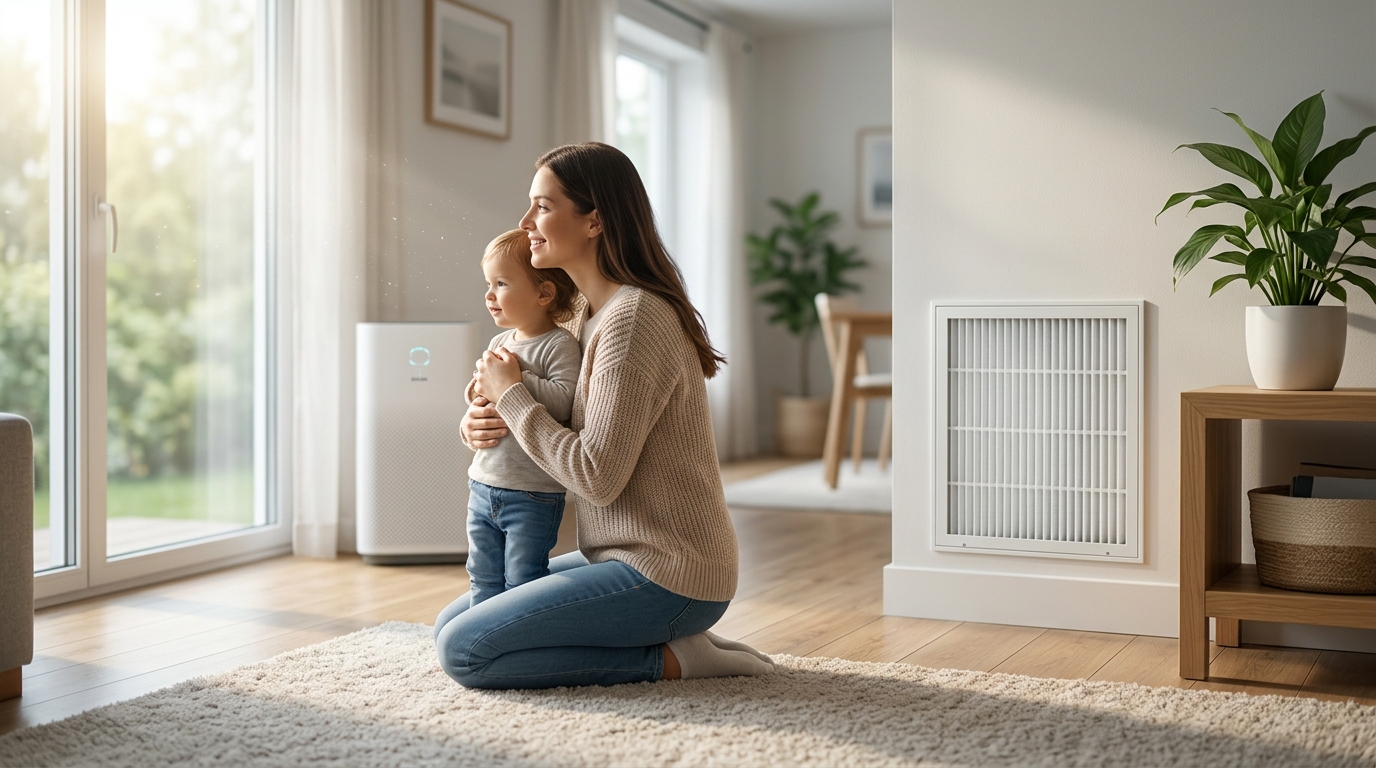
The air inside your home may look clean, but it could be working against your health. According to the U.S. Environmental Protection Agency (EPA), Americans spend roughly 90 percent of their time indoors, where pollutant concentrations can be two to five times higher than outdoor levels. Dust, pet dander, mold spores, and volatile organic compounds (VOCs) circulate through your HVAC system every day. The good news is that practical, proven strategies exist to dramatically improve the air your family breathes. This guide walks you through the most effective steps, from simple DIY fixes to professional solutions.
Why Indoor Air Quality Matters
Indoor air quality (IAQ) is the measure of how clean and healthy the air is inside a building. Poor IAQ can trigger allergies, worsen asthma, cause headaches and fatigue, and even contribute to long-term conditions like cardiovascular disease and respiratory illness. Vulnerable groups, including children, the elderly, and people with pre-existing conditions, face the greatest risk.
Energy-efficient homes trap conditioned air effectively, but they also trap pollutants with nowhere to go. That makes proactive air quality management essential for every homeowner. For a deeper look at how air quality affects well-being, read our guide on indoor air quality and its impact on health.
Common Indoor Air Pollutants
Understanding what is in your air is the first step toward fixing it. Here are the most common residential pollutants:
- Dust and dust mites: Microscopic particles that accumulate in ductwork and recirculate every time your HVAC runs.
- Pet dander: Tiny skin flakes from animals that stay suspended in the air for hours.
- Mold spores: These thrive in damp HVAC components like coils and drip pans.
- Volatile organic compounds (VOCs): Chemicals released from paints, cleaning products, and building materials.
- Pollen and outdoor allergens: Enter through doors, windows, and your HVAC intake.
- Combustion byproducts: Carbon monoxide and nitrogen dioxide from gas stoves and furnaces.
If you want to find out exactly what is circulating in your home, Apex Clean Air offers professional indoor air quality testing in Salt Lake City and Denver.
Strategy 1: Control Pollution at the Source
Source control is the process of eliminating or reducing the emissions of individual pollution sources inside your home. The EPA identifies it as the most effective and cost-efficient approach to improving IAQ. Practical steps include:
- Choosing low-VOC paints, adhesives, and cleaning products.
- Keeping gas appliances properly adjusted and regularly inspected.
- Banning indoor smoking.
- Storing chemicals in sealed containers away from living areas.
By addressing pollutants before they enter the air, you reduce your reliance on ventilation and filtration alone.
Strategy 2: Improve Ventilation
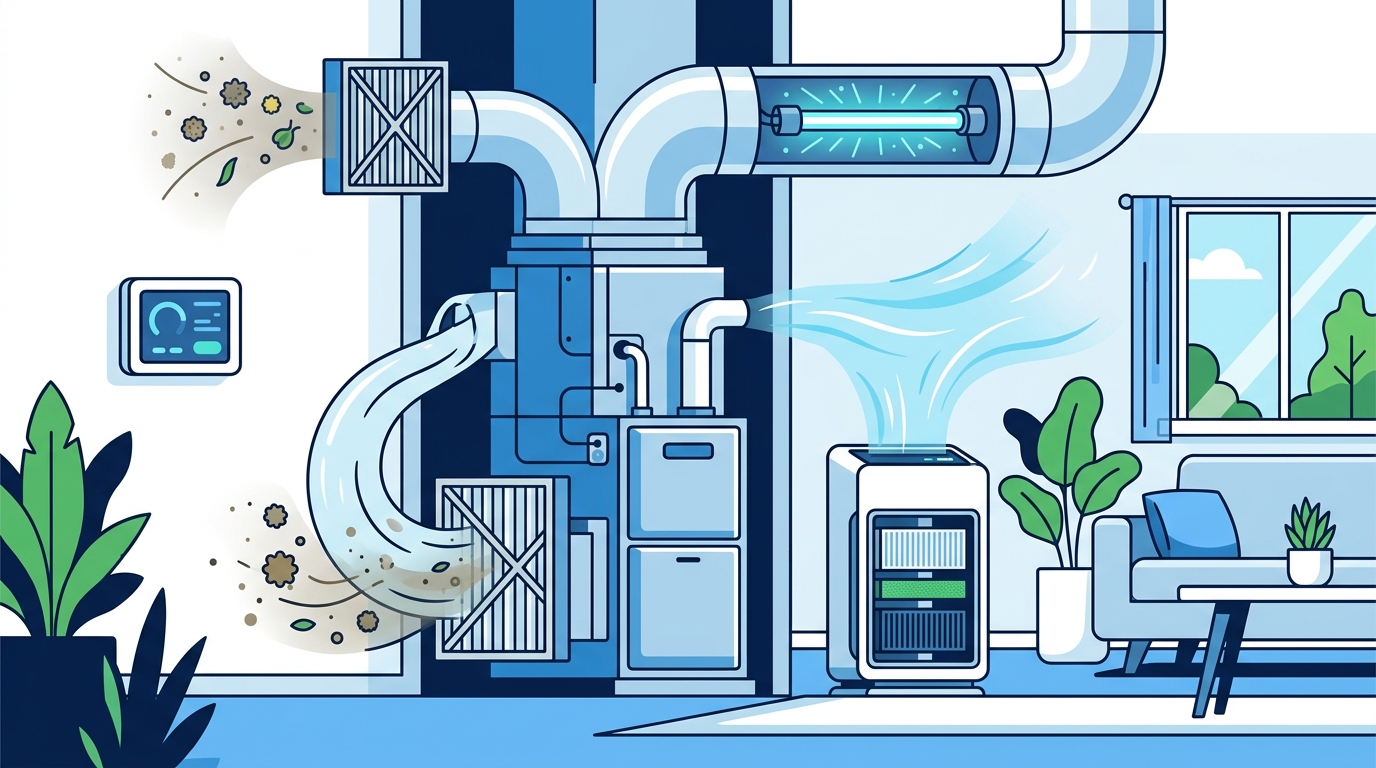
Ventilation is the introduction of outdoor air into an indoor space to dilute and remove contaminants. Simple tactics include opening windows when weather permits, running kitchen and bathroom exhaust fans, and using your HVAC system's fan mode. For a more advanced approach, energy recovery ventilators (ERVs) bring in fresh outdoor air while recapturing heating or cooling energy.
A properly installed HVAC system supports optimal airflow throughout your home. Learn how AC installation affects indoor air quality and why correct sizing matters.
Strategy 3: Upgrade Filtration and Air Cleaning
Standard HVAC filters rated MERV 8 or below are designed to protect equipment, not your lungs. Upgrading to a MERV 13 or higher filter captures significantly more fine particles including pollen, mold spores, and some bacteria. For maximum protection, whole-home air purification systems integrate directly with your HVAC equipment to clean every cubic foot of air in your house.
Whole-Home vs. Portable Air Purifiers
Portable air purifiers cover only a single room, while whole-home systems treat your entire house through the existing ductwork. UV germicidal lamps installed inside air handlers can also kill bacteria, viruses, and mold spores at the source. Many homeowners combine HEPA-grade filtration with UV or oxidation-based systems for layered, multi-stage protection.
Explore our full breakdown of options in our guide on whole-home air purifiers.
Strategy 4: Schedule Professional Air Duct Cleaning
Air duct cleaning is the process of removing dust, debris, and contaminants from your home's heating and cooling system. Over time, air ducts collect layers of dust, pet dander, pollen, and even mold. Every time your system cycles, those contaminants recirculate through every room.
Most homes benefit from professional duct cleaning every 3 to 5 years, with more frequent service recommended for households with pets, allergy sufferers, or recent renovations. A clean HVAC system also runs more efficiently, which can lower energy bills and extend the system's lifespan.
Apex Clean Air uses high-volume negative pressure and HEPA-filtered containment to ensure particles do not drift into living spaces during service. See our complete guide to air duct cleaning for a detailed look at the process.
Strategy 5: Manage Humidity Levels
The EPA recommends keeping indoor humidity between 30 and 50 percent. Excessive moisture encourages mold growth and dust mite proliferation, while overly dry air causes irritated sinuses and increases susceptibility to respiratory infections. Use a hygrometer to monitor levels, and consider adding a whole-home humidifier or dehumidifier integrated with your HVAC system for consistent, automatic control.
Utah's dry winters and occasionally humid summers make balanced humidity especially important for local homeowners. Our indoor air quality services include humidity assessment and tailored recommendations for your home.
DIY vs. Professional IAQ Solutions
| Action | DIY | Professional |
|---|---|---|
| Replace HVAC filters | Yes, every 1-3 months | Technician selects optimal MERV rating |
| Open windows for ventilation | Free and effective when weather allows | ERV installation for year-round fresh air |
| Clean visible vent covers | Soap and water | Full duct system cleaning with negative pressure |
| Monitor humidity | Hygrometer (~$15) | Whole-home humidifier/dehumidifier integration |
| Air purification | Portable unit for one room | Whole-home system treating all ductwork |
| Identify hidden pollutants | Limited | Professional IAQ testing with lab-grade equipment |
DIY maintenance is valuable, but professional services address deep system contamination and provide lasting, whole-home results.
Key Takeaways
- Indoor air can be 2 to 5 times more polluted than outdoor air, making IAQ a top health priority.
- The EPA's three core strategies are source control, ventilation, and air cleaning/filtration.
- Upgrading from a standard filter to MERV 13 or above captures significantly more harmful particles.
- Professional air duct cleaning every 3 to 5 years removes deep contamination your filter cannot reach.
- Keeping indoor humidity between 30 and 50 percent prevents mold growth and respiratory irritation.
- Whole-home air purification treats every room, unlike portable units that cover only one space.
- Professional IAQ testing identifies hidden pollutants so solutions are data-driven, not guesswork.
Frequently Asked Questions
How often should I change my HVAC filter?
Most standard filters should be changed every 1 to 3 months. Homes with pets, allergies, or high dust levels may need monthly replacements. Check your filter manufacturer's guidelines for specific recommendations.
Can air duct cleaning help with allergies?
Yes. Removing dust, dander, and mold spores from ductwork can significantly reduce triggers for asthma and allergy sufferers. Professional cleaning eliminates contaminants that standard filters miss.
What is the ideal indoor humidity level?
The EPA recommends maintaining indoor humidity between 30 and 50 percent. Levels above 60 percent encourage mold and dust mites, while very low humidity irritates respiratory passages.
Do whole-home air purifiers really work?
Yes. Whole-home systems integrate with your HVAC to clean air throughout the entire house. When combined with UV germicidal lamps or HEPA-grade media filters, they provide multi-stage protection against particles, biological contaminants, and odors.
How do I know if my indoor air quality is bad?
Common signs include persistent dust on surfaces, lingering odors, worsening allergy symptoms indoors, and visible mold near vents. A professional indoor air quality test provides measured data for a definitive answer.
Is professional duct cleaning worth the cost?
For most homes, yes. Professional duct cleaning improves airflow, reduces allergens, and can lower energy bills. It is especially important after renovations, in homes with pets, or if you notice musty smells from vents.
What MERV rating filter should I use?
MERV 13 filters are recommended for homes seeking better air quality. They capture pollen, mold, dust, and some bacteria. Always verify your HVAC system can handle the higher rating without restricting airflow.
Does Apex Clean Air offer air quality testing?
Yes. Apex Clean Air provides professional indoor air quality testing in the Salt Lake City and Denver markets. Technicians use professional-grade equipment to test for particulates, VOCs, carbon monoxide, and humidity imbalances.
Get Started With Cleaner Air
Your family deserves to breathe clean, healthy air every day. Whether you need a professional duct cleaning, a whole-home air purification system, or a comprehensive air quality test, Apex Clean Air's certified technicians are ready to help. We serve homeowners across Utah, Colorado, and Idaho with same-day availability and transparent pricing. Schedule your indoor air quality service today and take the first step toward a healthier home.