

Commercial HVAC systems do far more than keep office temperatures comfortable. They protect equipment, influence employee productivity, and represent one of the largest line items on your monthly energy bill. According to the U.S. Department of Energy, HVAC equipment accounts for roughly 40% of a commercial building's total energy use. Regular preventive maintenance is the single most cost-effective way to keep that consumption in check, extend system life, and ensure healthy indoor air for everyone in your building. Below, we break down the key benefits every business owner and facility manager should know.
Lower Energy Bills and Operating Costs
Energy efficiency is the most immediate financial benefit of routine HVAC maintenance. The U.S. Department of Energy estimates that effective operations and maintenance of commercial HVAC systems can save organizations 5 to 20% annually on energy bills. For a mid-size office spending $3,000 per month on utilities, that translates to $1,800 to $7,200 in yearly savings.
Dirty coils, clogged filters, and improper refrigerant levels force your system to work harder, driving up costs. Even a thin layer of dust on A/C coils can reduce system efficiency by 21%, as noted by Apex Clean Air's HVAC resource page. Routine cleaning and calibration keep your system running at peak performance.
Extended Equipment Lifespan
Preventive maintenance is the practice of performing scheduled inspections, cleaning, and part replacements to prevent equipment failure before it occurs. Commercial HVAC systems are costly to replace, and neglecting maintenance shortens their operational life significantly.
Research shows that properly maintained systems achieve dramatically longer service periods. According to peer-reviewed maintenance studies compiled by WorkTrek, condition-based maintenance can increase Mean Time Between Failures by 90 to 175 hours. The average commercial HVAC system lasts 15 to 20 years, but skipping maintenance can cut that lifespan by several years and multiply replacement costs.
Improved Indoor Air Quality
Indoor air quality (IAQ) is the condition of the air inside a building as it relates to the health and comfort of occupants. Poor IAQ is linked to headaches, fatigue, allergies, and reduced cognitive performance. The EPA estimates that indoor air can be two to five times more polluted than outdoor air.
Your HVAC system plays a central role in filtering and circulating indoor air. Over time, ductwork accumulates dust, pollen, pet dander, and even mold. Regular maintenance, including professional indoor air quality services and air duct cleaning, removes these contaminants and keeps your workforce breathing cleaner air.
The Business Impact of Clean Air
OSHA data suggests that improving indoor air quality in commercial buildings could yield $15 billion in savings from increased worker productivity, fewer sick days, and lower health care costs. For businesses, investing in IAQ is not just a health decision but a financial one.
Fewer Unexpected Breakdowns
Emergency HVAC repairs are a business disruption that no manager wants to face. A malfunctioning system can reduce employee productivity, damage temperature-sensitive inventory, and even force temporary closures. According to industry research, emergency HVAC repairs cost 50 to 100% more than standard service calls.
Preventive maintenance catches small problems before they escalate. A proactive approach, including seasonal tune-ups through programs like the Apex Comfort Club, means your technician identifies worn belts, loose electrical connections, and refrigerant leaks during a scheduled visit rather than during a crisis.
Regulatory Compliance and Safety
ASHRAE Standard 180 is the industry benchmark that establishes minimum HVAC inspection and maintenance requirements for commercial buildings. Many states and municipalities reference this standard in local building codes.
OSHA also requires employers to maintain safe working environments, which includes ensuring HVAC systems do not create indoor air quality or electrical hazards. Properties seeking LEED certification or ENERGY STAR benchmarking may need documented HVAC maintenance and performance audits. Staying current with maintenance protects your business from fines, insurance complications, and liability.
What a Commercial HVAC Tune-Up Includes
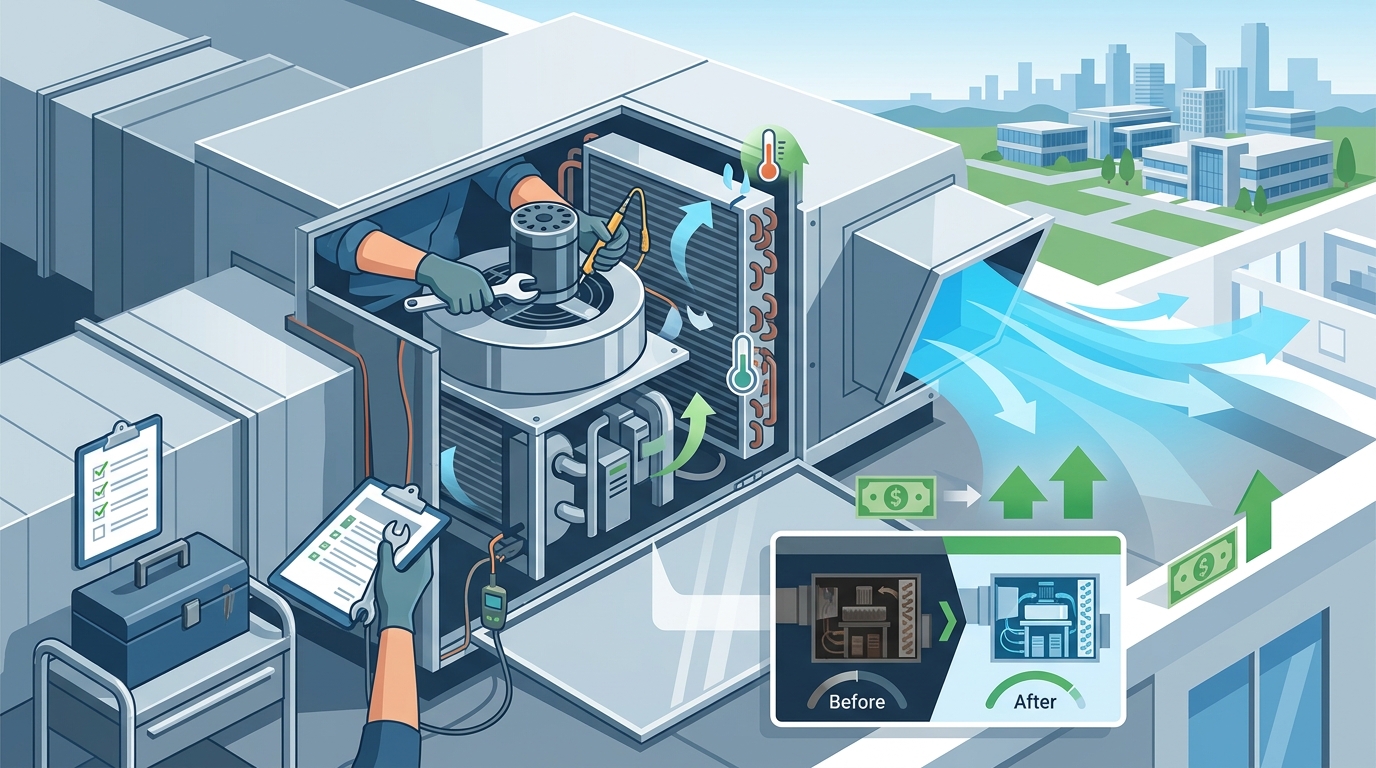
Understanding what happens during a professional maintenance visit helps business owners appreciate the value. Here is a typical checklist from the experienced Apex Clean Air commercial HVAC team:
| Maintenance Task | Why It Matters |
|---|---|
| Air filter inspection and replacement | Maintains airflow and reduces energy strain |
| Coil and drain line cleaning | Ensures efficient heat transfer and prevents leaks |
| Electrical connection check | Prevents malfunctions and safety hazards |
| Refrigerant level verification | Keeps cooling output at designed capacity |
| Thermostat calibration | Prevents unnecessary cycling and wasted energy |
| Ductwork inspection | Identifies leaks, buildup, and airflow restrictions |
| Safety component testing | Detects carbon monoxide risks and gas leaks |
How Often Should Businesses Schedule Maintenance?
Most HVAC professionals recommend at least two maintenance visits per year: one before cooling season and one before heating season. Businesses with high-traffic facilities, data centers, or healthcare environments may benefit from quarterly service.
Key Takeaways
- Regular HVAC maintenance can reduce commercial energy bills by 5 to 20% annually.
- Preventive care extends equipment lifespan by years and reduces total maintenance costs by up to 50% compared to reactive repairs.
- Clean, well-maintained systems dramatically improve indoor air quality, cutting allergens, pollutants, and sick-building symptoms.
- Emergency repairs cost 50 to 100% more than scheduled service visits.
- ASHRAE Standard 180 and OSHA regulations make documented maintenance a compliance necessity for many commercial properties.
- Seasonal tune-ups catch safety hazards like cracked heat exchangers and refrigerant leaks before they become dangerous.
Frequently Asked Questions
How much can businesses save with regular HVAC maintenance?
The U.S. Department of Energy estimates savings of 5 to 20% on annual energy bills. For larger commercial buildings, this can amount to thousands of dollars each year.
What is preventive HVAC maintenance?
Preventive HVAC maintenance is a scheduled program of inspections, cleaning, and component adjustments designed to keep systems running efficiently and prevent unexpected failures.
How often should commercial HVAC systems be serviced?
At minimum, commercial systems should receive professional maintenance twice per year. High-demand environments such as hospitals and data centers may need quarterly visits.
Does HVAC maintenance really improve indoor air quality?
Yes. Filter replacements, coil cleaning, and duct inspections remove dust, allergens, and microbial growth that would otherwise circulate through your building.
What happens if I skip HVAC maintenance for my business?
Skipping maintenance leads to higher energy consumption, more frequent breakdowns, shorter equipment life, and potential regulatory non-compliance. Emergency repairs can cost 50 to 100% more than routine service.
Is HVAC maintenance required by law for commercial buildings?
There is no universal federal mandate, but many states and municipalities require periodic inspections based on ASHRAE Standard 180 and local building codes. OSHA also requires safe indoor environments.
What does the Apex Comfort Club include?
The Apex Comfort Club provides scheduled tune-ups, priority service, and exclusive member discounts to keep your system maintained year-round. Visit the Apex Clean Air heating services page to learn more.
Schedule Your Commercial Maintenance Today
Do not wait for a breakdown to think about your HVAC system. Apex Clean Air's certified technicians serve businesses across Utah, Colorado, and Idaho with same-day availability, transparent pricing, and a 100% workmanship guarantee. Contact Apex Clean Air today to set up a preventive maintenance plan tailored to your building's needs.