

The air inside your home may look clean, but it could be working against your health. According to the U.S. Environmental Protection Agency (EPA), Americans spend roughly 90% of their time indoors, where pollutant concentrations can be two to five times higher than outdoor levels. From dust mites and pet dander to volatile organic compounds (VOCs) and mold spores, common contaminants circulate through your HVAC system every day. The good news is that practical, proven steps can dramatically improve the air your family breathes. Below, we walk through every strategy you need to know.
Understand What Indoor Air Quality Really Means
Indoor air quality (IAQ) is the condition of the air inside buildings as it relates to the health and comfort of occupants. Poor IAQ can trigger allergies, worsen asthma, cause headaches and fatigue, and even contribute to long-term respiratory and cardiovascular disease.
Common indoor pollutants include dust, pet dander, mold spores, pollen, combustion byproducts like carbon monoxide, and VOCs released by household cleaners and building materials. Understanding these sources is the first step toward a healthier home. For a deeper look, read our guide on indoor air quality and its impact on health.
Start With Source Control
Source control is the process of eliminating or reducing the emissions of individual pollution sources inside your home. The EPA considers it the most effective and cost-efficient strategy for improving indoor air quality because it addresses problems at their origin rather than diluting them after the fact.
Practical source-control actions include keeping a smoke-free home, using low-VOC paints and cleaning products, venting combustion appliances to the outdoors, and testing your home for radon. Storing chemicals in sealed containers and running exhaust fans while cooking also make a measurable difference.
Improve Ventilation Throughout Your Home
Ventilation is the process of exchanging indoor air with fresh outdoor air to dilute and remove pollutants. Most residential HVAC systems do not mechanically bring outdoor air into the house, so homeowners often rely on natural ventilation through windows and doors.
When weather and outdoor air quality allow, open windows on opposite sides of your home to create cross-ventilation. Use bathroom and kitchen exhaust fans to remove moisture and cooking pollutants. For a more permanent solution, ask your HVAC technician about energy-recovery ventilators (ERVs) that bring in fresh air without wasting conditioned energy.
Schedule Professional Air Duct Cleaning
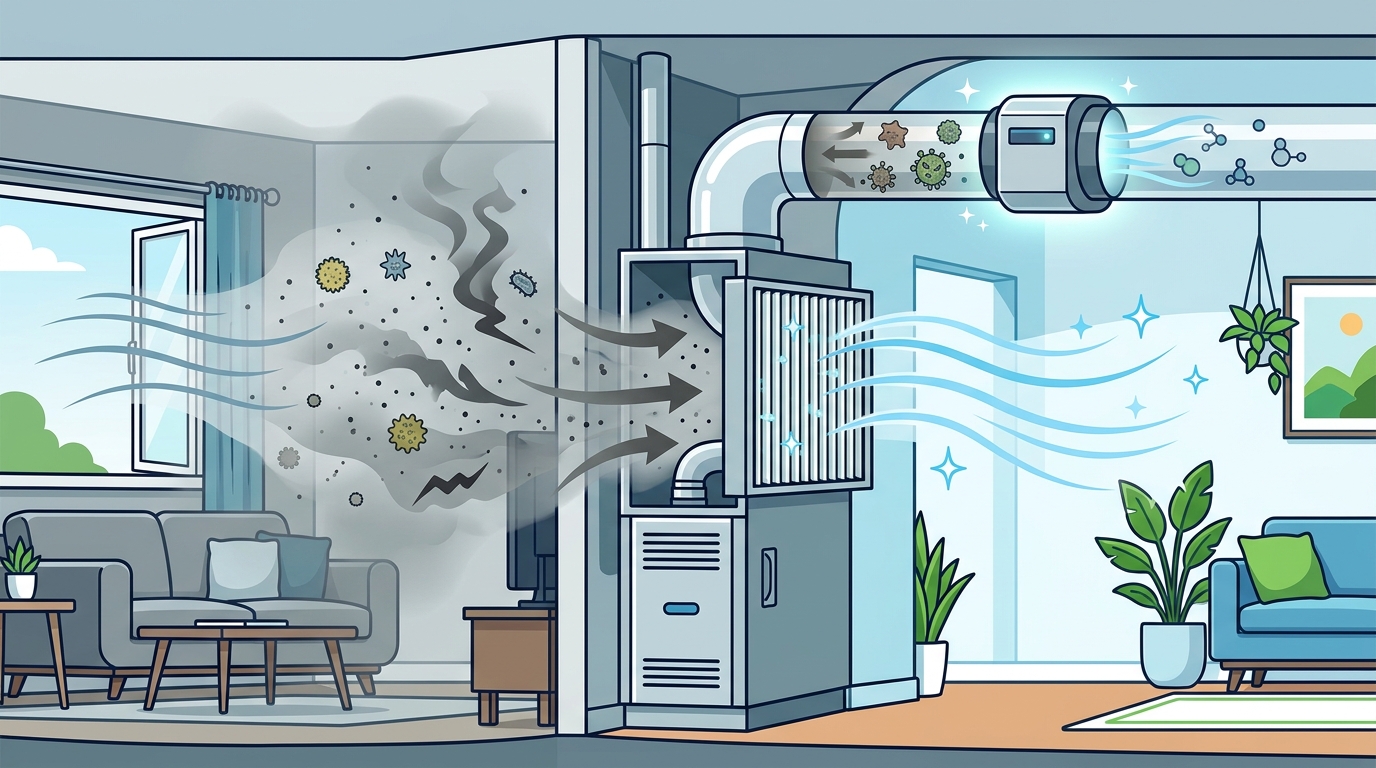
Your ductwork acts as the lungs of your home. Over time, dust, pet dander, pollen, and even mold accumulate inside the ducts and recirculate every time the system runs. A thorough professional air duct cleaning removes these contaminants and restores healthy airflow.
Most homes benefit from duct cleaning every three to five years, though more frequent service is recommended if you have pets, allergies, or recent construction. Apex Clean Air uses high-volume negative pressure and HEPA-filtered containment to prevent particles from drifting into living spaces during service. Learn more in our complete air duct cleaning guide.
| Household Situation | Recommended Frequency |
|---|---|
| No pets, no allergies | Every 3-5 years |
| Pets in the home | Every 2-3 years |
| Allergy or asthma sufferers | Every 2-3 years |
| Post-renovation or new construction | Immediately after project |
| Smokers in the household | Every 1-2 years |
Upgrade Your Filtration System
Air filtration is the use of filter media within your HVAC system or standalone devices to capture airborne particles before they circulate through your home. Standard HVAC filters rated MERV 8 or lower are designed to protect equipment, not your lungs. Upgrading to a MERV 13 or higher filter captures significantly more fine particulate matter, pollen, and mold spores.
For maximum protection, consider a whole-home air filtration system that integrates directly with your HVAC equipment. Unlike portable air purifiers that cover only a single room, whole-home systems clean every cubic foot of air in your house. This is especially valuable for families with young children, elderly residents, or pets.
MERV Ratings at a Glance
MERV stands for Minimum Efficiency Reporting Value. Filters rated MERV 1-4 catch large particles like carpet fibers. MERV 8-12 filters trap dust, mold, and some pollen. MERV 13 and above capture bacteria, tobacco smoke, and fine allergens. Your HVAC technician can recommend the highest MERV rating your system supports without restricting airflow.
Manage Indoor Humidity Levels
The EPA recommends keeping indoor humidity between 30% and 50%. Too much moisture encourages mold growth, dust mite reproduction, and bacterial spread. Too little moisture causes dry skin, irritated sinuses, and increased susceptibility to respiratory infections.
Use a hygrometer (available at most hardware stores) to monitor your home's humidity. In Utah's dry winters, a whole-home humidifier integrated with your HVAC system can maintain balanced moisture. During humid summer months, your air conditioner naturally dehumidifies, but a standalone dehumidifier may be needed in basements or poorly ventilated areas. Apex Clean Air technicians assess humidity balance during every AC installation and diagnostic visit.
Consider UV Light and Whole-Home Air Purification
UV germicidal lamps installed inside your air handler or ductwork kill bacteria, viruses, and mold spores at the source. When layered with HEPA-grade filtration and oxidation-based systems like the REME Halo, you get comprehensive multi-stage protection against the full spectrum of indoor contaminants.
Many Apex Clean Air customers combine two or more of these technologies for layered defense. Your technician will recommend the right approach based on your home layout, HVAC system type, and specific concerns. Explore all options on our whole-home air purifier guide.
Key Takeaways
- Indoor air can be 2-5x more polluted than outdoor air, making proactive IAQ management essential.
- Source control is the most effective and affordable first step toward cleaner air.
- Proper ventilation dilutes indoor pollutants; use exhaust fans and consider an ERV for tighter homes.
- Professional air duct cleaning every 3-5 years removes accumulated contaminants from your HVAC system.
- Upgrading to MERV 13+ filters or whole-home filtration captures fine particles standard filters miss.
- Keep indoor humidity between 30-50% to inhibit mold and dust mite growth.
- UV light systems and multi-stage air purifiers provide an additional layer of protection for vulnerable households.
Frequently Asked Questions
How often should I have my air ducts cleaned?
Most homes benefit from professional duct cleaning every three to five years. If you have pets, allergy sufferers, or have recently completed a renovation, every two to three years is recommended.
Do air purifiers really help with allergies?
Yes. Whole-home air purifiers continuously remove allergens, mold spores, and biological contaminants that trigger allergy symptoms and asthma flare-ups. They outperform portable units because they treat all the air circulating through your HVAC system.
What MERV rating should I use for my HVAC filter?
A MERV 13 filter is ideal for most residential systems. It captures fine particles, pollen, and some bacteria. However, always confirm with your HVAC technician that your system can handle the higher-rated filter without restricting airflow.
Can my AC system affect indoor air quality?
Absolutely. A well-maintained AC system filters pollutants, controls humidity, and circulates clean air. A neglected system can accumulate dust, mold, and allergens that recirculate throughout your home every time it runs.
What is the ideal indoor humidity level?
The EPA recommends maintaining indoor humidity between 30% and 50%. This range discourages mold growth and dust mite activity while keeping your skin and respiratory passages comfortable.
Are UV lights in HVAC systems effective?
UV germicidal lamps have been proven to kill or deactivate bacteria, mold, and viruses that circulate through HVAC systems. They are most effective when combined with proper filtration and regular system maintenance.
How do I know if my home has poor air quality?
Common signs include persistent dust on surfaces shortly after cleaning, lingering odors, worsening allergy or asthma symptoms indoors, and visible mold near vents. Professional indoor air quality testing can identify hidden pollutants with measured data.
Breathe Easier Starting Today
Your family deserves clean, healthy air at home. Whether you need duct cleaning, advanced filtration, or a complete IAQ assessment, Apex Clean Air's certified technicians are ready to help. With over 4,000 reviews and a 4.9-star average rating, homeowners across Utah, Colorado, and Idaho trust Apex for results they can feel. Request your free indoor air quality estimate today and take the first step toward a healthier home.