

The air inside your home may look clean, but it could be silently affecting your family's health. According to the U.S. Environmental Protection Agency (EPA), Americans spend roughly 90% of their time indoors, where pollutant concentrations can be two to five times higher than outdoor levels. From dust mites and pet dander to volatile organic compounds (VOCs) and mold spores, residential indoor air is full of invisible contaminants. The good news? With a few proven strategies and the right professional support, you can dramatically improve the air your family breathes every day.
Why Indoor Air Quality Matters for Your Family
Indoor air quality (IAQ) is the measure of how clean and healthy the air inside a building is relative to the health and comfort of its occupants. Poor IAQ can lead to allergies, asthma flare-ups, headaches, fatigue, and even long-term respiratory and cardiovascular conditions. Vulnerable groups such as children, the elderly, and those with pre-existing health issues face the greatest risk.
In states like Utah, Colorado, and Idaho, seasonal factors like wildfire smoke, dry winters, and pollen-heavy springs create unique IAQ challenges. Energy-efficient homes trap conditioned air inside, but they also seal in pollutants with nowhere to go. Understanding these risks is the first step toward better indoor air quality.
Common Indoor Air Pollutants in Residential Homes
Knowing what you are up against helps you choose the right solutions. Here are the most common contaminants found in homes:
| Pollutant | Common Sources | Health Effects |
|---|---|---|
| Dust and Dust Mites | Carpets, bedding, ductwork | Allergies, asthma triggers |
| Pet Dander | Cats, dogs, other animals | Respiratory irritation, allergic reactions |
| Mold Spores | Damp HVAC components, bathrooms | Allergies, respiratory infections |
| VOCs | Paints, cleaners, building materials | Headaches, nausea, long-term organ damage |
| Pollen | Open windows, HVAC intake | Seasonal allergy symptoms |
| Carbon Monoxide (CO) | Gas stoves, furnaces, fireplaces | Dizziness, poisoning, death at high levels |
| PM2.5 (Fine Particles) | Cooking, candles, wildfire smoke | Cardiovascular and respiratory disease |
The EPA's Care for Your Air guide notes that some pollutants cause or worsen allergies, respiratory illnesses, heart disease, and cancer. Identifying the sources present in your home is the foundation of any improvement plan.
Step 1: Control Pollution at the Source
Source control is the process of eliminating or reducing pollutant emissions where they originate. The EPA identifies it as the most effective and most cost-efficient strategy for improving IAQ because it removes the problem rather than just filtering it.
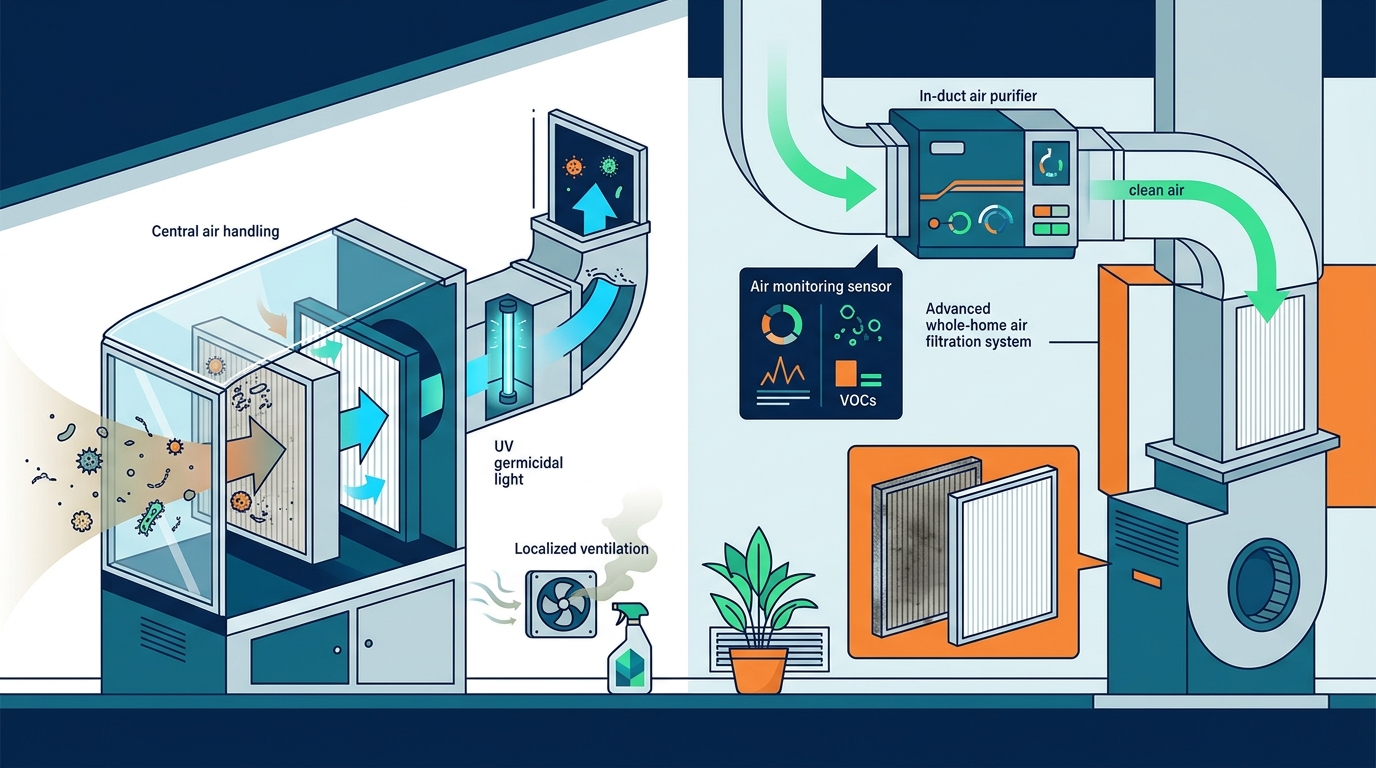
Practical Source Control Actions
- Use low-VOC or zero-VOC paints, cleaners, and building materials.
- Vent all combustion appliances (gas stoves, furnaces, fireplaces) to the outdoors.
- Fix water leaks promptly to prevent mold growth.
- Test your home for radon, especially in Utah and Colorado where elevated levels are common.
For a professional assessment of what is in your air, consider scheduling indoor air quality testing with Apex Clean Air, currently available in Denver and Salt Lake City.
Step 2: Improve Ventilation
Ventilation is the controlled exchange of indoor and outdoor air to dilute and remove pollutants. Inadequate ventilation allows contaminants to accumulate, particularly in tightly sealed modern homes.
Easy Ventilation Improvements
- Open windows and doors when outdoor air quality and weather allow.
- Run kitchen and bathroom exhaust fans during and after cooking or showering.
- Consider installing an Energy Recovery Ventilator (ERV) for continuous fresh air without major energy loss.
A properly installed HVAC system also plays a key role in ventilation. Proper AC installation ensures balanced airflow throughout your home, preventing stagnant zones where allergens collect.
Step 3: Upgrade Filtration and Air Purification
Air filtration is the use of mechanical or electronic devices to capture airborne particles before they circulate through your living spaces. Standard HVAC filters rated MERV 8 or lower protect equipment but are not designed to capture the fine particles that harm your lungs.
Choosing the Right System
For homes needing maximum particle removal, filters rated MERV 13 and above or HEPA-grade media filters capture extremely fine particulate matter. When combined with UV germicidal light systems, you get comprehensive multi-stage protection against biological contaminants like bacteria, viruses, and mold.
Portable air purifiers handle one room at a time, but whole-home air purification systems integrate with your HVAC equipment to clean every cubic foot of air in your house. This is especially valuable for families with pets, young children, or elderly residents.
Step 4: Maintain Your HVAC System
Your HVAC system does not just heat and cool your home. It circulates and filters the air continuously. When the system is neglected, dust, allergens, and mold accumulate in filters and coils and then recirculate throughout every room.
What Maintenance Includes
- Replacing or cleaning air filters every 1 to 3 months.
- Cleaning evaporator and condenser coils annually.
- Checking refrigerant levels, ductwork, and humidity controls.
- Inspecting safety components like carbon monoxide detectors.
Regular AC maintenance not only improves air quality but also extends equipment life and lowers energy bills. Apex Clean Air's seasonal tune-ups include comprehensive inspections designed to identify issues before they become costly problems.
Step 5: Schedule Professional Air Duct Cleaning
Your air ducts are the pathways that deliver conditioned air to every room. Over time, they collect dust, pet dander, pollen, and even mold that recirculates every time your HVAC system runs.
Most homes benefit from professional air duct cleaning every 3 to 5 years, with more frequent service recommended if you have pets, allergies, or recent construction. A thorough cleaning removes allergens from the system, improves airflow, and can reduce allergy and asthma triggers significantly.
Apex Clean Air is trusted by thousands of families across Utah, Colorado, and Idaho, with over 4,000 customer reviews and a 4.9-star average rating for duct cleaning and IAQ services.
Key Takeaways
- Indoor air can be 2 to 5 times more polluted than outdoor air, according to the EPA.
- Source control is the most effective and cost-efficient way to improve IAQ.
- Proper ventilation dilutes pollutants; exhaust fans and ERVs are practical upgrades.
- Upgrade to MERV 13+ filters or whole-home air purification for serious particle removal.
- Regular HVAC maintenance keeps your system from becoming a pollution source.
- Professional duct cleaning every 3 to 5 years removes accumulated contaminants.
- Professional IAQ testing gives you data-driven recommendations tailored to your home.
Frequently Asked Questions
How do I know if my home has poor indoor air quality?
Common signs include persistent dust buildup, musty odors, allergy symptoms that worsen indoors, and visible mold. Professional air quality testing can measure specific pollutant levels and give you a clear picture.
How often should I change my HVAC air filter?
Most standard filters should be replaced every 1 to 3 months. Homes with pets, smokers, or allergy sufferers may need more frequent changes. Check your filter monthly and replace it when visibly dirty.
Do air purifiers really work?
Yes. Whole-home air purification systems integrated with your HVAC can remove dust, dander, mold spores, and VOCs from every room. They are significantly more effective than portable units that only cover a single space.
Is air duct cleaning worth it?
Absolutely. Removing dust, dander, and mold spores from your ductwork can significantly reduce triggers for asthma and allergy sufferers. Most homes benefit from cleaning every 3 to 5 years.
What MERV rating should I use for my home?
MERV 13 or higher is recommended for effective particle removal. Standard MERV 8 filters protect your equipment but do not capture fine particles that affect respiratory health. Always confirm your HVAC system can handle higher-rated filters without restricting airflow.
How does humidity affect indoor air quality?
The EPA recommends keeping indoor humidity between 30% and 50%. Too much moisture promotes mold and dust mites. Too little causes dry skin, irritated sinuses, and increased susceptibility to respiratory infections.
Can my HVAC system make indoor air quality worse?
Yes. A poorly maintained system can accumulate and recirculate dust, mold, and bacteria. Regular maintenance and duct cleaning prevent your HVAC from becoming a pollution source.
Does Apex Clean Air offer air quality testing?
Yes. Apex Clean Air provides professional indoor air quality testing in the Denver and Salt Lake City markets, using professional-grade equipment to measure particulates, VOCs, carbon monoxide, and humidity imbalances.
Breathe Easier Starting Today
Improving your indoor air quality does not have to be overwhelming. Whether you need a professional duct cleaning, a whole-home air purifier, or a full HVAC diagnostic, Apex Clean Air's certified technicians are ready to help. Explore Apex Clean Air's indoor air quality services or call today to schedule a same-day appointment in Utah, Colorado, or Idaho.