
The air inside your home may look clean, but it could be silently affecting your family's health. According to the U.S. Environmental Protection Agency (EPA), Americans spend roughly 90 percent of their time indoors, where pollutant concentrations can be two to five times higher than outdoor levels. From dust and pet dander to volatile organic compounds (VOCs) and mold spores, common residential pollutants build up faster than most homeowners realize. The good news? A few targeted steps can dramatically improve the air your family breathes every day.
Why Indoor Air Quality Matters
Indoor air quality (IAQ) is a measure of how clean, safe, and comfortable the air inside a building is relative to the health of its occupants. Poor IAQ has been linked to allergies, asthma flare-ups, headaches, fatigue, and even long-term conditions like cardiovascular disease and lung cancer.
Vulnerable groups feel the effects most acutely. Children, the elderly, and people with pre-existing respiratory conditions face greater risk from contaminated indoor air. In the Mountain West states of Utah, Colorado, and Idaho, seasonal factors like wildfire smoke, dry winters, and pollen-heavy springs add regional urgency to the issue.
Common Indoor Air Pollutants in Homes
Understanding what is in your air is the first step toward fixing it. Below is a comparison of the most common residential pollutants, their sources, and the health effects they can trigger.
| Pollutant | Common Sources | Health Effects |
|---|---|---|
| Dust and dust mites | Carpet, bedding, ductwork | Allergies, asthma, respiratory irritation |
| Pet dander | Cats, dogs, other animals | Allergic reactions, airway inflammation |
| Mold spores | Damp HVAC components, bathrooms | Respiratory infections, allergy symptoms |
| Volatile organic compounds (VOCs) | Paints, cleaning products, furnishings | Headaches, dizziness, long-term organ damage |
| Carbon monoxide (CO) | Gas stoves, furnaces, fireplaces | Nausea, confusion, potentially fatal at high levels |
| Pollen | Outdoor air entering through doors and HVAC intake | Seasonal allergies, sinus congestion |
| Fine particulate matter (PM2.5) | Cooking, candles, wildfire smoke | Cardiovascular and respiratory disease |
If you are unsure what is floating in your home's air, professional indoor air quality testing can provide measured, data-backed answers.
Step 1: Control Pollution at the Source
Source control is the process of eliminating or reducing pollutant emissions before they enter your breathing space. The EPA identifies it as the most effective and often the most cost-efficient way to improve IAQ.
Practical Source Control Tips
- Switch to low-VOC paints, adhesives, and cleaning products.
- Avoid smoking indoors and limit candle or incense use.
- Ensure gas appliances are properly adjusted; a persistent yellow-tipped flame on your stove signals excess emissions.
- Store chemicals and solvents outside the living space when possible.
Step 2: Improve Ventilation
Ventilation is the exchange of indoor air with fresh outdoor air to dilute and remove contaminants. Without adequate ventilation, pollutants become trapped, especially in modern energy-efficient homes with tight building envelopes.
Easy Ventilation Wins
- Open windows when weather and outdoor air quality permit.
- Use bathroom and kitchen exhaust fans that vent to the outdoors.
- Consider an Energy Recovery Ventilator (ERV) that brings in fresh air while recapturing heating or cooling energy.
For homes in Colorado's Front Range or Utah's Wasatch Front where wildfire smoke is a seasonal concern, ventilating strategically with the help of an HVAC professional ensures you bring in fresh air without introducing outdoor pollutants. Learn how proper AC installation promotes optimal airflow throughout your home.
Step 3: Upgrade Filtration and Air Purification
Standard HVAC filters rated MERV 8 or lower are designed to protect equipment, not your lungs. Upgrading to a MERV 13 or higher filter captures significantly more fine particles, including many allergens and PM2.5.
Whole-Home vs. Portable Purifiers
A portable air purifier cleans the air in a single room. A whole-home air purification system integrates directly with your HVAC equipment to filter every cubic foot of air in your house. For families with pets, young children, or allergy sufferers, whole-home solutions provide consistent, comprehensive protection.
UV germicidal lamps installed inside the air handler or ductwork kill bacteria, viruses, and mold spores at the source. When layered with high-efficiency media filters, you get multi-stage protection against the full spectrum of indoor contaminants. Explore Apex Clean Air's indoor air quality services to find the right combination for your home.
Step 4: Schedule Professional HVAC Maintenance
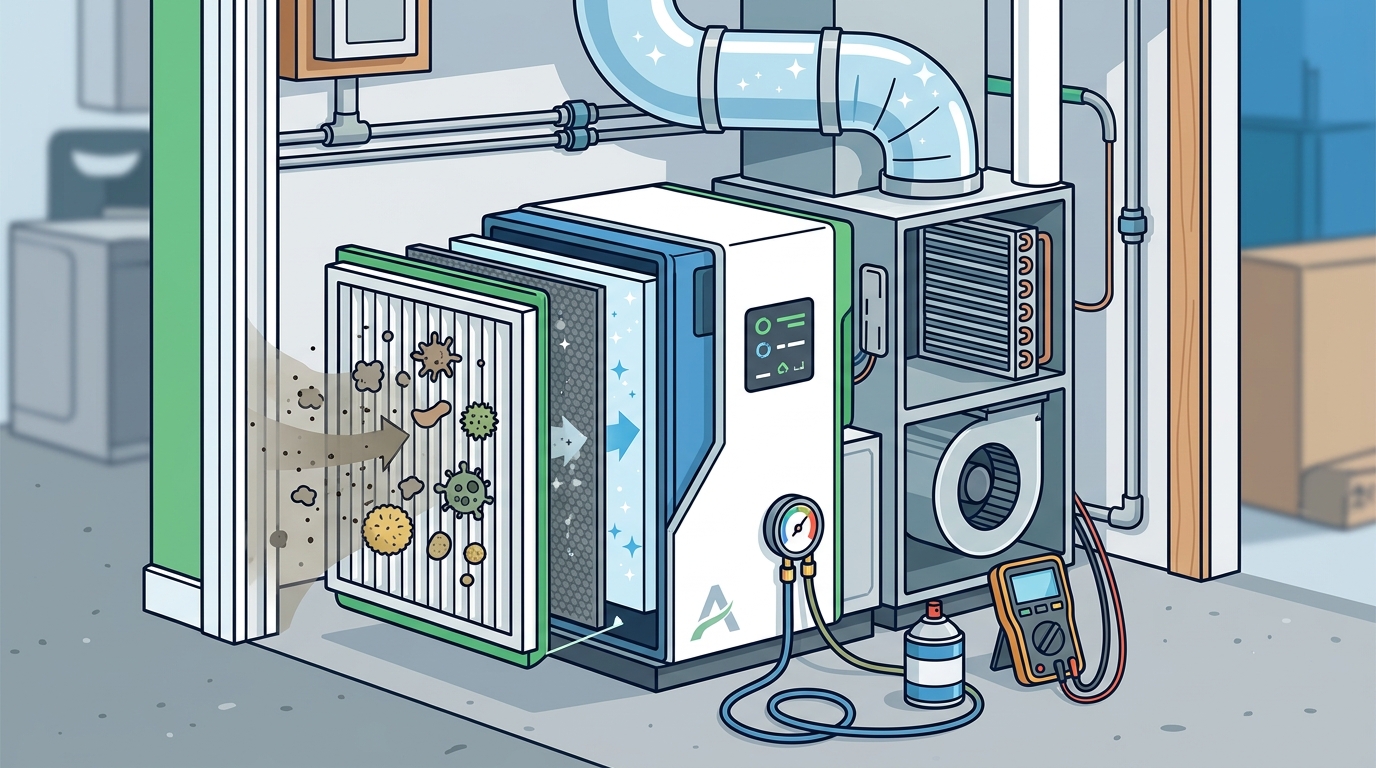
Your HVAC system circulates air through every room. When it is well maintained, it traps pollutants and keeps them from re-entering the air. When it is neglected, dust, allergens, and even mold accumulate on coils and filters, turning your system into a pollution source.
A professional tune-up typically includes filter inspection and replacement, coil cleaning, humidity assessment, and a ductwork review. The EPA emphasizes that maintaining HVAC systems is essential for good indoor air quality. Annual AC maintenance and heating system service keep your equipment running cleanly and efficiently year-round.
Humidity Control
The EPA recommends keeping indoor humidity between 30 and 50 percent. Too much moisture fosters mold growth and dust mites; too little causes dry skin, irritated sinuses, and increased susceptibility to infections. During a maintenance visit, your technician can assess whether a humidifier or dehumidifier should be integrated into your system.
Step 5: Invest in Air Duct Cleaning
Your air ducts are the lungs of your home. Over time, they collect dust, pet dander, pollen, and mold that recirculate every time the HVAC system runs. Most homes benefit from professional air duct cleaning every three to five years, with more frequent service recommended for homes with pets, allergy sufferers, or recent construction.
A thorough duct cleaning removes buildup, restores healthy airflow, and can even help your heating and cooling system operate more efficiently. In fact, just 0.042 inches of dust on a heating or cooling coil can reduce system efficiency by 21 percent.
Key Takeaways
- Indoor air can be two to five times more polluted than outdoor air, making IAQ a critical health concern.
- Source control is the most effective and cost-efficient first step.
- Proper ventilation dilutes indoor pollutants; use exhaust fans and consider an ERV for tightly sealed homes.
- Upgrading to MERV 13+ filters or whole-home purification captures fine particles standard filters miss.
- Annual HVAC maintenance prevents your heating and cooling system from becoming a pollution source.
- Professional duct cleaning every three to five years removes accumulated allergens and debris.
- Maintaining indoor humidity between 30 and 50 percent inhibits both mold growth and respiratory irritation.
Frequently Asked Questions
How do I know if my home has poor indoor air quality?
Common signs include persistent dust, lingering odors, allergy symptoms that worsen indoors, and visible mold. Professional indoor air quality testing can identify hidden pollutants like VOCs, carbon monoxide, and humidity imbalances using measured data.
How often should I change my HVAC air filter?
Most standard filters should be replaced every one to three months. Homes with pets, smokers, or high dust levels may need monthly changes. Check your filter monthly and replace it when visibly dirty.
Are whole-home air purifiers worth the investment?
Yes, especially for households with allergy or asthma sufferers. Unlike portable units that cover only a single room, whole-home systems integrated with your HVAC clean every cubic foot of air in the house continuously.
How often should air ducts be cleaned?
Most homes benefit from duct cleaning every three to five years. If you have pets, allergies, or have recently completed a renovation, more frequent cleaning is recommended.
Do UV light systems really kill germs in HVAC systems?
Yes. UV germicidal lamps have been proven to kill or deactivate bacteria, mold, and viruses that circulate through HVAC systems, especially when installed within the air handler or ductwork.
What humidity level should I maintain indoors?
The EPA recommends keeping indoor humidity between 30 and 50 percent. Levels above 60 percent encourage mold growth, while levels below 30 percent can cause dry skin and respiratory discomfort.
Can regular AC maintenance improve air quality?
Absolutely. A well-maintained AC system traps pollutants rather than recirculating them. Routine service includes filter replacement, coil cleaning, and airflow checks that directly impact the cleanliness of your indoor air.
Does Apex Clean Air offer indoor air quality services near me?
Apex Clean Air serves homeowners across Utah, Colorado, and Idaho with offices in Salt Lake City, Denver, Colorado Springs, and Boise. Services include air duct cleaning, whole-home air purification, UV light systems, HVAC diagnostics, and professional air quality testing.
Breathe Easier Starting Today
Improving your home's air quality does not have to be complicated. Whether you need a professional air quality assessment, duct cleaning, or a whole-home purification system, the certified technicians at Apex Clean Air are ready to help. Request your free estimate and take the first step toward cleaner, healthier air for your family.