
How to Ensure Efficient Heating and Cooling for Your Commercial Facility
Running a commercial facility in Utah, Colorado, or Idaho means battling extreme temperature swings, from scorching summers to freezing winters. An inefficient HVAC system does not just waste energy; it drives up operating costs, reduces employee productivity, and can even force temporary closures. HVAC systems account for 40 to 50 percent of total energy use in a typical commercial building, making them the single largest energy line item for most operators. The good news? With the right maintenance strategy, modern equipment, and a trusted service partner like Apex Clean Air, you can keep your facility comfortable and cost-efficient year-round.
1. Understand How Commercial HVAC Systems Work
HVAC stands for heating, ventilation, and air conditioning. This system provides heating and cooling to residential and commercial buildings. Ventilation is the process of replacing or exchanging air within a space, which includes removing moisture, odors, dust, and airborne bacteria while controlling temperature and replenishing oxygen.
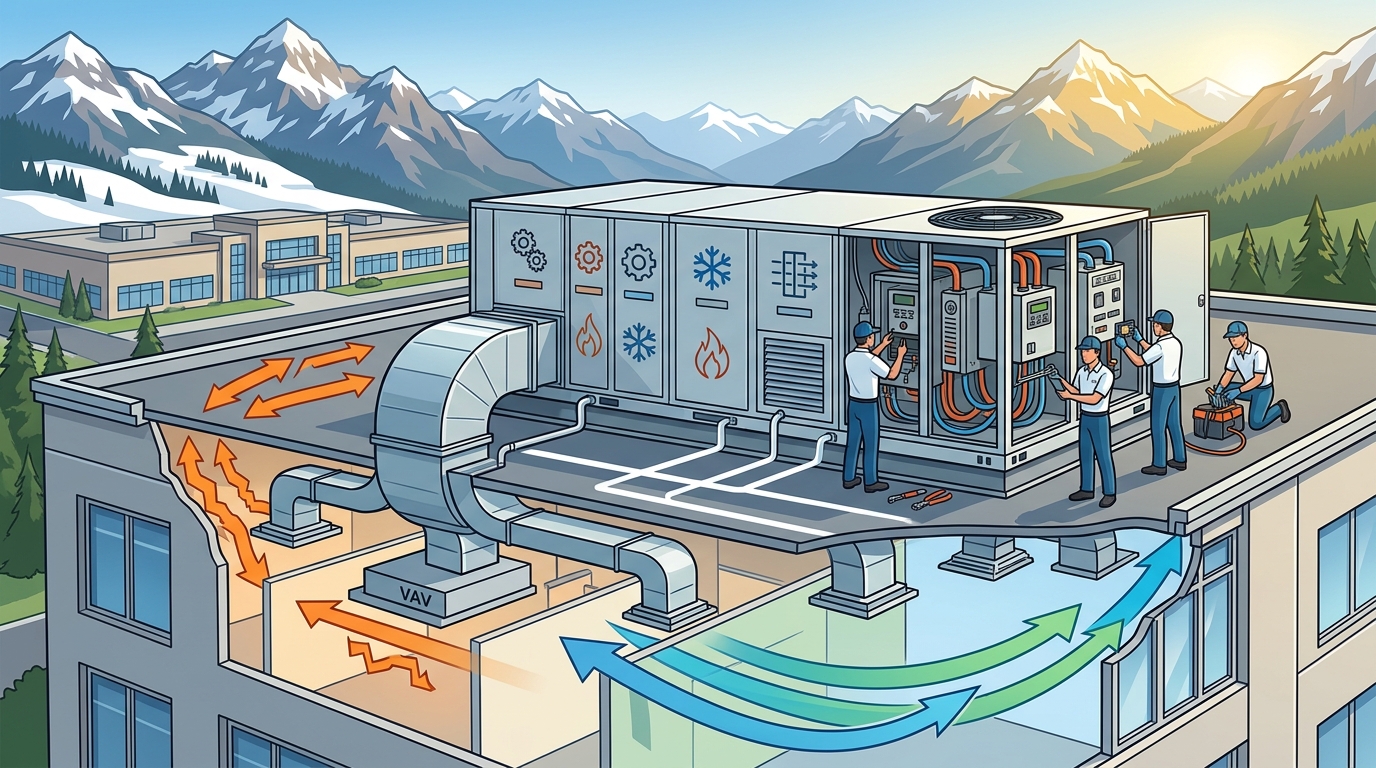
A commercial HVAC system consists of nine key components: the air return, filter, exhaust outlets, ducts, electrical elements, outdoor unit, compressor, coils, and blower. Understanding these parts helps facility managers identify issues early and communicate effectively with HVAC contractors.
2. Prioritize Preventive Maintenance
Preventive maintenance is a scheduled approach to servicing HVAC equipment before breakdowns occur. According to the U.S. Department of Energy, organizations can save 5 to 20 percent annually on energy bills by following best practices in operations and maintenance. Regular upkeep also extends equipment lifespan significantly.
Filter Replacement
A clogged filter restricts airflow, forcing the system to work harder and raising baseline energy use. Clean facilities such as offices typically need quarterly filter changes, while industrial environments may require monthly or even weekly replacement.
Coil Cleaning
Heating and cooling coils build up environmental contaminants over time. Fouled coils cannot transfer heat as effectively, forcing the system to consume more energy. The U.S. Department of Energy reports you can save 30 to 40 percent in energy costs by having A/C coils cleaned regularly. Schedule professional HVAC diagnostics at least twice a year to catch these issues early.
Seasonal Inspections
Spring and fall inspections prepare your system for peak summer and winter demand. These checkups should include thermostat calibration, refrigerant level verification, and ductwork inspection to catch problems before they escalate.
3. Optimize Temperature Setpoints and Scheduling
Temperature settings directly influence HVAC runtime and energy consumption across your facility. Small changes, applied consistently, multiply into large savings over time.
| Setting | Recommended Range | Benefit |
|---|---|---|
| Cooling Setpoint | 72–76°F | Reduces compressor runtime while maintaining comfort |
| Heating Setpoint | 68–70°F | Balances comfort with predictable energy use |
| Deadband | 2–3°F | Reduces short cycling and stabilizes indoor conditions |
| Unoccupied Setback | +/- 5–10°F from occupied | Eliminates energy waste during off-hours |
Align HVAC schedules with actual occupancy hours. Eliminating early starts, late stops, and unnecessary warmup periods cuts runtime and lowers utility bills. Programmable thermostats and building automation systems make this easy to manage across larger facilities.
4. Upgrade to High-Efficiency Equipment
Modern commercial HVAC systems consume almost half as much energy as older units, thanks to inverter compressors, automated climate controls, and variable-speed ventilation. If your equipment uses the obsolete R-22 refrigerant or experiences frequent breakdowns, replacement is likely more cost-effective than repair.
Variable Refrigerant Flow (VRF) systems are the fastest-growing segment of the commercial HVAC industry. Unlike conventional systems that cycle on and off, a VRF solution operates continuously at partial load, resulting in higher overall operating efficiency. These systems use the least amount of energy needed to maintain each zone's setpoint. Apex Clean Air's heat pump solutions offer versatile, energy-efficient heating and cooling for commercial clients throughout the Intermountain West.
Variable Frequency Drives (VFDs) are another proven upgrade. Reducing fan speed by 20 percent cuts power consumption by roughly 50 percent. VFD retrofits on fans and pumps typically deliver 30 to 50 percent energy savings with payback periods of 1.5 to 3 years, according to CIM's 2026 analysis.
5. Don't Overlook Indoor Air Quality
Indoor air quality (IAQ) is the measure of how clean and healthy the air is inside a building. Poor IAQ affects employee health, productivity, and comfort. Dust, pollen, and pollutants accumulate in ductwork over time, degrading air quality and exacerbating allergies and respiratory conditions.
Clean ducts also enhance the overall efficiency of your HVAC system, leading to improved performance, reduced energy consumption, and lower utility bills. Even with high-quality HEPA filters, air ducts need professional cleaning about once every two to three years. Apex Clean Air's duct cleaning services use advanced techniques to remove allergens and contaminants from every part of your ductwork.
For additional protection, consider air purification systems such as UV-C lighting and REME LED technology. These solutions lower airborne pathogen levels and enhance HVAC operational efficiency, creating a healthier workplace for everyone.
6. Leverage Energy Savings and Incentives
Federal and state programs offer substantial incentives for commercial energy efficiency upgrades. The 2025 Section 179D tax deduction provides up to $5.81 per square foot for qualifying improvements when prevailing wage requirements are met, as outlined by the U.S. Department of Energy. A properly implemented HVAC management strategy can reduce energy consumption by 20 to 30 percent.
When planning upgrades, start with a comprehensive energy audit. Contact Apex Clean Air to discuss assessment options. An audit identifies the highest-impact improvements, whether that means tightening schedules, replacing aging rooftop units, or installing smart controls, so you can prioritize spending where it delivers the fastest return.
Key Takeaways
- HVAC accounts for 40 to 50 percent of a commercial building's total energy use, making efficiency improvements the highest-impact cost reduction strategy.
- Preventive maintenance, including filter changes, coil cleaning, and seasonal inspections, can save 5 to 20 percent on annual energy bills.
- Optimized temperature setpoints and occupancy-aligned schedules reduce compressor runtime without sacrificing comfort.
- Modern equipment like VRF systems and VFDs can cut energy consumption by 30 to 50 percent compared to older units.
- Clean ductwork improves both air quality and system efficiency; schedule professional cleaning every two to three years.
- Federal tax deductions up to $5.81 per square foot are available for qualifying commercial energy efficiency projects.
- Partnering with a certified HVAC provider ensures proper sizing, installation, and ongoing maintenance for long-term savings.
Frequently Asked Questions
How often should a commercial HVAC system be serviced?
Schedule professional inspections at least twice a year, ideally in spring and fall, to prepare for peak heating and cooling seasons. Monthly filter checks and quarterly coil cleanings keep the system running efficiently between major service visits.
What are the signs my commercial HVAC system needs repair?
Watch for inconsistent temperatures (hot and cold spots), unexpectedly high utility bills, strange noises like banging or hissing, weak airflow, and musty odors from vents. Any of these signals warrants a prompt diagnostic call.
Should I repair or replace my commercial HVAC unit?
Repair is typically best for newer systems with minor, isolated issues. Consider replacement if the unit is aging, uses obsolete R-22 refrigerant, experiences frequent breakdowns, or shows declining efficiency.
What is proper system sizing, and why does it matter?
Proper system sizing is the process of calculating the exact heating and cooling capacity a building requires based on square footage, insulation, occupancy, and climate. An undersized unit struggles to condition the space, while an oversized one short-cycles, wastes energy, and wears out faster.
How do VRF systems improve commercial HVAC efficiency?
VRF (Variable Refrigerant Flow) systems deliver precise heating or cooling to individual zones rather than treating the entire building the same way. They run continuously at partial load instead of cycling on and off, which reduces energy waste and improves occupant comfort.
Does duct cleaning really save energy in commercial buildings?
Yes. Dirty ductwork restricts airflow and forces your HVAC system to work harder. Professional cleaning removes accumulated dust and debris, improving airflow and reducing the energy your system needs to maintain target temperatures.
What tax incentives are available for commercial HVAC upgrades?
The federal Section 179D tax deduction offers up to $5.81 per square foot for energy efficiency improvements in commercial buildings. Many states and utilities also provide rebates for high-efficiency equipment installations. Consult a tax professional for eligibility details.
Does Apex Clean Air serve commercial clients?
Yes. Apex Clean Air provides heating, cooling, and indoor air quality services for both residential and commercial clients across Utah, Colorado, and Idaho, with offices in Salt Lake City, Denver, Colorado Springs, and Boise.
Ready to Improve Your Commercial HVAC Efficiency?
Stop losing money to an underperforming HVAC system. Whether you need a professional energy assessment, preventive maintenance plan, or a full system upgrade, the certified technicians at Apex Clean Air are here to help. Schedule your free consultation today and start saving on energy costs while keeping your facility comfortable year-round.