

Keeping a commercial space comfortable is about more than adjusting a thermostat. Office buildings, retail stores, and other business environments demand heating and cooling systems that balance energy efficiency, indoor air quality, and consistent temperature control across large or multi-zone floor plans. According to the U.S. Department of Energy, HVAC systems account for roughly 40% of total energy consumed in commercial buildings, making the right system selection one of the most impactful decisions a facility manager can make. This guide covers the key solutions, technologies, and maintenance strategies that ensure optimal comfort in commercial spaces.
Why Commercial HVAC Matters
Commercial HVAC is the system of equipment and controls used to regulate temperature, humidity, and air quality in non-residential buildings. Unlike residential setups, commercial systems must handle higher occupancy loads, variable schedules, and large open floor plans. A poorly performing system leads to employee discomfort, increased sick days, and wasted energy dollars.
The commercial HVAC sector makes up roughly 30% of the overall HVAC market, primarily driven by office spaces and retail centers. As energy codes tighten and occupant expectations rise, investing in the right system is no longer optional.
Types of Commercial Heating and Cooling Systems
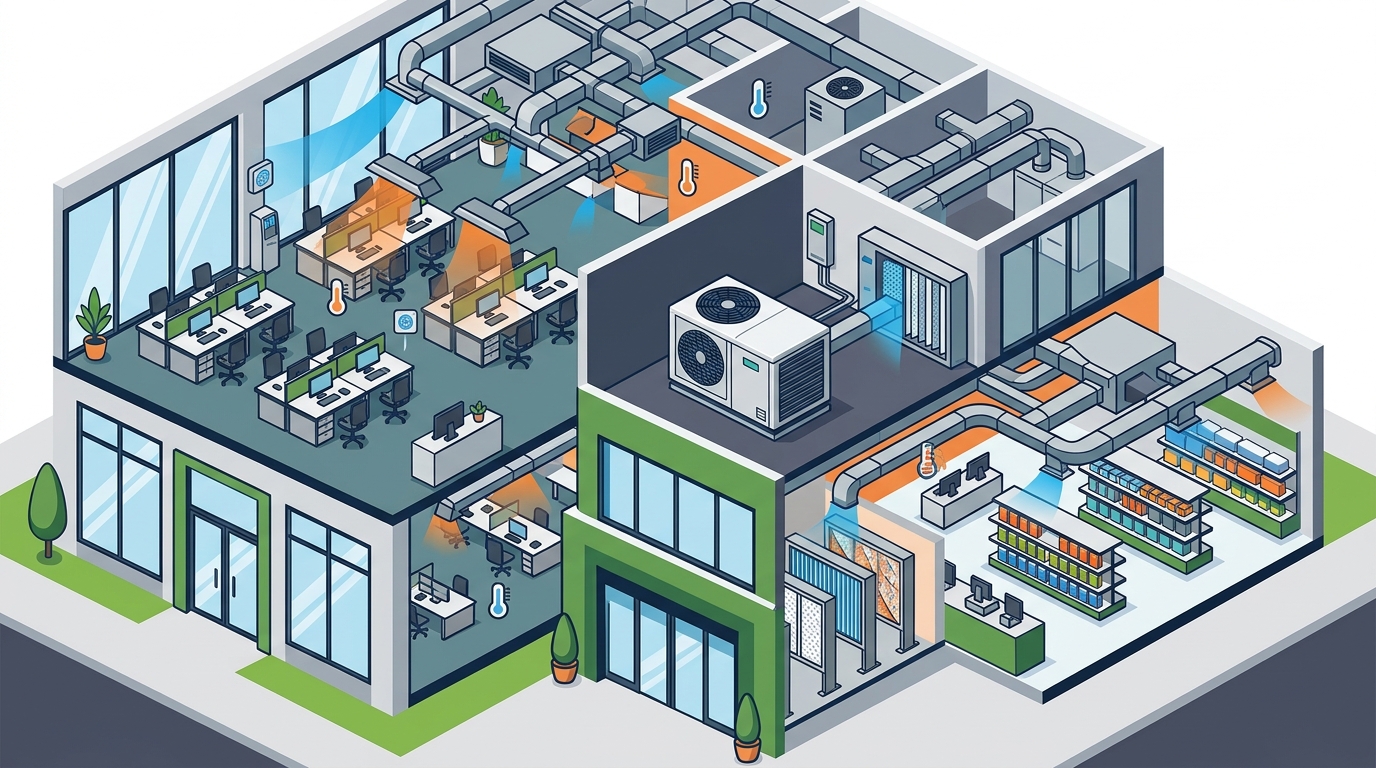
Choosing the right system depends on building size, climate zone, and usage patterns. Below is a comparison of the most common commercial HVAC system types.
| System Type | Best For | Key Advantage | Consideration |
|---|---|---|---|
| Rooftop Units (RTUs) | Retail, restaurants | Easy installation, low indoor footprint | Efficiency varies by SEER2 rating |
| Variable Refrigerant Flow (VRF) | Multi-zone offices | Up to 36% better part-load efficiency | Higher upfront cost |
| Heat Pumps | Mixed-use, moderate climates | Heating and cooling in one unit | Performance in extreme cold varies |
| Chiller Systems | Large campuses, hospitals | Scalable to massive cooling loads | Requires dedicated mechanical room |
| Ductless Mini-Splits | Add-on zones, server rooms | No ductwork needed | Limited capacity per head |
Heat Pumps: A Versatile Choice
A heat pump is a system that transfers heat rather than generating it, providing both heating and cooling from a single unit. Modern cold-climate heat pumps have advanced significantly. A Trane Technologies prototype tested in Boise, Idaho operated with backup electric heating only 10% of the time while delivering 15 to 20% energy bill savings. Apex Clean Air's heating services include expert heat pump installation and repair for businesses across Utah, Colorado, and Idaho.
Variable Refrigerant Flow (VRF) Systems
VRF is a technology that modulates refrigerant flow to individual zones, allowing simultaneous heating and cooling in different areas. Research published in the Journal of Thermal Analysis and Calorimetry found VRF systems reduced monthly energy consumption to 9,626.9 kWh versus 18,549.6 kWh for conventional split systems in university buildings, improving energy performance by 36.6%.
Energy Efficiency and Cost Savings
Energy efficiency is the ratio of useful heating or cooling output to total energy input, typically measured by SEER2 (cooling) or HSPF2 (heating) ratings. As of January 2025, commercial three-phase HVAC equipment must meet updated SEER2 and EER2 minimums that reflect real-world conditions including ductwork resistance.
According to EPA data, implementing an energy-efficient HVAC system can reduce energy consumption by 20 to 30%. For a mid-sized commercial building spending $160,000 annually on electricity, that translates to $32,000 to $48,000 in yearly savings. ENERGY STAR-certified systems can save between 10% and 30% on heating and cooling costs compared to standard equipment.
Rebates and Incentives
Many businesses in Utah, Colorado, and Idaho qualify for federal tax credits and local utility rebates when upgrading to high-efficiency equipment. Apex Clean Air helps clients navigate financing and offers 0% APR plans through partners like GoodLeap and mySynchrony.
The Role of Indoor Air Quality
Indoor air quality (IAQ) is a measure of how clean and healthy the air inside a building is, based on pollutant levels, humidity, and ventilation rates. Poor IAQ in commercial spaces can reduce employee productivity and increase absenteeism.
Dirty ductwork circulates dust, allergens, and mold spores every time the HVAC system runs. Professional air duct cleaning removes that buildup and improves system efficiency. For businesses looking for advanced solutions, Apex Clean Air offers air purification systems including HEPA filters, UV treatment, and REME Halo technology tailored to commercial environments.
Smart Controls and Building Automation
Smart thermostats and building automation systems (BAS) allow facility managers to program schedules, monitor energy usage remotely, and automate climate adjustments based on occupancy patterns. Commercial buildings with smart HVAC controls typically see energy savings of 15 to 20%.
The smart thermostat market is projected to reach $3.86 billion by 2029, reflecting widespread adoption. Apex Clean Air installs and calibrates smart thermostats as part of its cooling and heating services, ensuring proper communication between the thermostat and the HVAC system for peak performance.
Preventive Maintenance for Commercial HVAC
Skipping regular maintenance is one of the most costly mistakes a business can make. Even high-efficiency systems lose performance without routine care. Clogged filters, dirty coils, and low refrigerant levels all compound over time, leading to higher bills and premature equipment failure.
A proactive maintenance plan should include seasonal inspections, coil cleaning, refrigerant checks, and airflow balancing. Apex Clean Air's maintenance services cover all of these tasks and include the option to join the Apex Comfort Club for priority scheduling and two precision tune-ups per year. Businesses that schedule biannual HVAC maintenance can save up to $500 per year on repairs while extending equipment lifespan.
Key Takeaways
- HVAC systems consume up to 40% of a commercial building's total energy, making system selection critical.
- Heat pumps and VRF systems offer significant efficiency gains over conventional split systems.
- Upgrading to energy-efficient equipment can cut energy costs by 20 to 30%, according to EPA data.
- Indoor air quality directly impacts employee health and productivity; duct cleaning and air purification are essential.
- Smart controls and building automation can reduce energy use by 15 to 20%.
- Preventive maintenance prevents costly breakdowns and preserves system efficiency year-round.
- Federal and state incentives, plus flexible financing, make commercial HVAC upgrades more affordable than ever.
Frequently Asked Questions
How often should commercial HVAC systems be serviced?
Commercial systems should receive professional maintenance at least twice a year, ideally before the heating and cooling seasons. High-traffic buildings or environments with air quality concerns may benefit from quarterly service.
What is the most energy-efficient commercial HVAC system?
VRF systems and modern heat pumps consistently rank among the most efficient options. VRF technology can improve energy performance by over 35% compared to conventional split systems, while cold-climate heat pumps deliver 15 to 20% energy bill savings.
How much can a business save by upgrading to an efficient HVAC system?
According to EPA data, businesses can reduce energy consumption by 20 to 30%. For a building spending $160,000 per year on energy, that equals $32,000 to $48,000 in annual savings.
Does indoor air quality really affect employee productivity?
Yes. Poor IAQ caused by dust, allergens, and inadequate ventilation has been linked to increased sick days, reduced focus, and lower overall workplace satisfaction. Regular duct cleaning and air purification help maintain a healthier environment.
What SEER2 rating should I look for in commercial equipment?
As of 2025, commercial three-phase equipment must meet updated SEER2 minimums. Look for equipment rated at SEER2 16 or above for the best balance of efficiency and compliance. Regional requirements vary by climate zone.
Are heat pumps effective in cold climates like Utah and Idaho?
Modern cold-climate heat pumps perform well in Rocky Mountain winters. A prototype tested in Boise, Idaho required backup electric heating only 10% of the time, proving their viability in sub-freezing conditions.
Does Apex Clean Air serve commercial clients?
Yes. Apex Clean Air provides heating, cooling, and indoor air quality services for both residential and commercial clients across Utah, Colorado, and Idaho, with offices in Salt Lake City, Denver, Colorado Springs, and Boise.
Get Your Commercial Space Comfortable Today
Whether you need a system upgrade, routine maintenance, or professional air quality services, Apex Clean Air's certified technicians are ready to help. With offices across the Rocky Mountain region and flexible financing options, getting started is simple. Request a free estimate from Apex Clean Air and take the first step toward a more comfortable, efficient commercial space.