
The air inside your home may be far dirtier than you think. According to the U.S. Environmental Protection Agency (EPA), Americans spend roughly 90 percent of their time indoors, where pollutant concentrations can be two to five times higher than outdoor levels. For families in Utah, Colorado, and Idaho, seasonal pollen, wildfire smoke, and dry climates make indoor air quality (IAQ) an even bigger concern. This guide walks you through proven, practical steps to clean up the air your family breathes every day, from simple filter changes to professional-grade solutions.
What Is Indoor Air Quality?
Indoor Air Quality (IAQ) is a measure of the air quality within and around buildings, especially as it relates to the health and comfort of occupants. Poor IAQ can trigger allergies, worsen asthma, cause headaches and fatigue, and even contribute to long-term conditions such as cardiovascular disease.
Energy-efficient construction keeps conditioned air inside, but it also traps pollutants with nowhere to go. That means your HVAC system plays a central role in either cleaning or contaminating the air you breathe. Understanding the basics is the first step toward a healthier home, and the connection between IAQ and your health is well documented.
Common Indoor Air Pollutants
Before you can fix the problem, you need to know what you are dealing with. Below is a quick reference of the most common residential pollutants and their primary sources.
| Pollutant | Common Sources | Health Impact |
|---|---|---|
| Dust and dust mites | Ductwork, carpets, bedding | Allergy symptoms, asthma triggers |
| Pet dander | Cats, dogs, other animals | Respiratory irritation, allergic reactions |
| Mold spores | HVAC coils, drip pans, damp areas | Allergic reactions, worsened asthma |
| Volatile Organic Compounds (VOCs) | Household cleaners, paint, furnishings | Eye and throat irritation, headaches |
| Pollen | Doors, windows, HVAC intake | Seasonal allergy flare-ups |
| Carbon monoxide (CO) | Gas stoves, furnaces, fireplaces | Dizziness, nausea, fatal at high levels |
| Wildfire smoke / PM2.5 | Outdoor infiltration (common in the West) | Deep respiratory tissue damage |
If you are unsure which pollutants affect your home, professional indoor air quality testing from Apex Clean Air can measure particulate matter, VOCs, humidity, and carbon monoxide using professional-grade instruments.
Step 1: Control Pollution at the Source
Source control is the most effective way to improve indoor air quality, according to the EPA. This means eliminating or reducing the things that release pollutants in the first place.
Practical Source Control Actions
- Choose low-VOC paints, cleaners, and building materials.
- Fix water leaks promptly to prevent mold growth.
- Avoid smoking indoors and limit candle or incense use.
- Ensure gas appliances are properly vented and maintained.
Addressing sources directly reduces your reliance on filtration alone and delivers faster, more lasting results.
Step 2: Improve Ventilation
Ventilation is the process of exchanging stale indoor air with fresh outdoor air. Inadequate ventilation allows pollutants to accumulate to unhealthy levels.
Simple Ventilation Improvements
- Open windows when weather and outdoor air quality permit.
- Run bathroom and kitchen exhaust fans during and after moisture-producing activities.
- Consider a heat recovery ventilator (HRV) for energy-efficient fresh air exchange during extreme temperatures.
For homes in Colorado and Utah where wildfire smoke or inversions can make outdoor air problematic, consult an HVAC professional before relying solely on natural ventilation. Apex Clean Air's comprehensive HVAC diagnostics can evaluate your home's airflow and ventilation balance.
Step 3: Upgrade Filtration and Air Purification
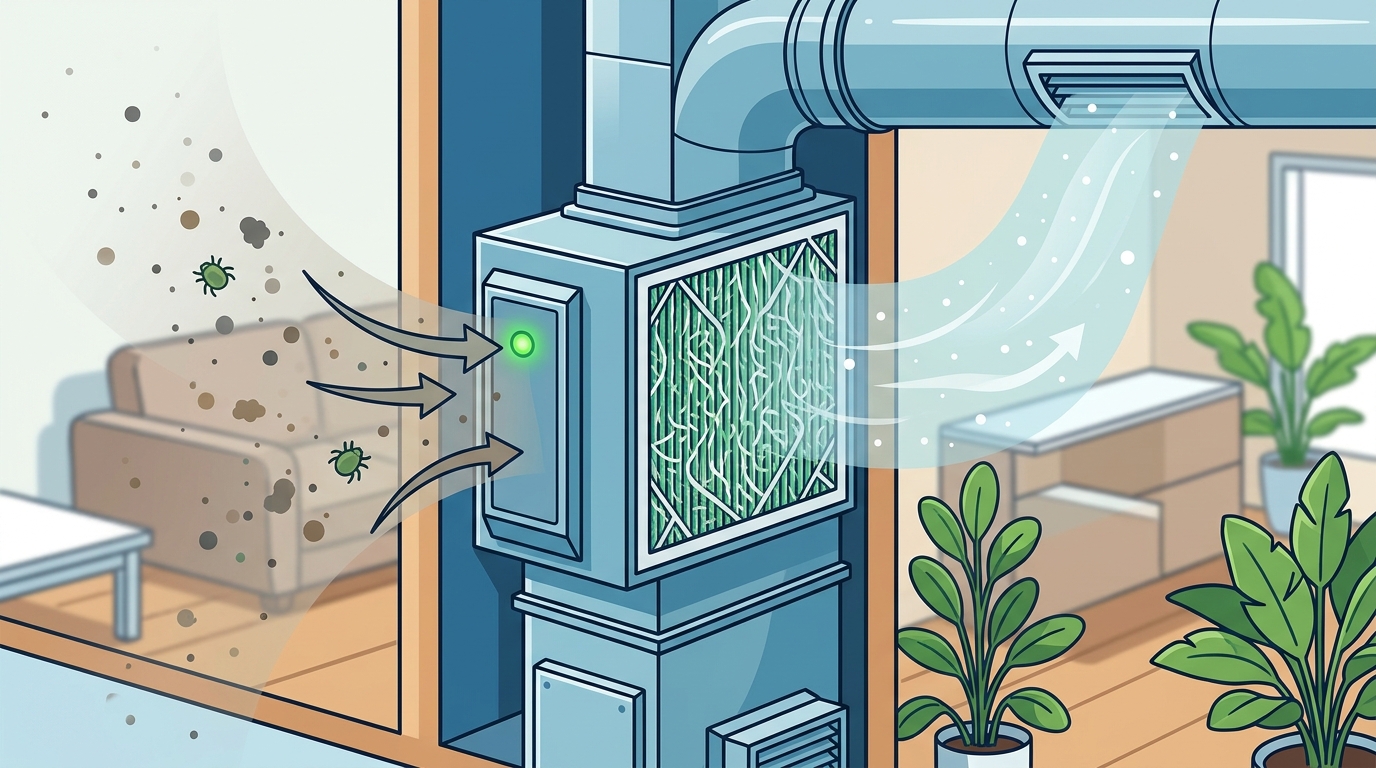
A whole-home air purifier is a filtration or purification device integrated directly into your HVAC system to treat every cubic foot of air in your house. Standard HVAC filters rated MERV 8 or lower protect equipment but do little for your lungs.
Portable vs. Whole-Home Systems
Portable units clean air in a single room, while whole-home systems treat your entire living space continuously. For families with pets, young children, or allergy sufferers, whole-home solutions provide far more comprehensive coverage. Apex Clean Air installs advanced purification systems including HEPA-grade media filters, UV germicidal lights, and the HALO-LED in-duct purifier, which uses hydrogen peroxide ionization to neutralize viruses, bacteria, and mold spores in minutes.
Filter Ratings to Know
- MERV 8: Basic equipment protection; minimal health benefit.
- MERV 13+: Captures fine particulate matter that standard filters miss.
- HEPA-grade: Removes 99.97% of particles 0.3 microns and larger.
Step 4: Schedule Professional Air Duct Cleaning
Air duct cleaning is the process of removing dust, allergens, and debris from your HVAC ductwork using specialized vacuum and agitation equipment. Over time, ducts collect layers of contaminants that recirculate every time the system runs.
The National Air Duct Cleaners Association (NADCA) recommends professional cleaning every 3 to 5 years for most homes. Households with pets, allergy sufferers, or those in dusty, high-pollen regions of Utah, Colorado, and Idaho may benefit from cleaning every 2 to 3 years.
Apex Clean Air has earned over 4,000 reviews and a 4.9-star average rating for its professional air duct cleaning services across Salt Lake City, Denver, and Boise. Technicians provide before-and-after documentation so you can see exactly what was removed.
Step 5: Manage Humidity Levels
The EPA recommends keeping indoor humidity between 30 and 50 percent. Too little moisture causes dry skin, irritated sinuses, and increased susceptibility to illness. Too much moisture fosters mold and dust mite growth.
Regional Considerations
Denver's dry climate and Utah's arid winters often push humidity well below the ideal range, while summertime monsoons in parts of Idaho can spike moisture levels. A balanced HVAC system with a properly calibrated humidifier or dehumidifier can maintain the right range year-round. Apex Clean Air technicians assess humidity as part of every HVAC diagnostic appointment.
Key Takeaways
- Indoor air can be 2 to 5 times more polluted than outdoor air, making IAQ a top priority for homeowners.
- Source control, such as fixing leaks and choosing low-VOC products, is the single most effective strategy.
- Proper ventilation dilutes indoor pollutants but must be balanced with outdoor air quality conditions.
- Upgrading to MERV 13+ filters or a whole-home air purifier dramatically reduces airborne allergens.
- Professional air duct cleaning every 3 to 5 years removes built-up contaminants from your HVAC system.
- Maintaining 30 to 50 percent indoor humidity prevents mold growth and respiratory irritation.
- Professional IAQ testing identifies the specific pollutants in your home so solutions can be targeted.
Frequently Asked Questions
How often should I have my air ducts cleaned?
Most homes benefit from duct cleaning every 3 to 5 years, according to NADCA guidelines. Homes with pets, allergies, or recent construction may need service every 2 to 3 years.
Is a whole-home air purifier worth it?
Yes, for most families. Whole-home systems treat every room continuously, unlike portable units that only cover a single space. They are especially valuable for households with allergy or asthma sufferers.
What MERV rating should I use for my HVAC filter?
MERV 13 or higher is recommended for meaningful health benefits. Standard MERV 8 filters protect equipment but allow fine particles and biological contaminants to pass through.
Can air duct cleaning help with allergies?
Yes. Removing dust, dander, and mold spores from ductwork can significantly reduce triggers for asthma and allergy sufferers.
What is indoor air quality testing?
IAQ testing uses professional-grade instruments to measure pollutants such as particulate matter, VOCs, carbon monoxide, and humidity imbalances in your home. Apex Clean Air currently offers testing in the Denver and Salt Lake City markets.
How does wildfire smoke affect indoor air quality?
Wildfire smoke introduces fine particulate matter (PM2.5) that can infiltrate homes through doors, windows, and HVAC intakes. Whole-home purification and high-efficiency filtration are critical defenses, especially across the western United States.
Does HVAC maintenance improve indoor air quality?
Absolutely. Regular AC and furnace maintenance keeps coils, filters, and blower components clean, preventing contaminants from recirculating. A well-maintained system also runs more efficiently, lowering energy costs.
What humidity level should I maintain indoors?
The EPA recommends keeping indoor humidity between 30 and 50 percent. Use a humidity gauge (available at most hardware stores) and consider a whole-home humidifier or dehumidifier if levels are consistently outside this range.
Get Started With Cleaner Air
Your family deserves to breathe clean, healthy air at home. Whether you need duct cleaning, a whole-home purifier, or a full HVAC diagnostic, the certified technicians at Apex Clean Air are ready to help. We serve homeowners across Utah, Colorado, and Idaho with same-day appointments, transparent pricing, and a satisfaction guarantee.
Request your free indoor air quality estimate today or call your nearest Apex Clean Air office in Salt Lake City, Denver, Colorado Springs, or Boise to schedule service.