
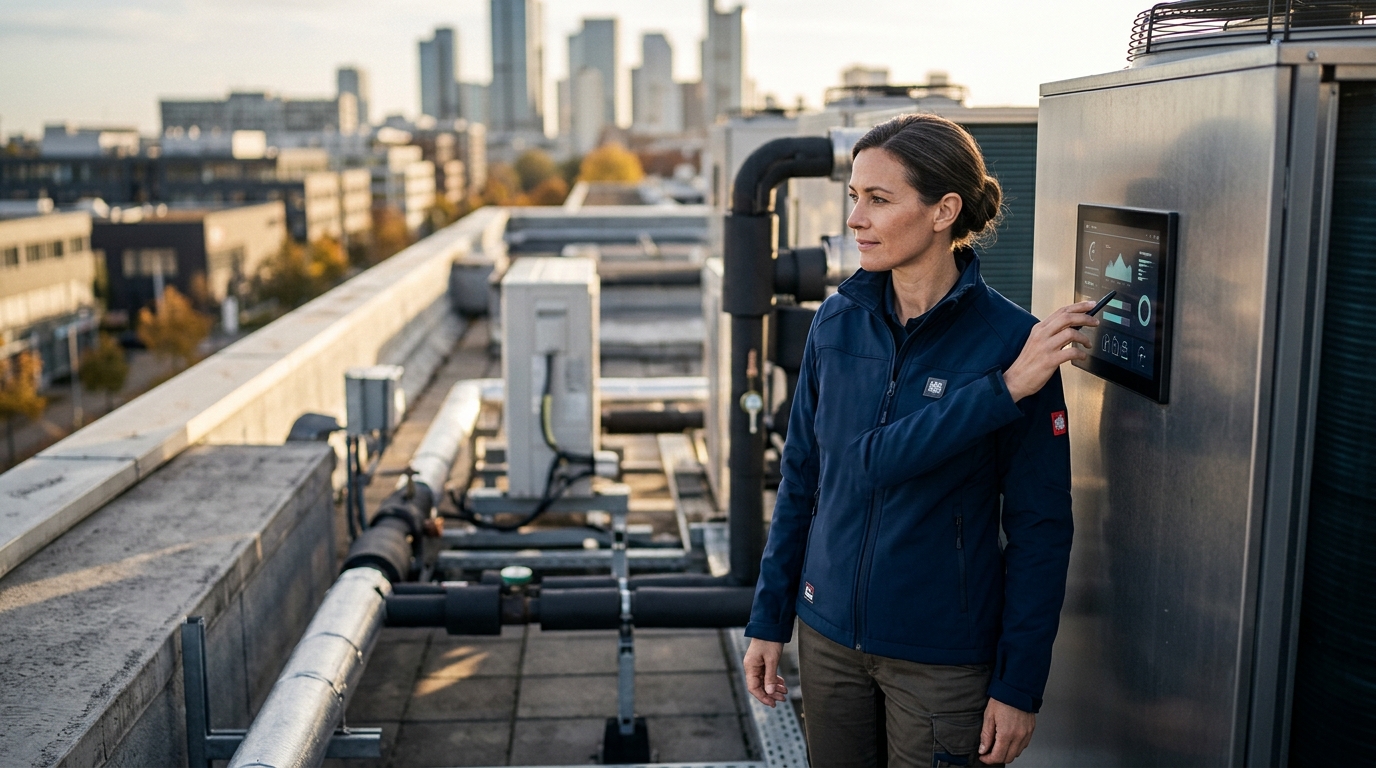
Keeping a commercial facility comfortable year-round without burning through your operating budget is one of the biggest challenges building owners face today. HVAC systems account for 40 to 50 percent of total energy use in most commercial buildings, according to the U.S. Energy Information Administration. With tightening federal efficiency mandates and rising utility costs in 2026, the stakes have never been higher. This guide walks you through seven actionable strategies to ensure efficient heating and cooling across your commercial space, from preventive maintenance and duct cleaning to heat pump upgrades and smart controls.
Why Commercial HVAC Efficiency Matters Now
Energy efficiency in HVAC is the practice of maintaining the indoor temperature, humidity, and air quality a building needs while minimizing the energy required to deliver them. In 2026, this is no longer optional. New federal efficiency mandates, a refrigerant phase-out to lower-GWP alternatives like R-454B, and updated SEER2/EER2 test procedures are reshaping the commercial HVAC landscape.
A malfunctioning or inefficient system does not just waste energy. It can reduce employee productivity, damage temperature-sensitive inventory, and even force temporary business closures. Organizations like ASHRAE publish standards to guide healthy and efficient building temperatures for exactly this reason.
Commit to Preventive Maintenance
Preventive maintenance is the single most cost-effective method for keeping commercial HVAC systems efficient. A well-maintained commercial HVAC system can operate 10 to 25 percent more efficiently than one that is neglected, because clean, correctly adjusted equipment works with less energy waste.
What a Maintenance Visit Should Include
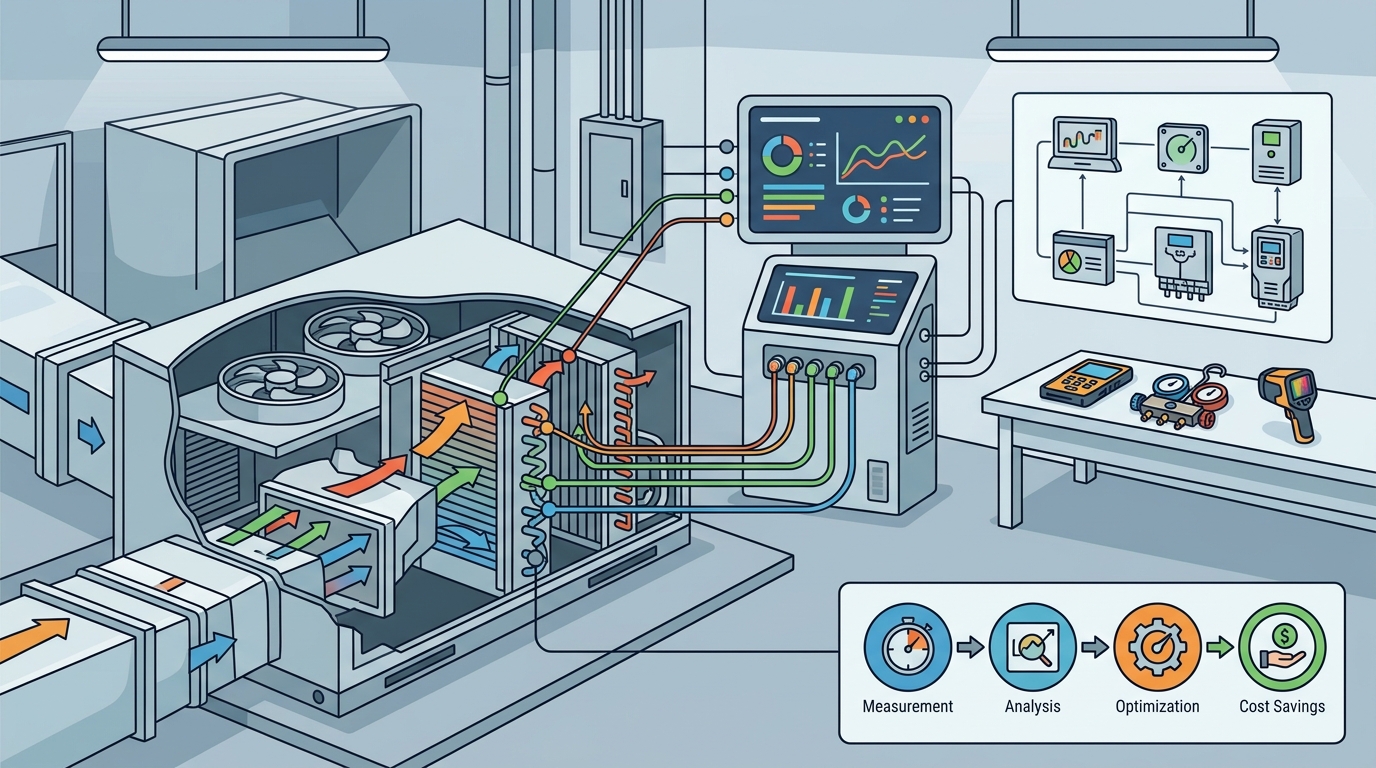
Quality maintenance goes beyond a quick visual check. It should include filter replacement, coil cleaning, refrigerant charge verification, thermostat calibration, and sensor testing. Apex Clean Air's Denver HVAC team performs comprehensive inspections that identify wear, remove dust from internal components, and fine-tune settings for peak efficiency.
How Often to Schedule Service
Most commercial facilities benefit from full HVAC check-ups every three to six months. Scheduling maintenance before peak heating and cooling seasons prevents breakdowns when your system is under the heaviest load.
Keep Ductwork Clean and Sealed
Ductwork is the circulatory system of your building. Leaky ductwork can lose 20 to 30 percent of conditioned air, forcing your HVAC equipment to work harder and consume more energy. Dust and grime in your vents also restrict airflow, increasing energy bills and the chance of system breakdown.
Professional air duct cleaning services remove years of buildup from your ductwork to improve airflow, reduce allergens, and boost HVAC efficiency. Even facilities with high-quality HEPA filters should have ducts cleaned every two to three years. After cleaning, a thorough duct inspection ensures system integrity and identifies any sealing issues that need attention.
Upgrade to High-Efficiency Heat Pumps
A heat pump is a system that provides both heating and cooling by transferring thermal energy between indoor and outdoor environments. Heat pumps are the preferred choice for commercial buildings in 2026 due to their high efficiency and ability to handle year-round climate control in a single unit.
Why Heat Pumps Make Sense for Commercial Facilities
Modern heat pumps support global electrification goals and reduce dependence on fossil fuels. They work exceptionally well in climates with wide temperature swings, such as the regions served by Apex Clean Air in Salt Lake City and along Colorado's Front Range. Many facility owners also qualify for federal and local rebates on heat pump installations, further reducing the total cost of ownership.
Installation Best Practices
Proper sizing is critical. Higher-efficiency equipment is less forgiving of bad assumptions, and oversizing can cause humidity problems, short cycling, and poor airflow. A qualified technician should perform load calculations using Manual J, Manual S, and Manual D workflows before recommending a system.
Leverage Smart Controls and Zoning
A Building Management System (BMS) is a centralized platform that monitors and controls a building's mechanical and electrical equipment, including HVAC. Smart controls powered by AI and IoT sensors are among the biggest trends in commercial HVAC for 2026.
Zoning allows facility managers to set different temperatures for different areas, such as conference rooms, open offices, and storage spaces. This reduces energy waste and keeps occupants more comfortable. Aligning HVAC schedules with actual occupancy patterns and using setback temperatures during unoccupied hours can cut runtime significantly.
Invest in Indoor Air Quality
Efficient HVAC and clean indoor air go hand in hand. Post-pandemic awareness has driven commercial buildings to invest in advanced air filtration, UV purification, and ventilation upgrades. Apex Clean Air's Colorado Springs location offers air purifiers and UV light installations that reduce airborne contaminants while supporting overall system efficiency.
Poor indoor air quality forces HVAC systems to cycle more frequently and work harder. Addressing filtration and purification reduces the load on your heating and cooling equipment and creates a healthier environment for employees and customers alike.
Efficiency Strategy Comparison
| Strategy | Estimated Energy Savings | Capital Cost | Implementation Time |
|---|---|---|---|
| Preventive Maintenance | 10 - 25% | Low | Immediate |
| Duct Cleaning & Sealing | 10 - 20% | Low to Moderate | 1 - 2 days |
| Heat Pump Upgrade | 20 - 40% | Moderate to High | 1 - 3 weeks |
| Smart Controls & BMS | 10 - 20% | Moderate | 2 - 4 weeks |
| Setpoint Optimization | 5 - 15% | Zero | Immediate |
| Air Filtration Upgrades | 5 - 10% | Low | Same day |
| Equipment Right-Sizing | 15 - 30% | High | 2 - 6 weeks |
Key Takeaways
- HVAC systems consume 40 to 50 percent of a commercial building's total energy, making efficiency improvements a top financial priority.
- Preventive maintenance every three to six months can improve system performance by 10 to 25 percent with minimal investment.
- Leaky or dirty ductwork wastes up to 30 percent of conditioned air; professional duct cleaning pays for itself quickly.
- Heat pumps offer both heating and cooling in one high-efficiency unit and are the leading technology choice for commercial facilities in 2026.
- Smart controls and zoning reduce energy waste by matching HVAC output to actual occupancy and use patterns.
- Indoor air quality upgrades support HVAC efficiency by reducing system strain from airborne contaminants.
- Combining multiple strategies delivers compounding savings far greater than any single improvement alone.
Frequently Asked Questions
How often should a commercial HVAC system be serviced?
Most commercial facilities should schedule full HVAC maintenance every three to six months. Systems in dusty or high-traffic environments may benefit from quarterly service to maintain peak efficiency.
What is the biggest cause of energy waste in commercial HVAC?
Leaky ductwork, dirty filters, and schedules that extend beyond business hours are the top culprits. Thermostat overrides by staff can also push systems into longer heating or cooling cycles, increasing runtime unnecessarily.
Are heat pumps effective in cold climates like Utah and Colorado?
Yes. Modern heat pumps are designed for wide temperature ranges and perform well in the mountain west. Apex Clean Air installs and services heat pumps across Salt Lake City, Denver, Colorado Springs, and Boise, where winter conditions are demanding.
How much can duct cleaning improve HVAC efficiency?
Clean ducts can enhance overall HVAC system efficiency by reducing energy consumption and lowering utility bills. Buildings with heavily soiled ductwork may see airflow improvements of 20 percent or more after professional cleaning.
What are SEER2 and EER2 ratings?
SEER2 and EER2 are updated efficiency metrics for HVAC equipment that reflect real-world conditions, including ductwork resistance and filter restrictions. As of January 2025, commercial three-phase HVAC equipment must meet minimum efficiency ratings using these new test procedures.
Do smart thermostats really save money in commercial buildings?
Yes. A well-configured building management system can deliver 10 to 20 percent energy savings by optimizing setpoints, aligning schedules with occupancy, and matching ventilation to actual indoor air quality requirements.
What rebates are available for commercial HVAC upgrades?
Many facility owners qualify for federal and local energy efficiency rebates, especially on heat pump installations. Apex Clean Air helps customers navigate available programs and handles the paperwork to maximize savings.
How do I choose the right HVAC contractor for my commercial facility?
Look for NATE-certified technicians, transparent pricing, and experience with commercial systems. A contractor should perform proper load calculations before recommending equipment, not rely on rules of thumb. Apex Clean Air's certified team serves commercial and residential clients across Utah, Colorado, and Idaho.
Schedule Your Commercial HVAC Assessment
Efficient heating and cooling starts with understanding where your current system stands. Apex Clean Air offers professional HVAC diagnostics, maintenance, and installation services for commercial facilities across the Intermountain West. Contact the Apex Clean Air team today to schedule an assessment and start reducing your energy costs.