

Your commercial HVAC system is one of the most critical investments in your facility. It controls temperature, regulates airflow, and directly affects the health, comfort, and productivity of everyone inside. Yet many business owners treat maintenance as an afterthought, waiting until something breaks before calling a technician. Regular HVAC maintenance is the practice of scheduling proactive inspections, tune-ups, and component servicing to keep heating and cooling systems running at peak performance. The benefits go far beyond avoiding breakdowns. From lower energy bills to better indoor air quality, a structured maintenance plan protects your bottom line and your people.
Lower Energy Costs and Improved Efficiency
Heating and cooling typically represent the largest share of a commercial building's energy consumption. When filters are clogged, coils are dirty, or refrigerant levels are low, your system works harder and uses more electricity to deliver the same output. According to the U.S. Department of Energy, organizations can save 5 to 20 percent annually on energy bills simply by following operations and maintenance best practices.
Routine tasks like professional air duct cleaning remove buildup that restricts airflow, while seasonal tune-ups ensure components like compressors and blower motors operate within designed parameters. Over the course of a year, even a modest efficiency improvement translates into significant utility savings for multi-room commercial spaces.
Fewer Breakdowns and Reduced Repair Costs
Preventive maintenance is the strategy of identifying and correcting small issues before they escalate into expensive emergency repairs. A worn belt, a failing capacitor, or a slow refrigerant leak can all be caught during a routine inspection. Without scheduled service, these minor problems compound and often result in complete system failures during peak demand.
According to ENERGY STAR, the average commercial building wastes 30 percent of the energy it consumes, much of which is tied to poorly maintained HVAC equipment. Prompt, reliable HVAC repairs paired with annual maintenance plans help businesses avoid the downtime and lost revenue associated with unexpected failures.
Extended Equipment Lifespan
Commercial HVAC equipment is a major capital investment. A rooftop unit or chiller can cost tens of thousands of dollars to replace. When maintenance is neglected, bearings wear out faster, motors overheat, and compressors run under poor conditions, accelerating the timeline for costly replacements.
A structured maintenance program supports longer equipment life by keeping components operating within proper ranges. Apex Clean Air's certified technicians perform detailed inspections that catch early warning signs and correct issues before they shorten your system's useful life. This proactive approach also extends to heating system maintenance, where furnace inspections and heat pump tune-ups protect your winter reliability.
Better Indoor Air Quality for Employees
Indoor air quality (IAQ) is the measure of how clean and healthy the air is inside a building. Poor IAQ has been linked to increased sick days, reduced cognitive performance, and higher rates of respiratory complaints. Dirty filters, poorly calibrated ventilation, and neglected condensate management can introduce contaminants or excess moisture into your workspace.
Well-maintained HVAC systems effectively remove debris and contaminants from the air, contributing to a healthier workplace. Pairing routine maintenance with advanced air purification systems provides an additional layer of protection against allergens, bacteria, and volatile organic compounds. Apex Clean Air installs proven purification technologies, including the RGF HALO-LED, to help businesses maintain cleaner indoor environments.
Increased Productivity and Occupant Comfort
Temperature inconsistencies and poor air circulation create discomfort that directly impacts employee focus and customer satisfaction. Hot or cold zones in offices, retail environments, or healthcare facilities quickly turn into complaints and lost productivity. Preventive maintenance limits these disruptions by catching problems early and keeping systems calibrated.
When your HVAC system maintains consistent temperatures and proper humidity levels, occupants work more effectively and customers stay longer. For businesses across Utah, Colorado, and Idaho, where temperature swings from blazing summers to freezing winters are common, reliable HVAC services are essential for year-round comfort.
Regulatory Compliance and Safety
Commercial buildings must meet ventilation and air quality standards set by organizations like ASHRAE. ANSI/ASHRAE/ACCA Standard 180 establishes minimum HVAC inspection and maintenance requirements that preserve a system's ability to achieve acceptable thermal comfort, energy efficiency, and indoor air quality. Falling out of compliance can result in fines, failed inspections, or liability issues.
Additionally, refrigerant regulations are evolving. As of January 2025, R-410A refrigerant is being phased out in favor of R-32 and R-454B under the AIM Act, which targets an 85 percent reduction in HFC production by 2036. A proactive maintenance partner helps your business stay ahead of these changes and maintain safe, compliant operations.
Reactive vs. Preventive Maintenance: A Cost Comparison
| Factor | Reactive Maintenance | Preventive Maintenance |
|---|---|---|
| Annual Energy Cost Impact | Up to 30% energy waste | 5-20% energy savings |
| Breakdown Frequency | High, often during peak demand | Reduced by up to 95% |
| Average Repair Cost | $243 - $1,567 per incident | Predictable, lower annual cost |
| Equipment Lifespan | Shortened by years | Extended to full rated life |
| Indoor Air Quality | Degrades over time | Consistently maintained |
| Operational Downtime | Unplanned, disruptive | Minimal, scheduled |
| Compliance Risk | Higher exposure | Standards consistently met |
What Does a Typical Maintenance Visit Include?
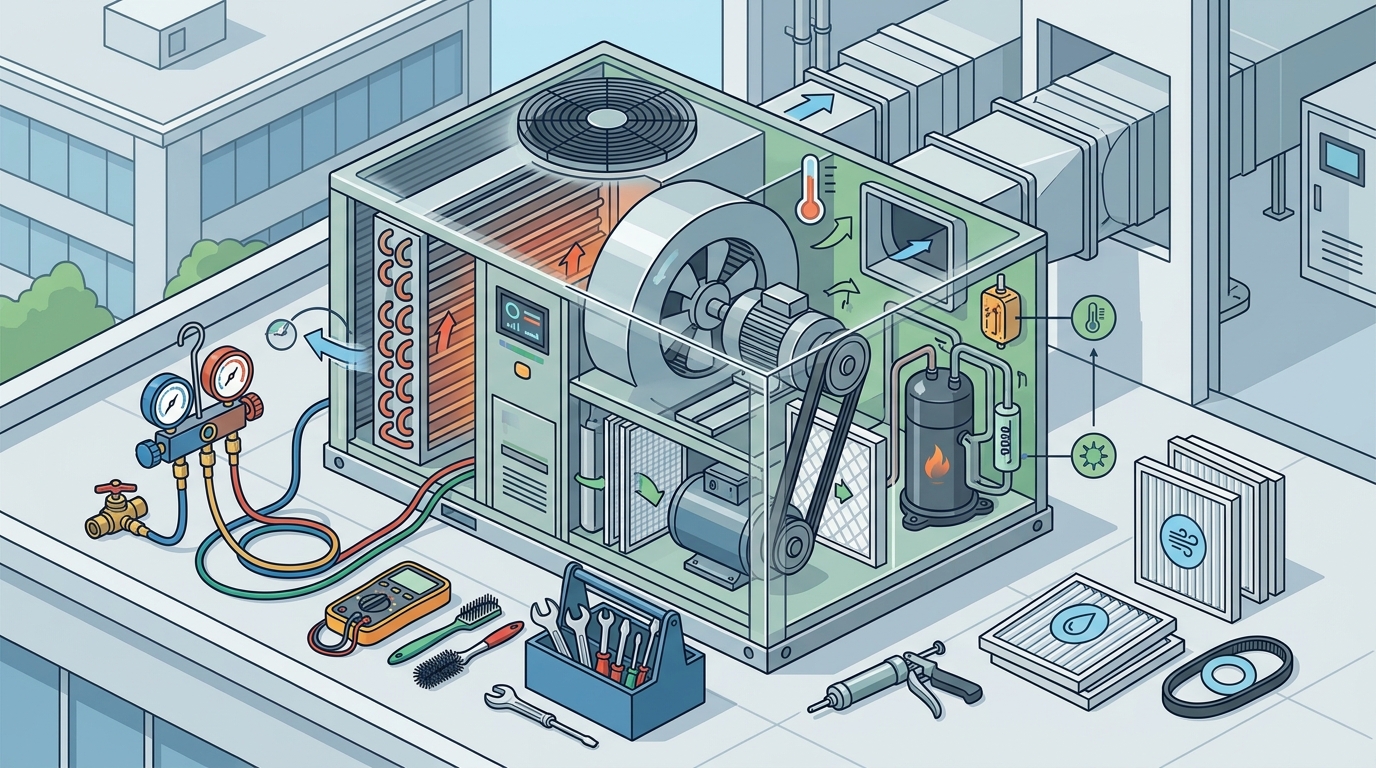
Most commercial HVAC maintenance plans include filter replacement, coil cleaning, refrigerant level checks, belt and motor inspections, thermostat calibration, safety device testing, and overall system performance review. These tasks ensure systems operate closer to design conditions, reducing wasted energy and stabilizing monthly utility costs.
How Often Should Businesses Schedule Maintenance?
Most commercial HVAC systems benefit from at least twice-yearly preventive maintenance, typically in spring and fall. Mission-critical facilities, healthcare spaces, and high-demand environments may require quarterly or monthly service schedules depending on system age and usage intensity.
Key Takeaways
- Regular HVAC maintenance can reduce energy costs by 5 to 20 percent annually, according to the U.S. Department of Energy.
- Preventive maintenance reduces system breakdowns by catching small issues before they become costly emergencies.
- Properly maintained commercial HVAC equipment lasts significantly longer, protecting your capital investment.
- Clean filters, calibrated ventilation, and professional duct cleaning improve indoor air quality and reduce employee sick days.
- Consistent temperatures and humidity levels boost occupant comfort, productivity, and customer satisfaction.
- Proactive maintenance helps businesses stay compliant with ASHRAE standards and evolving refrigerant regulations.
- The cost of a structured maintenance plan is far lower than the combined expense of emergency repairs, energy waste, and premature equipment replacement.
Frequently Asked Questions
How much can businesses save with regular HVAC maintenance?
The U.S. Department of Energy estimates that following operations and maintenance best practices can save organizations 5 to 20 percent annually on energy bills. Additional savings come from fewer emergency repairs and extended equipment life.
What is included in a commercial HVAC maintenance plan?
A comprehensive plan typically includes filter replacement, coil cleaning, refrigerant level checks, belt and motor inspections, thermostat calibration, safety control testing, and a full system performance review.
How often should commercial HVAC systems be serviced?
Most commercial systems should receive preventive maintenance at least twice a year, once before cooling season and once before heating season. High-use or specialized environments may need quarterly service.
Does HVAC maintenance really improve indoor air quality?
Yes. Routine maintenance keeps filters clean, ventilation calibrated, and condensate systems functioning properly. This reduces the circulation of dust, allergens, mold spores, and other contaminants throughout your workspace.
Can regular maintenance extend the life of my HVAC equipment?
Absolutely. Preventive care keeps components operating within proper ranges, reduces stress on motors and compressors, and catches early signs of wear. This approach helps commercial systems reach or exceed their full rated lifespan.
What happens if I skip HVAC maintenance for my business?
Deferred maintenance leads to declining performance, rising energy costs, increased breakdown risk, and accelerated equipment degradation. It can also put your building out of compliance with ventilation and air quality standards.
Are there new refrigerant regulations businesses should know about?
Yes. As of January 2025, R-410A refrigerant is being phased out under the AIM Act in favor of lower-impact alternatives like R-32 and R-454B. Regular maintenance ensures your systems are updated and compliant with these evolving requirements.
How do I choose the right HVAC maintenance provider for my business?
Look for a provider with certified technicians, transparent pricing, a strong local reputation, and experience with commercial systems. Apex Clean Air serves businesses across Utah, Colorado, and Idaho with over 4,000 reviews and a 4.9-star average rating.
Schedule Your Commercial HVAC Maintenance Today
Do not wait for a costly breakdown to take action. Protect your business, your employees, and your bottom line with a proactive HVAC maintenance plan. Apex Clean Air offers expert heating, cooling, and indoor air quality services across Utah, Colorado, and Idaho. Contact us today to schedule your maintenance consultation and learn about our Comfort Club membership for priority scheduling, seasonal tune-ups, and exclusive service discounts.