
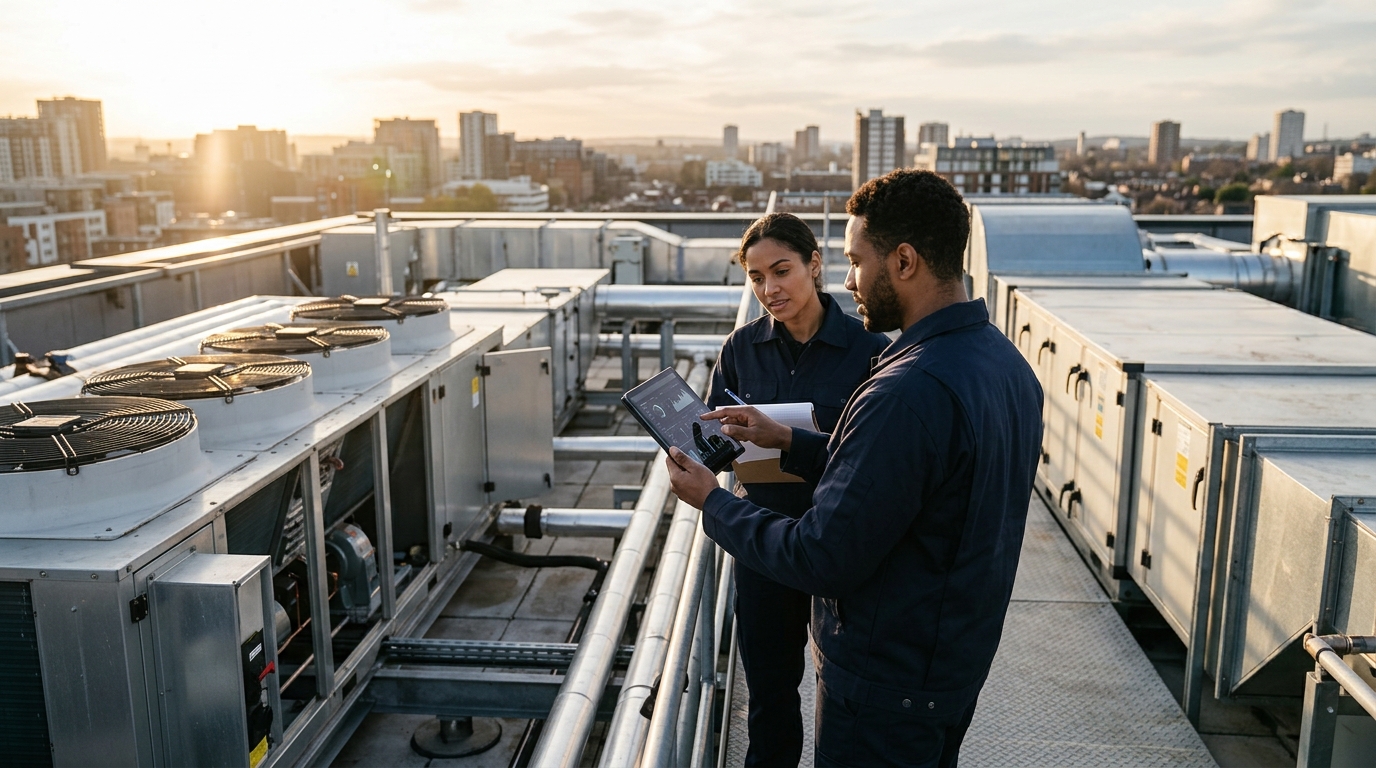
Keeping a commercial HVAC system in peak condition is one of the smartest investments a facility manager can make. HVAC systems account for up to 40% of a commercial building's total energy use, and the U.S. Department of Energy estimates that organizations can save 5 to 20% annually on energy bills simply by following operations and maintenance best practices. Whether you oversee an office tower, a retail complex, or a mixed-use property, a structured maintenance program protects equipment, improves indoor air quality, and prevents costly emergency repairs. This guide walks you through every essential practice, from filter changes to predictive analytics.
Why Preventive HVAC Maintenance Matters
Preventive maintenance is the practice of performing scheduled inspections, cleaning, and component servicing before problems arise. It is the opposite of reactive maintenance, where repairs happen only after a breakdown occurs. According to industry research, running a commercial HVAC system to failure costs 3 to 10 times more than structured preventive maintenance, and every dollar of deferred maintenance becomes roughly $4 in capital renewal costs.
Financial Impact
Facilities that allocate 1 to 2% of their operating budget toward HVAC upkeep typically see significant long-term savings by preventing major breakdowns and optimizing energy consumption. A poorly maintained 20-ton rooftop unit may fail after just nine years, while a well-maintained unit can reach its expected 14-year lifespan or beyond, according to MaintainX data.
Occupant Comfort and Productivity
Consistent temperatures and clean air reduce comfort-related complaints and support employee productivity. Well-maintained systems effectively remove debris and contaminants, contributing to a healthier workplace environment. If your facility needs expert AC maintenance services, scheduling seasonal tune-ups is one of the most effective steps you can take.
Seasonal Maintenance Checklist
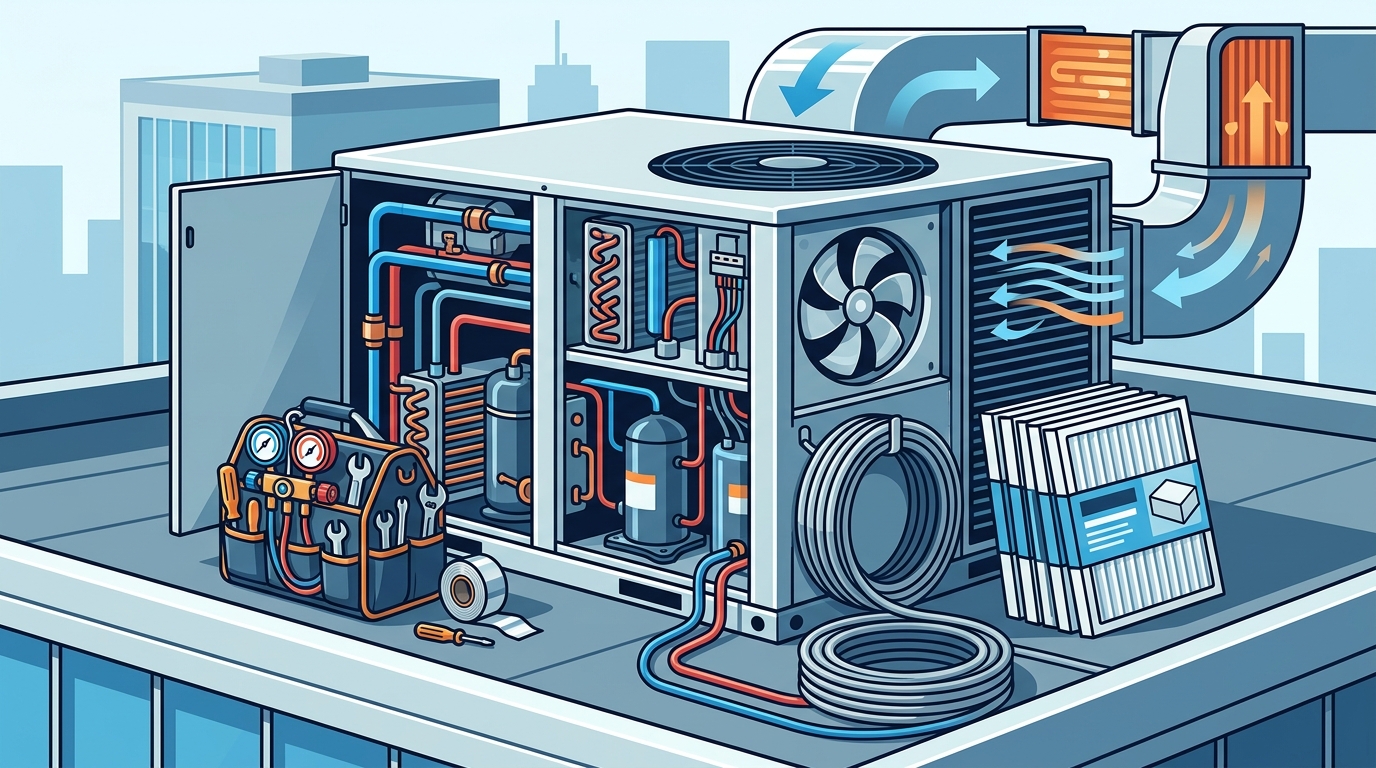
A seasonal maintenance schedule is the backbone of any commercial HVAC program. Seasonal HVAC maintenance is the practice of performing targeted inspections and adjustments aligned with upcoming weather demands. The table below outlines critical tasks by season.
| Season | Key Tasks | Priority Components |
|---|---|---|
| Spring | Test cooling output, clean condenser coils, check refrigerant levels | Compressor, condenser, thermostat |
| Summer | Monitor daily performance, replace filters monthly, inspect drain lines | Evaporator coils, condensate pan, blower |
| Fall | Test heating output, inspect heat exchangers, calibrate thermostats | Furnace, heat pump, gas connections |
| Winter | Monitor heating efficiency, check insulation on pipes, lubricate motors | Ductwork, blower motor, electrical connections |
Before each peak season, schedule comprehensive tune-ups to inspect thermostats, clean components, and test critical parts. This proactive approach reduces the risk of breakdowns during high-demand periods. Apex Clean Air offers professional cooling services and heating services designed to cover exactly these seasonal needs.
Air Filtration and Indoor Air Quality
Air filters are the first line of defense against dust, allergens, and particulate matter circulating through a building. Dirty filters reduce airflow and force the system to work harder, driving up energy consumption. In commercial settings, filters should be replaced every 30 to 90 days depending on occupancy levels and environmental conditions.
Indoor air can be up to five times more polluted than outdoor air, according to EPA estimates. For buildings where occupant health is a priority, pairing regular filter changes with whole-home air purification systems provides an additional layer of protection against volatile organic compounds, bacteria, and mold spores.
Coil Cleaning and Refrigerant Management
Condenser and evaporator coils are integral to heat transfer within any HVAC system. When coils become dirty, the system's ability to regulate temperature decreases, leading to increased energy consumption and potential failure. Annual coil cleaning is recommended for commercial properties at a minimum.
Refrigerant Compliance
Refrigerant management is becoming increasingly important. As of January 1, 2025, R-410A refrigerant is being phased out in favor of lower-GWP alternatives like R-32 and R-454B under the AIM Act. This transition is expected to increase the cost of new HVAC equipment by 10 to 15%, making proactive maintenance of existing systems even more valuable. Ensure your technician checks refrigerant levels and inspects for leaks during every service visit.
Controls, Thermostats, and Building Automation
A building automation system (BAS) is a centralized platform that monitors and controls HVAC, lighting, and other mechanical systems across a facility. Smart thermostats and BAS technology optimize energy usage by adjusting temperatures based on occupancy patterns and time-of-day schedules.
A malfunctioning thermostat can result in energy waste and uncomfortable indoor temperatures. Regularly calibrate thermostats and consider upgrading to programmable or smart models. Apex Clean Air's thermostat repair and smart thermostat upgrade services help commercial and residential clients get better control and energy savings from their existing systems.
Ductwork Inspection and Cleaning
Ductwork is the distribution network that moves conditioned air throughout your building. Over time, ducts collect dust, debris, and even mold that can impede airflow and degrade indoor air quality. Technicians should inspect and clean ductwork regularly, adjusting dampers and vents to balance airflow and eliminate hot and cold spots.
Proper insulation around ducts and refrigerant lines is equally critical. Damaged or degraded insulation leads to heat loss, forcing the system to work harder. Apex Clean Air's professional air duct cleaning services restore healthy airflow and enhance indoor air quality for properties throughout Utah, Colorado, and Idaho.
Choosing the Right HVAC Service Provider
Not all maintenance providers are created equal. When selecting a commercial HVAC partner, evaluate these criteria:
- Certifications and training: Look for NATE-certified or manufacturer-trained technicians.
- Preventive maintenance plans: A quality provider offers customized maintenance agreements with scheduled visits.
- Compliance expertise: Your provider should understand ASHRAE Standard 180, which establishes minimum HVAC inspection and maintenance requirements for commercial buildings.
- Transparent pricing: Avoid providers who cannot give upfront estimates.
- Local presence: A provider with offices near your facility can respond faster to emergencies.
Apex Clean Air operates from offices in Salt Lake City, Denver, Colorado Springs, and Boise, with certified technicians who deliver same-day service and transparent pricing. Learn more on the About Us page.
Key Takeaways
- Preventive HVAC maintenance can save organizations 5 to 20% on annual energy bills.
- Replace air filters every 30 to 90 days in commercial settings to maintain airflow and efficiency.
- Clean condenser and evaporator coils at least once a year to prevent energy waste.
- Monitor refrigerant levels closely, especially as R-410A is phased out under the AIM Act.
- Invest in smart thermostats or building automation to optimize temperature scheduling.
- Schedule professional duct cleaning every 3 to 5 years to protect indoor air quality.
- Choose an HVAC provider familiar with ASHRAE Standard 180 and local code requirements.
Frequently Asked Questions
How often should commercial HVAC systems be professionally inspected?
Most experts recommend at least two professional inspections per year, one before the cooling season and one before the heating season. High-traffic or high-occupancy buildings may benefit from quarterly visits.
What does ASHRAE Standard 180 require?
ASHRAE Standard 180 establishes minimum HVAC inspection and maintenance requirements that preserve a system's ability to achieve acceptable thermal comfort, energy efficiency, and indoor air quality in commercial buildings.
How much can preventive maintenance save on energy costs?
The U.S. Department of Energy estimates savings of 5 to 20% annually on energy bills for organizations that follow operations and maintenance best practices.
When should air filters be replaced in a commercial building?
Air filters should be replaced every 30 to 90 days. Buildings with pets, high foot traffic, or nearby construction may require more frequent changes.
What is happening with R-410A refrigerant?
R-410A is being phased down under the AIM Act in favor of lower-GWP refrigerants like R-32 and R-454B. The cost of new equipment using these refrigerants is expected to rise by 10 to 15%, and repairs for older R-410A systems will become more expensive as supply decreases.
Why is duct cleaning important for commercial buildings?
Ducts accumulate dust, allergens, and mold over time. Professional cleaning restores proper airflow, improves indoor air quality, and helps the HVAC system run more efficiently.
How do smart thermostats help commercial HVAC efficiency?
Smart thermostats optimize energy usage by adjusting temperatures based on occupancy patterns, time of day, and external conditions. They reduce waste from heating or cooling unoccupied spaces.
What areas does Apex Clean Air serve?
Apex Clean Air provides HVAC and indoor air quality services across Utah, Colorado, and Idaho, with offices in Salt Lake City, Denver, Colorado Springs, and Boise.
Schedule Your Commercial HVAC Maintenance Today
Do not wait for a breakdown to disrupt your operations. Contact Apex Clean Air to set up a customized preventive maintenance plan that keeps your commercial HVAC system running efficiently, extends equipment life, and protects indoor air quality for everyone in your building.