
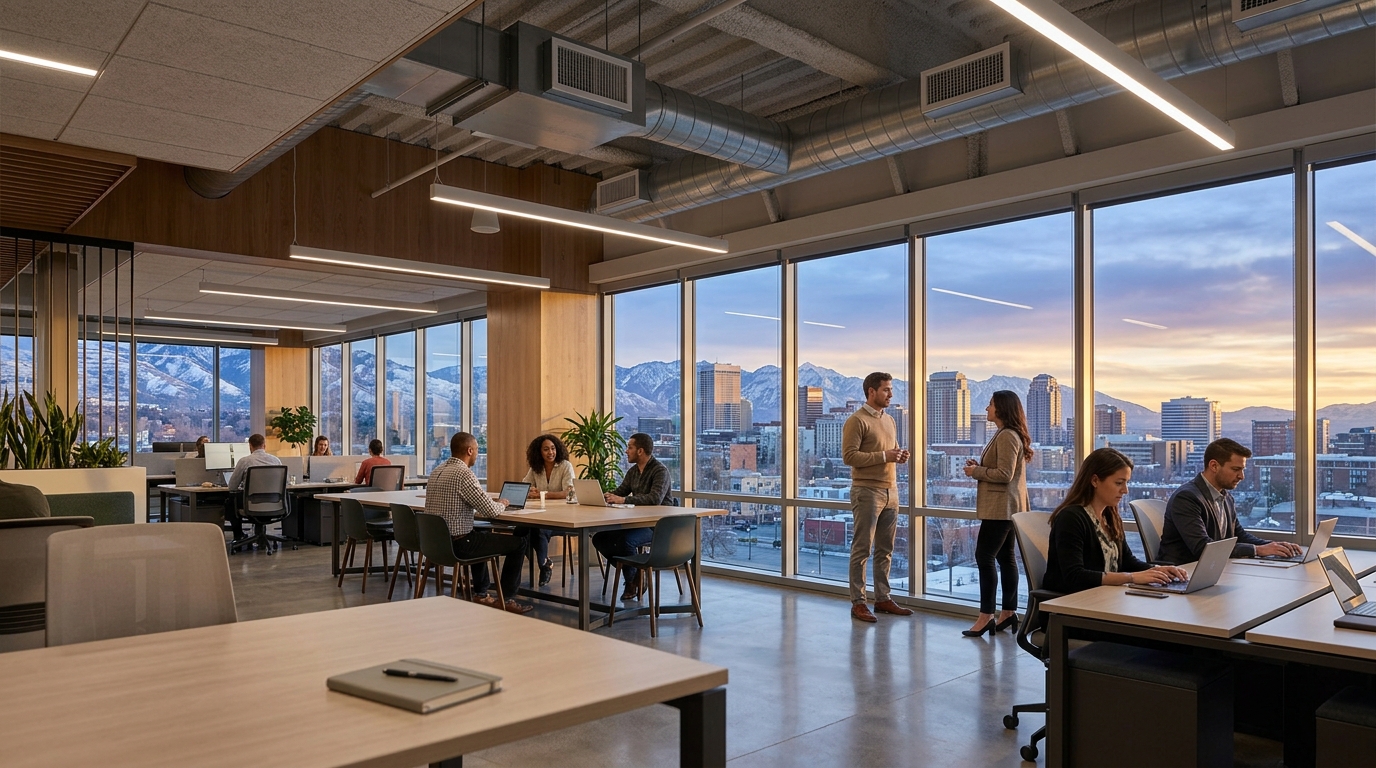
Keeping a commercial space comfortable year-round is about more than adjusting a thermostat. It requires the right combination of heating, cooling, ventilation, and air quality systems working together efficiently. According to the U.S. Department of Energy, heating and cooling accounts for roughly 35% of all building energy consumption, making it the single largest energy end use. For business owners across Utah, Colorado, and Idaho, selecting and maintaining the right HVAC equipment directly impacts operational costs, employee productivity, and customer satisfaction. This guide breaks down the most effective commercial heating and cooling solutions available today.
Why Commercial HVAC Demands a Different Approach
Commercial buildings face challenges residential homes simply do not. Higher occupancy rates, larger square footage, varied zoning needs, and stricter building codes all complicate system selection. The U.S. Energy Information Administration reports that about 32% of energy use in commercial buildings goes to space heating, with ventilation and lighting each adding another 10%.
A rooftop unit that works fine for a small retail shop may be completely inadequate for a multi-story office. That is why professional load calculations, ductwork design, and zoning strategies are essential before any equipment is installed.
Top Heating Solutions for Commercial Buildings
Furnaces and Boilers
A commercial furnace is a forced-air heating system that burns natural gas or propane to generate warmth distributed through ductwork. Boilers, by contrast, heat water and circulate it through radiators or in-floor piping. Both remain popular in cold-climate states like Colorado and Utah, where winter temperatures demand dependable output.
Rooftop Units (RTUs)
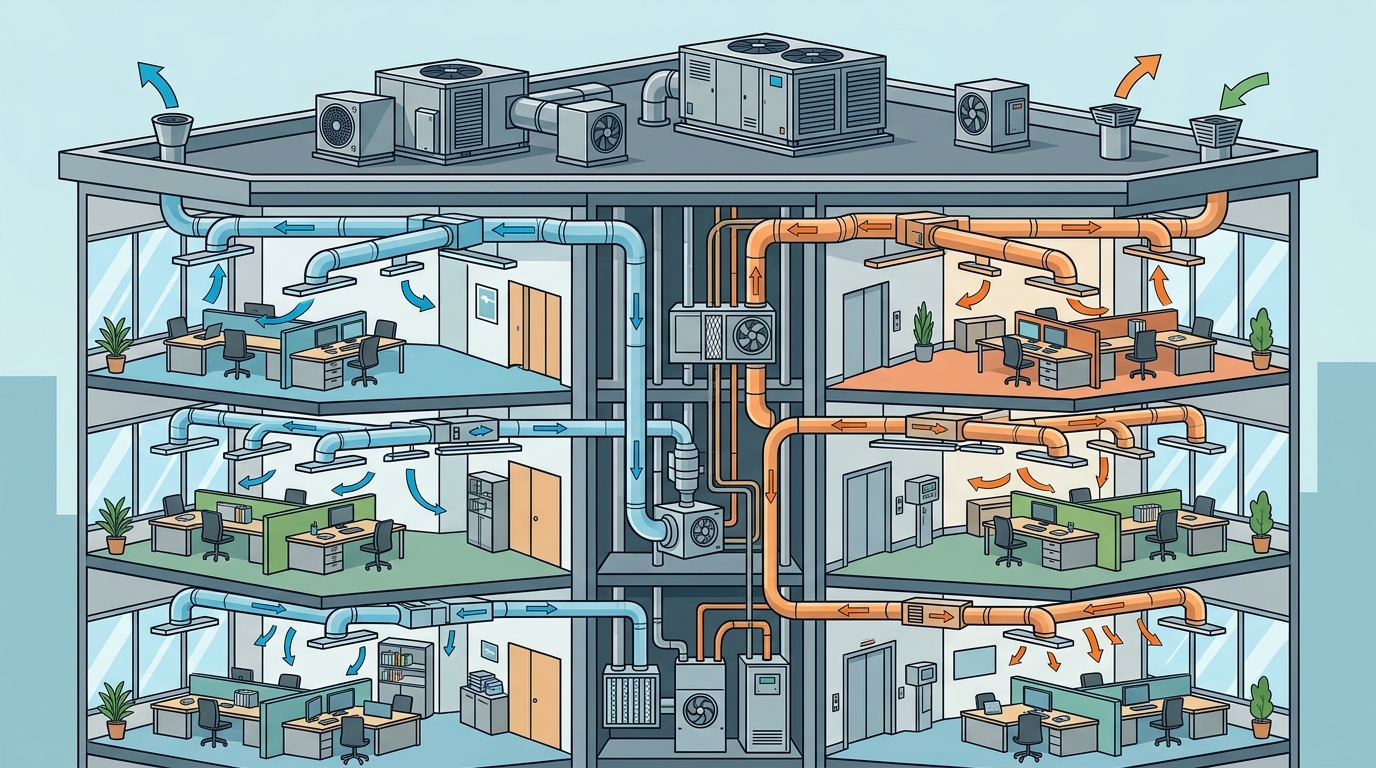
A rooftop unit is a self-contained HVAC package installed on a building's roof, combining heating and cooling in a single cabinet. RTUs are widely used in retail, warehouse, and office applications because they save interior floor space and simplify maintenance access.
Radiant Heating
For warehouses and large open-floor commercial spaces, radiant heating systems deliver warmth directly to people and objects rather than heating the air. This approach reduces energy waste in high-ceiling environments where forced-air systems struggle.
Apex Clean Air provides full-service heating solutions, from professional furnace installations to expert heat pump repairs, ensuring businesses stay warm without overspending on energy.
Cooling Solutions That Deliver Consistent Performance
When summer hits, commercial AC systems must handle heavy loads without interruption. Split systems, packaged units, and variable refrigerant flow (VRF) systems are the most common options.
VRF technology allows multiple indoor units to connect to a single outdoor condenser, offering precise zone-by-zone temperature control. This is ideal for office buildings where different floors or departments have different cooling demands.
For businesses in the Mountain West, Apex Clean Air's cooling services cover everything from fast AC repair to new system installations, with transparent pricing and financing through partners like GoodLeap and mySynchrony.
Heat Pumps: The Dual-Purpose Powerhouse
A heat pump is an energy-efficient HVAC system that transfers heat rather than generating it, providing both heating and cooling from a single unit. In moderate climates, heat pumps can reduce energy consumption by 30% to 50% compared to traditional furnaces and air conditioners, according to the U.S. Department of Energy.
Cold-climate heat pump technology has advanced significantly. Modern units maintain efficient performance even when outdoor temperatures drop well below freezing, making them viable across Colorado, Utah, and Idaho. Apex Clean Air specializes in heat pump installation and repair, helping commercial clients take advantage of available rebates and incentives.
Indoor Air Quality and Its Role in Comfort
Comfort in a commercial space goes beyond temperature. Indoor air quality (IAQ) is the measure of how clean, fresh, and pollutant-free the air inside a building is. Poor IAQ can lead to headaches, fatigue, and decreased productivity among employees.
Strategies to improve commercial IAQ include upgrading to HEPA or MERV-13+ filters, installing UV air purification systems, and scheduling regular professional air duct cleaning. Dirty ducts recirculate dust, allergens, and even mold spores every time the HVAC system runs.
Apex Clean Air offers advanced air purification solutions, including REME Halo systems and HEPA filtration, to help businesses maintain healthier indoor environments.
Preventive Maintenance: Protecting Your Investment
Skipping regular HVAC maintenance is one of the most expensive mistakes a commercial property owner can make. Dust buildup, clogged filters, and minor wear can all escalate into major failures if ignored. Seasonal tune-ups catch small issues before they become costly emergencies.
A solid commercial maintenance plan should include biannual inspections, refrigerant level checks, coil cleaning, and thermostat calibration. Many businesses benefit from a service membership like the Apex Comfort Club, which includes priority scheduling, precision tune-ups, and discounted repairs.
Commercial HVAC System Comparison
| System Type | Best For | Heating | Cooling | Energy Efficiency |
|---|---|---|---|---|
| Rooftop Unit (RTU) | Retail, warehouses | Yes | Yes | Moderate |
| Split System | Small offices, shops | Yes | Yes | Moderate to High |
| VRF / Mini-Split | Multi-zone offices, hotels | Yes | Yes | High |
| Heat Pump | Offices, mixed-use buildings | Yes | Yes | High |
| Boiler + Chiller | Large facilities, hospitals | Yes | Yes | Varies |
| Radiant Heating | Warehouses, garages | Yes | No | High (targeted) |
Key Takeaways
- HVAC systems account for approximately 40% of total energy use in commercial buildings, making equipment selection critical.
- Heat pumps offer dual heating and cooling from a single unit, cutting energy costs significantly in moderate and cold climates.
- Indoor air quality is just as important as temperature for employee comfort and productivity.
- Rooftop units and VRF systems are among the most popular commercial solutions, each suited to different building types.
- Preventive maintenance reduces the risk of emergency breakdowns and extends equipment lifespan by years.
- Professional load calculations and zoning design are essential before installing any commercial HVAC system.
- Rebates and financing options can substantially lower the upfront cost of high-efficiency equipment upgrades.
Frequently Asked Questions
What is the most energy-efficient heating system for a commercial building?
Heat pumps are widely regarded as the most energy-efficient option for commercial heating because they transfer heat rather than generate it. In many cases, they can reduce energy consumption by 30% to 50% compared to traditional gas furnaces.
How often should commercial HVAC systems be serviced?
Most experts recommend servicing commercial HVAC equipment at least twice per year, once before the cooling season and once before the heating season. High-traffic buildings may need quarterly inspections.
What size HVAC system does my commercial building need?
System sizing depends on square footage, ceiling height, insulation quality, occupancy levels, and local climate. A professional load calculation (Manual J or equivalent) is the only reliable way to determine the correct size.
Can heat pumps work in cold climates like Colorado and Utah?
Yes. Modern cold-climate heat pumps are designed to perform efficiently even when temperatures drop well below freezing. They are increasingly popular in Rocky Mountain states.
How does indoor air quality affect commercial building comfort?
Poor IAQ causes headaches, fatigue, and respiratory issues, which lower employee productivity and increase absenteeism. Air filtration, purification, and duct cleaning are proven strategies to improve it.
What is a rooftop unit (RTU)?
An RTU is a packaged HVAC system installed on a commercial building's roof. It combines heating and cooling components in a single cabinet, saving interior space and simplifying maintenance.
How much does a commercial HVAC system cost?
Costs vary widely based on system type, building size, and complexity. Small rooftop units may start around $3,000 to $7,000 installed, while large VRF or chiller systems can run well into six figures. Financing options help spread the investment over time.
What are the benefits of duct cleaning for commercial spaces?
Professional duct cleaning removes accumulated dust, allergens, and debris that restrict airflow and reduce system efficiency. It improves air quality and can lower energy bills by helping HVAC equipment run more effectively.
Get a Free Commercial HVAC Assessment
Whether you manage an office building in Denver, a retail space in Salt Lake City, or a warehouse in Boise, the right HVAC strategy can save thousands in annual energy costs while keeping occupants comfortable. Apex Clean Air's certified technicians serve businesses across Utah, Colorado, and Idaho with expert heating, cooling, and air quality services.
Contact Apex Clean Air today to schedule a free commercial HVAC assessment and discover which solutions fit your building and budget.