
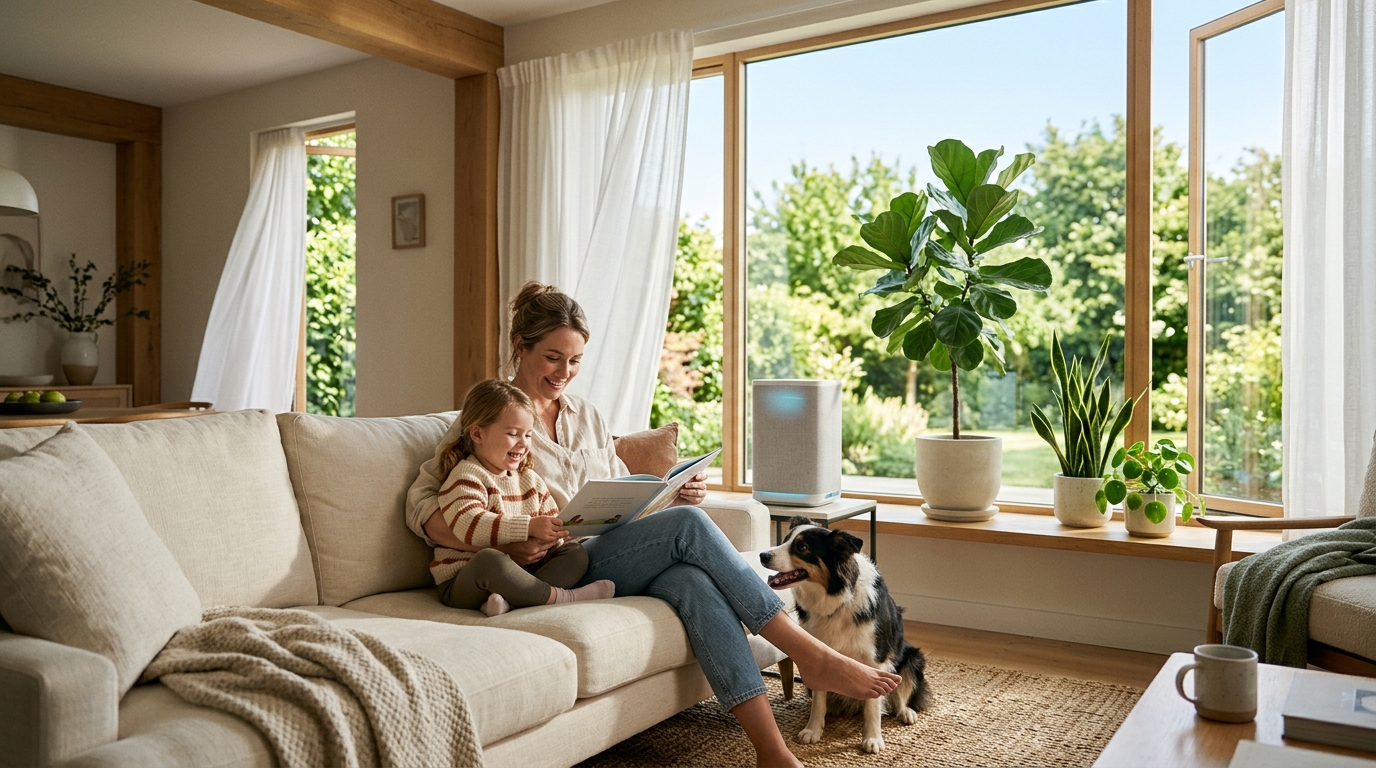
The air inside your home may be far dirtier than you think. According to the U.S. Environmental Protection Agency (EPA), indoor air pollutant levels can be two to five times higher than outdoor concentrations. With the average American spending roughly 90% of their time indoors, that exposure adds up fast. This guide walks you through the most effective ways to improve residential indoor air quality, from simple daily habits to professional-grade solutions that protect your family year-round.
Why Indoor Air Quality Matters
Indoor air quality (IAQ) is the condition of the air inside buildings and homes as it relates to the health and comfort of occupants. Poor IAQ has been linked to headaches, fatigue, respiratory irritation, and long-term conditions such as asthma and cardiovascular disease. The American Lung Association notes that young children, older adults, and people with existing lung disease face the highest risk.
Modern energy-efficient construction traps conditioned air inside, which also means pollutants have nowhere to go. If your home feels stuffy, smells musty, or aggravates allergy symptoms, IAQ is likely the culprit. Addressing it improves health, comfort, and even HVAC system efficiency.
Common Indoor Air Pollutants
Before choosing a solution, it helps to know what you are fighting. Below is a comparison of the most common residential pollutants, their sources, and potential health effects.
| Pollutant | Common Sources | Health Effects |
|---|---|---|
| Dust and dust mites | Carpets, bedding, ductwork | Allergy flare-ups, asthma triggers |
| Pet dander | Cats, dogs, other animals | Respiratory irritation, allergic reactions |
| Mold spores | Damp HVAC components, bathrooms | Infections, chronic respiratory issues |
| Volatile organic compounds (VOCs) | Paints, cleaners, furnishings | Eye/throat irritation, neurological damage |
| Pollen | Doors, windows, HVAC intake | Seasonal allergies, sinus congestion |
| Carbon monoxide | Gas stoves, furnaces, fireplaces | Headaches, dizziness, life-threatening poisoning |
Volatile organic compounds (VOCs) are gases emitted from everyday products like paints, adhesives, and cleaning supplies. They can irritate airways and, with prolonged exposure, pose serious health risks. Identifying which pollutants are present is the first step toward cleaner air, and professional indoor air quality testing can pinpoint exactly what needs attention.
Improve Ventilation Throughout Your Home
Ventilation is the process of exchanging stale indoor air with fresh outdoor air. The EPA identifies it as one of three foundational strategies for better IAQ, alongside source control and air cleaning. Simple actions like opening windows when weather permits, running kitchen and bathroom exhaust fans, and ensuring your HVAC system's outdoor air intake is unobstructed all help dilute indoor pollutants.
Mechanical Ventilation Options
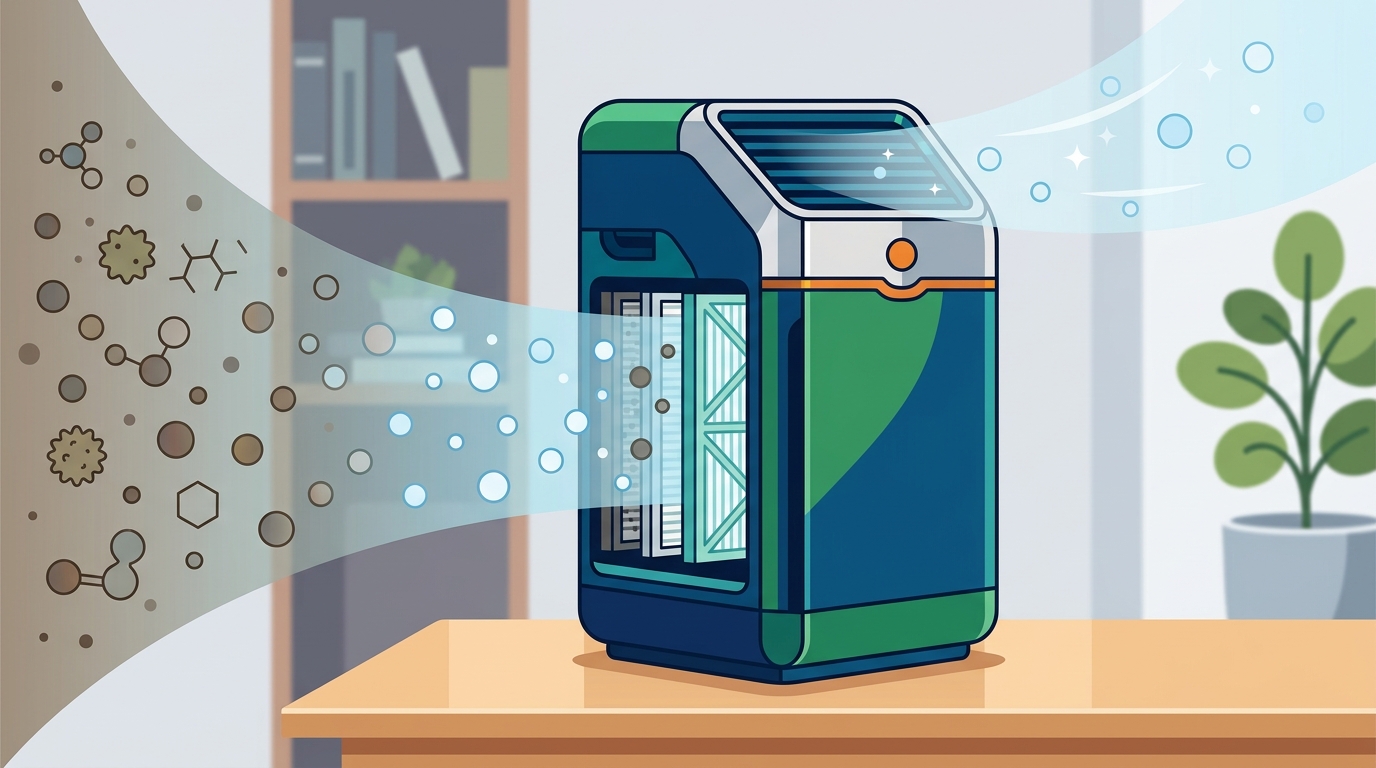
For tightly sealed homes, an Energy Recovery Ventilator (ERV) provides controlled fresh-air exchange without wasting heating or cooling energy. ERVs pull in filtered outdoor air while exhausting stale indoor air, maintaining comfort and efficiency simultaneously.
Humidity Control
Balanced humidity, ideally between 40% and 60%, prevents mold growth on the high end and dry-air irritation on the low end. Whole-home humidifiers and dehumidifiers integrated with your HVAC system keep levels consistent without manual monitoring.
Upgrade Your HVAC Filtration
Your HVAC filter is the first line of defense against airborne particles. Standard filters rated MERV 8 or lower primarily protect equipment, not lungs. Upgrading to a MERV 13 or higher filter captures fine particulate matter including pollen, mold spores, and bacteria.
HEPA-Grade Media Filters
A high-efficiency particulate air (HEPA) filter is a filtration device that captures at least 99.97% of particles 0.3 microns in size. While true HEPA filters require specialized housings, HEPA-grade media filters can be integrated into many residential HVAC systems for near-HEPA performance.
Replacing your filters every 60 to 90 days, or more often if you have pets, is one of the simplest and most cost-effective ways to improve IAQ. Regular AC maintenance ensures filters, coils, and blower components stay clean and efficient.
Schedule Professional Air Duct Cleaning
Your air ducts circulate conditioned air through every room. Over time, they collect dust, pet dander, pollen, and even mold that re-enters your living space each time the system cycles. Professional air duct cleaning removes years of buildup, improving both air quality and HVAC efficiency.
How Often Should You Clean Ducts?
Most homes benefit from duct cleaning every three to five years. Homes with pets, allergy sufferers, or recent renovation work may need more frequent service. Signs that your ducts need attention include visible dust around vents, musty odors, and inconsistent airflow between rooms.
The Efficiency Connection
Research cited by the National Air Duct Cleaners Association (NADCA) suggests that as little as 0.042 inches of dust on a heating or cooling coil can reduce system efficiency by 21%. Clean ducts mean lower energy bills and longer equipment life.
Install a Whole-Home Air Purification System
Portable air purifiers clean one room at a time. A whole-home air purification system integrates directly with your HVAC equipment and treats every cubic foot of air in your house. Technologies include UV germicidal lamps that neutralize bacteria and mold, advanced oxidation systems like the RGF HALO-LED, and high-efficiency media filters for particle removal.
Layering multiple technologies provides comprehensive, multi-stage protection. For example, combining a MERV 13+ filter with a UV light system addresses both particulate matter and biological contaminants. Learn more about your options with Apex Clean Air's air purification services or read the complete guide on whether a whole-home air purifier is right for you.
Daily Habits That Protect Your Air
Technology alone is not enough. Small, consistent habits make a measurable difference in your home's air quality.
- Vacuum twice a week using a vacuum with a HEPA filter to trap fine particles instead of redistributing them.
- Choose low-VOC products for paint, cleaning supplies, and furnishings. Look for the EPA's Safer Choice label.
- Run exhaust fans while cooking and bathing to remove moisture and combustion byproducts at the source.
- Keep indoor humidity in check by fixing leaks promptly and using dehumidifiers in damp spaces like basements.
- Avoid smoking indoors and limit the use of candles and air fresheners, which release fine particles and VOCs.
Key Takeaways
- Indoor air can be two to five times more polluted than outdoor air, making IAQ a top health priority.
- Source control, ventilation, and air cleaning are the EPA's three core strategies for healthier indoor air.
- Upgrading to MERV 13+ filters captures fine particles that standard filters miss.
- Professional duct cleaning every three to five years removes buildup that recirculates allergens and reduces HVAC efficiency.
- Whole-home air purifiers treat every room, outperforming portable units for consistent protection.
- Humidity should stay between 40% and 60% to prevent both mold growth and dry-air irritation.
- Daily habits like vacuuming with HEPA filters and choosing low-VOC products compound over time for cleaner air.
Frequently Asked Questions
How do I know if my home has poor indoor air quality?
Common signs include persistent dust, musty odors, allergy symptoms that worsen indoors, and stuffy or stale-feeling air. A professional indoor air quality test can measure specific pollutant levels and provide clear answers.
What is the most effective way to improve indoor air quality?
The EPA recommends starting with source control, which means eliminating or reducing pollutant sources. From there, improving ventilation and adding air cleaning devices provides layered protection.
How often should I change my HVAC filter?
Most filters should be replaced every 60 to 90 days. Homes with pets, smokers, or allergy sufferers may benefit from monthly replacements. Check your filter regularly and replace it when visibly dirty.
Is air duct cleaning worth it?
Yes. Professional duct cleaning removes accumulated dust, dander, mold spores, and debris that recirculate through your home. It also helps your HVAC system run more efficiently, potentially lowering energy costs.
What is the difference between a portable air purifier and a whole-home system?
A portable air purifier cleans air in a single room. A whole-home system integrates with your HVAC equipment and purifies air throughout the entire house, delivering consistent coverage without multiple standalone devices.
Do UV light systems really work?
UV germicidal lamps installed inside HVAC systems have been proven to kill or deactivate bacteria, mold, and viruses as air passes through. They are most effective when combined with high-efficiency filtration for comprehensive protection.
How much does it cost to improve indoor air quality?
Costs vary widely. Replacing an HVAC filter costs under $30, while whole-home purification systems and professional duct cleaning are larger investments. Many HVAC companies, including Apex Clean Air, offer flexible financing to make upgrades affordable.
Can indoor plants improve air quality?
Certain plants like peace lilies and snake plants can remove small amounts of toxins. However, their impact is limited compared to mechanical filtration and purification systems. Plants are best viewed as a complement, not a replacement, for proper IAQ solutions.
Breathe Easier Starting Today
Your family deserves clean, healthy air at home. Whether you need a professional duct cleaning, a whole-home air purifier, or a complete IAQ assessment, the certified technicians at Apex Clean Air are ready to help. Serving homeowners across Utah, Colorado, and Idaho with same-day availability, transparent pricing, and guaranteed results. Schedule your free indoor air quality consultation today.