

Cooling Solutions for Large Residential Properties: A Complete Guide
Keeping a large home cool during summer is about more than cranking up the thermostat. Properties over 3,000 square feet face unique challenges including uneven temperatures, high energy bills, and oversized or undersized equipment that wastes money. Whether you are building new or upgrading an aging system, choosing the right cooling solution requires careful planning around your home's layout, insulation, and local climate. This guide walks you through the most effective residential cooling technologies available in 2026, what to look for in efficiency ratings, and how professional installation makes all the difference.
Why Large Homes Need Specialized Cooling
A standard single-zone air conditioner may work fine in a 1,500-square-foot home, but it will struggle in a property twice that size. Large homes have more windows, longer duct runs, and multiple floors that create temperature imbalances. Rooms far from the air handler often receive weaker airflow, leaving hot spots throughout the house.
Altitude and climate also play a role. Homeowners across the Intermountain West, from Salt Lake City to Denver and Boise, face intense afternoon sun paired with dry heat that demands reliable, high-capacity cooling. Selecting a system matched to these regional conditions is the first step toward consistent comfort.
Types of Cooling Systems for Large Properties
Central Air Conditioning
A central air conditioning system is a whole-home cooling solution that uses ductwork to distribute conditioned air from a single outdoor condenser and indoor air handler. It remains the most popular choice for large homes with existing duct infrastructure. Modern units rated at 16 SEER2 or higher can reduce cooling energy use by 30 to 40 percent compared to older 10 SEER models, according to industry buying guides.
Heat Pumps
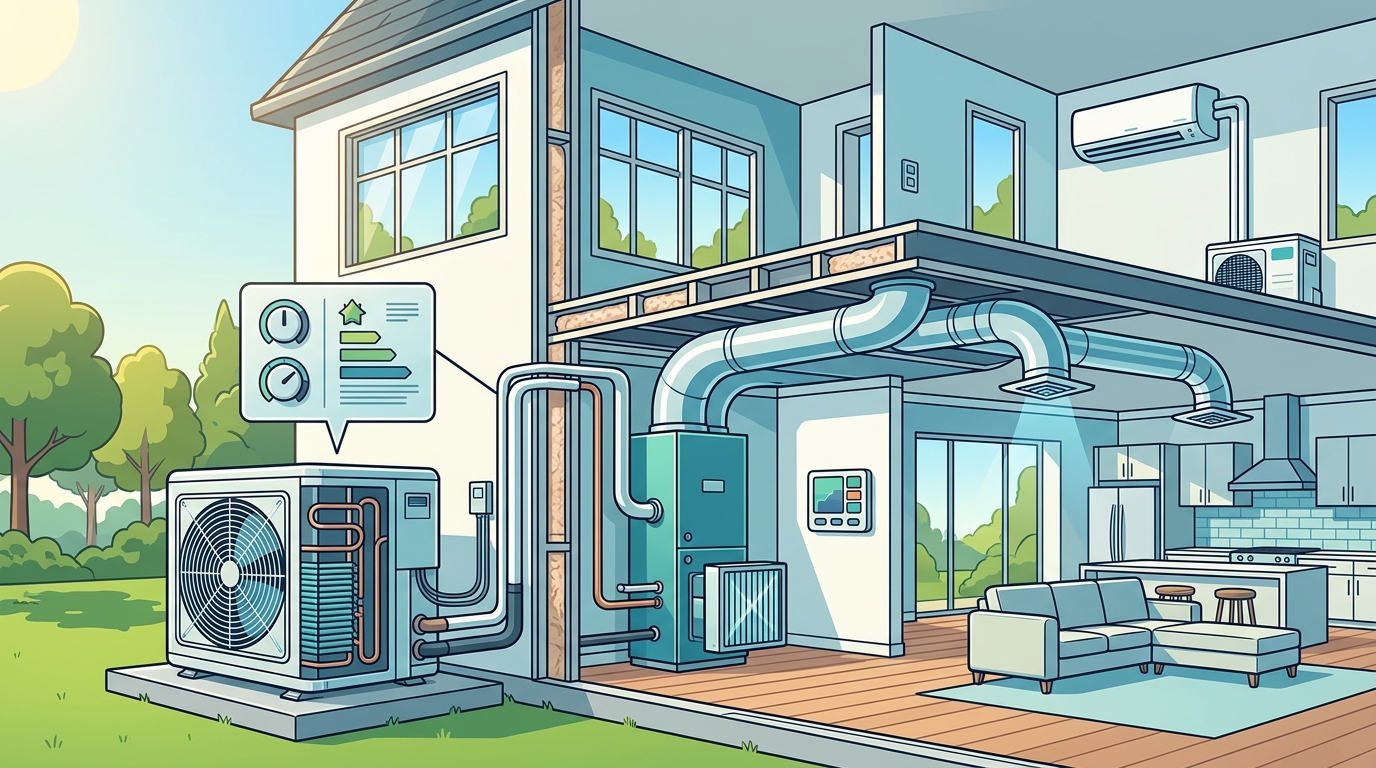
A heat pump is an electrically powered system that transfers heat rather than generating it, providing both heating and cooling from a single unit. Cold-climate models now operate efficiently at temperatures as low as negative 13 degrees Fahrenheit, making them practical even in mountain climates. Apex Clean Air installs advanced heat pumps designed for the climates of Utah, Colorado, and Idaho, and homeowners can see energy savings of up to 30 to 40 percent versus older equipment.
Ductless Mini-Split Systems
A ductless mini-split system is a cooling and heating solution that delivers conditioned air directly to individual rooms without requiring ductwork. These systems are ideal for additions, finished basements, or older large homes where extending ducts is impractical. Multi-zone configurations connect up to five indoor units to a single outdoor compressor, offering quiet, room-by-room control.
| System Type | Best For | Typical Installed Cost (2026) | Efficiency Range |
|---|---|---|---|
| Central AC | Large homes with existing ductwork | $3,500 - $12,500 | 13.4 - 24+ SEER2 |
| Heat Pump (Air-Source) | Year-round heating and cooling | $5,500 - $14,000+ | 14.3 - 22+ SEER2 |
| Ductless Mini-Split | Room additions, homes without ducts | $2,000 - $15,000+ | 15 - 30+ SEER2 |
| Geothermal Heat Pump | Maximum long-term savings | $15,000 - $35,000+ | Up to 400% efficient |
Understanding SEER2 Efficiency Ratings in 2026
Since January 2023, the U.S. Department of Energy has required all new residential cooling equipment to be rated using SEER2 instead of the older SEER metric. SEER2 tests systems under higher external static pressure that more accurately reflects real-world duct conditions, as explained by the U.S. Department of Energy. Federal minimums in the Northern region sit at 13.4 SEER2 for central AC, while heat pumps carry a nationwide minimum of 14.3 SEER2.
For large homes, investing in a unit rated at 16 SEER2 or above is typically worthwhile because the longer cooling cycles in bigger spaces amplify efficiency gains. Systems qualifying for ENERGY STAR certification generally require 15.2 SEER2 or higher for split systems, providing better humidity removal alongside lower utility bills.
Zoned Cooling: Room-by-Room Comfort
Zone control systems divide your home into separate areas, each with independent temperature settings. Bedrooms, living spaces, and rarely used rooms can all be conditioned differently, cutting unnecessary energy use. Zoning works best when designed alongside compatible equipment and a smart thermostat upgrade.
For large properties, zoning solves the perennial problem of the upstairs being five degrees warmer than the main floor. Variable-speed air handlers adjust output to match each zone's demand, maintaining steady temperatures without the constant on-off cycling that drives up bills and wears out components.
Why Proper Sizing Is Critical
System sizing is the single most important factor in cooling performance for large homes. An oversized unit short-cycles, causing premature wear, wasted energy, and poor dehumidification. An undersized unit runs constantly without reaching the set temperature. Professional contractors use a Manual J load calculation, a detailed assessment that analyzes square footage, insulation, window orientation, and local climate, to determine the precise capacity needed.
Apex Clean Air performs thorough Manual J load calculations on every installation project. One industry study found that 32 percent of HVAC installations are improperly sized, underscoring why a professional assessment matters far more than a rule-of-thumb estimate. For large homes, even half a ton of miscalculation leads to noticeable comfort and efficiency losses.
Indoor Air Quality and Cooling Performance
Cooling and air quality go hand in hand. Dirty ductwork, clogged filters, and neglected coils force your system to work harder while circulating allergens and dust throughout the house. Apex Clean Air offers air purification, duct cleaning, and HVAC diagnostics that complement any cooling upgrade.
For large homes, whole-house air filtration and UV purification systems work directly with your HVAC equipment to capture airborne contaminants. Pairing an energy recovery ventilator with your cooling system exchanges stale indoor air for fresh outdoor air without overloading the AC, a particularly smart addition for tightly sealed newer construction.
Key Takeaways
- Large homes need properly sized, high-capacity cooling systems to avoid hot spots and energy waste.
- Heat pumps offer both heating and cooling in one system, saving up to 30 to 40 percent on energy costs versus older equipment.
- SEER2 is the current efficiency standard; aim for 16 SEER2 or higher in large properties for the best return.
- Zoned cooling eliminates uneven temperatures across multiple floors and wings.
- Manual J load calculations are essential; 32 percent of installations are improperly sized without them.
- Indoor air quality upgrades such as duct cleaning and air purification improve both comfort and system efficiency.
- Professional installation by certified technicians protects your investment and ensures code compliance.
Frequently Asked Questions
What is the best cooling system for a house over 3,000 square feet?
A central AC system or ducted heat pump paired with zone controls typically delivers the best performance. The right choice depends on your existing ductwork, insulation levels, and whether you also want a heating solution. A professional cooling services consultation can identify the ideal setup for your property.
How do I know if my AC is the right size for my large home?
Request a Manual J load calculation from a qualified HVAC contractor. This analysis considers your home's square footage, insulation, windows, and climate zone to pinpoint the exact capacity you need. Avoid contractors who size equipment based on square footage alone.
What SEER2 rating should I look for in 2026?
For large homes, 16 to 20 SEER2 offers the best balance of upfront cost and long-term savings. Units at 15.2 SEER2 or above qualify for ENERGY STAR certification. Higher ratings make the most financial sense in regions with long, hot cooling seasons.
Are heat pumps effective in cold climates like Denver or Salt Lake City?
Yes. Modern cold-climate heat pumps are engineered to operate effectively down to approximately negative 13 degrees Fahrenheit. For the coldest days, hybrid dual-fuel systems automatically switch to a backup furnace, ensuring you are never left without heating. Learn more from the heat pump installation guide.
How much does a new cooling system cost for a large home?
A central AC replacement with existing ductwork typically ranges from $3,500 to $12,500. Heat pumps run $5,500 to $14,000 or more depending on capacity. Geothermal systems cost $15,000 to $35,000 but deliver the highest long-term savings. Flexible financing through providers like mySynchrony and GoodLeap can make upgrades more affordable.
What changed with HVAC refrigerants in 2026?
Starting January 2026, all newly manufactured residential HVAC equipment must use low global warming potential refrigerants such as R-32 or R-454B, replacing the older R-410A. Existing systems can still be maintained, but new installations must comply with updated EPA regulations under the AIM Act.
How often should I schedule AC maintenance for a large home?
At minimum, schedule professional maintenance twice per year: once in spring before cooling season and once in fall before heating season. Larger systems with more components benefit from proactive care through a plan like the Apex Comfort Club, which includes scheduled tune-ups and priority service.
Get a Professional Cooling Assessment for Your Home
Every large home is different, and the right cooling solution starts with a thorough evaluation of your property's unique needs. Apex Clean Air's certified technicians serve homeowners across Utah, Colorado, and Idaho with expert installation, honest recommendations, and flexible financing. Contact Apex Clean Air today to schedule a free consultation and find the cooling system that fits your home and your budget.