
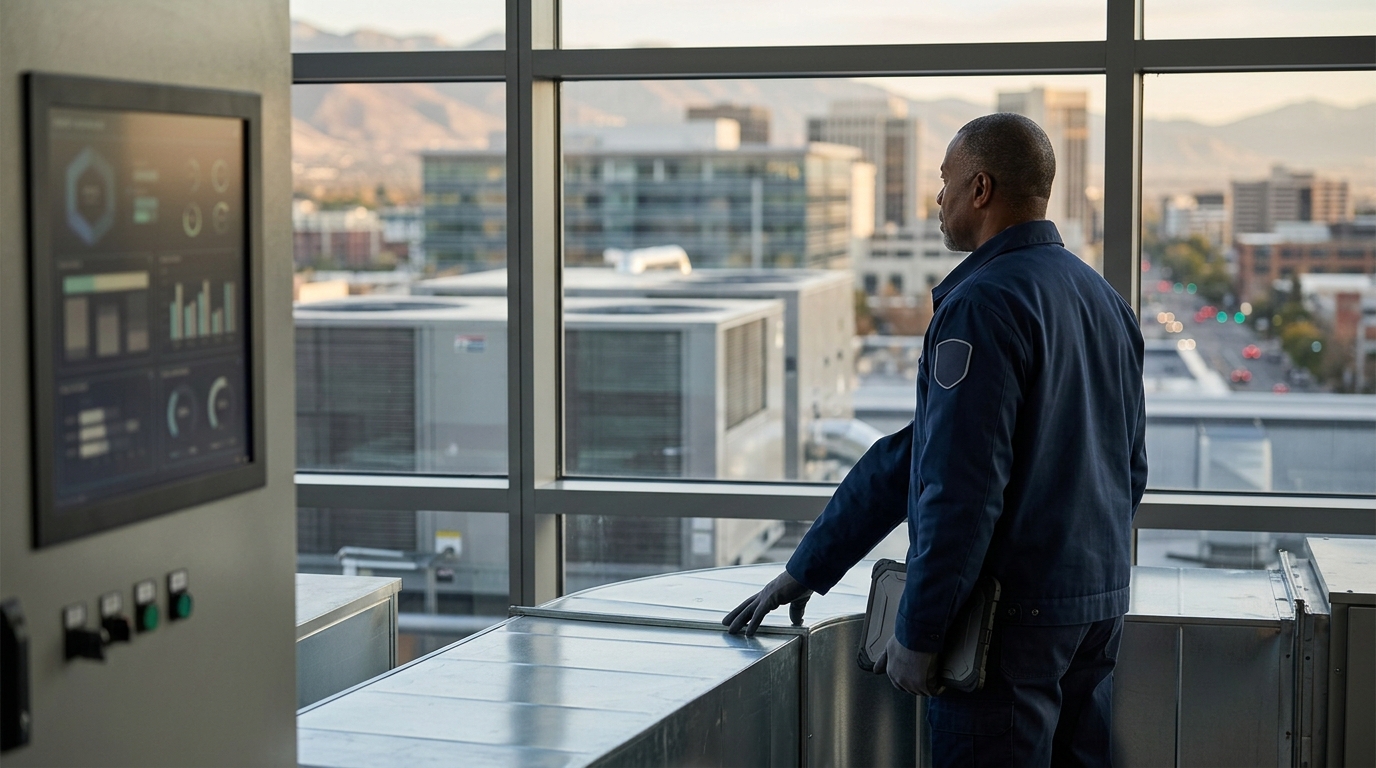
Commercial HVAC Efficiency: 7 Proven Strategies to Cut Costs and Maximize Comfort
Heating and cooling account for up to 50% of a commercial building's total energy consumption, making HVAC optimization the single highest-impact efficiency strategy available to facility managers. Whether you operate an office building in Salt Lake City, a retail space in Denver, or a warehouse in Boise, the way you maintain, upgrade, and monitor your HVAC system directly affects your bottom line, employee productivity, and occupant comfort. This guide breaks down seven actionable strategies that help commercial facility owners reduce energy waste and keep indoor environments comfortable year-round.
Why Commercial HVAC Efficiency Matters
HVAC systems are the largest energy consumer in most commercial buildings. According to the U.S. Department of Energy, buildings consume 75% of the nation's electricity, and HVAC is responsible for roughly 40-50% of that load. An inefficient system does not just raise utility bills; it also creates uncomfortable hot and cold zones, reduces worker concentration, and accelerates equipment wear.
Organizations like ASHRAE publish standards guiding healthy, efficient building temperatures because even small indoor temperature changes can influence productivity and occupant satisfaction. For commercial properties, the stakes are higher than residential settings: a malfunctioning system can lead to immediate revenue loss and reputational damage.
1. Invest in Preventive Maintenance
Preventive maintenance is the practice of scheduling regular inspections, cleaning, and component adjustments before problems escalate into costly breakdowns. This proactive approach extends equipment lifespan and reduces energy consumption.
What a Commercial Maintenance Plan Includes
A thorough plan covers coil cleaning, filter replacement, refrigerant level checks, thermostat calibration, and electrical connection inspections. Apex Clean Air's Colorado Springs team uses the latest technology and proven techniques to increase heating and cooling system performance and reliability.
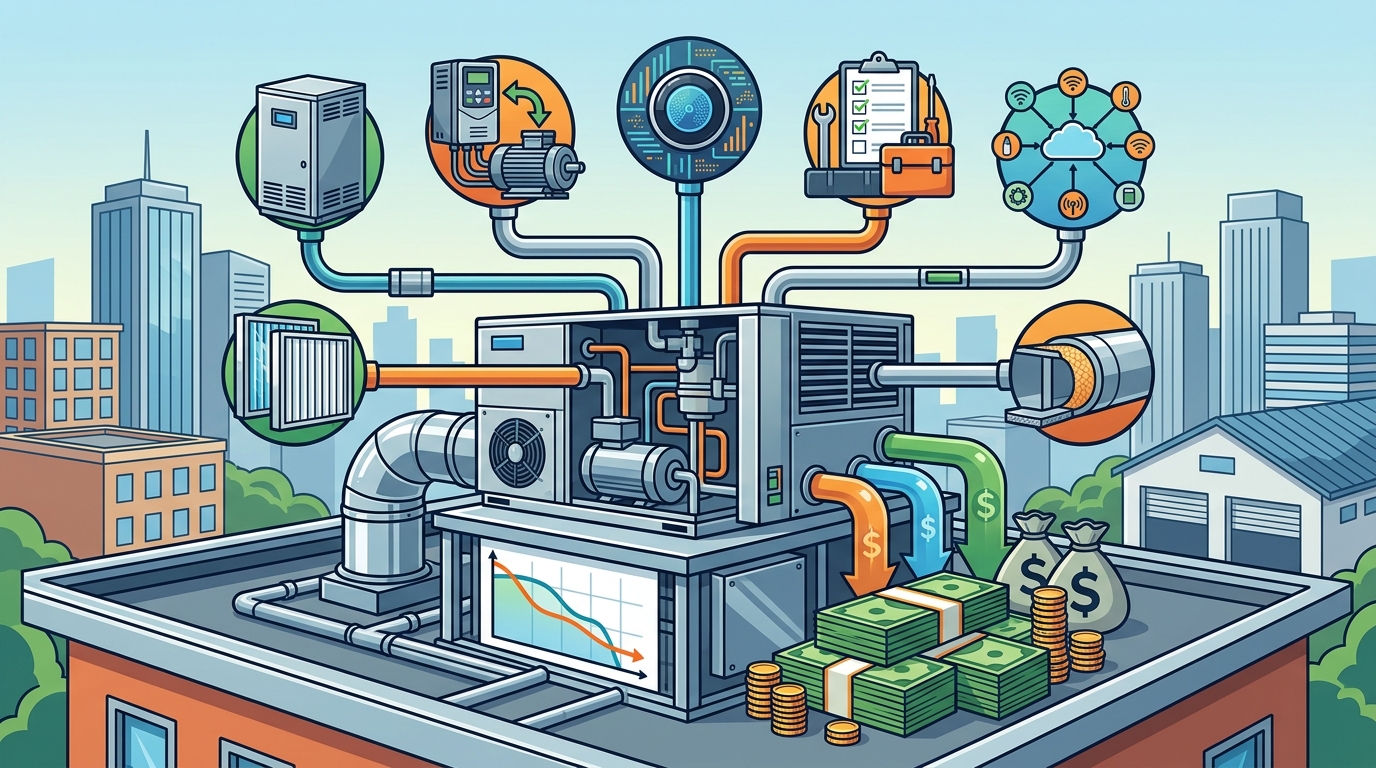
How Often Should You Schedule Service?
Most commercial systems benefit from at least two tune-ups per year, ideally in spring and fall. Facilities in extreme climates like Utah's Wasatch Front or Colorado's Front Range may need quarterly visits to keep systems running at peak efficiency.
2. Keep Ductwork Clean for Optimal Airflow
Dirty ductwork forces HVAC equipment to work harder, increasing energy bills and the chance of system breakdown. Dust and grime restrict airflow, putting strain on fans and compressors. Professional air duct cleaning restores healthy airflow and enhances indoor air quality.
For commercial facilities, contaminants accumulate faster due to higher foot traffic, larger duct networks, and continuous system operation. A thorough duct cleaning not only improves the air occupants breathe but also helps heating and cooling equipment work more efficiently.
3. Upgrade to High-Efficiency Equipment
SEER2 is the updated efficiency metric for air conditioners and heat pumps, replacing the older SEER standard with a more realistic test that accounts for real-world ductwork resistance and filter restrictions. As of January 2025, commercial three-phase HVAC equipment must meet updated minimum efficiency ratings using the SEER2 and EER2 test procedures.
| Technology | Typical Energy Savings | Payback Period |
|---|---|---|
| Variable Frequency Drives (VFDs) | 30-50% on fans/pumps | 1.5-3 years |
| High-AFUE Condensing Furnaces (95%+) | 10-20% vs. standard furnace | 3-5 years |
| Heat Pumps (ENERGY STAR rated) | Up to 40% vs. electric resistance | 4-7 years |
| Smart Controls / BMS Integration | 10-20% HVAC energy reduction | 1.5-4 years |
| LED Lighting + Reduced Heat Load | Indirect HVAC savings 5-10% | 1-2 years |
A heat pump is a versatile system that provides both heating and cooling by transferring thermal energy rather than generating it, making it one of the most energy-efficient options for commercial facilities. Apex Clean Air offers full-service heat pump solutions from professional installations to expert repairs across Utah, Colorado, and Idaho.
4. Leverage Smart Controls and Building Automation
Building automation systems (BAS) integrate HVAC, lighting, and energy management into a centralized control platform. Smart thermostats, occupancy sensors, and BMS integration can create dynamic zoning and automated setback schedules that deliver measurable savings.
Field reports consistently show 10-15% HVAC energy savings through remote commissioning and fault detection tools. For multi-zone commercial spaces, VRF (variable refrigerant flow) systems allow precise temperature control for different areas within the same building, reducing waste from conditioning unoccupied zones.
5. Prioritize Indoor Air Quality
Indoor air quality (IAQ) is the measure of how clean, fresh, and healthy the air is inside a building. Poor IAQ does not just affect health; it drives up HVAC operating costs when filters clog faster and systems compensate for pollutant loads.
Apex Clean Air installs advanced air purifiers designed to eliminate contaminants at the source, including HEPA filters, UV purification, and systems like the RGF HALO-LED. Pairing air purification with regular duct cleaning gives purifiers a clean baseline and allows them to focus on day-to-day contaminants such as pollen, VOCs, and bacteria.
6. Use Professional HVAC Diagnostics
HVAC diagnostics is the process of using advanced testing tools and techniques to pinpoint system inefficiencies, component failures, and hidden issues before they become costly emergencies. Diagnostic services identify problems like refrigerant leaks, airflow imbalances, and electrical faults that waste energy silently.
Apex Clean Air provides advanced HVAC diagnostic services that pinpoint issues before they become costly. From detecting mold and leaks to uncovering inefficiencies contributing to poor air quality, diagnostics give facility managers the data they need to make smart repair-versus-replace decisions.
7. Choose the Right HVAC Partner
Working with a qualified, local HVAC company offers distinct advantages for commercial facilities. A partner with deep understanding of your region's climate challenges can recommend solutions best suited to your building's needs.
Apex Clean Air serves commercial and residential clients across Utah, Colorado, and Idaho with offices in Salt Lake City, Denver, Colorado Springs, and Boise. Their certified technicians deliver same-day service, transparent pricing, and a satisfaction guarantee. With over 4,000 reviews and a 4.9-star average rating, they have earned a trusted reputation across the Intermountain West.
Key Takeaways
- HVAC systems consume 40-50% of commercial building energy, making efficiency upgrades the highest-impact cost reduction strategy.
- Preventive maintenance at least twice per year prevents breakdowns and extends equipment lifespan.
- Clean ductwork improves airflow and reduces system strain, lowering energy bills.
- Upgrading to SEER2-rated, ENERGY STAR equipment ensures compliance with current federal efficiency standards.
- Smart controls and building automation deliver 10-20% energy savings with payback periods of 1.5-4 years.
- Pairing air purification with duct cleaning creates the healthiest indoor environment and reduces HVAC workload.
- Professional diagnostics catch hidden inefficiencies before they escalate into expensive repairs.
Frequently Asked Questions
How often should commercial HVAC systems be serviced?
Most commercial systems should receive professional maintenance at least twice per year. Facilities in harsh climates or with heavy usage may benefit from quarterly service visits to maintain peak performance.
What is SEER2 and why does it matter for commercial HVAC?
SEER2 is the updated efficiency rating for air conditioners and heat pumps. It uses a more realistic test procedure that reflects real-world conditions including ductwork resistance. Higher SEER2 numbers mean better energy efficiency and lower operating costs.
How much can duct cleaning improve HVAC efficiency?
While savings vary by system condition, removing dust and debris from ductwork reduces airflow restrictions and allows equipment to run shorter cycles, using less energy. Clean ducts also extend the lifespan of HVAC components.
Are heat pumps a good option for commercial buildings?
Yes. Modern heat pumps with ENERGY STAR ratings offer high efficiency for both heating and cooling. They are especially effective in climates like those found in Utah, Colorado, and Idaho where seasonal temperature swings are significant.
What are the signs that a commercial HVAC system needs repair?
Warning signs include weak airflow, inconsistent temperatures between zones, unusual noises, musty odors, water leaks, and unexpectedly high utility bills. If you notice any of these, schedule a professional diagnostic assessment promptly.
How do smart thermostats reduce commercial energy costs?
Smart thermostats and occupancy sensors create automated schedules and dynamic zoning, ensuring HVAC systems only condition occupied spaces. This targeted approach typically delivers 10-15% energy savings compared to fixed-schedule systems.
What indoor air quality solutions work best for commercial facilities?
A layered approach combining professional duct cleaning, whole-building air purification (such as UV or HEPA systems), and proper ventilation delivers the best results. This strategy reduces allergens, VOCs, and biological contaminants while easing the load on HVAC equipment.
Does Apex Clean Air serve commercial clients?
Yes. Apex Clean Air provides heating, cooling, air duct cleaning, air purification, and HVAC diagnostic services for both residential and commercial environments across Utah, Colorado, and Idaho.
Ready to Improve Your Commercial HVAC Efficiency?
Stop overpaying for energy and start enjoying a more comfortable, healthier facility. Contact Apex Clean Air today to schedule a commercial HVAC diagnostic or maintenance visit. With same-day service, transparent pricing, and a satisfaction guarantee, your building's comfort is in expert hands.