
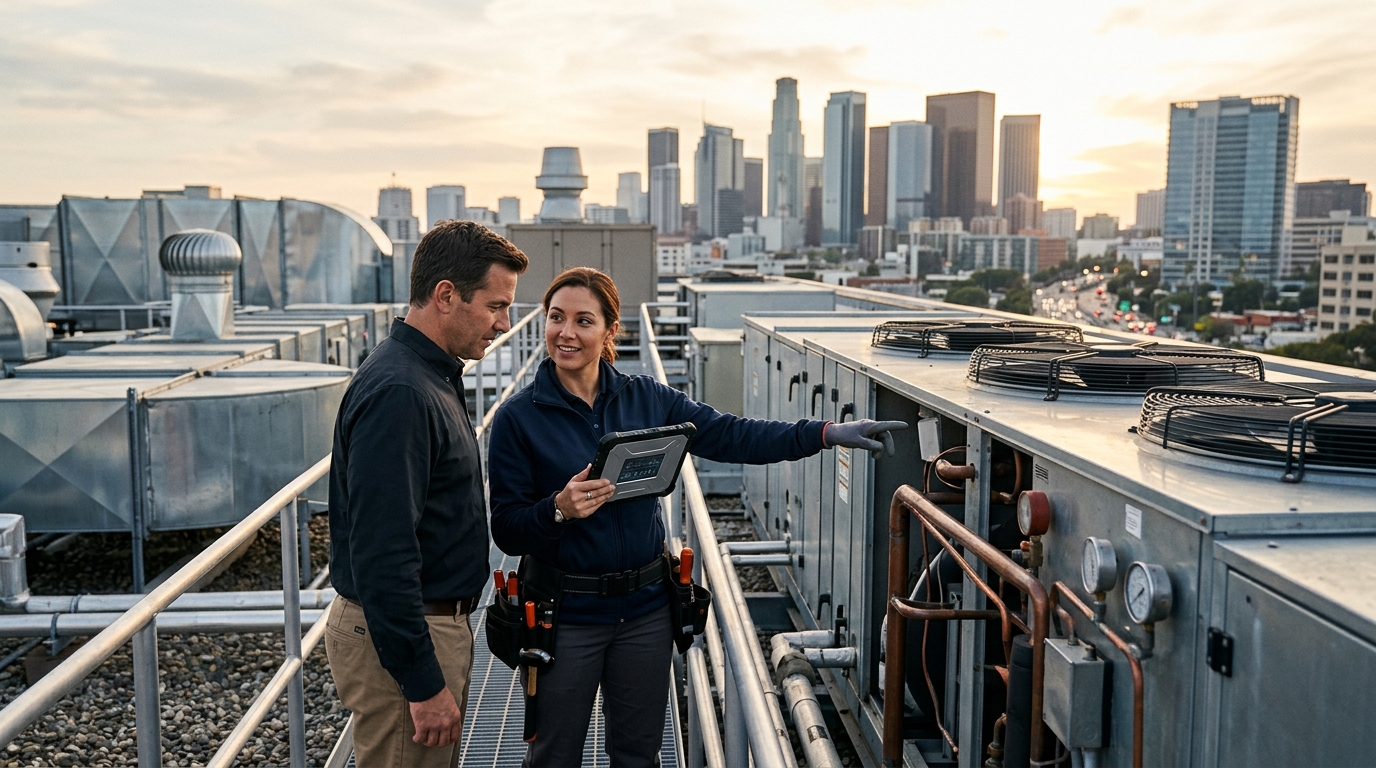
Keeping a large commercial building comfortable and energy-efficient starts with a disciplined HVAC maintenance program. HVAC systems in commercial settings account for up to 40% of total energy consumption, according to the U.S. Department of Energy. Yet only about 30% of facility managers schedule preventive maintenance consistently. The result is avoidable breakdowns, skyrocketing utility bills, and shortened equipment life. This guide walks you through the proven best practices that protect your investment, reduce costs, and keep occupants healthy year-round.
Why Preventive Maintenance Matters
Preventive HVAC maintenance is the practice of performing scheduled inspections, cleaning, and servicing before problems occur. Organizations that follow operations and maintenance best practices can save 5 to 20% annually on energy bills, according to DOE research. Running a commercial HVAC system to failure, by contrast, costs 3 to 10 times more than a structured preventive program.
A poorly maintained 20-ton rooftop AC unit typically fails after just nine years, while a well-maintained unit can reach its expected 14-year lifespan or beyond. The financial case is clear: every dollar of deferred maintenance becomes roughly four dollars in capital renewal costs. Proactive care also keeps tenants comfortable, reduces complaint calls, and supports regulatory compliance with standards like ASHRAE Standard 180.
Essential Commercial HVAC Maintenance Checklist
A comprehensive checklist ensures nothing gets overlooked. Below is a comparison of tasks organized by frequency, reflecting industry best practices and ASHRAE 180 guidelines.
| Frequency | Task | Why It Matters |
|---|---|---|
| Monthly | Inspect and replace air filters | Dirty filters restrict airflow and force the system to consume more energy |
| Monthly | Monitor for unusual sounds, vibrations, or odors | Early detection prevents cascading failures |
| Quarterly | Check thermostat calibration and settings | Miscalibrated thermostats waste energy and reduce comfort |
| Quarterly | Tighten electrical connections | Loose wiring causes safety hazards and system shutdowns |
| Biannually | Clean evaporator and condenser coils | Dirty coils reduce heat transfer and raise operating costs |
| Biannually | Check and adjust refrigerant levels | Incorrect levels strain the compressor and cut efficiency |
| Annually | Lubricate motors, fans, and bearings | Friction accelerates wear and increases energy use |
| Annually | Inspect ductwork and insulation | Leaks and degraded insulation cause significant energy loss |
Partnering with certified technicians ensures each item is addressed with precision. At Apex Clean Air, our team delivers thorough AC maintenance services that follow this type of structured approach.
Seasonal Tune-Ups and Scheduling
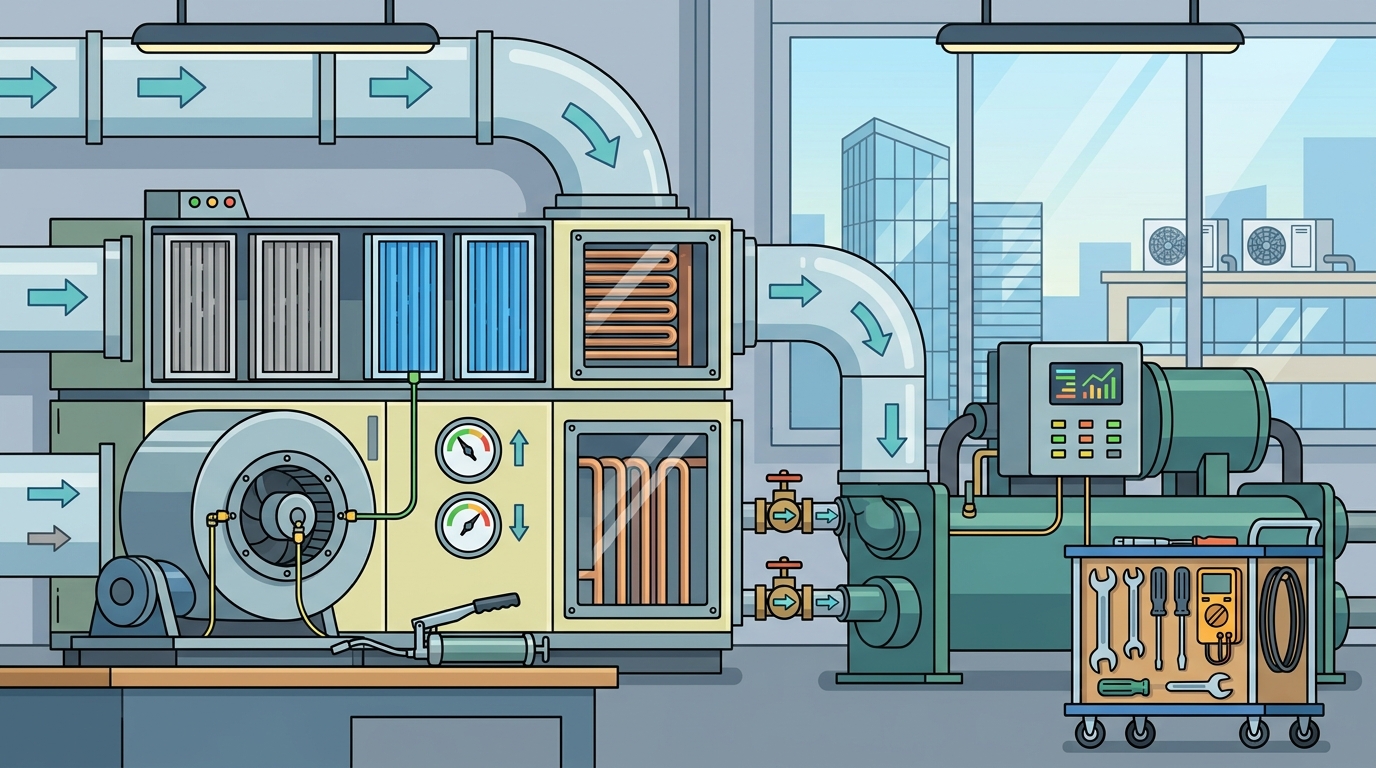
A seasonal tune-up is a focused inspection performed before peak heating or cooling demand. Spring tune-ups prepare the cooling system for summer, while fall tune-ups ready the heating system for winter. This timing reduces the risk of breakdowns during high-demand periods when repair crews are busiest.
Spring Cooling Prep
Before temperatures climb, technicians should clean condenser coils, verify refrigerant charge, test capacitors and contactors, and calibrate thermostats. Addressing these items in advance prevents mid-summer emergency calls. Learn more about seasonal HVAC maintenance benefits and how they protect your system.
Fall Heating Prep
Heading into winter, the focus shifts to furnace components, heat exchangers, ignition systems, and gas pressure. In Rocky Mountain climates served by Apex Clean Air, dependable heat is not optional. Our heating services cover everything from furnace tune-ups to heat pump inspections.
Protecting Indoor Air Quality
Indoor air quality (IAQ) is the measure of how clean and healthy the air inside a building is relative to the comfort and wellbeing of its occupants. Poor IAQ in commercial spaces leads to increased sick days, lower productivity, and potential liability. Indoor air can be up to five times more polluted than outdoor air when HVAC systems are not properly maintained.
Duct cleaning is one of the most impactful IAQ strategies. Over time, ducts collect dust, allergens, mold spores, and other contaminants that recirculate every time the system runs. Professional air duct cleaning services remove years of buildup, improving airflow and reducing allergen exposure. For deeper protection, whole-home air purification systems such as HEPA filters and UV technologies neutralize airborne pathogens at the source.
Smart Controls and Building Automation
A building automation system (BAS) is a centralized network that monitors and controls HVAC, lighting, and other building systems for optimal performance. Smart thermostats and BAS platforms optimize temperature settings based on occupancy, time of day, and weather forecasts, reducing wasted energy without sacrificing comfort.
Upgrading to smart controls is especially valuable in large commercial buildings where zone-by-zone management can eliminate hot and cold spots. Apex Clean Air offers thermostat repair and smart thermostat upgrades that give facility managers greater control over energy consumption. Over 60% of commercial buildings are now implementing IoT-enabled predictive HVAC maintenance, a trend that continues to accelerate.
Refrigerant Regulations and Compliance
Facility managers should be aware of significant regulatory shifts. As of January 1, 2025, R-410A refrigerant is being phased out in favor of lower-GWP alternatives like R-32 and R-454B. This transition is driven by the AIM Act in the U.S., which targets an 85% reduction in HFC production by 2036. As a result, new HVAC equipment costs are expected to increase 10 to 15%, and repairs on older R-410A systems will grow more expensive as supply tightens.
Staying compliant means scheduling regular refrigerant level checks, documenting all service activities, and planning equipment upgrades proactively. Your HVAC partner should be well-versed in current codes. ASHRAE Standard 180 sets the minimum requirements for inspection and maintenance programs in commercial buildings, and many local jurisdictions adopt or reference it in their codes.
Key Takeaways
- Preventive HVAC maintenance can save 5 to 20% annually on energy costs compared to reactive approaches.
- Replace air filters monthly and clean coils at least twice per year to maintain peak efficiency.
- Schedule seasonal tune-ups before summer and winter to prevent breakdowns during peak demand.
- Clean ductwork every 3 to 5 years to protect indoor air quality and system performance.
- Upgrade to smart thermostats or building automation systems for zone-level energy optimization.
- Budget 1 to 2% of your building's operating costs for HVAC maintenance to avoid compounding repair expenses.
- Plan for the R-410A phase-out by evaluating equipment age and scheduling proactive replacements.
Frequently Asked Questions
How often should commercial HVAC systems be professionally inspected?
Most experts recommend at least two professional inspections per year, one before the cooling season and one before the heating season. This biannual schedule aligns with ASHRAE Standard 180 recommendations and helps catch issues before they escalate into expensive repairs.
What is the biggest benefit of preventive HVAC maintenance?
The biggest benefit is cost avoidance. Running a system to failure costs 3 to 10 times more than structured preventive care. Regular maintenance also extends equipment life, improves energy efficiency, and maintains indoor air quality.
How long should a commercial HVAC system last?
A well-maintained commercial rooftop unit typically lasts around 14 years. Without proper maintenance, that lifespan can drop to as low as 9 years. Regular inspections, filter changes, and coil cleaning are the primary factors that extend equipment longevity.
How much should a business budget for HVAC maintenance?
Industry guidance suggests setting aside 1 to 2% of a building's total operating budget for HVAC maintenance. This investment helps prevent major breakdowns and optimizes long-term energy consumption.
What are the signs that a commercial HVAC system needs immediate attention?
Watch for inconsistent temperatures across zones, sudden spikes in energy bills, unusual noises like banging or hissing, and visible dust or debris around vents. These symptoms often signal clogged filters, refrigerant leaks, or failing components that need prompt repair.
Why is air duct cleaning important for commercial buildings?
Ducts accumulate dust, allergens, mold spores, and debris over time. When the HVAC system runs, these contaminants circulate throughout the building, degrading air quality and forcing the system to work harder. Professional duct cleaning restores airflow and reduces health risks for occupants.
What refrigerant changes should facility managers know about?
R-410A is being phased down under the AIM Act, with R-32 and R-454B replacing it in new equipment. Existing systems can still be serviced, but refrigerant costs are rising. Facility managers should evaluate the age of their equipment and plan ahead for transitions.
Can smart thermostats really reduce commercial energy bills?
Yes. Smart thermostats and building automation systems adjust temperature based on occupancy and scheduling, eliminating waste from heating or cooling unoccupied zones. Many facilities see meaningful energy savings after upgrading to intelligent controls.
Get Professional HVAC Support
Whether you need a seasonal tune-up, a full system inspection, or help planning for refrigerant compliance, Apex Clean Air's certified technicians are ready to help. With offices in Salt Lake City, Denver, Colorado Springs, and Boise, expert service is always close by. Contact Apex Clean Air today to schedule your commercial HVAC maintenance consultation and keep your building running at peak performance.