
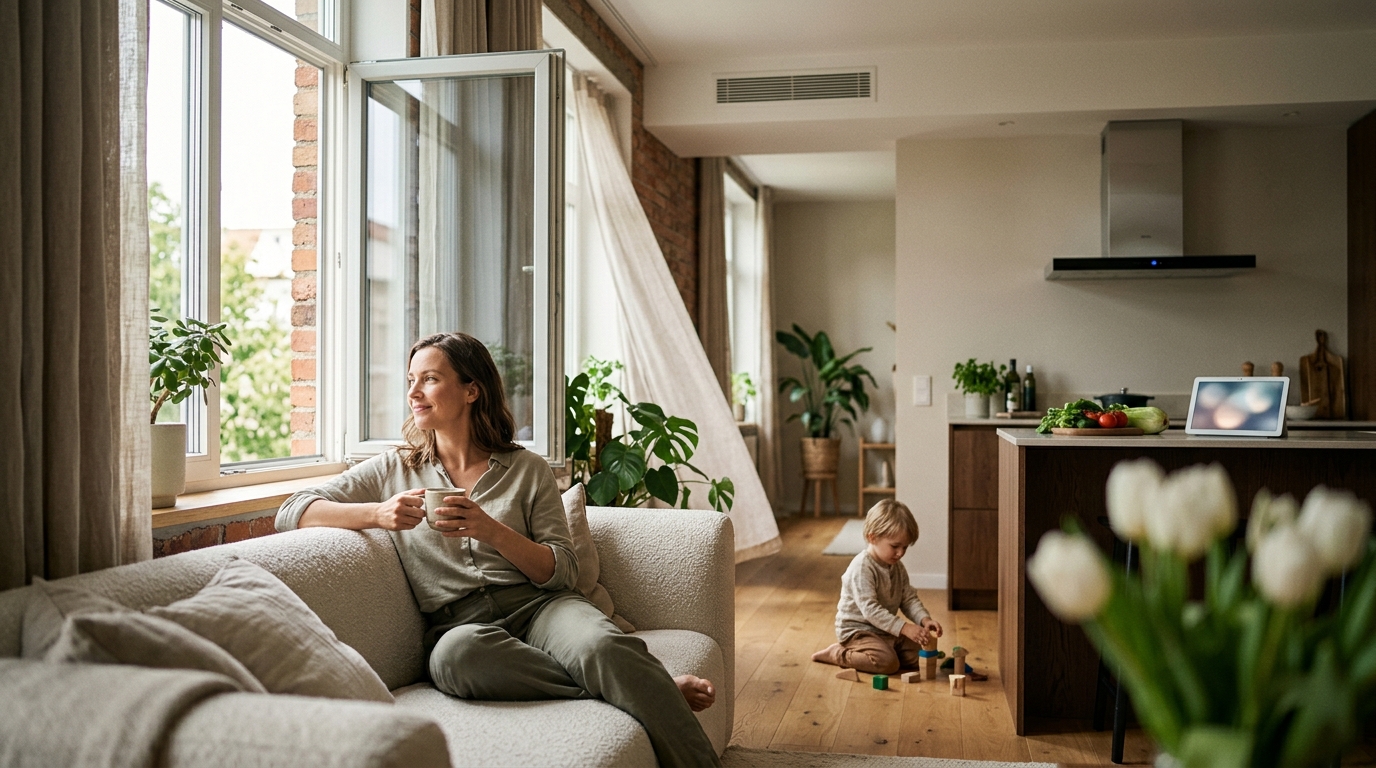
Recurring wheezing, nighttime coughing, and stubborn sinus congestion often have one thing in common — the air inside your home. Rather than debating whether ventilation might help, this tutorial walks you through every room in the house with specific upgrades, measurements, and maintenance tasks that are backed by peer-reviewed research.
The Evidence at a Glance
Before picking up a single tool, it helps to understand what science actually tells us about ventilation and respiratory outcomes.
- Ventilation rates matter. A Lawrence Berkeley National Laboratory review of 20 peer-reviewed studies found that improvements in health with increased home ventilation rates far exceeded what could be attributed to chance, with reported benefits ranging from 20 percent to several-fold improvements in respiratory outcomes.
- Pollutant concentrations are surprisingly high indoors. According to the National Center for Healthy Housing, pollutant concentrations can be two to five times higher indoors than outdoors, and poor indoor air quality can result in higher rates of respiratory irritation and illness.
- Children are especially vulnerable. Research published in PMC demonstrated that higher household ventilation was associated with lower reporting of persistent cough, phlegm, bronchitis, and wheeze among school children across four Chinese cities.
- Cross-ventilation outperforms passive mechanical systems. A 2025 Wuhan-based cross-sectional study found that traditional cross-ventilation using windows and doors was significantly more effective in mitigating allergen accumulation than sole reliance on mechanical ventilation devices with poorly maintained filters.
Room-by-Room Ventilation Upgrades
Kitchen
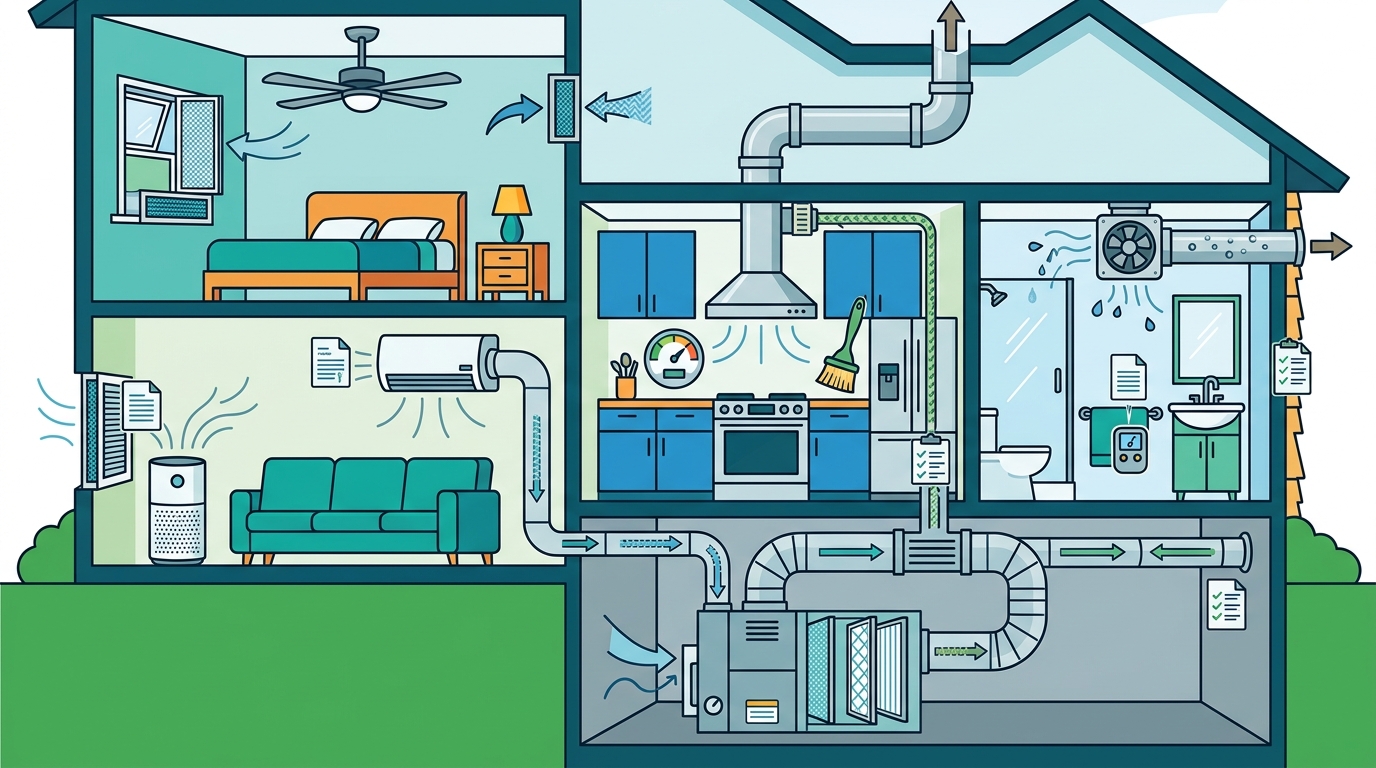
The kitchen is a primary source of combustion byproducts and excess moisture. Always run a range hood that vents to the exterior — not a recirculating unit — whenever cooking. If your home has a gas stove, ensure the hood delivers at least 200 CFM. Consider upgrading to an induction cooktop to eliminate combustion byproducts entirely.
Bathroom
Shower steam left unchecked raises whole-house humidity. Install a timer-controlled exhaust fan rated to at least 50 CFM for a standard bathroom. Keep the fan running for 20 minutes after every shower. Clean exhaust fan vent covers regularly to remove accumulated dust, which may cause inadequate ventilation and could also contain mold.
Bedroom
You spend at least eight to ten hours asleep in the bedroom each night, making it the room with the longest continuous exposure. Use a portable HEPA air purifier sized for the room's square footage. The EPA recommends purifiers that capture particles under 1 micrometer. HEPA filters are 99.97 percent effective in removing particles as small as 0.3 micrometers in size. Encase pillows and mattresses in allergen-proof covers and keep pets out of the sleeping area.
Basement and Utility Rooms
Moisture from a home's foundation is often a significant contributor to indoor humidity. Use a dehumidifier to keep relative humidity between 30 and 50 percent — the range recommended by the American Academy of Allergy, Asthma and Immunology to reduce mold and dust mite levels. Inspect dryer vents quarterly; a blocked exhaust hose is a common hidden pollution source.
Living Areas
When outdoor air quality is acceptable and the pollen count is low, open doors and windows for natural cross-ventilation. Position open windows on opposite sides of the room to promote airflow. In tighter homes without operable windows, an energy-recovery ventilator (ERV) or heat-recovery ventilator (HRV) can supply fresh outdoor air without major energy penalties.
HVAC System Maintenance Checklist
Your central HVAC system is the largest ventilation mechanism in most homes, but it can also become a source of indoor air pollutants if poorly maintained. Follow this schedule:
| Task | Frequency | Why It Matters |
|---|---|---|
| Replace air filter (MERV 13 or higher) | Every 60–90 days | Traps fine particulate matter and common allergens |
| Professional duct inspection | Every 2–3 years | Identifies mold, debris, and leaks that reduce airflow |
| Clean evaporator coils | Annually | Prevents mold growth on damp surfaces |
| Test return-air balance | Annually | Ensures each room receives adequate fresh air |
| Inspect condensate drain | Quarterly | Prevents standing water that breeds bacteria |
How to Measure Whether Your Changes Are Working
Subjective improvement matters, but data confirms it. Invest in an indoor air-quality monitor that tracks CO₂, particulate matter (PM2.5), humidity, and temperature. Elevated CO₂ levels — above roughly 1,000 ppm — are a reliable proxy for insufficient ventilation. One study reported a doubling of respiratory tract infections with each 500 ppm increase in indoor CO₂ concentrations, while a separate study reported an 80 percent reduction in rhinitis after installing mechanical ventilation.
Track symptom frequency in a simple journal alongside your monitor readings for at least 60 days. Look for correlations between spikes in PM2.5 or humidity and flare-up days.
When Better Ventilation Alone Is Not Enough
Ventilation is one layer of defense, not a cure-all. Air circulation alone will not prevent respiratory viruses, but it may help reduce their spread and can complement other prevention strategies. If symptoms persist after ventilation upgrades, consider:
- Professional mold remediation if moisture problems are structural
- Allergy testing to identify specific triggers
- An HVAC professional assessment of whole-house airflow balance
- Medical evaluation for conditions such as vocal cord dysfunction or GERD that mimic asthma
Key Takeaways
- Peer-reviewed research consistently links better home ventilation rates with improved respiratory outcomes, though the magnitude of benefit varies.
- Indoor pollutant concentrations can be two to five times higher than outdoor levels — ventilation is the primary mechanism for dilution.
- A room-by-room approach — kitchen hoods, bathroom exhaust fans, bedroom HEPA purifiers, basement dehumidifiers — addresses the specific sources unique to each space.
- HVAC maintenance on a set schedule prevents your ventilation system from becoming a pollution source itself.
- Data-driven monitoring with a CO₂ and PM2.5 sensor lets you verify that improvements are translating into measurable air-quality gains.
- Ventilation complements but does not replace medical treatment — consult an allergist or pulmonologist for persistent symptoms.
Frequently Asked Questions
Does opening windows actually help with respiratory issues?
Yes, when outdoor air quality is good and pollen counts are low. A 2025 study from Wuhan found that cross-ventilation through windows and doors was significantly more effective at reducing indoor allergen accumulation than mechanical systems with poorly maintained filters. However, during high-pollen or high-pollution days, keep windows closed and rely on filtered mechanical ventilation or a HEPA purifier instead.
What MERV rating filter should I use for respiratory health?
A MERV 13 filter captures most common allergens including pollen, mold spores, dust-mite debris, and fine particulate matter. Higher ratings like MERV 16 exist but can restrict airflow on residential systems not designed for them. Always confirm your HVAC system can handle the filter before upgrading.
Can a HEPA air purifier replace whole-house ventilation?
No. HEPA purifiers excel at removing airborne particles — they are 99.97 percent effective at capturing particles as small as 0.3 micrometers — but they do not introduce fresh outdoor air or remove gases like CO₂ and VOCs. Think of a purifier as a complement to, not a substitute for, adequate ventilation.
What humidity level should I maintain to reduce asthma triggers?
Keep indoor relative humidity between 30 and 50 percent. The American Academy of Allergy, Asthma and Immunology recommends this range to limit dust mite and mold growth. Use a hygrometer or an indoor air-quality monitor to track levels continuously.
How quickly can I expect to see respiratory improvements after upgrading ventilation?
Many homeowners notice reduced nighttime congestion within the first one to two weeks after installing better exhaust fans or HEPA filtration. However, measurable reductions in allergen levels — especially dust mites — can take several months because existing populations need time to decline as humidity drops. Track CO₂ and PM2.5 readings daily to confirm the environmental changes are taking hold.