

Your thermostat reads 82 °F indoors, the vents are blowing lukewarm air, and there is a faint hissing behind the utility closet door. If this scenario sounds familiar during a July heat wave, you may be dealing with a refrigerant leak—a problem that demands quick, methodical action rather than panic. This checklist walks you through exactly what to do, why each step matters, and how to protect both your wallet and your household.
Understand What Refrigerant Actually Does
Before you can respond effectively to a leak, it helps to know why refrigerant is so critical. Refrigerant is a chemical compound that circulates in a sealed loop inside your air conditioning system. It absorbs heat from your indoor air as it evaporates and releases that heat outdoors as it condenses. Without adequate refrigerant, the entire heat-exchange process breaks down and your system essentially becomes an expensive fan.
Crucially, refrigerant is not consumed like gasoline in a car. It stays in a closed loop indefinitely unless there is a breach. If your technician says the system needs a “top-off,” that itself confirms a leak exists somewhere in the circuit.
Recognize the Warning Signs
Catching a refrigerant leak early dramatically reduces repair scope and cost. Watch for these indicators:
1. Warm or Insufficiently Cool Air
When refrigerant levels fall below optimal pressure, the system loses its ability to exchange heat effectively. You may notice that the AC runs constantly without ever satisfying the thermostat—especially once outdoor temperatures climb into the high 80s or 90s.
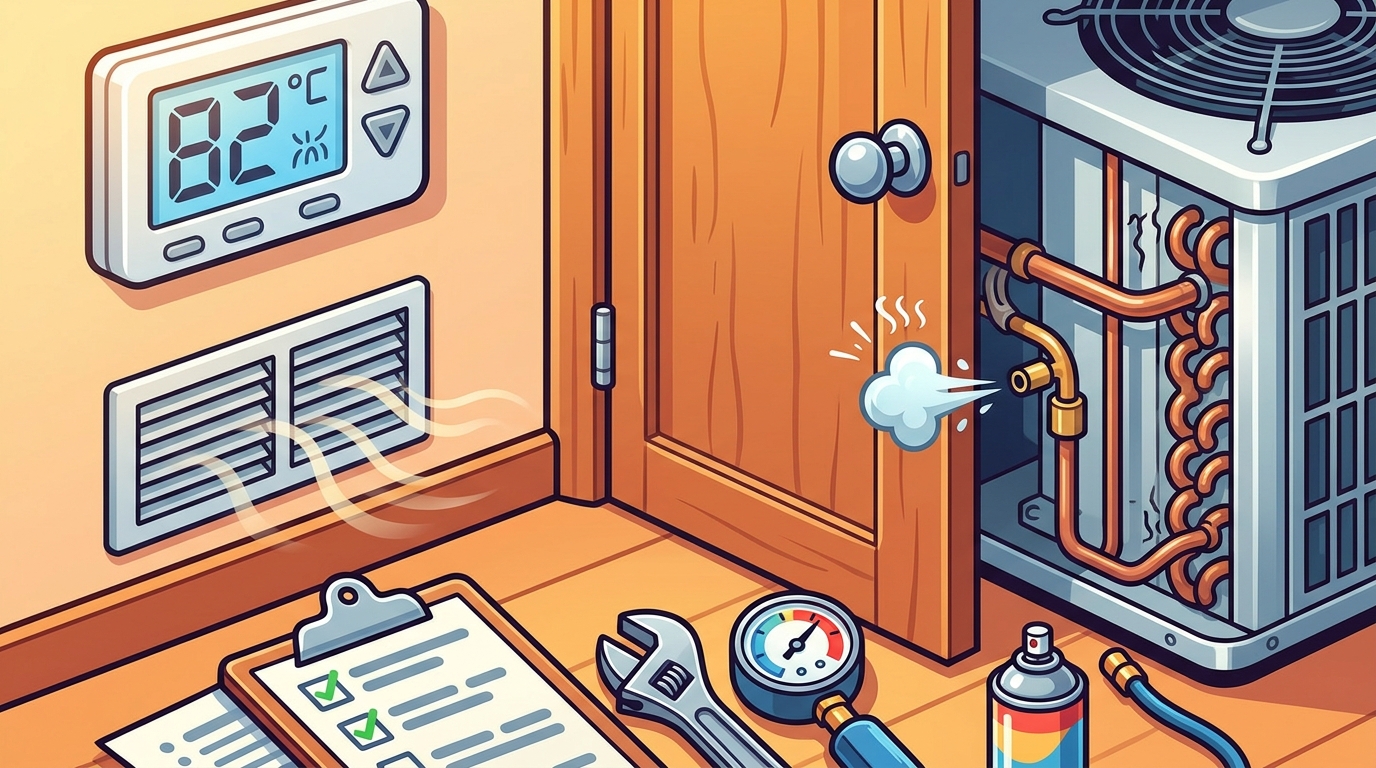
2. Hissing, Bubbling, or Gurgling Sounds
Pressurized refrigerant escaping through cracks or pinholes in copper tubing produces audible hissing or bubbling. Gurgling sounds may indicate a larger volume of escaping refrigerant and oil mixture—a more serious situation.
3. Frozen Evaporator Coils
When refrigerant levels drop too low, the evaporator coil gets excessively cold and moisture from the air freezes on it. Ice buildup further restricts airflow and creates a cycle that makes the problem worse. Seeing frost on copper lines or indoor coils in midsummer is a major red flag.
4. Unexplained Spike in Energy Bills
A system low on refrigerant works harder and runs longer to maintain your set temperature. Compare your current electricity bill to the same month last year; a significant jump with no change in usage habits often points to a leak.
5. Higher Indoor Humidity
Air conditioners dehumidify as they cool. When the refrigerant charge is low, the unit cannot remove moisture effectively, leaving the home feeling sticky even while the system runs.
6. Oil Residue Near the Outdoor Unit
Refrigerant and compressor oil travel together. Visible oil pooling around the outdoor condenser can signal that the system has lost a significant amount of refrigerant.
Immediate Actions (The First 30 Minutes)
Speed matters when you suspect a refrigerant leak in the summer. Follow these steps in order:
- Turn off the AC at the thermostat. Continuing to run a low-charge system forces the compressor to work under abnormal conditions. Prolonged operation can cause compressor failure—one of the most expensive AC repairs a homeowner can face.
- Open windows or doors to ventilate. Certain refrigerants are heavier than air and settle near floor level, posing a risk to children, pets, and anyone resting on the ground floor. Ventilating the space dilutes any leaked gas quickly.
- Check and replace your air filter. A severely clogged filter can cause frozen coils and symptoms that mimic a refrigerant leak. If you have not changed the filter in months, swap it now, let any ice melt fully, restart the AC, and monitor. If symptoms persist, the refrigerant is the likely culprit.
- Document everything. Note the date, sounds you heard, temperatures displayed on your thermostat versus actual room feel, and any visible ice or oil. Take photos. This information helps your technician diagnose the problem faster.
- Call a licensed HVAC professional. Many providers offer same-day or next-day emergency service during peak summer months. Request a refrigerant leak inspection specifically.
Working With a Licensed HVAC Technician
Refrigerant handling is not a DIY project. Only technicians holding EPA Section 608 certification are legally authorized to recover, recycle, or add refrigerant to residential systems. Here is what to expect during a professional service call:
Leak Detection
Technicians use electronic leak detectors (sometimes called “sniffers”), UV fluorescent dye, or the classic soap-bubble test to pinpoint the breach. Finding the leak may take 30 minutes to two hours depending on its location.
Repair
Common repairs include brazing pinhole leaks in copper tubing, replacing corroded Schrader valves, or installing a new evaporator coil. Minor line repairs typically take one to three hours, while an evaporator coil replacement can require four to eight hours.
Recharge and Verification
After sealing the leak, the technician evacuates the system, pressure-tests it, and recharges it with the manufacturer-specified refrigerant type and weight. A follow-up verification test confirms the repair is holding.
Tip: Ask for an itemized invoice showing the refrigerant type, quantity added, and a description of the repair. This documentation is valuable for warranty claims and future service visits.
Repair Costs and the Repair-vs-Replace Decision
Costs vary widely based on leak location, severity, and refrigerant type. Across the U.S., refrigerant leak repair costs typically range from $200 to $1,600, with the national average sitting around $800. Severe cases—such as a failed evaporator coil combined with a full recharge—can exceed $3,000.
Quick Decision Framework
| Factor | Lean Toward Repair | Lean Toward Replacement |
|---|---|---|
| System age | Under 10 years | Over 12–15 years |
| Refrigerant type | R-410A (still available) | R-22 (phased out, expensive) |
| Leak history | First occurrence | Recurring leaks |
| Repair cost × age | Below $5,000 | Above $5,000 |
One practical rule: multiply the estimated repair cost by the system's age in years. If the result exceeds $5,000, replacement is often the more economical long-term choice.
Health and Safety Considerations
Exposure to airborne refrigerants—especially older R-22—can trigger respiratory irritation, headaches, and dizziness. Prolonged inhalation of high concentrations may lead to serious complications including shortness of breath and central nervous system depression. In extreme cases, untreated refrigerant poisoning can be fatal.
Children and pets are particularly vulnerable because refrigerant vapors are denser than air and accumulate near the floor. If you smell a chemical or sweet odor near the indoor unit, evacuate the area immediately and seek fresh air before calling for help.
EPA Rules Every Homeowner Should Know
Refrigerant management in the United States is governed primarily by Section 608 of the Clean Air Act and the American Innovation and Manufacturing (AIM) Act. Key points that affect homeowners:
- Certified technicians only: Anyone purchasing or handling refrigerant for stationary equipment must hold EPA Section 608 certification. DIY refrigerant work is both illegal and unsafe.
- Venting prohibition: It is illegal to knowingly vent most refrigerants into the atmosphere.
- R-22 phase-out: R-22 (Freon) is no longer manufactured or imported into the U.S. Only recovered and reclaimed supplies remain, which drives up costs for older systems significantly.
- HFC phase-down: Under the AIM Act, HFC consumption will be reduced by 85 % by 2036 compared to baseline levels, which may affect future refrigerant pricing and availability for systems using R-410A.
Preventing Future Leaks
Once you have resolved the current leak, protect your system going forward with these habits:
- Schedule biannual maintenance. A spring tune-up before cooling season and a fall check after it ends allows a technician to catch developing issues—corrosion, vibration wear, loose fittings—before they become full leaks.
- Keep the outdoor unit clear. Maintain at least two feet of clearance around the condenser. Route refrigerant piping away from high-traffic zones and protect the unit from lawnmower strikes or garden tools.
- Monitor your energy bills. Tracking month-over-month electricity costs is one of the simplest ways to detect a slow leak early.
- Replace aging systems proactively. If your unit still runs on R-22 and has leaked before, transitioning to a modern system with R-410A or a next-generation low-GWP refrigerant eliminates the ongoing risk and lowers operating costs.
Key Takeaways
- A refrigerant leak means your sealed system has a breach—refrigerant does not get “used up.”
- Shut the AC off immediately to protect the compressor, then ventilate your home.
- Frozen coils in summer, hissing noises, warm air from vents, and unexplained bill spikes are the top warning signs.
- Only EPA-certified technicians may legally handle refrigerant—never attempt a DIY fix.
- Typical repair costs range from $200 to $1,600; use the repair-cost-times-age formula to decide between repair and replacement.
- Biannual professional maintenance is the single best defense against future leaks.
Frequently Asked Questions
Can I keep running my AC if I suspect a refrigerant leak?
No. Running a low-charge system forces the compressor to operate under abnormal pressure, which can lead to compressor failure—the single most expensive component in your AC. Turn the system off at the thermostat and call a licensed technician.
Is a refrigerant leak dangerous to my family?
It can be. Inhaling refrigerant vapors may cause headaches, dizziness, and respiratory irritation. Children and pets face heightened risk because many refrigerants are heavier than air and settle near the floor. Ventilate the area and evacuate if you detect a strong chemical smell.
How much does it cost to fix a refrigerant leak?
Costs typically range from $200 to $1,600, with the national average around $800. Factors include the leak location, refrigerant type, and whether major components like the evaporator coil need replacement.
Can I add refrigerant myself?
No. Federal law under EPA Section 608 requires anyone handling refrigerant to hold proper certification. Attempting a DIY recharge is illegal, unsafe, and voids most manufacturer warranties.
My system uses R-22 (Freon). Should I repair or replace?
R-22 is no longer manufactured or imported, so any available supply is reclaimed and increasingly expensive. If your R-22 system has developed a leak and is over 10 years old, replacement with a modern unit using R-410A or a lower-GWP refrigerant is usually the better financial decision.
How can I prevent refrigerant leaks in the future?
Schedule professional maintenance twice a year, keep the outdoor unit clear of debris and landscaping hazards, monitor your energy bills for unexplained increases, and replace aging systems before they develop chronic issues.