
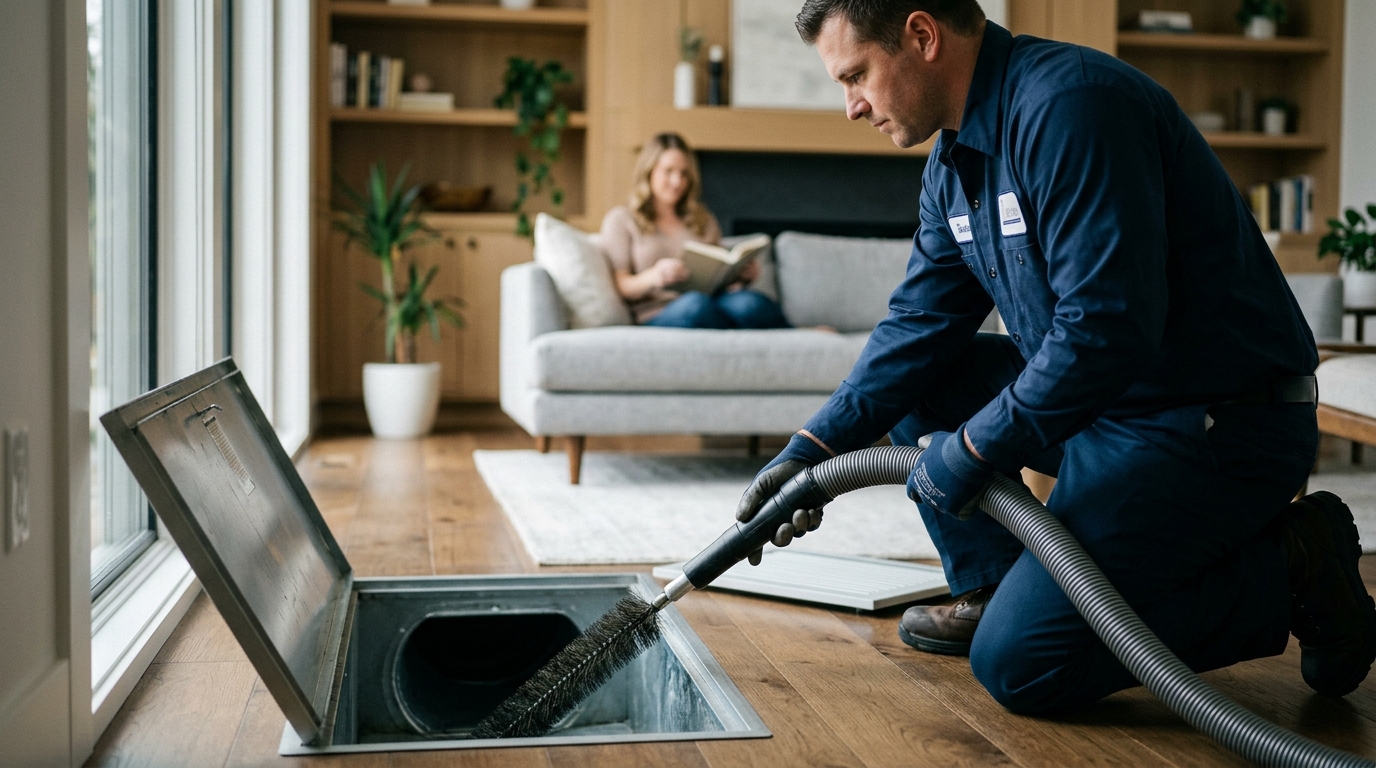
Discovering mold or noticing allergy flare-ups every time your HVAC kicks on forces a tough decision: grab a scrub brush and handle it yourself, or call in a certified technician? This comparison breaks down the real capabilities, limitations, and risks of each approach so you can protect your household without wasting money or making things worse.
When Is Duct Cleaning Actually Necessary?
Not every dusty vent warrants a full-scale cleaning. The U.S. Environmental Protection Agency recommends cleaning only when specific conditions exist: substantial visible mold growth on hard-surface ducts, vermin infestation, or ducts clogged with debris that actively releases particles into living spaces. The EPA also makes clear that if no household member suffers from allergies or unexplained symptoms, and no visible mold or heavy dust deposits are present, duct cleaning is probably unnecessary.
Critically, the EPA stresses that the root cause of contamination must be resolved before any cleaning takes place. Moisture intrusion from leaking pipes, poor condensate drainage, or high indoor humidity will cause mold to return regardless of how thoroughly the ducts are scrubbed. Water-damaged areas should be dried within 24 to 48 hours to prevent mold from establishing itself.
What DIY Cleaning Can (and Cannot) Accomplish
Realistic DIY Capabilities
- Vent covers and register openings: Homeowners can remove vent covers, wash them in soapy water, and use a household HEPA vacuum to clean the first few inches inside the register opening.
- Surface-level wipe-down: For minor surface mold visible around vent openings on bare metal, wiping with an EPA-registered mold cleaner designed for HVAC systems can address small spots.
- Filter replacement: Swapping out HVAC filters every one to three months is something every homeowner should do. Clean filters restrict the organic material mold feeds on.
Where DIY Falls Short
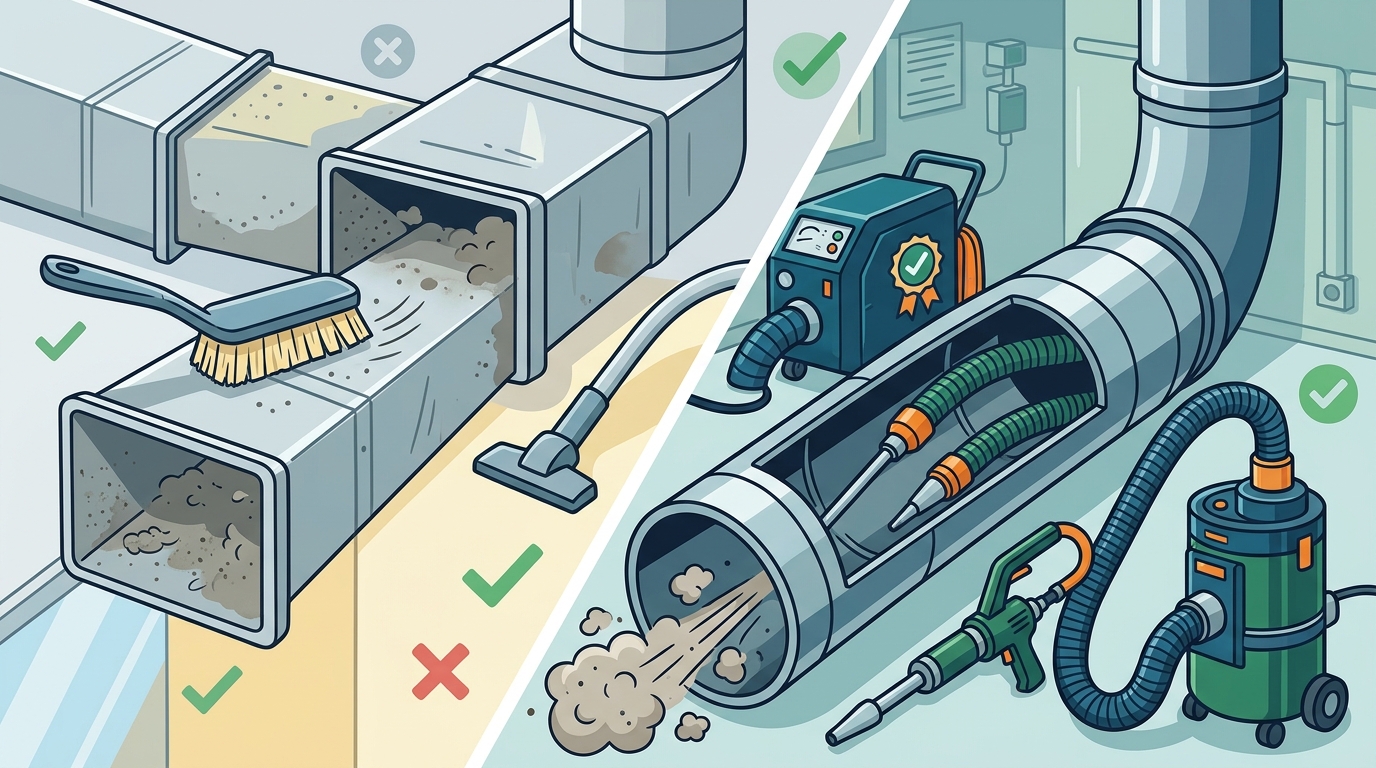
The vast majority of residential ductwork extends far beyond arm's reach. Without truck-mounted vacuums, robotic cameras, or pneumatic agitation tools, homeowners simply cannot access the interior surfaces where mold colonies and allergen deposits accumulate. DIY cleaning also fails to address hidden growth inside the ductwork or deeper HVAC components like evaporator coils and blower assemblies.
Perhaps the biggest danger is cross-contamination. Scrubbing or disturbing mold colonies without proper containment releases spores into the air, potentially spreading contamination to previously clean areas of your HVAC system and throughout your home. Using bleach, vinegar, or other harsh chemicals inside ducts can damage materials and is generally not effective at eliminating mold at its roots.
What Professional Remediation Includes
Certified technicians follow structured protocols that go well beyond surface scrubbing. Here is what a thorough professional service typically involves:
- Video inspection and documentation: Technicians insert cameras to map contamination before and after, providing objective proof of the problem and the results.
- Negative-pressure containment: High-powered vacuums create negative air pressure so that dislodged mold and dust are pulled into a secure containment unit rather than released into your living spaces.
- Mechanical agitation: Spinning brushes and pneumatic air whips reach deep into ductwork to break apart hardened mold colonies and packed allergen deposits.
- Porous material replacement: Insulated duct liner or fiberglass duct board that has become moldy cannot be effectively cleaned. The EPA, NADCA, and NAIMA all recommend removing and replacing wet or moldy fiberglass duct material. Professionals cut out compromised sections and install fresh material.
- EPA-registered antimicrobial treatment: After mechanical cleaning, technicians may apply fogged antimicrobials registered with the EPA for HVAC use. This step neutralizes residual biological activity that brushing alone cannot eliminate.
- Full-system scope: Professionals clean all HVAC components—supply and return ducts, grilles, coils, drain pans, fan motor housings—not just the visible openings.
The EPA explicitly states that mold remediation involving an HVAC system should be performed only by professionals experienced in working with HVAC systems. Workers may need full personal protective equipment including powered air-purifying respirators with HEPA filters.
Side-by-Side Comparison Table
| Factor | DIY Approach | Professional Service |
|---|---|---|
| Accessible area | Vent covers and first 6–12 inches of duct opening | Entire duct network, coils, blower, drain pans |
| Equipment | Household vacuum, spray bottle, rags | Truck-mounted vacuum, robotic cameras, air whips, HEPA filtration |
| Mold on sheet metal | Minor surface spots only | Full removal with antimicrobial follow-up |
| Moldy fiberglass or insulation | Cannot be cleaned—requires replacement | Cut out and replaced per EPA/NADCA standards |
| Cross-contamination risk | High—no containment system | Low—negative pressure isolates work area |
| Verification | Visual only | Before/after camera documentation, optional air sampling |
| Typical cost | $20–$80 in supplies | $400–$1,000+ depending on system size and mold severity |
| Best suited for | Routine vent maintenance, filter changes | Confirmed mold, allergen complaints, post-construction debris |
Cost Reality Check
DIY supplies are inexpensive—a HEPA vacuum attachment, an EPA-registered spray cleaner, replacement filters, and basic PPE typically total under $80. But that investment addresses only what you can physically reach.
Professional duct cleaning for a standard residential system generally ranges from $400 to $1,000. If active mold remediation is required—with containment, material replacement, and antimicrobial treatment—costs can rise to $1,500 or more depending on severity and system size.
The hidden cost of DIY failure is significant. A botched attempt that spreads contamination can necessitate a more expensive professional remediation later, plus potential medical expenses from prolonged mold exposure. The EPA recommends hiring professionals when mold covers more than 10 square feet or involves inaccessible areas.
Preventing Mold and Allergen Buildup Long-Term
Whether you ultimately choose professional cleaning, limited DIY maintenance, or both, prevention is the most cost-effective strategy. Controlling moisture is the single most effective way to prevent biological growth in all types of air ducts.
- Maintain indoor humidity below 50%. Use a whole-house or portable dehumidifier in humid climates or seasons.
- Replace HVAC filters on schedule. The U.S. Department of Energy recommends swapping filters every one to three months.
- Keep drain pans clear. Ensure condensate drain pans slope toward the drain so standing water never collects beneath cooling coils.
- Seal duct leaks. Leaky joints allow humid unconditioned air into the system, creating condensation that feeds mold.
- Fix plumbing and roof leaks promptly. Water intrusion near ductwork is one of the most common triggers for mold colonization.
- Schedule periodic HVAC inspections. A yearly check by a qualified technician catches moisture problems and early mold growth before they escalate.
Key Takeaways
- DIY duct cleaning is limited to vent covers, register openings, and filter changes. It cannot reach deep ductwork or replace contaminated insulation.
- Professional cleaning uses negative-pressure containment, mechanical agitation, and EPA-registered treatments to remove mold without spreading spores.
- Moldy fiberglass duct liner must be removed and replaced—no cleaning method can salvage it.
- The root moisture source must be fixed before any cleaning, or mold will return.
- The EPA recommends professional help when mold exceeds 10 square feet or is in inaccessible areas.
- Prevention through humidity control, filter maintenance, and leak repair is the most cost-effective long-term strategy.
Frequently Asked Questions
Can I remove mold from air ducts myself?
You can clean minor surface mold on removable vent covers and the visible edges of metal ducts. However, if mold extends deeper into the ductwork, covers a large area, or involves fiberglass insulation, professional remediation is necessary. DIY attempts on extensive mold risk spreading spores throughout your home.
How do I know if there is mold in my air ducts?
Common indicators include a persistent musty odor that intensifies when the HVAC system runs, visible dark spots around vent openings, and unexplained allergy symptoms such as sneezing, congestion, or headaches that improve when you leave the house. Professional inspection with cameras and air sampling provides the most reliable diagnosis.
Does the EPA recommend air duct cleaning?
The EPA does not recommend routine duct cleaning on a set schedule. It advises cleaning when there is substantial visible mold, vermin infestation, or excessive debris actively entering living spaces. The agency emphasizes fixing the underlying cause—usually moisture—before cleaning.
What happens if I use bleach to clean mold in my ducts?
Bleach and vinegar are generally not recommended for duct interiors. They can damage duct materials, produce harmful fumes in an enclosed system, and fail to penetrate the root structures of mold growing in porous materials. EPA-registered antimicrobials applied by professionals are a safer and more effective option.
How much does professional air duct mold removal cost?
Standard duct cleaning runs $400 to $1,000 for most homes. When active mold remediation is needed, including containment, material replacement, and antimicrobial treatment, expect $1,000 to $2,500 or more depending on system complexity and contamination extent.
How often should air ducts be professionally cleaned?
There is no universal schedule. Clean when objective signs warrant it—visible mold, pest evidence, heavy debris, or allergy symptoms linked to HVAC operation. Many professionals suggest inspecting every two to three years and cleaning only as needed.