
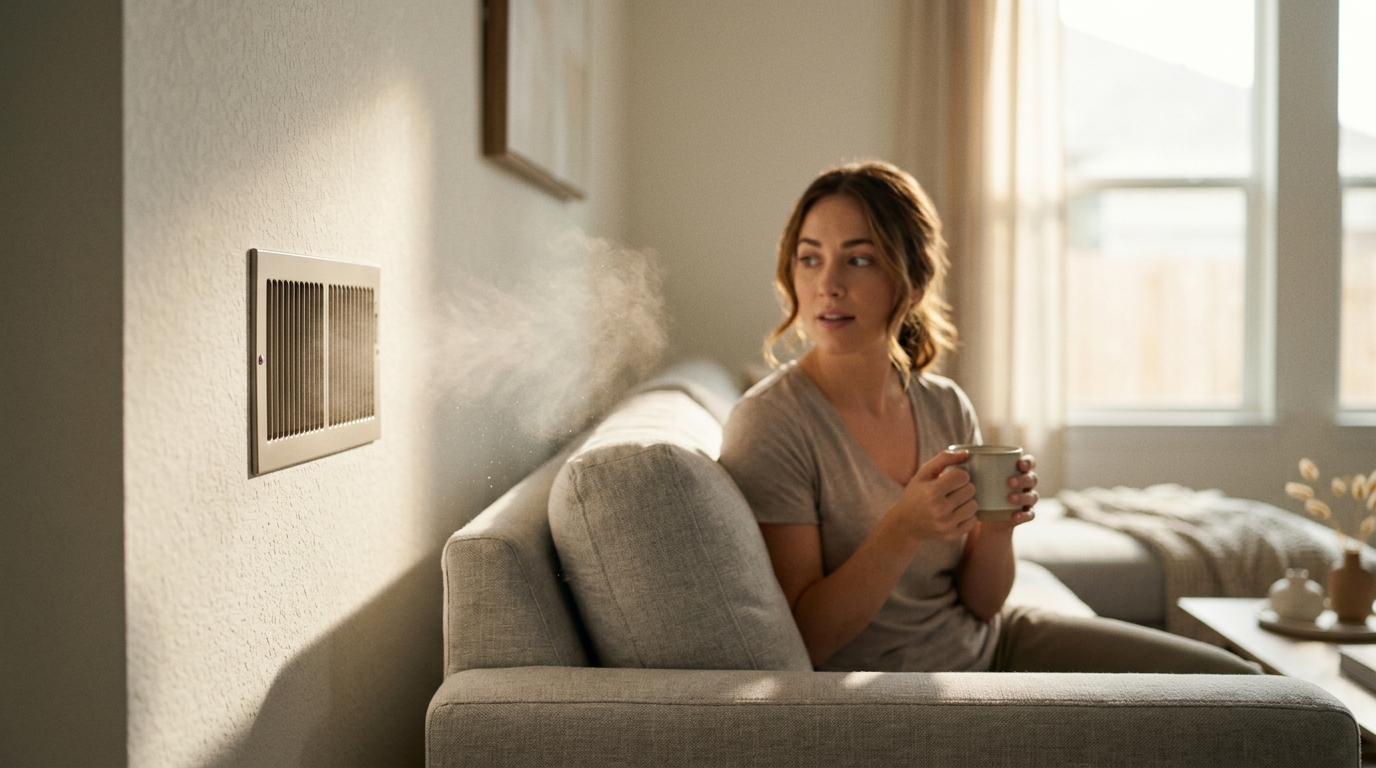
Your HVAC ductwork is essentially the respiratory system of your house. When contaminants build up inside those hidden channels, the effects eventually surface in ways you can see, smell, and feel. Below are nine real-world warning signs that it is time to call a certified duct-cleaning professional.
1. Visible Dust Puffs When the System Kicks On
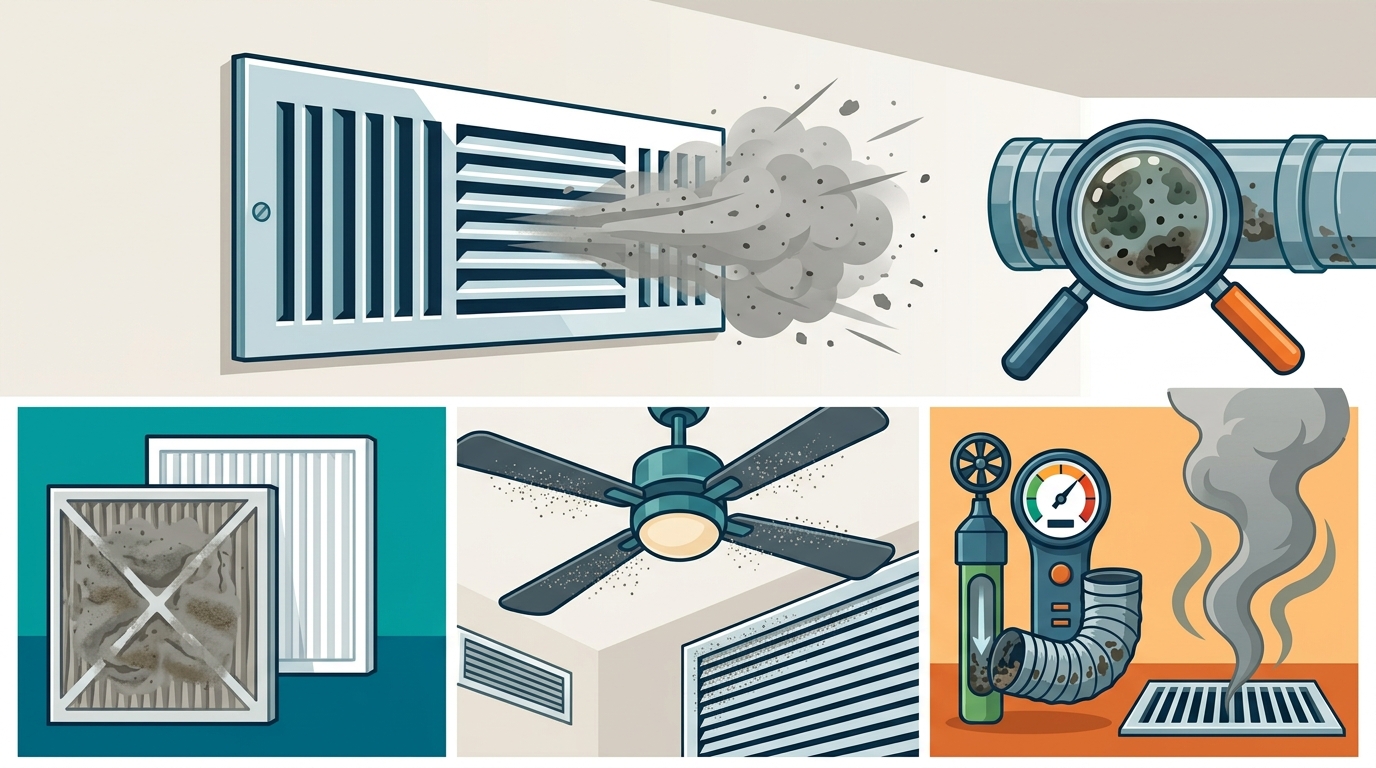
One of the clearest red flags is a small burst of dust that shoots from a supply register the moment your HVAC starts a cycle. Under normal conditions, air ducts should not release visible dust or debris when the system turns on. If you spot these puffs consistently, dust and particulate matter have accumulated to the point where normal airflow dislodges them.
Quick Self-Test
Hold a white tissue near a supply vent as the blower engages. If the tissue turns grey or you see particles swirling, schedule an inspection.
2. Rapid Filter Clogging
Most HVAC filters are designed to last roughly 90 days under normal household conditions. When a filter becomes packed with debris in only a few weeks, that accelerated clogging often indicates excessive dust circulating through the duct system. A clogged filter also chokes off airflow, which allows even more dust to settle and build up inside the return ductwork.
What to Track
- Write the installation date on each new filter with a marker.
- If you replace it before the 30-day mark more than once, investigate the ducts.
- Homes with pets, smokers, or multiple occupants may see faster clogging, so consider those variables before assuming the ducts are the sole cause.
3. Persistent Musty or Stale Odours
Unexplained smells that seem to come from nowhere often originate inside the ductwork. If your home smells musty and you cannot identify another source, get close to each vent register and take a deliberate sniff. A persistent musty odour may point to microbial growth, while a sharper, unpleasant stench can indicate a rodent carcass or pest waste inside the ducts.
A brief burning smell when you fire up the furnace for the first time each season is typically harmless—it is dust burning off the heat exchanger. The smell to worry about is one that lingers throughout the heating or cooling cycle and grows stronger over time.
4. Mould Growth on or Near HVAC Components
Both air conditioners and furnaces can develop condensation, making mould growth a genuine possibility, especially in humid climates. The U.S. EPA advises homeowners to consider duct cleaning when there is substantial visible mould growth inside hard-surface ducts or on other components of the heating and cooling system. If you have insulated air ducts and the insulation gets wet or mouldy, it cannot be effectively cleaned and should be removed and replaced.
Important Caveat
Not every dark spot near a vent is mould. Before spending money on remediation, ask the technician to show you evidence and consider having the substance tested by an indoor-air-quality professional.
5. Unexplained Allergy Flare-Ups Indoors
If household members experience sneezing, congestion, or itchy eyes that improve when they leave the house, airborne contaminants circulating through the ducts could be a contributing factor. Dust inside ductwork contains fine dirt, dead skin, pet dander, pollen, mould spores, and even rodent waste. When disturbed by airflow, those particles enter living spaces and can trigger allergic or respiratory symptoms.
The EPA notes that some contaminants in HVAC components may cause allergic reactions or other symptoms in people who are exposed to them. Air duct cleaning is not a guaranteed cure for allergies, but removing a significant reservoir of settled allergens is a logical step alongside good filtration and humidity control.
6. Inconsistent Airflow Between Rooms
When conditioned air flows freely from some registers but barely trickles from others, the cause could be obstructions inside the duct runs. Accumulated dust and debris can partially block certain branches while leaving others clear. Inconsistent airflow can also be caused by ripped or disconnected ducts, so a professional inspection should check for both blockages and structural damage simultaneously.
7. Rising Energy Bills With No Other Explanation
Your heating and cooling costs should be relatively predictable from one year to the next. A noticeable spike—especially when utility rates have not changed—can signal that dirt and dust are restricting airflow, forcing the system to run longer and consume more energy. Leaking duct seals compound the problem; over years of use those seals can deteriorate, allowing conditioned air to escape into attics, walls, or crawlspaces instead of reaching your living areas.
8. Evidence of Rodents or Insects
Mice, squirrels, and insects can enter ductwork through small gaps or unsealed access points. Once inside, rodents build nests and leave droppings that send fecal spores through the system every time the blower runs. Telltale signs include droppings near vents, chewed materials, scratching sounds, and foul odours. The EPA specifically lists vermin infestation as a condition that warrants professional duct cleaning.
After an exterminator resolves the infestation itself, a thorough duct cleaning removes the biological debris left behind and helps restore safe indoor air quality.
9. Recent Renovation or Construction
Home improvement projects generate enormous amounts of airborne debris. Drywall dust, sawdust, and insulation fibres inevitably find their way into HVAC ductwork unless the system is shut off and completely sealed during the entire project—something that is rarely practical. Construction dust can contain particulate matter you do not want to breathe, so scheduling a professional duct cleaning after any significant renovation is a smart precaution.
When Duct Cleaning May Not Be Necessary
Not every dusty register means your ducts are in crisis. The EPA does not recommend routine duct cleaning; it advises cleaning only on an as-needed basis because much of the dirt inside ducts adheres to interior surfaces and does not necessarily enter the living space. A light amount of household dust in the ductwork poses no proven health risk.
The National Air Duct Cleaners Association (NADCA) recommends a professional inspection every three to five years to establish whether cleaning is actually warranted. Use the signs above as your trigger to schedule that inspection rather than committing to an arbitrary calendar.
What to Expect From a Professional Duct Cleaning
A legitimate service covers the entire HVAC system—not just the visible ducts. That includes supply and return air ducts, registers, grilles, diffusers, heating and cooling coils, condensate drain pans, the fan motor and housing, and the air handling unit. Reputable technicians will:
- Perform a pre-cleaning inspection and photograph the interior of your ducts.
- Use specialized HEPA-filtered vacuums and agitation tools to dislodge and capture debris.
- Inspect for mould, leaks, and structural damage during the process.
- Provide before-and-after photos so you can see tangible results.
Be cautious of providers who quote extremely low prices, make sweeping health claims, or pressure you into chemical biocide treatments. The EPA warns homeowners not to hire duct cleaners who make unsubstantiated health-benefit claims or who recommend cleaning as a routine part of maintenance without evidence of contamination.
Key Takeaways
- Dust puffs from vents, rapid filter clogging, and unexplained odours are the three most immediately noticeable signs of dirty ducts.
- Visible mould, pest evidence, and post-renovation debris are the three scenarios where even the EPA agrees professional cleaning is warranted.
- Rising energy bills and inconsistent room temperatures may point to duct obstructions or leaks worth investigating.
- Not every dusty vent requires a full cleaning. Schedule an inspection first and let the findings guide your decision.
- Always choose NADCA-certified technicians who document results with photos and clean the entire HVAC system.
Frequently Asked Questions
How often should I have my air ducts cleaned?
NADCA recommends having your ducts inspected every three to five years. The EPA takes a more conservative stance, advising cleaning only when specific problems—such as mould, pest infestation, or heavy debris—are present. Homes with pets, allergy sufferers, or smokers may benefit from more frequent inspections.
Can dirty air ducts make you sick?
The EPA states that contaminants in HVAC components may cause allergic reactions or other symptoms in susceptible individuals, but it also notes that duct cleaning has not been conclusively shown to prevent health problems. When mould or vermin are present, cleaning is a prudent health measure.
How much does professional air duct cleaning cost?
Costs vary by region, home size, and duct complexity. Nationally, most homeowners pay between $300 and $700 for a whole-system cleaning. Be wary of offers significantly below that range—they often indicate a bait-and-switch or incomplete service.
Can I clean air ducts myself?
You can clean vent covers, replace filters, and vacuum visible debris at register openings. However, reaching deep into the duct runs and cleaning coils, blower fans, and drain pans requires professional-grade equipment. For a thorough cleaning, hiring a certified professional is recommended.
What is the best time of year to schedule duct cleaning?
Spring and early autumn are popular because they fall between peak heating and cooling seasons, giving technicians easier access without disrupting your comfort. Post-renovation is another ideal time regardless of season.