

Few things are worse than discovering your air conditioner is losing refrigerant during the hottest week of the year. A refrigerant leak is a sealed-system failure that reduces cooling power, spikes your energy bills, and can permanently damage your compressor if left unchecked. The good news is that catching the problem early and following the right steps can save you hundreds of dollars and restore comfort fast. Below, you will find a clear, step-by-step guide to identifying, responding to, and resolving a summer refrigerant leak before it turns into a full system breakdown.
What Is a Refrigerant Leak?
A refrigerant leak is an unintended escape of the chemical coolant that cycles through your air conditioner's sealed loop. Your AC does not consume refrigerant like fuel. It is a closed-loop system, so if levels are low, it means there is a leak that needs to be found and repaired.
Refrigerant is the substance responsible for absorbing heat from your indoor air at the evaporator coil and releasing it outdoors at the condenser coil. When this chemical escapes through corroded coil joints, damaged valves, or cracked refrigerant lines, your system loses the ability to cool effectively. Under EPA Section 608 of the Clean Air Act, the knowing release of refrigerant during maintenance or service is prohibited, and only certified technicians may handle these chemicals.
Warning Signs Your AC Is Leaking Refrigerant
Spotting a leak early is the fastest way to limit damage. Here are the most common indicators:
Warm Air and Uneven Cooling
If your AC is running but the air coming from your vents is not cold, low refrigerant is a likely cause. The system simply cannot absorb enough heat to cool your home. You may also notice inconsistent temperatures from room to room.
Ice Buildup on Coils or Lines
Frost on the evaporator coil or the copper refrigerant lines is a telltale sign of low refrigerant. A pressure drop causes the coil temperature to fall below freezing, and moisture from the air freezes on contact. If you notice ice, schedule an AC repair immediately.
Hissing, Bubbling, or Rising Bills
Hissing or bubbling sounds near the indoor or outdoor unit can indicate refrigerant escaping through a hole. A system low on refrigerant also runs longer and works harder, which causes a noticeable spike in your electricity bills. If your energy costs have jumped without explanation, a refrigerant leak repair inspection is a smart next step.
Immediate Steps to Take When You Suspect a Leak
Acting quickly protects your compressor and your wallet. Follow these steps in order:
Step 1: Turn Off the AC
Running the system with low refrigerant can cause the evaporator coil to freeze and, eventually, burn out the compressor motor. A compressor replacement is one of the most expensive AC repairs, so shutting the system down is critical.
Step 2: Check Your Air Filter
A severely clogged filter restricts airflow enough to mimic or worsen refrigerant-related symptoms. Replace it if it is dirty. This quick check can sometimes resolve freezing issues unrelated to a leak.
Step 3: Call an EPA-Certified HVAC Technician
Refrigerant is a hazardous chemical that requires specialized handling. EPA regulations mandate that only certified professionals can recharge a home HVAC system. Contact a qualified team like Apex Clean Air's cooling specialists to perform a proper diagnosis.
What a Professional Repair Looks Like
A proper refrigerant service is a comprehensive repair, not a simple top-off. Reputable HVAC companies follow a strict multi-step process to ensure the fix lasts.
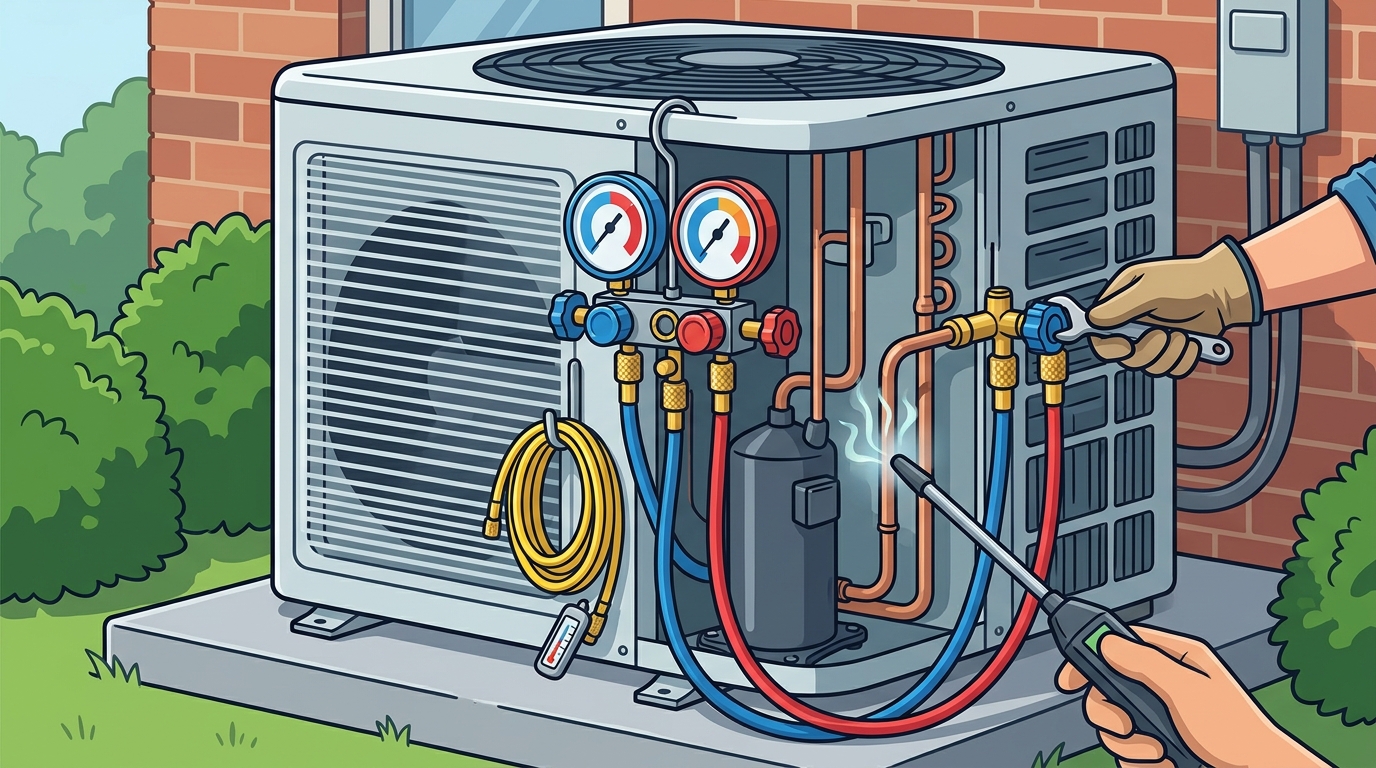
At Apex Clean Air, certified technicians use electronic detectors or UV dye to find the exact source of the leak. The team never adds refrigerant without fixing the leak first. After the leak is sealed, the technician uses a vacuum pump to evacuate all air and moisture from the lines, then weighs the precise refrigerant charge using manufacturer specifications. Finally, a pressure test and performance check confirm the system is cooling efficiently.
This approach protects against overcharging or undercharging, both of which can destroy the compressor. Apex offers seasonal AC maintenance plans that catch small leaks before they become costly emergencies.
Costs and Refrigerant Types Compared
The refrigerant type in your system significantly impacts the cost of a recharge. The HVAC industry has shifted away from older, ozone-depleting chemicals toward safer alternatives.
| Refrigerant | Common Name | Status | Approx. Cost per Pound (Installed, 2025) |
|---|---|---|---|
| R-22 | Freon | Fully phased out in the U.S. | $100 - $250 |
| R-410A | Puron | Current standard (being phased down) | $40 - $100 |
| R-454B | Opteon XL41 | Next-generation, lower GWP | $50 - $120 |
R-22, also known as Freon, was common in systems over 15 years old but has been completely phased out of production in the United States, making it extremely expensive. R-410A is the refrigerant found in most systems installed between 2010 and 2024. If your unit still uses R-22, a leak may be the right time to discuss a full system replacement with your technician.
How to Prevent Future Refrigerant Leaks
Prevention is always cheaper than repair. A few proactive habits go a long way toward keeping your sealed system intact.
Schedule professional maintenance at least once a year, ideally before summer begins. During a tune-up, technicians inspect refrigerant levels, clean coils, and check for early signs of corrosion. Apex Clean Air's AC maintenance services include a full system diagnostic designed to catch problems before the cooling season starts.
Keep the area around your outdoor condenser clear of debris, and change your air filter every 30 to 90 days. Good airflow reduces strain on the refrigerant cycle and helps prevent the pressure fluctuations that accelerate wear on coil joints and fittings.
Key Takeaways
- A refrigerant leak means your sealed system has a hole; refrigerant does not get "used up" during normal operation.
- Warm air from vents, ice on coils, hissing sounds, and spiking energy bills are the top warning signs.
- Turn off your AC immediately if you suspect a leak to protect the compressor from permanent damage.
- Only EPA-certified technicians should diagnose and repair refrigerant leaks, as these chemicals are hazardous.
- A professional repair includes leak detection, sealing, system evacuation, precise recharging, and pressure testing.
- R-22 (Freon) is phased out and very costly; if your system uses it, consider upgrading to a modern unit.
- Annual maintenance is the single best way to catch small leaks before they become expensive failures.
Frequently Asked Questions
How do I know if my AC is leaking refrigerant or just low on coolant?
Your AC is a sealed system. If refrigerant levels are low, there is a leak somewhere. A technician uses electronic detectors or UV dye to pinpoint the exact location before adding any refrigerant.
Is a refrigerant leak dangerous to my family?
Refrigerants are hazardous chemicals. In a well-ventilated home, a small leak poses a low immediate health risk, but prolonged exposure in enclosed spaces can cause dizziness, headaches, and respiratory irritation. Getting the leak fixed promptly is always the safest choice.
Can I add refrigerant to my AC myself?
No. EPA regulations require that only certified professionals handle and recharge residential HVAC refrigerants. Improper handling can damage your system and is illegal under the Clean Air Act.
How much does it cost to fix a refrigerant leak?
Costs vary by the location of the leak and the type of refrigerant. A straightforward line repair with an R-410A recharge may cost a few hundred dollars, while a coil replacement on an R-22 system can run significantly higher. Request a free diagnostic from a trusted provider like Apex Clean Air to get an accurate estimate.
How long can I run my AC with low refrigerant?
You should not run it at all once you suspect a leak. Operating with low refrigerant causes the evaporator coil to freeze and forces the compressor to overwork, which can lead to a compressor burnout that often requires full unit replacement.
Will a refrigerant leak fix itself?
No. Refrigerant leaks only get worse over time. Corrosion, vibration, and thermal cycling cause small holes to expand, so early professional repair is always the most cost-effective option.
How often should I have my refrigerant levels checked?
At least once per year during a professional maintenance visit. Scheduling a tune-up before summer ensures your system is fully charged and ready for peak demand.
Do Not Wait for a Small Leak to Become a Big Problem
If your AC is blowing warm air, forming ice, or making unusual sounds this summer, take action today. Contact Apex Clean Air to schedule a same-day refrigerant leak diagnosis. With offices across Utah, Colorado, and Idaho, certified technicians are ready to restore your comfort quickly and affordably.